History of Revivalism in Boston
Resources for the urban pastor and community leader published by Emmanuel Gospel Center, Boston
Emmanuel Research Review reprint
Issue No. 24 — January/February 2007
by Rudy Mitchell, Senior Researcher, Emmanuel Gospel Center, Boston
Read the full version online here.
Executive Summary
“Revivalism,” according to the Dictionary of Christianity in America, “is the movement that promotes periodic spiritual intensity in church life, during which the unconverted come to Christ and the converted are shaken out of their spiritual lethargy.” David W. Bebbington, professor of history at the University of Stirling in Scotland and a distinguished visiting professor of history at Baylor University, describes revivalism as a strand of evangelicalism, a form of activism (which he identifies as one of evangelicalism’s four key characteristics), where a movement produces conversions “not in ones and twos but en masse.”
Dwight L. Moody revival meeting in Boston
In this 2007 study, EGC’s Senior Researcher Rudy Mitchell traces Boston’s key evangelistic revival movements from the First Great Awakening in Boston in 1740–1741 through the Billy Graham campaign in Boston, starting on New Year’s Eve in 1949. With 23,000 attending services on the Boston Common in 1740 to hear Whitefield (without the benefit of electronic amplification) to an estimated 75,000 gathered at the same spot in 1950 to hear the same Gospel preached by Rev. Billy Graham, the story of revivalism in Boston gives color and texture to the waves of revival.
Rudy introduces us to a few of the key players, remarkable crowds, recorded outcomes, while weaving in familiar faces and places, from Charles Finney, Dwight L. Moody and Billy Sunday to Harvard Yard, Park Street Church and the Boston Garden. We sense history coming alive as we read how God moved in remarkable ways through his gifted evangelists and preachers, and we gain a deeper appreciation for Boston’s vibrant Christian history.
“History of Revivalism in Boston” was first printed in the January/February 2007 issue of the Emmanuel Research Review, Issue 24. It was subsequently published in New England’s Book of Acts, a collection of reports on how God is growing the churches among many people groups and ethnic groups in Greater Boston and beyond.
Table of Contents (with key themes and names added)
First Great Awakening in Boston
Learn More
Read the full version of “History of Revivalism in Boston.”
Contact Rudy Mitchell with questions or to request a printed copy.
As churches explore ways to more fully use their buildings, they also need to consider any potential issues that might affect their tax-exempt status.
Churches faced with aging buildings, lack of parking, and aging, dispersed membership may find selling their buildings necessary—or even advantageous. What happens to the buildings when they do?
This guide showcases organizations addressing some of the most pressing social issues. Their endeavors range from supporting vulnerable children and families to promoting environmental stewardship.
From community-based participatory research to social-network analysis, there are various ways Christians can learn more about the communities they serve.
A Christian church or ministry functions in the context of a particular community. To effectively minister in that community, it’s important to understand it.
From population trends to social needs, this illustrated guide lists the factors to consider when learning more about a local neighborhood or community.
From population trends to social needs, this guide lists the factors to consider when learning more about a local neighborhood or community.
This guide includes Boston-area Christian campus ministries and a sample of churches serving college students.
The Boston Church Directory may be used for a variety of scholarly, relational, and spiritual purposes.
More and more newcomers are flocking to Boston even as the number of churches appears to be leveling off.
Are you looking to get a better understanding of the city of Boston with all its history, neighborhoods, and eccentricities? Rudy Mitchell, researcher of Boston's neighborhoods and churches for over 30 years, gives his top 5 recommendations for books about Boston.
Want to know where to plant a church in Boston? You might consider Boston’s newest or soon-to-be-built residential growth sites. We’ll take a look at eight neighborhoods where growth is—or soon will be—taking place, based on public and private development plans.
The scope of sexual and gender-based violence in America is coming into the public light—not just in Hollywood and Washington, but in the church as well. Three nationwide movements focus on the church’s responsibility, both in adding to the problem and in bringing healing.
Do you feel called to help survivors of gender-based violence (domestic abuse, sexual assault, etc.)? See these recommended local and national organizations and see how you may be able to get involved.
To address local homelessness, we need a clear picture of whom we seek to help. You may be surprised by who qualifies as part of the homeless population. What follows is a glimpse of the current reality of homelessness in Massachusetts today.
The Church has a critical role in prevention, intervention, and healing from gender-based violence (GBV). These resources can help.
To address local homelessness, we need a clear picture of whom we seek to help. You may be surprised by who qualifies as part of the homeless population. What follows is an overview of how homelessness is defined in the US.
Are you planting a church or ministering in Jamaica Plain? Get to know this vibrant neighborhood and explore some great local resources.
At the geographic heart of Boston, Roxbury is home to a diverse community. Like many Boston neighborhoods, Roxbury is in transition—holding the tension between the beautiful old while welcoming in the beautiful new.
Are you ministering or planting a church in Dorchester? Check out this gateway to local resources for understanding the people and community you serve.
The City of Boston has released “Imagine Boston 2030,” a comprehensive vision to prepare for an expected population surge by the city’s 400th anniversary in 2030. Can the church articulate a similar vision for what the Kingdom of God could look like in Boston 13 years from now?
Starting a new church, but short on leaders? A few years ago, we interviewed a number of Greater Boston’s church planters to ask how they were developing new leaders for their churches. Here are some of their tips for raising new leaders.
The South End has undergone a dramatic transformation in this generation. Christian leaders in the South End can benefit from these recommended resources for foundational and ongoing learning about this dynamic community.
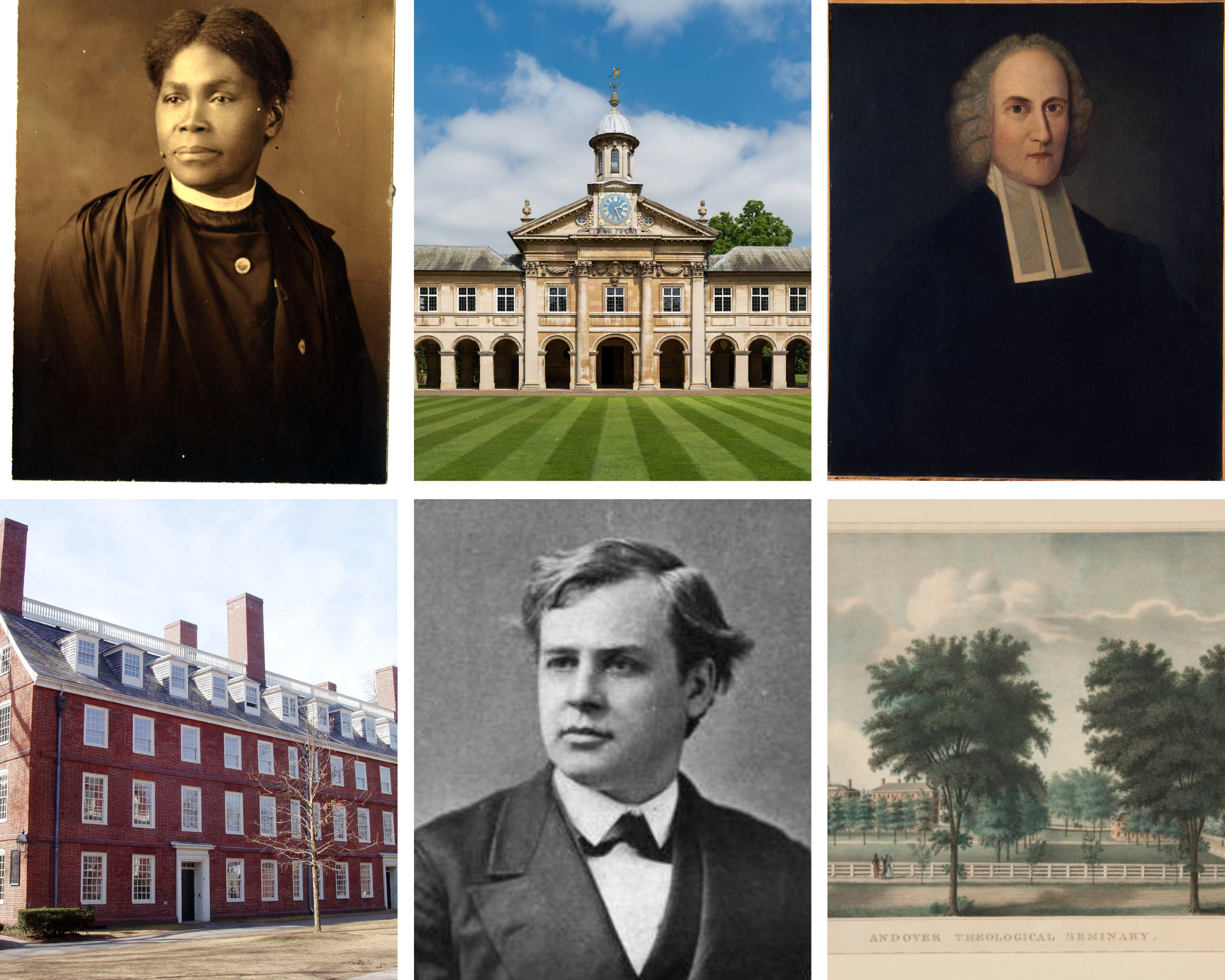
Journey with EGC’s Senior Researcher Rudy Mitchell through Boston’s key evangelistic revivals from the First Great Awakening in 1740–1741 through the Billy Graham campaign of 1950. History comes alive as we read how God moved in remarkable ways through gifted evangelists, and we gain a deeper appreciation for Boston’s vibrant Christian history.
From progressive education policies in the late 1600s, to the arrival of immigrants and industry in the 1800s, to the establishment of diverse housing projects and churches up to the present day, Jamaica Plain has had a colorful and action-filled past.