
Doug Hall: Memorial Tribute
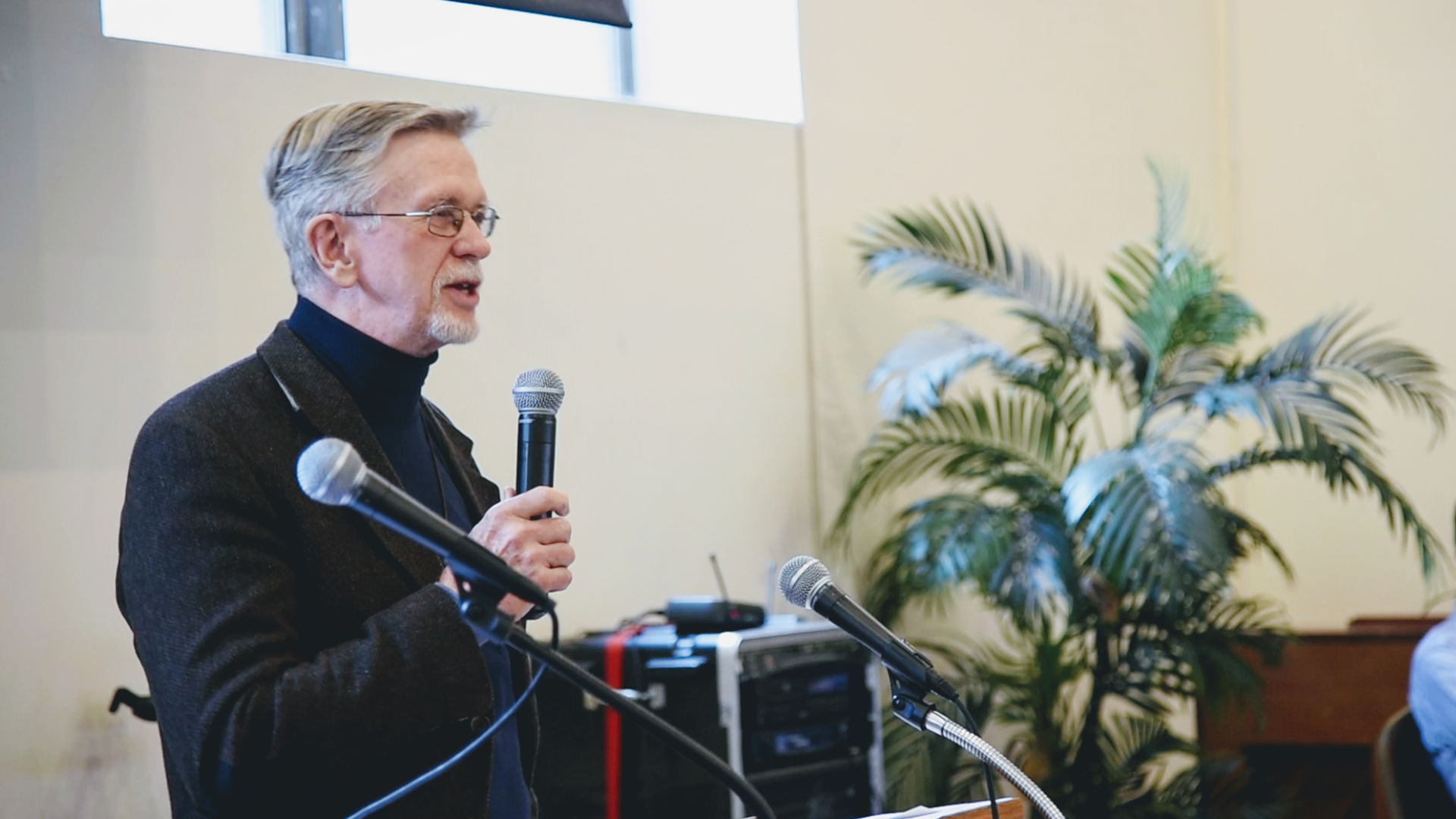
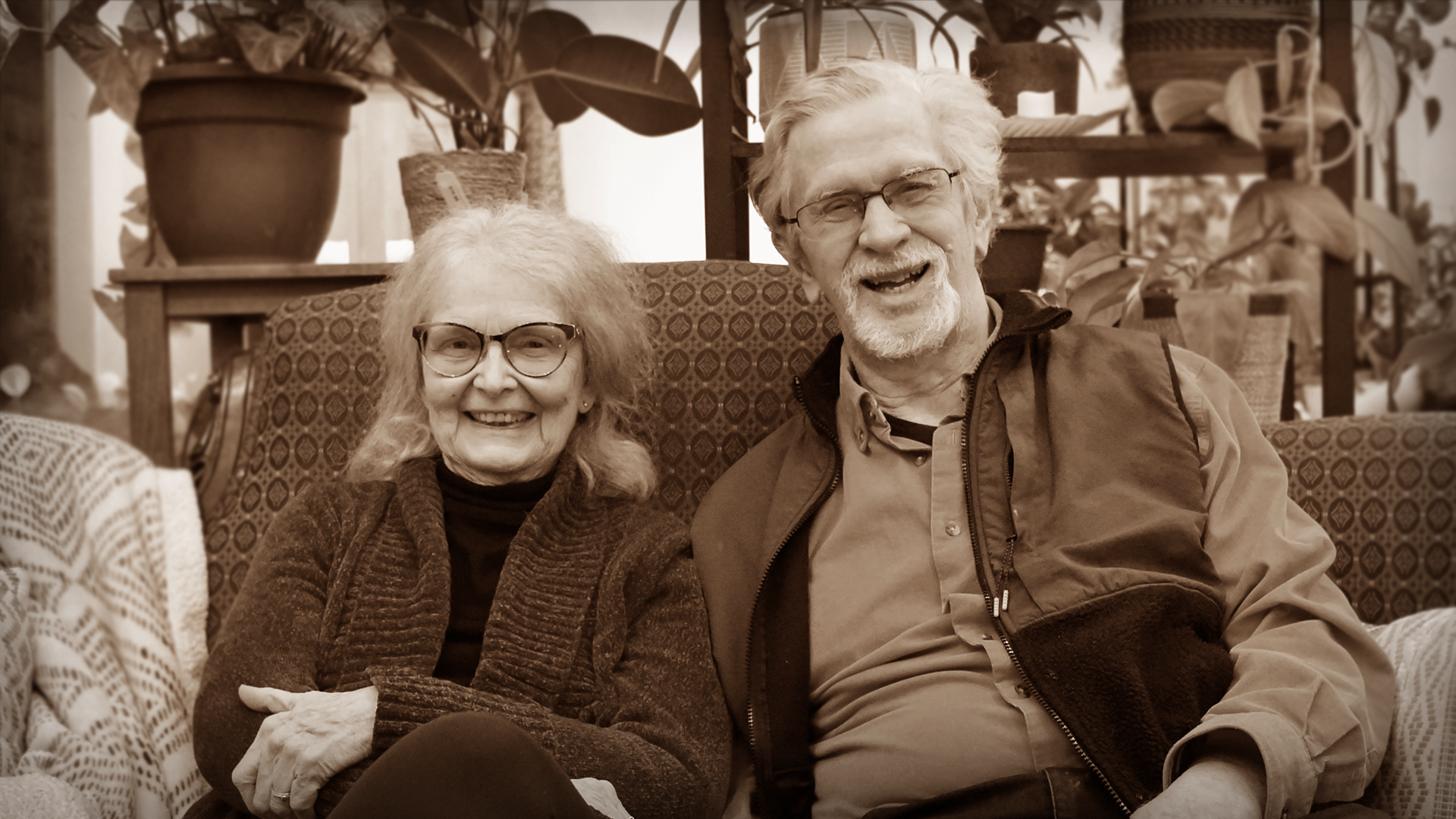
It is with deep sadness that we share the passing of Dr. Douglas A. Hall, former executive director and president of the Emmanuel Gospel Center (EGC) (1964–2014). Doug and his wife, Judy Hall, served as leaders of EGC for 50 years. He died on Monday, April 13, 2026, at the age of 89.
The Emmanuel Gospel Center joins the many people in and around Boston who grieve the loss of a man who blessed so many. Stacie Mickelson, Executive Director of EGC, echoed the magnitude of the loss for the Church in Boston:
Doug understood that lasting fruit belongs to the Lord. For him, that wasn’t a reason to hold back; it was an invitation to give everything. He held those two things together his whole life. Open-handed with prayer, with ideas, with resources, with authority. He shaped generations of Christian leaders in Boston and across the globe. He and Judy invested personally in the people and work they believed in, and I am one of many grateful recipients of that generosity.
No one could out-dream Doug. But for someone who dealt in big ideas, he was humble, approachable, rooted. Feet firmly on the ground—he spent his life finding vitality and nurturing it.
His loss is enormous. For me, for EGC, and for the Church in Boston. We do not grieve without hope, but we do grieve.
Rest in glory, Doug.
During their time at the Center, Doug and Judy oversaw the transformation of EGC from an evangelistic outreach ministry in the South End neighborhood of Boston to an innovation lab for Christian leaders seeking the shalom of the city. Doug likened EGC to a teaching hospital where ministry practice, research, and training were all shaping and informing each other.
“Doug was a truly creative thinker, a passionate leader, and, always in partnership with his wife Judy, a humble visionary who followed God’s lead in transforming EGC from a small rescue mission into a hub of applied research, connection, and ministry innovation,” said Jeff Bass, former EGC executive director and current senior advisor. “So many of us stand on Doug’s shoulders, and he will be deeply missed.”
Doug did not set out to make a name for himself—he realized early on in ministry that is not how the kingdom of God grows. Encountering the work of MIT systems thinker Jay Forrester gave him a new perspective and approach. Instead of being crippled by the complexity of the needs of the city, he learned to see people, churches, communities, neighborhoods, and cities as living systems. He used the analogy of a cat and a toaster to illustrate the shift Western Christianity needed to make in its approach to ministry: a toaster is a mechanical system that can be taken apart with tools to be fixed and put back together again; a cat is a living system that fiercely resists those tools and requires a completely different approach. Doug called Christian leaders to approach the church, not as a toaster, but more like a cat. The wisdom they gained through their extensive urban ministry experience is presented in their 2010 book, The Cat and the Toaster: Living System Ministry in a Technological Age.
That approach can be summed up in Doug and Judy’s favorite phrase for ministry in the city: “Find vitality and nurture it.” The city is not a spiritual wasteland. God is already at work there. The Christian’s job is to look for life and help it grow.
But that’s not something that can be done alone. Doug knew well-intentioned individuals and organizations can cause unforeseen negative consequences if they do not take the time to constantly listen and learn from the system. So he and Judy used applied research to discern what God is doing in the city. They worked closely with leaders from all walks of life to stop asking, “How do I reach the city?” and ask, “How is the city reached?”
This approach meant doing the quiet work behind the scenes. While Doug often flew under the radar, ministries throughout the city—and other cities around the world—have his fingerprints all over them. His personal connections and consulting helped shape a major urban ministry in Mumbai, India, and he guided multicultural ministries in Berlin, Germany. He also supported Eldin Villafañe in launching the Center for Urban Ministerial Education (CUME), the Boston campus of Gordon-Conwell Theological Seminary (GCTS).
Doug served as an adjunct professor with GCTS, and he and Judy taught urban ministry classes for four decades, starting in 1973. He also taught a doctoral-level course on ministering in complex urban settings. Their teaching nurtured and transformed countless leaders and their ministries. In their urban ministry class, students learned foundational principles and were guided in developing their vision into either a new concrete and contextualized ministry or a transformed version of their current ministry.
After retiring in 2014, the Halls remained passionate about the potential for Christianity to grow in every city as a living system, often meeting for private consultations with leaders wanting to learn more. Doug continued to write on systems thinking and urban ministry until the end.
Doug was born and raised in Detroit, Michigan. He and Judy were married in 1960 and came to Boston in 1964 where they lived, worked, and worshiped in the South End neighborhood. Passionate about civil rights and community development, they were instrumental in community work in South End neighborhoods—including standing alongside neighbors to see the development of low-income housing in the Villa Victoria neighborhood.
Along with their children Becky and Ken, they lived for decades in the “Hall Hotel,” a brownstone they rehabbed and turned into a warm and welcome home. Hundreds of people lived and found community with them here over the decades—sometimes for a few nights or even a few years. They worshipped at South End Neighborhood Church.
Doug held a diploma from Moody Bible Institute (1960). From Michigan State University, he earned a Bachelor of Arts degree in sociology and anthropology (1962) and a Master of Arts degree in counseling and guidance (1966). He graduated from Gordon-Conwell Theological Seminary in 1968 with the equivalent of a Master of Divinity degree and was granted an honorary Doctor of Divinity degree from that institution in 1981 for his pioneering work in urban ministry.
Doug leaves behind his lovely family: wife Judy of over 65 years; daughter Becky and her husband, Ken Anderson; son Ken and his wife, Jennifer, and their three children, Caleb, Asher, and Naomi.
His life will be celebrated in two chapters. Chapter One: Viewing and Goodbye will be held on April 27, 2026, at Bethel AME Church, 100 Wachusett Street, Boston, MA 02130. Visiting hours will be from 4:30 to 7:30 p.m., with a closing time of reflection and prayer from 7:30 to 8:00 p.m. Chapter Two: Celebration of Life will take place on Saturday, June 20, 2026, 10:00 am-2:00 pm at Hope Chapel, 35 Chocksett Rd
Sterling, MA.
The righteous are like trees planted by streams of water, which yield their fruit in its season, and their leaves do not wither. In all that they do, they prosper. (Psalm 1:3, adapted)


Doug's thinking lives on in his writing. Below are four articles from our Resources page — a small window into the ideas he spent his life developing and sharing.
Sometimes a group may be grappling with an issue, and they need to be able to “see” their issue in a clearer way. A facilitated brainstorming technique called hexagoning can help achieve that.