
BLOG: APPLIED RESEARCH OF EMMANUEL GOSPEL CENTER
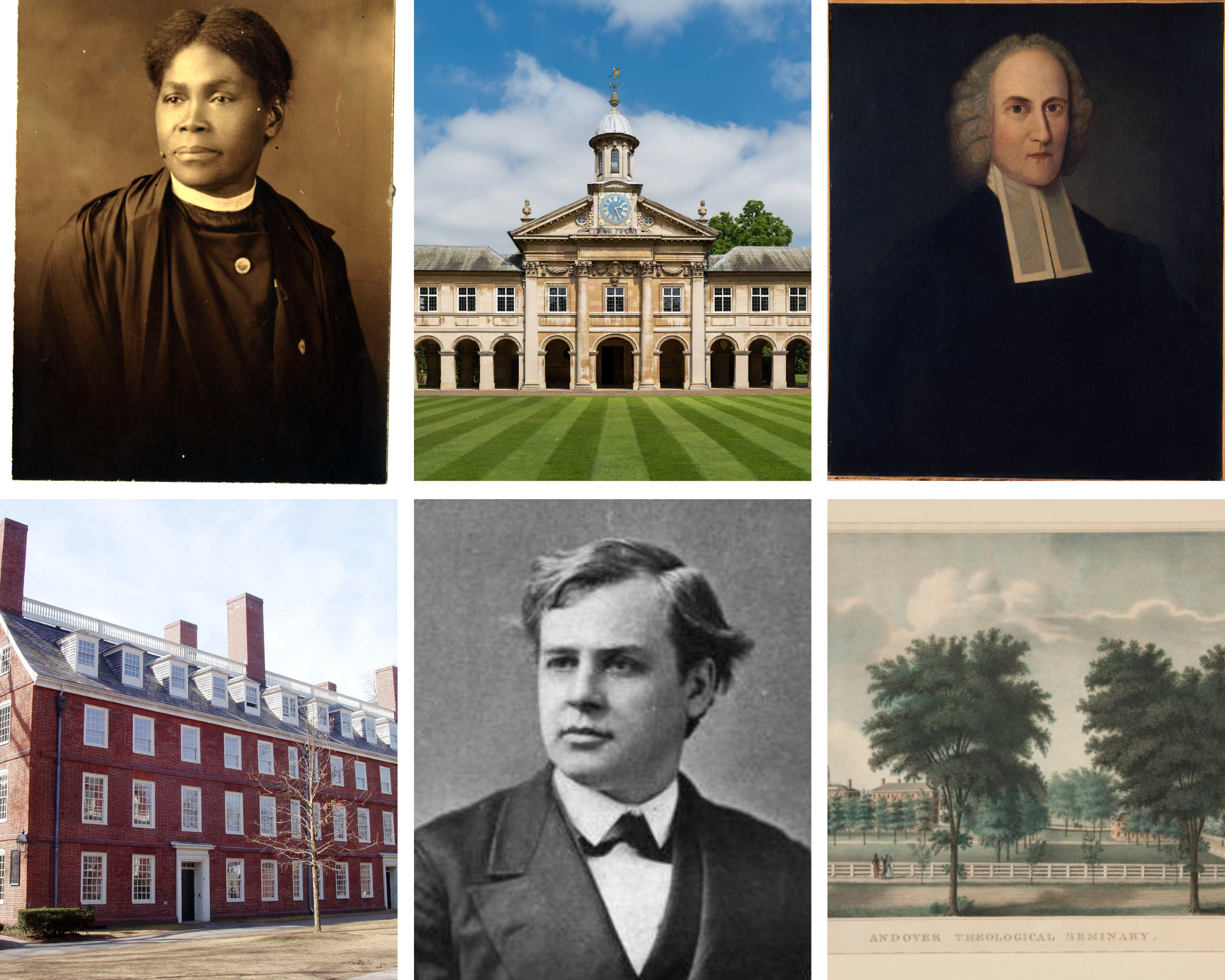
History of Theological Education and Ministry Training in New England
From Harvard College to Bible institutes meeting in churches, Boston and New England have a long history of innovation in theological education and ministry training. The successes and failures of schools in the past can help shape and inspire a new vision for training men and women for gospel ministry.
Emmanuel Gospel Center
New Beginnings: A History of Innovations in Protestant Theological Education and Ministry Training in New England
by Rudy Mitchell, Senior Researcher, Applied Research
Boston and New England have long pioneered innovative models for training pastors, Christian workers, and missionaries, exerting national and international influence on theological education. While some trends in this region have followed cultural and philosophical influences away from biblical orthodoxy, others have strongly supported world evangelism and church growth. By examining the enduring strengths of New England’s innovative approaches, one can discern key principles to guide the future of theological education in Greater Boston, ensuring it remains both adaptive and impactful.
The Days Before Harvard: Theological Education of Boston’s Early Pastors
Understanding the educational background of Boston’s early church leaders offers insight into their approach to differing views and how they designed Harvard College’s program. All first-generation Puritan pastors in Boston attended English universities, and most of the first-generation Boston-area pastors studied at Cambridge University, followed by some pastoral experience in England. (See the Appendix for a list of early Boston-area church leaders along with the education and ministerial training they received.)
The first three leaders of Harvard all attended colleges at Cambridge University. Nathaniel Eaton and Charles Chauncey attended Trinity College, and Henry Dunster attended Magdalene College. Although Boston-area pastors attended several colleges at Cambridge University, a number of influential leaders, including John Wilson, John Cotton, Thomas Hooker, and John Harvard, attended Emmanuel College, founded in 1584 to train young men for the Protestant ministry. It had become an influential center of Puritan education. Cambridge University, therefore, became a fertile seedbed for the growth and education of a large cohort of future New England pastors and leaders.
Laurence Chaderton, a key figure in the Puritan movement, was the Master of Emmanuel College from 1584 to 1622, during which time almost all of the Boston-area graduates of Emmanuel attended. The pastors of the First Churches of Boston, Cambridge, and Charlestown all studied at Emmanuel College. A few pastors, namely the early pastors of the First Church of Dorchester, studied at Oxford University, which was quite similar to Cambridge University at this time. Typically, these early clergy also held a Master of Arts degree, which was conferred on holders of the Bachelor of Arts degree from Cambridge and Oxford after a period of three years, without any further prescribed coursework. Although students, such as John Cotton, spent additional time studying or teaching at the university, others mostly pursued independent study while serving in a parish, since there was no strict residential requirement.
“Boston and New England have long pioneered innovative models for training pastors, Christian workers, and missionaries, exerting national and international influence on theological education.”
The methods of learning at Cambridge were later followed by Harvard. These included lectures, recitations, disputations, declamations, formal sermons, meetings with tutors, and private study. All the formal parts of this education took place in Latin. Students also learned Greek and sometimes Hebrew for Old Testament study.
At Cambridge University, the lectures were organized around questions and articles, with topics and subtopics arranged in a hierarchy of ideas. Public lectures were delivered in the Old Schools,1 and private lectures were given in the colleges. Lecturers were expected to give four lectures a week (although some seemed to be negligent in this).2 The public lectures included theology, medicine, and civil law, among other subjects. Biblical studies, Greek and Latin classics, and mathematics were emphasized. “Lecturers in language, philosophy, dialectics, and rhetoric were held to five lectures per week.”3
Student recitations were oral exercises in which students recited memorized material from texts or previous lectures, translated texts, or explained and defended interpretations. Disputations were informal and formal debates between students. The formal debate sessions lasted four hours, Monday through Friday, during Lent, and were full of ritual, rules, and traditions. Each student was required to participate in four formal debates for the B.A. degree. Students also had to give “declamations” or set speeches in Latin. It was expected that these would exhibit good style and draw quotations from the Greek and Latin classics.

Emmanuel College, Cambridge, England (DAVID ILIFF via Wikimedia Commons. License: https://creativecommons.org/licenses/by-sa/3.0/)
Students would keep notebooks called “Commonplace Books” with their selection of quotations and information on various subjects. Ministerial students would also deliver “Clerums,” formal sermons preached to the clergy on set days. Tutors played an important role in the educational system, providing academic and moral guidance and oversight.
A Cambridge education in this period “was dialectical, Aristotelian, and highly systematized. It was concerned with logic, logical formulations, and disputations.”4 This led to an eagerness “to divide truth from error” and to win debates with adversaries.5
One can see how the elements and tendencies of this educational background carried over to Boston, where disputations on doctrine and Christian practice were common. This educational experience also shaped Puritan leaders’ planning when they developed Harvard College. Some of the strengths of this education were its preparation of students to study the Bible in the original languages, to engage in clear and effective reasoning, and to speak in public.
A Theological School for the Commonwealth: Harvard College (later Harvard Divinity School)
Harvard was established to make sure New England had a well-educated clergy. In 1636, Harvard was founded to “advance learning and perpetuate it to posterity: dreading to leave an illiterate ministry to the churches, when our present ministers shall lie in the dust.”6
Henry Dunster, a graduate of Emmanuel College, Cambridge University, became president in 1640 and developed a course of study adapted from his alma mater. Since instruction and discourse were in Latin, students were required to know Latin before admission. They could prepare for college through private tutoring or at one of the early Latin schools: Boston Latin School (1635), Charlestown School (1636), Mather School in Dorchester (1639), Roxbury Latin School (1645), or Cambridge Latin School (1648).
Greek and Hebrew studies were emphasized in the first two years by daily classes. The purpose of this rigorous language study was to enable students to study the classics and exegete Scripture. The overall curriculum was still centered on the Trivium (grammar, logic, rhetoric) and the Quadrivium (arithmetic, geometry, music theory, astronomy), along with a focus on biblical studies and theology (using The Marrow of Theology by William Ames as a text).

Massachusetts Hall, Harvard University, built in 1720 (Daderot via Wikimedia Commons)
In the first two years, students studied basic mathematics and ethics, as well as logic, using the textbook The Dialectics by Peter Ramus, and rhetoric, using examples from Cicero and Quintilian, to prepare for “declamations” (set speeches in Latin). As they advanced to their third and fourth years, students studied Calvinistic theology, natural philosophy, moral philosophy, and metaphysics. They engaged in weekly “disputations” (debates), prepared sermons, and studied some practical theology.7
Once the first college building was completed, teachers and students lived together, sharing meals, prayers, and recreation. Although there were fewer tutors or teachers, the teaching methods were similar to those at Cambridge University, with disputations, lectures, daily recitations, declamations, and discussions with tutors. Students were expected to engage in daily prayers and devotions, and to learn the catechism.
“After God had carried us safe to New England and we had builded our houses, provided necessaries for our livelihood, reared convenient places for God’s worship, and settled the civil government: One of the next things we longed for and looked after was to advance learning and perpetuate it to posterity; dreading to leave an illiterate ministry to the churches, when our present ministers shall lie in the dust.”
By 1654, Harvard had 50 students. Further ministerial preparation took place after students received their Bachelor’s degrees. “A few students remained at Harvard to read for the Master’s degree, while most apprenticed with local ministers,” and continued independent study. “About half of Harvard students entered the ministry until about 1720.”8
In 1805, Henry Ware was chosen as the Hollis Professor of Theology, signaling a shift toward Unitarianism and theologically liberal views at Harvard. Since the Hollis Professorship of Theology was a key influential position, this was a watershed moment. This change played a role in the founding of Andover Theological Seminary and in the establishment of other later seminaries. In 1816, Harvard Divinity School became a separate school of the university.
Carrying the Torch: Yale College
In 1701 the Collegiate School, known as Yale College after 1718, in Connecticut was founded with a clear purpose: “The founding, suitably endowing & ordering of a Collegiate School within his Majesties Colony of Connecticut wherein Youth may be instructed in the Arts & Sciences who through the blessing of Almighty God may be fitted for Publick employment in both Church and Civil State.”9
.jpg)
Divinity College at Yale before 1870 (Wikimedia Commons)
Ten ministers, led by James Pierpont, took the initiative in bringing the plan to found Yale to the general assembly of Connecticut. They were given funding and the authority to direct its affairs. All but one of these ten founders of Yale were Harvard graduates. During the first several years under the leadership of the Rev. Abraham Pierson, students met together at his church, and instruction was not unlike pastoral mentoring taking place elsewhere during the eighteenth century.
Once the school was firmly established, the early curriculum followed Harvard’s curriculum of the latter 1600s and emphasized theology, the biblical languages, and Bible study. In its early years, Yale was largely focused on training ministers, and even later, when it broadened its focus, the school still trained many influential pastors and theologians: “Whereas almost three-quarters of the early graduates entered the ministry, that proportion fell to around one-half from the 1720s onward.”10
“By examining the enduring strengths of New England’s innovative approaches, one can discern key principles to guide the future of theological education in Greater Boston, ensuring it remains both adaptive and impactful. ”
Those influencing the founding of the college were interested in maintaining the pure Calvinism of the earlier Puritans, since some believed Harvard was becoming liberal in its theology. However, in the decades to follow, Yale would be influenced by revivals and new intellectual currents from England and elsewhere. Jonathan Edwards, a very influential graduate (1720), was a key leader in the First Great Awakening, and Lyman Beecher (1797) was a leader in later revivals in Boston. Jonathan Edwards’ grandson, Timothy Dwight, served as President from 1797 to 1817. His talented and spiritual leadership led to major growth of the college, curriculum improvements, spiritual revival, and influential theological movements, such as the New Divinity and New England Theology under Nathanael Taylor.
A separate Theology Department, which later became Yale Divinity School, was founded in 1822, and Nathaniel Taylor became the professor of theology.
A Broader Table: Brown University
In 1764, Brown University was founded as Rhode Island College. Although the school was open to students of any religious belief, the Philadelphia Association of Baptist Churches had appointed Baptist minister the Rev. James Manning to be President, and Baptist leaders revised the Rev. Ezra Stiles’ draft of the charter for Rhode Island College to ensure Baptists had majority control of the school’s governing bodies.
_2.jpg)
University Hall at Brown University (Wikimedia Commons)
While the college was not designed specifically to train ministers, 43 of its early graduates did become pastors.11 In the early decades, Latin was the common language in most classes and discussions. While theology was not specifically taught, future ministers benefited from Brown’s emphasis on public speaking, orations, and composition. Other parts of the curriculum relevant to their ministerial preparation included logic, Greek and New Testament study, moral philosophy, rhetoric, and general philosophy.12 The educational methods included recitations from texts, lectures, preparing and delivering orations, and disputations (debates) on various theses. Most of the students ate and lived together in the college hall with the tutors and were required to attend morning and evening prayers in the chapel. This learning environment contributed to a sense of community.
A More Personal School: Pastoral Mentoring in New England
Although some mentoring of young prospective pastors occurred throughout New England’s history, this mode of ministerial training seemed to flourish especially after these early colleges were founded and before the establishment of graduate seminary programs such as Andover Theological Seminary.
New England Christian leaders, such as Jonathan Edwards, provided a model of mentoring young graduates in their homes and churches. Typically, when students who felt called to ministry graduated from college, they would seek to study personally with a prominent pastor who would take in a few students to mentor and guide in their further training for the ministry. For example, in 1736, Joseph Bellamy came to study theology with Edwards and live in the family household. Other students followed Bellamy in the Edwards’ household, including Samuel Hopkins in late 1741. Through their study of theology under Edwards, both Bellamy and Hopkins would later become very influential in New England.
.jpg)
Jonathan Edwards by Henry Augustus Loop (1831-1895) after Joseph Badger (Princeton University Art Museum, Public Domain)
This method of study also enabled the students to grow spiritually and learn from the example of their mentor and his wife in handling family life and practical church concerns. When Hopkins was spiritually dejected, Mrs. Sarah Edwards encouraged him, and her “counsel and example in his early spiritual formation had a lasting impact… Hopkins also admired her ‘excellent way of governing her children,’ bringing them to obey cheerfully… Jonathan also showed the greatest calmness as well as the greatest firmness in his discipline, and as ‘a consequence of this, they revered, esteemed, and loved him.’”13 This personal interaction and observation of mature Christians in daily life could be invaluable.
Students mentored in this holistic way received much more than academic information. The Rev. Joseph Bellamy, after settling into a pastorate in Bethlehem, Connecticut, in turn started mentoring many future pastors using questions on theology, evening discussions, and talks. His students would write papers on the questions, and he would respond with corrections or critiques. He had his students give sermons, and they would receive feedback on how to improve. Bellamy strongly encouraged the spiritual life of his students and discussed the joys and trials of ministry with them. Students could observe the pastor in his pastoral duties and could help perform various services in the church. Bellamy served in this way in the latter 1700s and likely had the second-largest number of students of any pastor.14
“This method of study also enabled the students to grow spiritually and learn from the example of their mentor and his wife in handling family life and practical church concerns.”
Others, like the Rev. Smalley, one of Bellamy’s students, followed a similar pattern of ministerial training. One of the Rev. Smalley’s 30 students was Nathanael Emmons, who became an influential proponent of the New Divinity system of theology and mentored nearly 90 students over the years in Franklin, Massachusetts.15 Several of the other prominent pastoral mentors of the period from 1750 to 1810 included the Rev. Samuel Hopkins, the Rev. Timothy Dwight, the Rev. Titus Barton, the Rev. Joseph Lathrop, Dr. Charles Backus, and Dr. Asahel Hooker.16
The pastoral mentoring process had some limitations, including time constraints due to the teacher’s pastoral responsibilities, limited access to books, and the limits of the pastor’s teaching ability and educational background. Nevertheless, this method of ministry training was very important during the period discussed, and has some very valuable elements for any time period.
The Beginnings of the Modern Seminary: Andover Theological Seminary
As Unitarianism gained increasing influence at Harvard and in New England churches in the early 1800s, orthodox Congregationalist leaders grew concerned about the future of sound ministerial training. The appointment of Henry Ware, a Unitarian, as Hollis Professor of Theology at Harvard in 1805 proved to be a watershed moment, prompting several prominent church leaders to pursue the founding of a new school committed to Calvinistic, biblical orthodoxy. Just as Harvard, Yale, and Brown had each been founded in response to a perceived need for faithful Christian education, so this new institution would arise from a similar conviction, and would go on to become the prototype for scores of seminaries founded across America over the next two centuries.
In Andover, Massachusetts, in association with Phillips Academy, the kind of pastoral training that had been flourishing under ministers such as Jonathan Edwards was supported by a scholarship fund. The Rev. Jonathan French mentored groups of students from 1797 to 1808. The Phillips family, who founded Phillips Academy in 1778, planned for the school to teach orthodox Christian doctrine and promote piety and virtue. Although the academy was only a preparatory school, its campus would, in a few decades, become host to Andover Theological Seminary.
The Academy’s first principal was Dr. Eliphalet Pearson. He later became Professor of Hebrew and then interim President of Harvard in the early 1800s. He was opposed to the growing liberal theological and Unitarian movement; therefore, when Henry Ware, a Unitarian, was appointed Professor of Theology at Harvard, Pearson resigned. He returned to Andover and helped spearhead a group seeking to establish a new Calvinistic, orthodox school to train ministers. This Founders Group working in Andover included the Rev. Jedidah Morse, a Charlestown pastor; Mr. Samuel Abbot, a wealthy potential donor; Mrs. Phoebe Phillips and her son, John Phillips, who committed to fund two buildings; Samuel Farrar, a lawyer; the Rev. Jonathan French; and several others.

Andover Theological Seminary by J. Kidder (1813-1823) (Yale University Art Gallery, Public Domain)
Meanwhile, a second group, led by Dr. Samuel Spring of the North Congregational Church in Newburyport, had developed a vision for an orthodox ministry training school. Dr. Spring and potential theology professor, Leonard Woods, had gathered the support of three wealthy “Associate Donors”: Moses Brown, William Bartlett, and John Norris. After lengthy negotiations involving theological differences, financial arrangements, and authority structures to ensure doctrinal fidelity, the two groups merged their vision into one new school at the Phillips Academy campus—the Andover Theological Seminary. Dr. Woods, who was friends with both Dr. Spring and his former teacher, Dr. Pearson, served as a bridge-builder, bringing the two groups to agreement, and was appointed to the important post of Professor of Theology.17
Founded in 1807, this was the first Protestant graduate-level seminary in America, and it became the prototype for scores of seminaries founded over the next 200 years.
Andover’s approach was a three-year curriculum for college graduates who would live on campus and learn from highly qualified professors in residence. Initially, donors even sponsored and built houses for specific professorships. Early professors besides Dr. Leonard Woods included Moses Stuart (Biblical studies, languages, and exegesis), Dr. Edward Dorr Griffin (rhetoric and preaching), the Rev. Ebenezer Porter (preaching), and Dr. Pearson (natural theology). Students studied Hebrew and Greek, hermeneutics, and the principles of exegesis under Dr. Moses Stuart, who “had a powerful influence in promoting in our country the study of the Scriptures in their original languages.”18 Other subjects included church history, theology, preaching, rhetoric, and pastoral duties.
“Just as Harvard, Yale, and Brown had each been founded in response to a perceived need for faithful Christian education, so this new institution would arise from a similar conviction, and would go on to become the prototype for scores of seminaries founded across America over the next two centuries.”
Professors experimented with various teaching methods, including recitations followed by the teacher’s explanations, lectures with free discussions and questions, and writing papers.19 However, Dr. Woods believed the most valuable learning time was the weekly Wednesday evening discussion. These were open discussions on theology and “all matters relating to Christian experience, duty, and comfort.” Moses Stuart led these with Dr. Woods, who said, “We poured out the feelings of our hearts to our beloved students.”20
Professors met with students one-on-one to talk about their spiritual lives, encouraged them to read devotional works, and, in general, placed a high priority on their spiritual growth. Once each term, the seminary would hold a fast with prayer and discussions. Professors such as Dr. Woods would take walks with students, or take groups of six at a time home to a social meal with their families after prayers in the chapel. The professors’ homes were on or near the campus and thus accessible. Andover’s new three-year training process provided extended time for deeper study, access to library resources, housing, and classrooms, while still facilitating personal interaction with the best teachers, who could now devote nearly full-time to their students.
Over the school’s first 38 years, it admitted 1,500 students, and its graduates became pastors, missionaries, and educators, some of whom became presidents, leaders, or founders of other colleges.21 During those early years, the faculty and students played a central role in the founding of the pioneering American Board of Commissioners for Foreign Missions (ABCFM) and in the growing American missionary movement. America’s first foreign missionaries were ordained at Tabernacle Congregational Church in Salem, Massachusetts, on February 16, 1812. Those five pioneering missionaries—Adoniram Judson, Gordon Hall, Luther Rice, Samuel Nott, and Samuel Newell—were all graduates of Andover Theological Seminary, which had nurtured their missionary zeal and supported their efforts to establish the ABCFM.
The First Baptist Seminary: Newton Theological Institute
Under the leadership of Dr. Thomas Baldwin, pastor of the Second Baptist Church of Boston, area Baptists founded the Massachusetts Baptist Education Society in 1814 to help financially support students called to the ministry. This organization advanced the idea that Baptist pastors would benefit from more education.
By May 1825, the Society’s executive committee and Baptist ministers were ready to found a theological school “where the combined powers of two or three or more men of experience, and men of God, can be employed in instructing and forming the manners and habits and character of pious young men for the work of the ministry.”22 From this statement, one can discern the important goal of students’ spiritual formation, not just intellectual instruction.
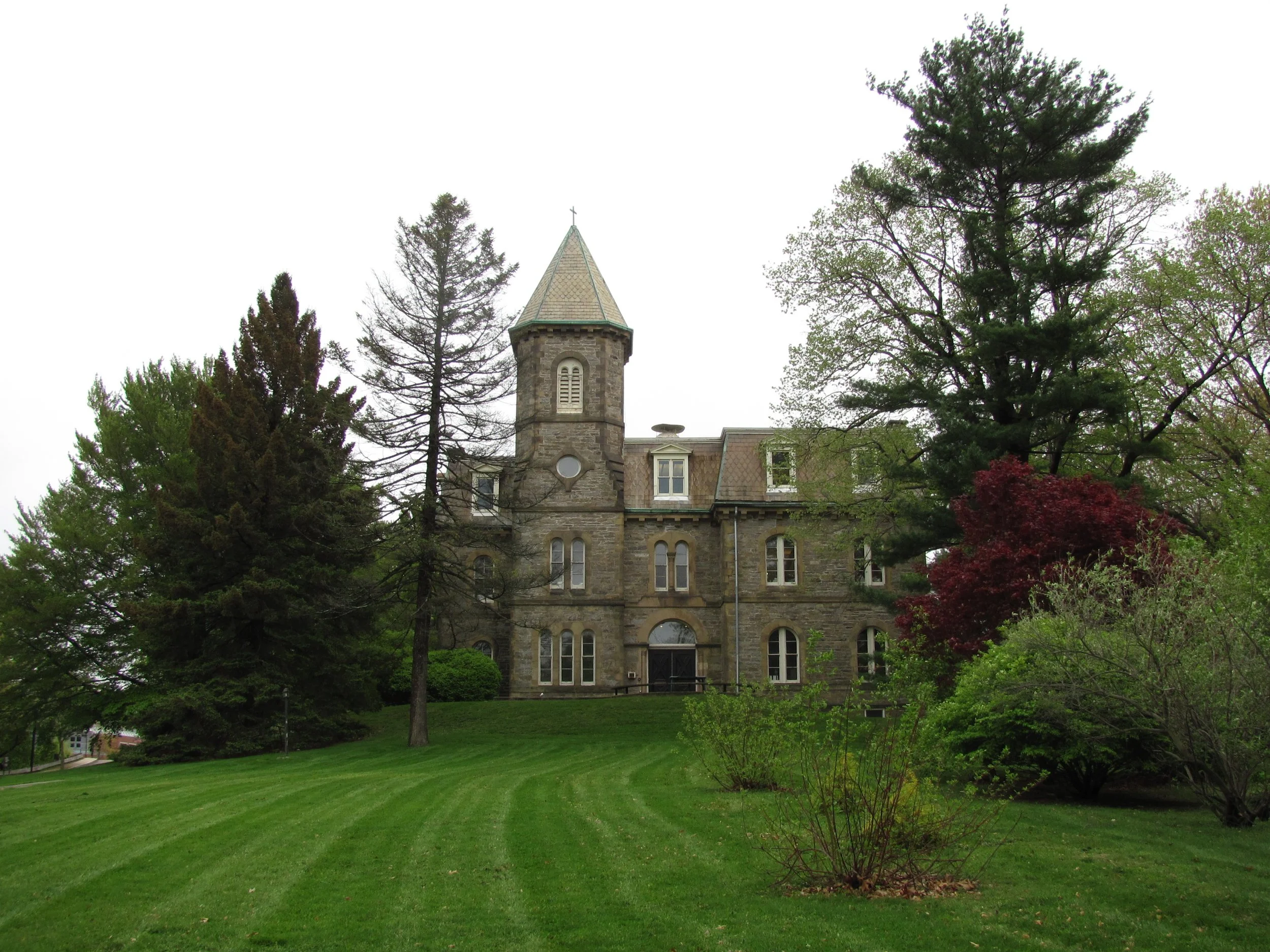
Colby Hall, Newton Theological Institute (John Phelan, 2011, via Wikimedia Commons)
The planning committees moved rapidly, purchasing the 85-acre Peck Estate on a hill in Newton for the campus and hiring the Rev. Irah Chase as Professor of Biblical Theology. The Rev. Chase, who was a graduate of Andover Theological Seminary, began teaching in November at the new Newton Theological Institute.23 The following year, Dr. Henry J. Ripley, also an Andover graduate (1819), became Professor of Biblical Literature and Pastoral Duties. Since both professors were products of Andover, it is not surprising that this new school developed a three-year curriculum and educational process somewhat like that of their alma mater.
The students took courses in Biblical literature, church history, Biblical theology, and pastoral duties. One of the central goals for students was to understand the Bible clearly and teach its lessons effectively. “Newton became the first freestanding post-graduate Baptist seminary to be established in North America, the first Baptist graduate school of any kind.”24 In 1849, Dr. Alvah Hovey began his long and influential career as a professor and later as President of Newton. He continued to defend orthodox theology throughout the last half of the nineteenth century.
A New School for Congregationalists: Hartford Theological Seminary
As the New England Theology was gaining ground, an opposing Pastoral Union group of “Old Calvinist” pastors in Connecticut founded the Theological Institute of Connecticut in East Windsor in 1834. This seminary would later move to Hartford and change its name to Hartford Theological Seminary.
_(14784222972).jpg)
Hosmer Hall, Hartford Theological Seminary (1889) (Wikimedia Commons)
Like Andover, the new seminary, led by Dr. Bennet Tyler, offered a three-year course of study for college graduates. They came from several different states, but were often graduates of Amherst College, Williams College, and Yale College. Tuition, rooms, and the library were free, and by 1843, the school building had rooms for 52 students. By that year, 62 students had graduated and gone on to become pastors or missionaries.25 Although students studied several subjects each year, including church history, the first year emphasized Biblical interpretation, the second year systematic theology, and the third year sacred rhetoric and pastoral theology.26
Ministry Training for Methodists: Boston University School of Theology
In the late eighteenth and early nineteenth centuries, most Methodist pastors did not attend a college or seminary for ministerial training. They basically learned on the job with some guidance from the presiding elder, or district superintendent, and in some places, a list of books to read.
Although Wesleyan College (later University) of Middletown, Connecticut, was originally Methodist, it was not founded to specifically train pastors: “From 1831 to 1870 Wesleyan was a local evangelical enterprise promoted by a town that provided land and buildings and by a few Methodist clergy and laymen who extracted very limited support from a denomination having only a nascent interest in higher education.”27 The school did have Christian objectives, and undoubtedly some Methodist leaders did receive a general college education there, although not specialized ministerial training.
After several years of debate, Methodist leaders at a convention in Boston in 1839 were ready to propose the establishment of a theological school. This group approved the establishment of a seminary and decided to work with and support a new program to be part of a school in Newbury, Vermont. Under the leadership of Osmon C. Baker, the program, called the Newbury Theological Institute, trained pastors until 1847.
“It is intended that the student shall do something more than merely memorize text-books. Whenever a branch of science or a portion of a branch, can be best taught by a fresh original handling...the professors will not shrink from the additional labor which such methods necessarily involve.”
At that time, the students, finances, and library were moved to Concord, New Hampshire, and under a new charter, the school became independent with the new name, Methodist General Biblical Institute (also called the Concord Biblical Institute). John Dempster, a former missionary, became the President, while Osman Baker moved and continued to teach.28 Even in this early period, the seminary had some emphasis on missionary work.29 With the rapid growth of Methodism and the development of a more robust program, the Institute flourished in Concord over the next 20 years.
In 1867, the school relocated to Boston and reorganized as the Boston Theological Seminary. Meanwhile, over the next few years, Methodist leaders were working to establish Boston University, with plans to create four professional and graduate schools. In 1871, the seminary became part of the new university as its first professional school.
The school was designed to have a regular three-year ministerial course and also a three-year course in missionary work. The curriculum had four major sections: exegetical theology, historical theology, systematic theology, and practical theology. Exegetical theology included the study of Hebrew, Greek, exegesis, and archaeology. Special studies were offered in various other languages—including Spanish and Asian languages for missions—plus music, German theology, and medical topics for missions.

Boston University Marsh Chapel (John Phelan, 2011, via Wikimedia Commons)
Teachers were encouraged to use fresh and varied methods of instruction: “It is intended that the student shall do something more than merely memorize text-books. Whenever a branch of science [knowledge] or a portion of a branch, can be best taught by a fresh original handling in the way of written lectures, or by free exposition, or by black-board exercise, or by a Socratic method, or by a combination of any or all of these, the professors will not shrink from the additional labor which such methods necessarily involve.”30
Spiritual life was encouraged by three prayer meetings each week and morning and evening devotions. Missions was generally emphasized, and students were encouraged to attend the meetings of the Missionary Association. The school was a pioneer among seminaries in admitting women. Anna Howard Shaw and Helen Magill White were among the early graduates in the 1870s.
The school was innovative in setting up two divisions. The First Division would only accept students who had earned a B.A. degree. After three years of coursework and passing an examination, they would receive a Bachelor of Divinity degree. The Second Division opened access to students who had completed a secondary education but, for various reasons or due to age, had not been able to earn a B.A. degree. These students could receive a diploma after completing the course of study.
While the Boston University School of Theology followed the basic pattern of other three-year residential seminaries, it introduced several innovative policies and was the first theological seminary of the Methodist Episcopal Church. By 1871, it was the largest seminary in New England. Much later in the 1930s, the seminary, along with the university, moved from Beacon Hill to a new campus along the Charles River.
Ministry Beyond the Pulpit: New England Deaconess Training School
In 1889, the Methodists initiated another training effort, the New England Deaconess Training School (and Deaconess House), located at 45 East Chester Park in Boston’s South End. This was part of a larger movement, beginning in Europe, to revive the formal lay ministry of deaconesses. The program was designed to educate young women for missionary and service work, especially in the city. Mary E. Lunn, the first superintendent, also advocated for a hospital, and in 1896, she founded New England Deaconess Hospital in a South End brownstone.
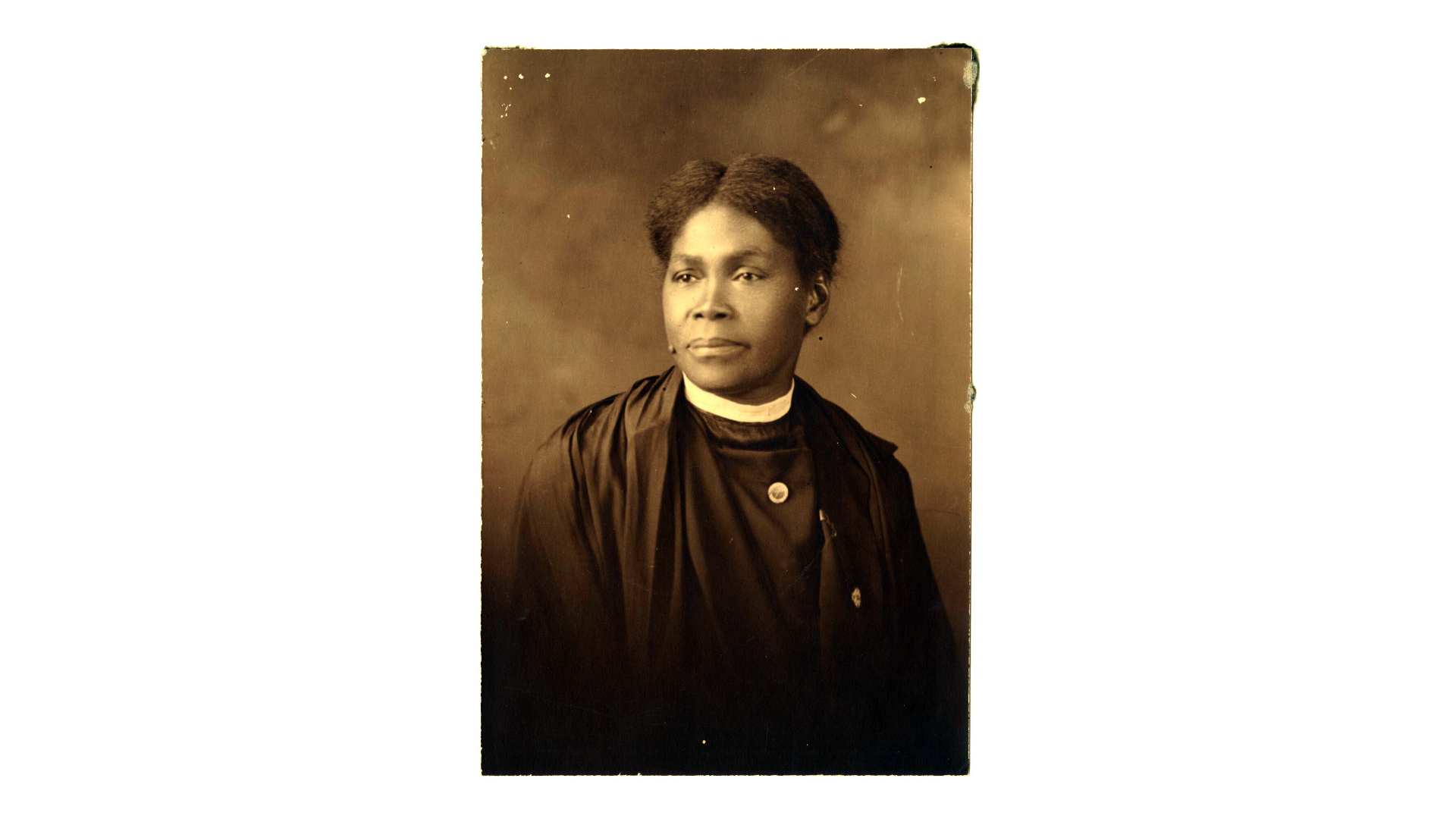
“Anna E. Hall, circa 1900”. Anna E. Hall Collection. Atlanta University Center Robert W. Woodruff Library. http://hdl.handle.net/20.500.12322/auc.119:0077.
The training school offered courses in theology, church history, and other subjects, including sociology in cooperation with Simmons College after 1900. The school’s first African American graduate, Anna E. Hall, became a missionary educator in Liberia, serving for 24 years as director of a girls’ school and home.31 Other deaconesses went on to study at the nursing school associated with the hospital.
In 1918, the Deaconess Training School became a part of Boston University and was renamed the School of Religious Education and Social Service.
An Episcopal School for the Commonwealth: Episcopal Theological School (later Episcopal Divinity School)
In the early nineteenth century, New England Episcopalians who felt called to ministry would often go to New York City to study at the General Theological Seminary. However, a significant number of these students stayed in the New York area after graduation rather than returning to serve in New England. This situation led church leaders in Boston to start planning an Episcopal seminary in Massachusetts. Beginning with a resolution passed at the 1831 Massachusetts Episcopal Convention, several efforts were made over the years to found a theological school in the Boston area.
These efforts failed to bear fruit due to a lack of finances until, finally, in 1867, Benjamin Tyler Reed, a wealthy Boston businessman, committed $100,000 to endow what soon became the Episcopal Theological School.32 He did not want the school to become embroiled in controversies that might arise within the denomination, and so he sought to make it independent of the diocese, its conventions, and its bishop, in part by establishing its trustees as laymen only. They would control temporal matters, while the faculty would have some oversight of theological and academic matters.
Reed called on Dr. Francis W. Wharton, rector of St. Paul’s Church of Brookline, who was a brilliant legal expert, to draw up the school’s constitution, develop its organization, and help gather the first group of faculty. Wharton is thus often considered the founder of the Episcopal Theological School. With his legal background, he emphasized apologetics and Christian evidences in the curriculum. He also taught liturgics, polity, canon law, homiletics, and pastoral care.

Episcopal Theological School, Cambridge, Massachusetts (Wikimedia Commons)
The Rev. John Seeley Stone, a leader among evangelicals and one of the great preachers of the time, became the dean and professor of systematic divinity (theology). Other courses in the three-year curriculum included Hebrew, Greek, Biblical interpretation, and church history.33 Dean Stone “opposed what he called the ‘rationalistic tendencies of our time,’ and meant the school to stand as a bulwark of evangelicalism.”34
At the end of the school year, professors conducted oral public examinations of students in all classes. During the first 10 years, a chapel and other buildings were completed at the Brattle Street campus in Cambridge. The student body at that time averaged only about 12 to 15 students. The school followed the general pattern of other seminaries in establishing a three-year, post-college course on a residential campus, but its governing structure was innovative for a seminary serving a specific denomination but outside its power structure.
To the Ends of the Earth: The Bible School and Missionary Training Institute Movement
After experiencing urban revivals in 1842, 1857-58, and 1877-78, Boston contributed to other growing Christian movements, including the Foreign Missions movement, the Holiness or Higher Life movement, and the Faith Cure or Divine Healing movement. Involvement in these movements led to the founding of other training schools. In addition to Boston University School of Theology, other schools with an emphasis on foreign missions included the Faith Training College and the Boston Missionary Training Institute (eventually named Gordon College after its founder).

Charles Cullis (Wikimedia Commons)
One major new development in Christian ministry training was the Bible School and Missionary Training Institute Movement. These schools offered a shorter course of study, emphasizing Bible study, practical ministry training, and spiritual life to prepare men and women for home and foreign missionary work. Although short-lived, the Boston Faith Training College could be considered the pioneering American institution in what became the Bible College Movement (followed by A.B. Simpson’s Missionary Training Institute [Nyack College] in 1882; Moody Bible Institute in 1886-7; and the Boston Missionary Training Institute [Gordon College] in 1889). A. B. Simpson and his institute became very influential in the Bible College Movement and in missions. Simpson, in turn, was greatly influenced by Charles Cullis. “Probably the American educator with the greatest influence upon A. B. Simpson was Dr. Charles Cullis…. Cullis’ Faith Training College convinced Simpson that he could successfully launch a missionary training college.”35 D. L. Moody was also influenced by his Boston contacts and background.
Faith Training College
Dr. Charles Cullis, the leader of a large network of ministries in Boston, the U.S., India, and China, founded the Faith Training College on Beacon Hill in 1875. The Faith Training College described its efforts as “…to train for Christian work such consecrated men and women as are unable to pursue an extended and thorough course of theological study in the various denominational seminaries, but are desirous of fitting themselves for the highest efficiency in the widening fields of lay activity, which the Head of the Church is wonderfully opening in our age, such as Sunday School instruction, Christian Association work, Bible exposition, exhortation, lay preaching, lay evangelism, home and foreign missionary labor” (1875 Annual Report, p. 90).
The Bible college model emphasized a shorter course of study, a focus on the Bible, practical ministry, witness, and missions. Faith Training College was co-educational and tuition-free.
Dr. Cullis, the founder, had also founded the Boston Consumptives (tuberculosis) Home, the Spinal Home, and the Cancer Home, and he was the most prominent national leader of the Divine Healing Movement. Among the college’s teachers was William Boardman, Professor of Christian Life. He ministered throughout Europe and England, spreading the Higher Life Movement and, along with Robert Pearsall Smith, inspiring the Keswick Conference movement. Boardman was a graduate of Yale University and Lane Theological Seminary. Daniel Steele, a graduate of Wesleyan University, was professor of systematic theology, and A. B. Earle was professor of revivalism, a position that was probably unique to Faith Training College. Another professor was Charles Wesley Emerson, the founder of Emerson College.
Boston Missionary Training Institute: Gordon College and Gordon Divinity School (later Gordon-Conwell Theological Seminary)
In 1889, Dr. A. J. Gordon, pastor of the Clarendon Street Baptist Church in Boston, founded the Boston Missionary Training Institute to help train Christian men and women for missionary work. Pastor Gordon had been inspired by Dwight L. Moody’s months-long evangelistic campaign next door to his church in 1877 and by the great London conference on foreign missions in 1888.
In 1884, Dr. and Mrs. Grattan Guinness, the directors of the Livingstone Inland Mission in the Congo, had offered the mission to the American Baptist Missionary Union. The Rev. A. J. Gordon became the Chairman of the Executive Committee of the Missionary Union and, therefore, was concerned with the Congo mission’s great need for funds and missionary candidates in the late 1880s.36 This was one of the major motives for starting a missionary training school with a short course of studies. Dr. Guinness and the Rev. M. R. Deming of the Bowdoin Square Tabernacle church were also involved in founding the school. Dr. Gordon’s work with Dr. Guinness also would have familiarized him with the details and model of the East London Missionary Training Institute that Guinness had founded in 1873.
“Although many students came from the Boston area, some came from as far away as Kansas, Indiana, and New York.”
Pastor Gordon, like Dr. Cullis at the Faith Training College, saw a need to provide access to ministry training for those who could not follow the rigorous academic path of four years of college and three years of seminary. The school charged no tuition, admitted both men and women, and did not require a high school or college education to enroll. The normal course of study was two years, with classes during the day, but the school also began offering public evening lectures and Bible courses taught by Dr. James M. Gray and Rev. F. L. Chapell. These were attended by hundreds of people.37 Dr. Gray became one of the best-known Bible teachers in the country and later served as President of Moody Bible Institute. Dr. Chapell taught the majority of the core courses during the school’s first ten years.
In some of the early years, women students were in the majority in the daytime classes. Women were also serving as teachers and administrators. Mrs. Maria Gordon served as secretary, treasurer, and a teacher at the school. Other women teachers were Dr. Julia Morton Plummer, Mrs. Susan G. Gray, Mrs. Chapell, and Miss Blanche Tilton.
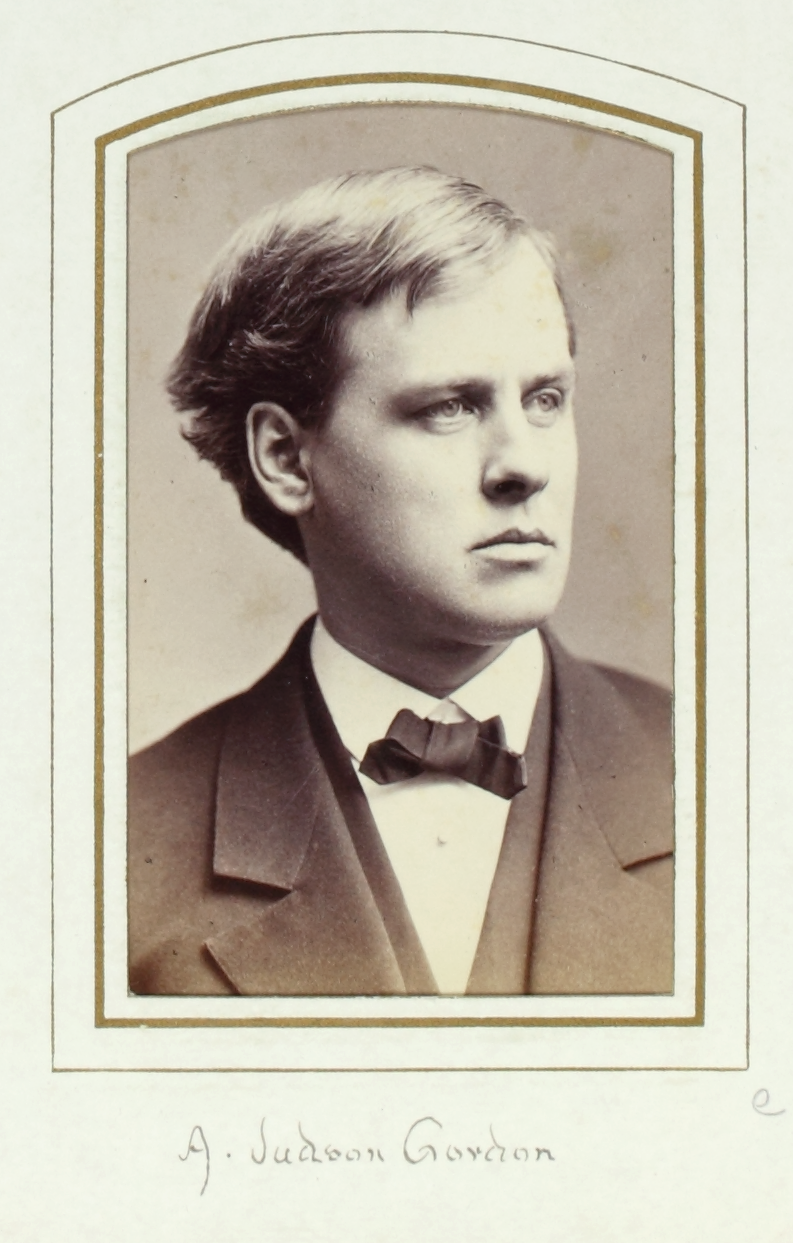
Adoniram Judson Gordon (Library Company of Philadelphia)
The school emphasized the consecrated spiritual life of the students with daily devotional periods, including testimonies and singing. The classes included theology, missions, comprehensive Bible study, music, and Christian Life and Service. Students engaged in extensive practice in Christian work at Clarendon Street Baptist Church, in their own churches, or in the city.
Although many students came from the Boston area, some came from as far away as Kansas, Indiana, and New York. In the first ten years, 500 students attended day classes, 1,000 to 1,500 benefited from evening classes, and about 50 students, both men and women, went on to serve in foreign missions. Also, 50 students became pastors, and at least 200 went into other Christian work.38
The school went through a number of name changes, but the most noteworthy was when it became the Gordon Bible and Missionary Training School after the death of Dr. A. J. Gordon in 1895. In 1927, the state legislature granted the school the authority to award graduate degrees, and, in 1931, the graduate theological course became the Divinity School of Gordon College. After a number of years in the Fenway area of Boston, the divinity school, followed by the college, moved to Wenham, Massachusetts, in the 1950s.
Multiplying Leaders: Boston Young Men’s Christian Association
In 1851, Boston leaders founded the first YMCA in America following the model of the London YMCA. Although this pioneering organization was never a formal ministry training school, it did have classes and, in various ways, trained young men in biblical study and practical ministries.
In its early decades, the Boston YMCA was clearly Christian and trained young leaders to go out to other towns and cities in Massachusetts and New England to start or support other YMCAs. An 1870 report states, “About 118 of the Associations [local YMCAs] in this country are in Massachusetts. Many calls are made for our young men to address public meetings, conventions, etc.”39 In this process, they also did evangelism, and the Boston YMCA was involved in many evangelistic activities and conventions.

YMCA, Berkeley St., Boston (Wikimedia Commons)
After the Civil War, the work was characterized by spiritual fervor, overflowing prayer meetings, and “quite a number of its members were reported as studying for the ministry.”40 Also, in 1885, a YMCA School for Christian Workers was started in Springfield, Massachusetts. It emphasized training YMCA leaders who would lead programs that nurtured the spirit, mind, and body. The school was also notable as the birthplace of basketball. In 1890-91, the name was changed to the International YMCA Training School, which later became Springfield College.
The education department in Boston also grew significantly in the late nineteenth century. Although many of the classes at the Boston YMCA were on practical subjects related to vocations and avocations, there were some Bible classes. By 1896-1898, the education department under Frank Palmer Speare became highly organized into an Evening Institute. The school grew rapidly and evolved, with state approval, in 1916, into Northeastern College, and, in 1922, into Northeastern University, which eventually became independent of the YMCA.
Holiness Unto the Lord: Eastern Nazarene College
Founded as part of the holiness movement in 1900, Eastern Nazarene College was initially called the Pentecostal Collegiate Institute and was located in Saratoga, New York. Lyman C. Pettit served as its first president. Within two years, it moved to North Scituate, Rhode Island. The original plan was to provide a liberal education and ministry training through a preparatory academy, a four-year college, and a seminary.
In the early years, the school was connected to the Association of Pentecostal Churches of America (APCA), a network of Wesleyan-holiness churches. When the APCA merged into the Church of the Nazarene denomination in 1907, the institute became affiliated with the Nazarenes. In 1918, the school was chartered with degree-granting authority in Rhode Island and was renamed Eastern Nazarene College. The following year, it moved to Quincy, Massachusetts, to be near Boston and Harvard University.

Gardner Hall, Eastern Nazarene College (Wikimedia Commons)
The school sought to integrate Christian perspectives across its liberal arts and business curriculum. Although the original plan included a seminary, it was not until 1938 that the school started a graduate program in theology. In 1946, the school was offering 30 courses in Bible and Theology.41 In 1964, the theology program was replaced by a master's degree program in religion.
The college closed in May 2025 due to financial challenges and a declining student body.
Providence Bible Institute / Barrington College
The roots of Barrington College trace back to Bethel Bible Training School in Spencer, Massachusetts, founded in 1900 by the Baptist pastor, Essex W. Kenyon, who “wanted to train young Christians in the Bible and Christian service.”42 Some students went on to be missionaries overseas.
In 1923, the school moved to Dudley, Massachusetts, and was renamed the Dudley Bible Institute. The following year, after Kenyon resigned, Howard W. Ferrin became president (Ferrin’s mentor, Paul Rader, was nominal president in absentia). In 1929, under his leadership, the school moved to Capitol Hill, Providence, Rhode Island, and was renamed Providence Bible Institute.

Barrington College, Barrington, Rhode Island (Kenneth C. Zirkel via Wikimedia Commons)
Ferrin came to the school after serving in a multifaceted ministry with Paul Rader at the Chicago Gospel Tabernacle. He had experience in urban ministry, evangelism, and using radio. Thus, Providence Bible Institute became an urban school within a sphere of multiple ministries that Ferrin developed. In addition to a radio ministry, traveling student music groups, conferences, and evangelistic outreach events, he developed evening Bible schools in Boston, New York City, and Providence.
In 1950, the school purchased a 150-acre campus in Barrington, Rhode Island, for $331,001, winning the bid by one dollar. From 1950 to 1960, the school operated two campuses in Providence and Barrington, but then consolidated its work at Barrington and was renamed Barrington College. In 1985, the college merged with Gordon College and sold the campus to Zion Bible Institute.
Pentecostal Fire: Zion Bible Institute / North Point Bible College
In 1924, the Rev. Christine A. Gibson founded a Pentecostal missionary training school in East Providence, Rhode Island. In its early years, the school was called The School of the Prophets, but in 1936, it was renamed Zion Bible Institute. The school has had an emphasis on studying the Bible and preparing young people for Pentecostal ministry.
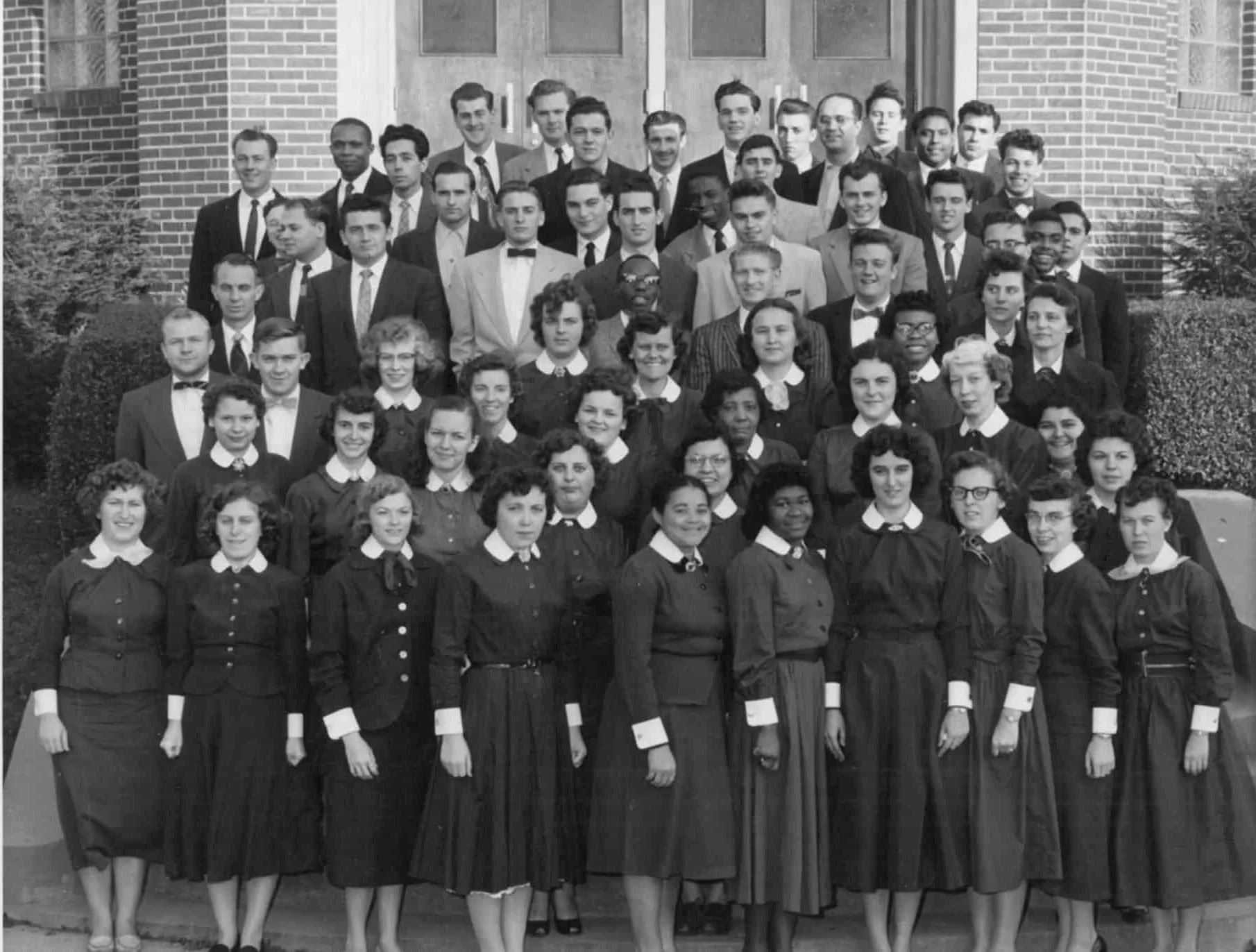
Northpoint Bible College
When Barrington College merged with Gordon College in 1985, Zion bought their former campus. Then, in the summer of 2008, the school relocated to the former campus of Bradford College in Haverhill, Massachusetts. David Green, a wealthy Christian businessman, had purchased the campus the year before and gave it to the college for $1.00, along with funds for renovations.43
Bradford College, founded as Bradford Academy in 1803, helped educate a number of missionaries in the nineteenth century, including Ann Hasseltine Judson (Burma), John Taylor Jones (Thailand), and Lucy Goodale Thurston (Hawaii). In 2011, after the move to the Bradford campus, the school received approval to offer a Master of Arts in Practical Theology program that focuses on church planting and revitalization, as well as spiritual formation.44 Later, in 2013, Zion officially changed its name to Northpoint Bible College and Graduate School.
Rooted in the City: Theological Training for the People
Boston also developed models for training lay leaders of city churches. Two of these models were the Boston Evening School of the Bible and the Center for Urban Ministerial Education, which has trained both lay leaders and pastors. In addition, many smaller Bible Institutes have been held in local churches, offering courses in Spanish or English.
Boston Evening School of the Bible
In the fall of 1942, Harold J. Ockenga, Pastor of Park Street Church, and Howard W. Ferrin of Providence Bible Institute established the Boston Evening School of the Bible. “It was their desire to help Christian people in all churches, irrespective of denomination, to secure a thorough and systematic knowledge of the Bible and practical training for various kinds of Christian work.”45
Classes were held at Park Street Church from November to April, and classes followed a six-year curriculum. Classes thoroughly covered the Bible and also included Christian doctrine, church history, archaeology, evangelism, teacher training, and other ministry topics. The first dean was Dr. Morton C. Campbell, a former professor at Harvard Law School.46 Major goals of the School of the Bible were to address biblical and theological illiteracy and to prepare laypeople for church ministry. The average pastor was overburdened and could not provide the depth and range of training needed.47 This was not just an enhanced Sunday School, but a major educational program involving hundreds of students and excellent teachers. The successor to this was called the Boston Center for Christian Studies.
“The principles of Theological Education by Extension were developed and adapted in some programs during this period.”
During the period from the 1960s through the 1980s, American cities were experiencing many changes and challenges, and Christians responded with new models of theological education. Cities were going through racial transition, facing many problems, and receiving an influx of new immigrants from Latin America, the Caribbean, and Asia. Theological education needed to be contextualized to address urban issues, scheduling constraints of bi-vocational leaders, language needs, and other concerns.
The principles of Theological Education by Extension (TEE)48 were developed and adapted in some programs during this period. Several urban training efforts used experiential, action-reflection, or action-training models of urban education. Some examples of urban ministry training programs of that time were the Urban Training Center for Christian Mission (UTC, Chicago), New York Theological Seminary programs led by Bill Webber, Seminary Consortium for Pastoral Education (SCUPE, Chicago), the Center for Urban Theological Studies (CUTS, Philadelphia), and the Center for Urban Ministerial Education (CUME, Boston).
Center for Urban Ministerial Education (CUME): The Boston Campus of Gordon-Conwell Theological Seminary
Following a 1969 merger of Gordon Divinity School and Conwell School of Theology, the merged school sought ways to train leaders for urban ministry. In the early 1970s, the Rev. Michael Haynes of Twelfth Baptist Church, Doug Hall of the Emmanuel Gospel Center (EGC), and Dr. Stephen Mott of Gordon-Conwell helped establish an Urban Middler Year program enabling residential students to spend their middle year in the city of Boston with classes at EGC and field education in various city churches or ministries. However, this effort was not meeting the need for in-service training of Black and Hispanic leaders already in ministry.
Therefore, when Eldin Villafane was hired in 1976, he began developing what became the Center for Urban Ministerial Education (CUME). CUME was a new model for linking with a seminary rather than a college, and for its many methods of contextualizing theological education for urban leaders. As Villafane studied various programs, he incorporated ideas from action-reflection biblical models, urban Bible institutes, and Theological Education by Extension.49 “Extension education,” Villafane said, “is not merely a matter of conducting the same classes with the same educational methods and the same teachers in a different location.”50
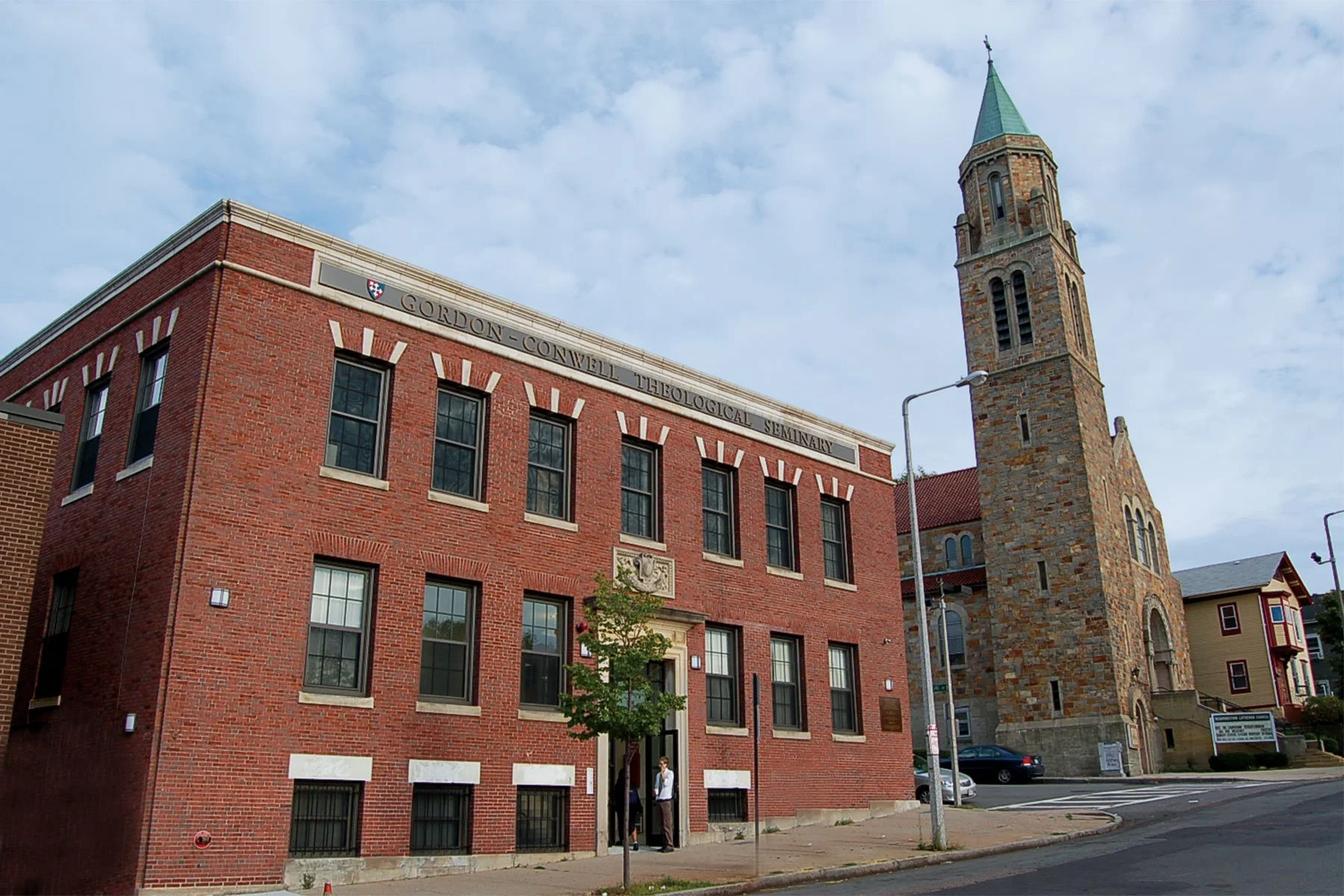
Center for Urban Ministerial Education, Roxbury, Massachusetts
The CUME program provided access to an accredited seminary education for Christian pastors and lay leaders who were called, gifted, and experienced in ministry, but, for socio-economic and other reasons, had been excluded from a residential program. Even if they could have attended a traditional seminary program, it would not have been contextualized to the needs of their urban and immigrant church ministries. The CUME program was located in the heart of the city,51 with a diverse administration and faculty, and offered contextualized coursework in Spanish, Portuguese, French (for Haitians), and English. All classes were held in the evenings and on weekends when bi-vocational leaders could attend. To reduce economic barriers, tuition was reduced, and scholarships were available. The student body included leaders from many backgrounds, including Hispanic, Black, Brazilian, Haitian, Chinese, Korean, and Anglo churches of many denominations. This had the added benefit of promoting interchurch fellowship and ministry collaboration.
By 1983, the program had 177 students from 104 churches, and in subsequent years it more than doubled in size. Over the years, CUME has offered certificate and diploma programs, as well as M.A., M.R.E., and Master of Divinity programs, along with Mentored Ministry for the practical application of coursework. The program has declined greatly in recent years, but much can be learned from the ideals and principles of this model of theological education.
Conclusion: A Legacy of Innovation
These individual stories of the beginnings of new schools and training programs for Christian leaders reveal educational innovations and adaptations that can inspire current theological education initiatives. In founding Harvard University in 1636, Boston-area leaders used the curricula and learning methods they were familiar with from Cambridge and Oxford Universities. However, as they developed the first institution of higher education in North America, they pioneered adaptations to the new environment and their limited resources. They also paved the way for other early colleges. The strengths of the English and early American collegiate forms of ministry training included active learning of effective reasoning, rhetoric, and logic; an emphasis on biblical study with training in Greek and Hebrew; and residential community life with tutors and devotional practices.
Especially in the eighteenth and early nineteenth centuries, pastoral mentoring was a vital form of ministerial education. This method had some limits tied to the pastor’s limited time, library, breadth and depth of knowledge, and teaching ability. However, pastoral mentoring had strengths, including personal interaction with the pastor and the opportunity to observe how he handled the trials and joys of life and ministry. Students also received practical instruction and opportunities to preach and serve in ministry with coaching and feedback. This personalized education was also well-suited to encourage personal spiritual growth.
The founders of Andover Theological Seminary (1807) sought to maintain traditional Reformed theology and biblical views in their training. However, Andover was innovative in establishing the first American model of a three-year, graduate-level residential seminary. This model was the prototype for scores of later theological seminaries. The strengths of this form of training, at least ideally, included providing distinguished professors with a depth of knowledge who could teach general and specialized courses and interact with students in class and out of class. In this type of residential seminary, students and faculty could focus much of their time on studies with less distraction. A residential seminary could provide a good library, residences, classrooms, and community life to encourage spiritual growth.
“These individual stories of the beginnings of new schools and training programs for Christian leaders reveal educational innovations and adaptations that can inspire current theological education initiatives.”
In the late nineteenth century, cities and their churches were rapidly growing, and the need for foreign missionaries increased as that movement expanded. These factors led to a need for new forms of accessible ministry training for those who couldn’t afford a full college and graduate seminary program. In response, Boston-area leaders founded some of the early Bible and missionary training institutes and schools. These were the early prototypes of the Bible School Movement. Faith Training College and the Boston Missionary Training Institute (later called Gordon College) offered shorter courses of study, with the advantage of preparing lay leaders and missionaries with free tuition, with low entry requirements, and with more practical, Bible-centered courses. Courses were offered for both men and women and were sometimes available in the evening. Several other area schools started as similar Bible institutes and, over the years, evolved into Christian colleges.
More recently, Boston-area leaders have developed ministry training programs contextualized to the changing city with its various social needs and growing immigrant populations. Gordon-Conwell Theological Seminary developed the Center for Urban Ministerial Education. Among its strengths were accredited classes in several languages, held in the evenings and on weekends to accommodate lay leaders and bi-vocational pastors, and reduced tuition costs. The model drew on principles of Theological Education by Extension and action-reflection learning to integrate ministry preparation with ongoing involvement in the students’ own churches. Course content and topics were designed to address the needs of the urban context. This innovative program also became a model for other cities.
While other models could be cited, these examples demonstrate how Boston and New England schools have built on the past and created new innovations in theological education. These efforts in training pastors, lay leaders, and missionaries have had a worldwide impact and paved the way for the founding of many other ministry training schools.
Appendix
The following list identifies the education and ministerial training of early Boston-area church leaders.
-
John Wilson, pastor at First Church of Boston, studied at Kings College at Cambridge (BA, 1610) and Emmanuel College at Cambridge (MA, 1613). Wilson served as a chaplain to prominent families, was a pastor in Sudbury, England, and also studied law.
John Cotton, teacher at First Church of Boston, studied at Trinity College at Cambridge (BA, 1603) and Emmanuel College at Cambridge (MA, 1606). Cotton studied another five years at Cambridge after 1606 and received a BD in 1613. He studied under William Perkins, was pastor of St. Botolph’s in Boston, England, and was a friend of Thomas Hooker at Emmanuel College.John Wheelwright studied at Sidney Sussex College at Cambridge (BA, 1614/1615; MA, 1618). Wheelwright served as vicar of Bilsby, England, and was a friend of John Cotton and Oliver Cromwell. In 1636, Wheelwright came to Boston but was later banished, along with his sister-in-law, Anne Hutchinson, in the Antinomian Controversy. He preached at the First Church of Boston on occasion but was not the pastor. He served in Wollaston/Quincy; Exeter, New Hampshire; and Wells, Maine.
-
John Maverick, pastor at First Church of Dorchester, studied at Exeter College at Oxford (BA, 1599; MA, 1603). Maverick served as a curate to his uncle Radford Maverick and then as rector of the church at Beaworthy, both in Devonshire, England.
John Warham (or Wareham), pastor at First Church of Dorchester, studied at St. Mary Hall at Oxford (BA, 1614; MA, 1618). He pastored churches in Crewkerne and later at St. Sidwell's, Exeter, England. In 1635, he led many of his Dorchester congregation to Windsor, Connecticut.
Richard Mather, pastor at First Church of Dorchester, studied at Braesnose College at Oxford. Mather attended Oxford but did not graduate. He served as a master of two English schools and preached at Toxteth, Liverpool. He was the father of Increase and grandfather of Cotton Mather. -
Thomas Welde, pastor at First Church of Roxbury, studied at Trinity College at Cambridge (BA, 1613-1614; MA, 1618). Welde served as a minister in Terling, Essex, England, and as the first pastor at Roxbury from 1632 to 1641. He was an overseer of Harvard College and helped produce the Bay Psalm Book. He later returned to England.
John Eliot, pastor and teacher at First Church of Roxbury, studied at Jesus College at Cambridge (BA, 1622). Eliot served as a teacher with Thomas Hooker in England. Known as the “Apostle to the Indians,” he came to Boston in 1631. -
Thomas Hooker, pastor at First Church of Cambridge (Newton), studied at Emmanuel College at Cambridge (BA, 1608; MA, 1611). Hooker held the Dixie Fellowship at Cambridge until 1619. He served in St. George’s Church in Escher and St. Mary’s Church in Chelmsford, England. In 1636, he led a group to found Hartford, Connecticut.
-
Thomas James, Sr., pastor at First Church of Charlestown (1632-1634), studied at Emmanuel College at Cambridge (BA, 1615; MA, 1618). James served in Charlestown from 1632 to 1634 and then pastored in New Haven, Connecticut, before returning to England.
Zechariah Symmes, pastor at First Church of Charlestown (1634-1671), studied at Emmanuel College at Cambridge (BA, 1620/1621; MA, 1624). Symmes served as a teacher at St. Antholin, London, and as rector of Dunstable, Bedfordshire, before emigrating to Boston in 1634.
John Harvard, assistant minister at First Church of Charlestown, studied at Emmanuel College at Cambridge (BA, 1631/1632; MA, 1635). Harvard arrived in Charlestown in 1637, where he became a teacher and assistant pastor. He donated his library and half his estate to the college that was later named for him.
-
George Phillips, pastor at First Church of Watertown, studied at Caius College at Cambridge (BA, 1613; MA, 1617). Phillips served as vicar of Boxted, Essex, England. He came with Saltonstall to found Watertown in 1630, and later became an overseer of Harvard.
-
John Allin, pastor at First Church of Dedham, studied at Caius College at Cambridge (BA, 1615; MA, 1619). Allin served as curate of the parish church at Wrentham, England. He came to Dedham in 1637 and founded the First Church of Dedham.
-
Roger Williams, pastor at Church at Plymouth and First Church of Salem, studied at Pembroke College at Cambridge (BA, 1627). After he was banished from Massachusetts in late 1635, Williams began Providence Plantations in 1636. In 1638, he formed the First Baptist Church in America. He was first a Puritan and then a Separatist.
-
Nathaniel Eaton, first master and teacher at Harvard, studied at Trinity College at Cambridge (BA), the University of Franeker, and the University of Padua (MD, PhD, 1647). Eaton studied under the Puritan theologian, William Ames, at the University of Franeker. He was (Head)Master at Harvard after its founding from ~1637 to 1639.
Henry Dunster, president of Harvard and interim pastor of First Church of Cambridge, studied at Magdalene College at Cambridge (BA, 1631; MA, 1634). Dunster served as curate at the Church of St. Mary the Virgin, Bury, England. He was the first president of Harvard (1640-1654) and pastored the First Church of Scituate, Massachusetts.
Charles Chauncy, second president of Harvard and pastor at Plymouth and Scituate, Massachusetts, studied at Trinity College at Cambridge (BA, 1614; MA, 1617). Chauncy served vicar of St. Mary’s Church, Ware, and vicar of Marston St. Lawrence, Northamptonshire, England. He served as president of Harvard from 1654 to 1672.
Footnotes
- The “Old Schools” were groups of older buildings used for university-wide lectures, disputations, libraries, and administration. They were distinct from the colleges where students and tutors lived, ate, and listened to what were called private lectures.↩︎
- William T. Costello, The Scholastic Curriculum at Early Seventeenth Century Cambridge (Cambridge, Mass.: Harvard Univ. Press, 1958), 12.↩︎
- Ibid., 13.↩︎
- Ibid., 8.↩︎
- Ibid.↩︎
- New England’s First Fruits (London: R.O. and G.D. for Henry Overton, 1643).↩︎
- New England’s First Fruits., for the 1642 Statutes of Harvard, and see also the 1655 “Lawes of the Colledge published publiquely before the Students of Harvard Colledge,” Colonial Society of Massachusetts, accessed 9 Dec. 2025, https://www.colonialsociety.org/node/429. These statutes give more details than the above summary about the studies and requirements in the early years of Harvard.↩︎
- Roger Geiger, “The First Century of the American College: 1636-1740,” in The History of American Higher Education: Learning and Culture from the Founding to World War II (Princeton, N.J.: Princeton University Press, 2016), 7.↩︎
- Preamble to the Collegiate School’s First Charter, approved by the General Court of the Colony of Connecticut (the Connecticut legislature), 1701.↩︎
- Geiger, 11.↩︎
- Walter C. Bronson, The History of Brown University 1764-1914 (Providence, R.I.: Brown University, 1914), 129.↩︎
- Ibid., 103.↩︎
- George M. Marsden, Jonathan Edwards: A Life (New Haven, Conn.: Yale University Press, 2003), 250-51.↩︎
- Leonard Woods, History of the Andover Theological Seminary (Boston: James R. Good, & Company, 1885), 19-20.↩︎
- Ibid., 21-22.↩︎
- Ibid., 19-24.↩︎
- Leonard Woods, History of the Andover Theological Seminary (Boston: James R. Good, & Company, 1885).↩︎
- Ibid., 153.↩︎
- Ibid., 160-161.↩︎
- Ibid.↩︎
- Ibid., 137.↩︎
- Board of Trustees, Newton Theological Institute: A Sketch of Its History (Boston: Gould and Lincoln, 1866), 6-7.↩︎
- Ibid., 11.↩︎
- Margaret Bendroth, A School of the Church: Andover Newton across Two Centuries (Grand Rapids, Mich.: Eerdmans, 2008), 29.↩︎
- General Catalogue of the Theological Institute of Connecticut at East-Windsor, 1843 (Hartford: Elihu Geer, 1843), 14.↩︎
- Ibid., 15.↩︎
- David B. Potts, Wesleyan University: 1831-1910 (Middletown, Conn.: Wesleyan University Press, 1992), xv.↩︎
- “A People’s History of the School of Theology,” Boston University website, https://www.bu.edu/sth-history/graduates/concord-students/.↩︎
- Ibid., https://www.bu.edu/sth-history/alphabetical-index/albert-l-long-1857/. (For example, Albert L. Long, class of 1857, became a missionary to Bulgaria.)↩︎
- Annual Report of the School of Theology of Boston University, 1873. (Cambridge, Mass.: Riverside Press, 1873), 18.↩︎
- “Anna E. Hall, (1870-1964): Long-Time African-American Missionary Educator In Liberia,” Boston University School of Theology, History of Missiology, March 2020, https://www.bu.edu/missiology/2020/03/02/hall-anna-e-1870-1964/.↩︎
- James Arthur Muller, The Episcopal Theological School: 1867-1943 (Cambridge, Mass.: Episcopal Theological School, 1943), 8.↩︎
- Ibid., 31-32.↩︎
- Ibid., 45.↩︎
- Phillip Douglas Chapman, “The Whole Gospel for the Whole World: A History of the Bible School Movement within American Pentecostalism, 1880-1920” (Ph. D. thesis, Michigan State University, 2008), 105-6.↩︎
- Nathan R. Wood, A School of Christ (Boston: Halliday Lithograph, 1953), 11-12.↩︎
- Ibid., 25.↩︎
- Ibid., 27. (Only about 150 students completed the full two-year course of study.)↩︎
- L. L. Doggett, History of the Boston Young Men’s Christian Association (Boston: Young Men’s Christian Association, 1901), 43.↩︎
- Ibid.↩︎
- Donald Dewart, Educational Institutions of New England (Boston: Bellman Publishing Company, 1946), 127.↩︎
- Gordon College, “The History of Barrington College,” https://www.gordon.edu/about/history/barrington-history, accessed 14 Jan. 2026.↩︎
- “Northpoint History,” Northpoint College Student Handbook (2020-2021), 5. https://northpoint.edu/wp-content/uploads/2021/01/2020-2021-Student-Handbook.pdf.↩︎
- Currently this degree program offers concentration on pastoral leadership, preaching and spiritual formation.↩︎
- Garth M. Rosell, Boston’s Historic Park Street Church (Grand Rapids, Mich.: Kregel Publications, 2009), 142.↩︎
- Ibid., 42-43.↩︎
- Ibid., 44.↩︎
- These principles were illustrated with the analogy of a fence: (1) local weekly group meetings served as the fence posts; (2) independent self-study often using programmed texts between group meetings served as one fence rail; and (3) immediate practical ministry application served as the second fence rail.↩︎
- Eldin Villafane and Rudy Mitchell, “The Center for Urban Ministerial Education,” Urban Mission 2, no.2 (Nov. 1984):32.↩︎
- Ibid., 35.↩︎
- Some classes were also held in Lawrence, Springfield and New Bedford, Massachusetts.↩︎
Bibliography
“Anna E. Hall, (1870-1964): Long-Time African-American Missionary Educator in Liberia,” Boston University School of Theology, History of Missiology, March 2020, https://www.bu.edu/missiology/2020/03/02/hall-anna-e-1870-1964/.
Annual Report of the School of Theology of Boston University, 1873. Cambridge, Mass.: Riverside Press, 1873.
Bendroth, Margaret. A School of the Church: Andover Newton across Two Centuries. Grand Rapids, Mich.: Eerdmans, 2008.
Board of Trustees. Newton Theological Institute: A Sketch of Its History. Boston: Gould and Lincoln, 1866.
Bronson, Walter C. The History of Brown University: 1764-1914. Providence, R.I.: Brown University, 1914.
Chapman, Phillip Douglas. “The Whole Gospel for the Whole World: A History of the Bible School Movement within American Pentecostalism, 1880-1920.” Ph. D. thesis, Michigan State University, 2008.
Costello, William T. The Scholastic Curriculum at Early Seventeenth Century Cambridge. Cambridge, Mass.: Harvard Univ. Press, 1958.
Dewart, Donald. Educational Institutions of New England. Boston: Bellman Publishing Company, 1946.
Doggett, L. L. History of the Boston Young Men’s Christian Association. Boston: Young Men’s Christian Association, 1901.
Geiger, Roger. ”The First Century of the American College: 1636 -1740,” in The History of American Higher Education: Learning and Culture from the Founding to World War II. Princeton, N.J.: Princeton University Press, 2016.
General Catalogue of the Theological Institute of Connecticut at East-Windsor, 1843. Hartford: Elihu Geer, 1843.
Gordon College. “The History of Barrington College.” https://www.gordon.edu/about/history/barrington- history, accessed 14 Jan. 2026.
“Lawes of the Colledge published publiquely before the Students of Harvard Colledge,” 1655. Colonial Society of Massachusetts, accessed 9 Dec. 2025, https://www.colonialsociety.org/node/429.
Marsden, George M. Jonathan Edwards: A Life. New Haven, Conn.: Yale University Press, 2003.
Morison, Samuel Eliot. The Founding of Harvard College. Cambridge, Mass.: Harvard University Press, 1935.
Muller, James Arthur. The Episcopal Theological School: 1867-1943. Cambridge, Mass.: Episcopal Theological School, 1943.
New England’s First Fruits. London: R.O. and G.D. for Henry Overton, 1643.
“Northpoint History,” Northpoint College Student Handbook: 2020-2021. https://northpoint.edu/wp-content/uploads/2021/01/2020-2021-Student-Handbook.pdf
“A People’s History of the School of Theology, Boston University website, https://www.bu.edu/sth-history/graduates/concord-students/.
Potts, David B. Wesleyan University: 1831-1910. Middletown, Conn.: Wesleyan University Press, 1992.
Preamble to the Collegiate School’s First Charter, approved by the General Court of the Colony of Connecticut (the Connecticut legislature), 1701.
Rosell, Garth M. Boston’s Historic Park Street Church. Grand Rapids, Mich.: Kregel Publications, 2009.
Villafane, Eldin, and Rudy Mitchell. “The Center for Urban Ministerial Education,” Urban Mission 2, no.2 (Nov. 1984):32.
Wood, Nathan R. A School of Christ. Boston: Halliday Lithograph, 1953.
Woods, Leonard. History of the Andover Theological Seminary. Boston: James R. Good, & Company, 1885.
Keywords
- #ChurchToo
- 365 Campaign
- ARC Highlights
- ARC Services
- AbNet
- Abolition Network
- Action Guides
- Activism
- Administration
- Adoption
- Aggressive Procedures
- Andrew Tsou
- Annual Report
- Anti-Gun
- Anti-racism education
- Applied Research
- Applied Research and Consulting
- Asking for help
- Ayn DuVoisin
- Balance
- Battered Women
- Berlin
- Bianca Duemling
- Bias
- Biblical Leadership
- Biblical leadership
- Black Church
- Black Church Vitality Project
- Book Recommendations
- Book Reviews
- Book reviews
- Books
- Boston
- Boston 2030
- Boston Church Directory
- Boston Churches
- Boston Education Collaborative
- Boston General
- Boston Globe
- Boston History
- Boston Islamic Center
- Boston Neighborhoods
- Boston Public Schools
- Boston-Berlin
- Brainstorming
- Brazil
- Brazilian
- COVID-19
- CUME
- Cambodian