
BLOG: APPLIED RESEARCH OF EMMANUEL GOSPEL CENTER

White Evangelicals’ Candid Talk About Race: 6 Takeaways
What happens when a group of white evangelical Christians get together for candid conversation about race issues? Here are six takeaways from a starter conversation on April 1.
White Evangelicals’ Candid Talk About Race: 6 Takeaways
by Megan Lietz
[Last month I posted A Word to White Evangelicals: Now Is The Time To Engage Issues of Race, a call to action for beginning a journey toward respectful and responsible engagement with issues of race. As an action step, I invited white evangelicals to join me for small group conversation on race. The gathering took place April 1, 2017 at EGC. Here’s what we learned together from the experience.]
With little more than a few key questions and a spark of hope, I wasn’t sure how this first conversation would go. Under a surprise April snowstorm, I wasn’t even sure who would show up. But I sensed that God was in this. Having done my part, I was trusting God to do his.
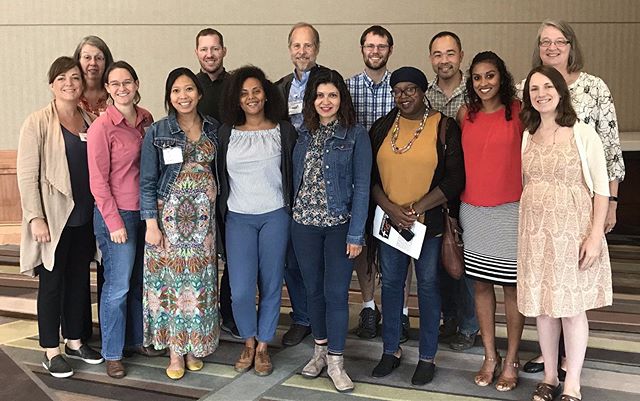
One by one, eight white evangelical Christians filtered in. Men and women of different ages, life experiences, and church backgrounds came to the table with varied levels of awareness about race-related concerns. Against cultural headwinds of complacency and fear, these eight were ready for an open conversation about race.
Stepping Into the River
To frame our time together, I invited each person in the group to use the image of a river to depict their journey toward racial reconciliation. It was my hope that by recalling our experiences together, we could help one another imagine pathways ahead and find the support to move forward.
As people shared parts of their journey, we heard six unique stories. One man’s engagement with race issues began in the 1960s through his observation of racial discrimination at his university and his subsequent positive reaction toward the leadership of the Black Power movement. This got him thinking and eventually led him to visit a black church. One woman began to seriously think about race only weeks before our gathering because of an eye-opening grad school course.
We then used our river-journeys to reflect together on three simple questions: With regard to our engagement in issues of race...
Where are we?
Where do we want to be?
What can we do to move forward?
Takeaways
As group members began to share their experiences wrestling with issues of race and culture, they did so with relief at the opportunity to speak openly. With a life-giving mix of humility and excitement, the group gave voice to the following shared insights.
1. We Remember A Time Before We Were Aware
Each white evangelical in the room remembered a time in their life before they were aware of the magnitude and significance of racial disparities today. As one participant put it, “I didn’t realize there was an issue. It is hard to know there are racial problems when living in racially homogeneous communities.”
Confronting basic, hard realities shifted their perspective, evidenced by comments such as these from various participants:
People of color are not treated the same as white people.
Ethnic injustice was an issue even in biblical times.
People make assumptions about people’s experiences and needs based on the color of their skin.
When people just go with the flow, they are unconsciously agreeing with what is going on.
2. We Have Personal Work To Do
The group broadly agreed on the need for white people to engage in personal learning and engage issues of race more effectively. One participant shared, “There are racist systems (that need to be addressed), but I also need to do a lot of [self-]work.”
Another, who became aware of the profound impact race has on people’s lives more recently, added, “Lack of knowledge keeps me from entering the conversation. I’m still learning, so I’m insecure.” A third participant asserted that white people need to do their learning and self-work both before and during their engagement across racial lines.
3. Story Sharing is Key
Many insights affirmed the power of story sharing to bring awareness and practical guidance. It is a helpful step for us to reflect on our own stories and be willing to be honest and vulnerable. It is essential to become good listeners, giving careful attention to the stories of our brothers and sisters of color. Some of our comments were:
White evangelicals have many things to learn from communities who look different from them.
We should share our own stories about our journey toward racial justice with our fellow white evangelicals.
We should take the posture not of “rescuers,” but of mutual learners.
Sharing our own story can impact others.
Engaging with white people and people of color who are both ahead of and behind us in the journey can be useful in understanding the self-work we need to do.
4. We Need More Skills to Do Hard Conversations Well
The group identified an obstacle in their work around race: limited skill for hard conversations. They attributed the problem to a lack of good models, especially within the white evangelical community, for listening, dialogue, and engaging conflict.
One participant said that white evangelicals are not good at engaging conflict. He went on to explain that, in his experience, people often announce their opinions in ways that shut down conversations rather than invite genuine dialogue. “When people are not listening and are argumentative, it’s difficult to have the conversations that propel people forward in their journey [toward racial reconciliation].”
5. We Need Brave Spaces
When discussing what these leaders would look for in a healthy conversation, they used words like “open,” “humble,” “honest” and “authentic.”
One participant observed, “Lack of [such spaces] keeps us locked in coasting mode or in the status quo.” Brave spaces to engage in uncomfortable conversation are needed for growth.
6. Growth Requires Ongoing Community
These white evangelicals were seeking brave spaces not just for conversation, but to walk with one another in community. One participant declared his need for a “community of inquirers… that address the current social tensions.”
Another added that single events, while helpful in sparking interest and fostering growth, are less effective in supporting lasting transformation. “We need continuity…There needs to be a group who is doing this work over a length of time.”
Pilot Cohort
With a shared longing to experience new ways of listening, dialoguing, and learning in community, the group committed to experiment together as a cohort for a time. The group agreed to use two upcoming meetings to discuss Debby Irving’s book Waking Up White. We will also attend a lecture with the author.
Through this pilot cohort in EGC’s new Race & Christian Community initiative, we aim to:
Create a space where the group can try, fail, learn, and grow.
Practice dialogue that nurtures respectful and responsible engagement around issues of race.
Take Action
Are you a white evangelical Christian interested in a similar, future cohort?
Do you have advice or resources that could help our cohort function more effectively?
Do you want to speak into the development of the Race & Christian Community initiative at EGC?
Please connect with us! We invite the insights of the community and are excited to see where the Lord may lead.
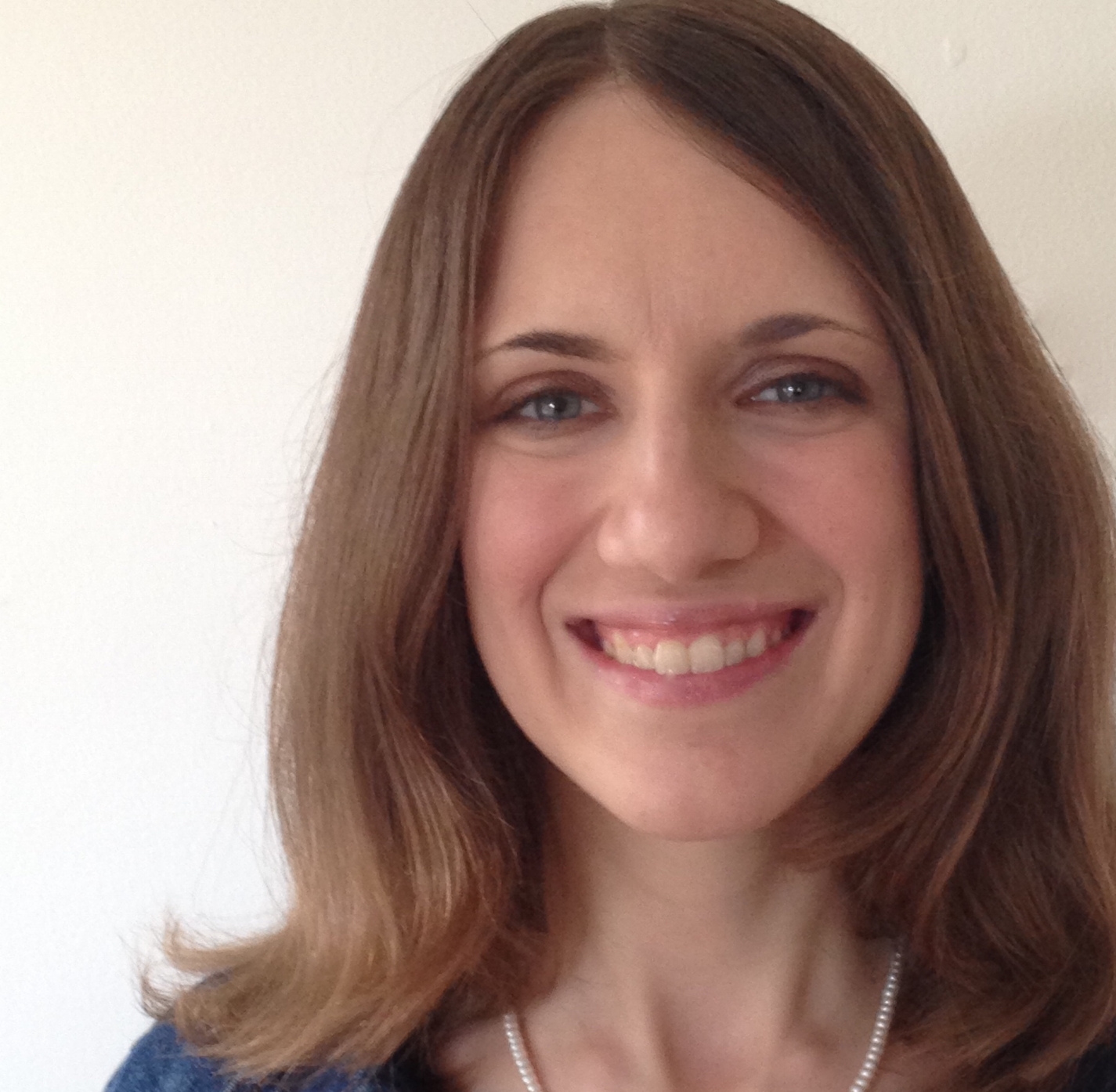
Megan Lietz, M.Div., STM, helps white evangelicals engage respectfully and responsibly with issues of race. She is a Research Associate with EGC's Race & Christian Communities ministry.





A Word to White Evangelicals: Now is the Time to Engage Issues of Race
We are at a critical moment in the history of our nation—a time not when new problems have arisen, but when old problems have been revealed. The violence against young Black men, the tension that inspired the killings of police officers, the division surrounding a heated election, and the exclusion of the Muslim community are just a few indicators that things are not well. How will we respond in our increasingly diverse nation as racial tensions flare across our land?

PERSPECTIVES
by Megan Lietz, ARC Research Associate
We are at a critical moment in the history of our nation—a time not when new problems have arisen, but when old problems have been revealed. The violence against young Black men, the tension that inspired the killings of police officers, the division surrounding a heated election, and the exclusion of the Muslim community are just a few indicators that things are not well.
How will we respond in our increasingly diverse nation as racial tensions flare across our land?
Like a doctor removes a bandage to reveal a festering wound, these national incidents are exposing deep-seated racial inequities. As a physician exposes a wound to provide treatment, so does exposing these inequities create opportunity for healing. How will we respond to this opportunity? In our choices, we are accountable to the Lord.
The Current Reality
The racial diversity of our nation is increasing. The US Census Bureau projects that by 2043 more than half of the nation will be people of color. We have already seen this shift occur in Boston when we became a “minority majority” city in 2000. Diversity is our future, and the future is indeed here.
With this diversity also comes division. Some division comes from the differences inherent in diverse cultures, such as disparate worldviews or languages. These types of differences are not inherently bad. Other divisions, however, happen because disparities exist between White people and people of color. These disparities have a profound impact on people’s daily lives and foster tension and fear.
Consider the racial disparities in education, health care, and financial well-being in Boston. In 2016, rates of graduation from the Boston Public School System in four years were 13 percentage points lower for Black students, and 15 percentage points lower for Hispanic students, than their White counterparts. In 2015, a 2011 health report found that, compared to White people, Black and Hispanic people in Massachusetts have higher rates of infant mortality, cardiovascular and circulatory system related deaths, and diabetes.
Most notably, in 2015 the median net worth for White families in the Boston area ($247,500) towered over that of Hispanic ($3,020 for Puerto Ricans, $2,700 for other Hispanics) and Black families ($12,000 for “Caribbean Blacks” and $8 for “U.S. Blacks”). Furthermore, there is little hope of this improving without significant change, as these national wealth gaps by race have remained relatively consistent for the last 50 years.
These inequalities shape the future ministry of the Church and invite White evangelicals to the work of racial reconciliation. The invitation is open. Our city isn’t waiting. Will we see the problem before us? Will we respond in a Christ-like way to the hurt and division across our land?
Stepping Up
I believe it is time for White evangelicals to step up in this moment of crisis and walk into the opportunity for conciliation it provides. As a White evangelical myself, I am choosing to step up. Neither my faith nor my conscience allows me to do otherwise.
“These inequalities shape the future ministry of the Church and invite White evangelicals to the work of racial reconciliation.”
I am stepping up by calling other White evangelicals to join me on a journey toward racial reconciliation, and I am committing to walking with them along the way. More specifically, I am developing an initiative at the Emmanuel Gospel Center called Race and Christian Community. I’m designing the initiative to meet White evangelicals where they are and help them take concrete steps to engage in racial issues respectfully and responsibly.
While my primary motivators for action are God’s Word (e.g. Eph. 2:11-14, John 17:20-23, Jer. 29:7) and the grave need, my desire to engage is also personal. There was a time when I was unaware of my race and privilege and culture, when I didn't know what God's Word had to say about the racism and division and discord that sullies our land. At that time, I had fellow Christians come alongside me as I began my own journey towards racial reconciliation.
Born and raised in a predominantly White, rural town, growing up I never imagined myself in multiracial ministry. It was not until I was immersed in communities of color during my college years that I wrestled with my own race and culture. It was not until then that I had considered how racial reconciliation related to my faith.
“I had fellow Christians come alongside me as I began my own journey towards racial reconciliation.”
As I reflect on my involvement in those early days, I recall my desire to help, my good intentions, my uncertainty about what to do, and my remarkable ignorance. At the same time I recall God’s faithfulness. He extended me grace and guided me, through the Spirit and the saints.
In this space I came to discover my culture and racial identity. I began to genuinely appreciate the cultures of others. My view of God expanded, and I began to more fully live out my faith.
Similar to how the Lord used others to lead me on my journey toward racial reconciliation, it is my hope that I can partner with the Lord to guide others who are starting out.
Join the Journey
I invite you to join me in reflecting on the racial tension our nation is experiencing and to consider how you might respond. As the inequities and divisions are coming to light in ways that White evangelicals can no longer deny, we are posed with the question, "What will you do about it?" It is a question that, though powerful, is often brushed off by a barrage of competing priorities: the problem of good people having too many good things to do.
I challenge you to not brush off the question of how you will respond too easily. In our complacency, we hurt both people of color and ourselves. After centuries of being largely disengaged from pursuits of racial equity, now is the time for White evangelicals to begin to change our legacy.
Perhaps the incidents of violence and upheaval that cross our television screens are a means of God’s grace to us. Perhaps God is using these incidents to interrupt our daily routine with moments of clarity—moments that invite us to engage in the reconciling work that is not a partisan issue but is essential to the work Christ did on the cross (Eph. 2:11-21).
“Now is the time for White evangelicals to begin to change our legacy.”
Will you join me, broken and faulty as I am, on a journey toward racial reconciliation? Will you join me, with wounds and fears and insecurities? Will you join me with confidence, not in our ability to bring about reconciliation, but in Christ’s ability to work through those who say, “Yes, Lord, send me”?
Take Action
I invite you to :
Attend an EGC small group conversation for White evangelicals. Saturday, April 1, 10 am - noon, at Emmanuel Gospel Center, 2 San Juan Street, Boston. Discuss obstacles and insights you’ve encountered in your own engagement of race, and brainstorm how EGC could support you to do so more effectively.
Speak into the development of EGC’s Race & Christian Community initiative by connecting with me personally. I value your perspective and want this initiative to be shaped by the voice of the community!
Explore my recommended resource list to begin learning about race and how to engage these issues.
Refer a church, organization, or individual who is already engaging racial reconciliation. I’d like to connect with them, learn from them, and explore how what we do at EGC can complement, not duplicate, their efforts.
Offer financial support to EGC’s Race and Christian Community initiative.
If you are willing to join me, I welcome you to the journey. May we walk it together, bearing the good news of Jesus' reconciling power and allowing him to use us as his hands and feet.
Keywords
- #ChurchToo
- 365 Campaign
- ARC Highlights
- ARC Services
- AbNet
- Abolition Network
- Action Guides
- Activism
- Administration
- Adoption
- Aggressive Procedures
- Andrew Tsou
- Annual Report
- Anti-Gun
- Anti-racism education
- Applied Research
- Applied Research and Consulting
- Ayn DuVoisin
- Balance
- Battered Women
- Berlin
- Bianca Duemling
- Bias
- Biblical Leadership
- Biblical leadership
- Black Church
- Black Church Vitality Project
- Book Recommendations
- Book Reviews
- Book reviews
- Books
- Boston
- Boston 2030
- Boston Church Directory
- Boston Churches
- Boston Education Collaborative
- Boston General
- Boston Globe
- Boston History
- Boston Islamic Center
- Boston Neighborhoods
- Boston Public Schools
- Boston-Berlin
- Brainstorming
- Brazil
- Brazilian
- COVID-19
- CUME
- Cambodian
- Cambodian Church