
BLOG: APPLIED RESEARCH OF EMMANUEL GOSPEL CENTER
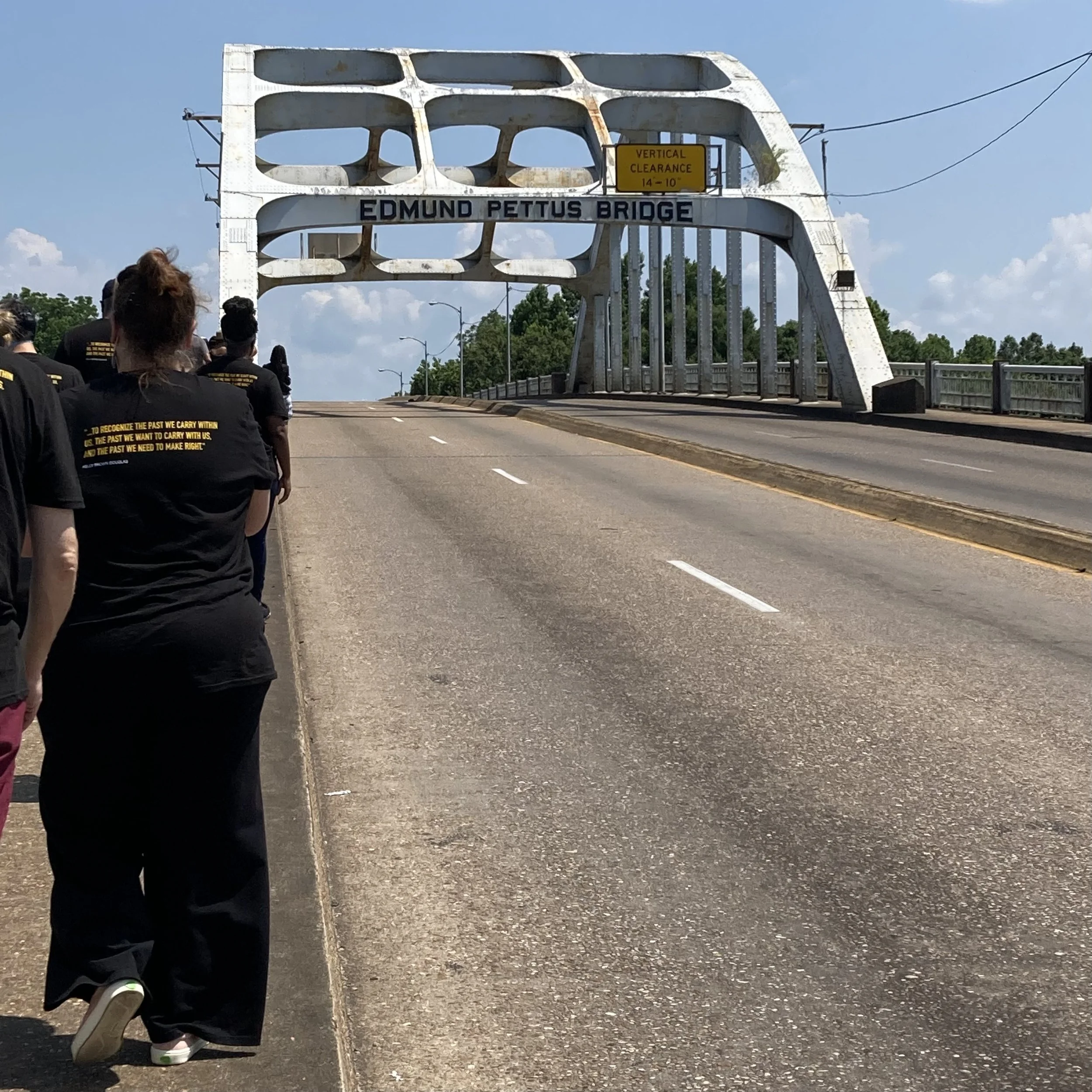
Crossing the Bridge
Civic engagement can feel overwhelming—especially if no one in your faith community ever modeled it. Here's what one white evangelical learned by jumping in anyway.
Emmanuel Gospel Center
Crossing the Bridge
Lessons l’m learning on the road to civic engagement.
by Megan Lietz, Founding Director, The Race & Christian Community Initiative
Joanne Bland spoke with wisdom and authority as she recounted her experiences as one of the youngest participants in the 1965 march from Selma to Montgomery. She recalled the events of Bloody Sunday and spoke of her community’s tireless efforts to help preserve this history and the voting rights so many had fought and bled to secure. As she concluded, a participant asked, “So, what should we be fighting for today?”
With clarity and conviction, Ms. Bland said, “The same thing we fought for back then.”
She said this in 2024. I couldn’t have imagined how true her words would ring today.
Many of the deeply rooted problems we see in our country won’t go away through personal transformation alone. The enduring issues that plague our nation are rooted in policies and social systems beyond our immediate control.
One way we can contribute to changing these systems is through civic engagement and political action. I believe these are tools Christians can use to continue Christ’s redemptive work and seek the kingdom of God.
As someone who cares deeply about addressing racial injustice, I’ve long had civic engagement on my radar as a way to make change. But as someone who was also raised as a white evangelical, I encountered obstacles to living out my faith by pursuing systemic change.
As someone still new to civic engagement, I wanted to reach back and share both the obstacles I encountered—and what helped me navigate them. It’s my hope that my story might help others overcome their own barriers to civic engagement and encourage Christians to be more active participants in contributing to the change they want to see.
“I don’t know how to get started!”
This is something I often hear as I talk to white evangelicals; and trust me, I can relate. We didn’t talk about politics in my family growing up. At church, we were encouraged to make a difference for Jesus, but it was assumed that this would happen in our personal spheres. So when I desired to learn more about how to make social change and contribute to the dismantling of systemic racism, I felt like neither my family nor my church had equipped me to enter the civic sphere.
As I sought to learn, I realized I didn’t even know how to get started. I wasn’t sure how change happens or how to get involved. What’s more, I didn’t see others from my evangelical background working to address systemic racism. I didn’t have examples from my own tradition to follow or a pathway from within my community to help me learn.
I lamented that the community I had come to love didn’t speak into matters so close to God’s heart. I lamented the narrow view of God’s redemptive work that had come to inform our practice. I lamented how I felt I needed to leave my people and my homeland in order to more faithfully follow Jesus in a multiracial world.
Sometimes, as Christians, we can feel deeply about something, but let practical barriers keep us from responding to our convictions. I wanted to get involved, but felt I didn’t know how. It was hard enough for me to carve out time to take action. So, finding time to learn about civic engagement felt like a learning curve I just didn’t have the capacity to climb.
But herein lies my first faulty assumption: That in order to get involved, I have to know before I go.
Especially as white people, we’re often used to being informed. To being the knowledge-holders. To having the privilege, before starting an endeavor, to get all our ducks in a row.
But with something as vast and complicated as contributing to systemic change, that’s an unrealistic expectation. While we should do our homework and do our best to be informed, we cannot let this be a barrier to engagement.
Instead of feeling that we need to know everything—or be embarrassed for not knowing—we simply need to get started and learn as we go.
“I don’t need all the answers to get started. I can learn as I go. ”
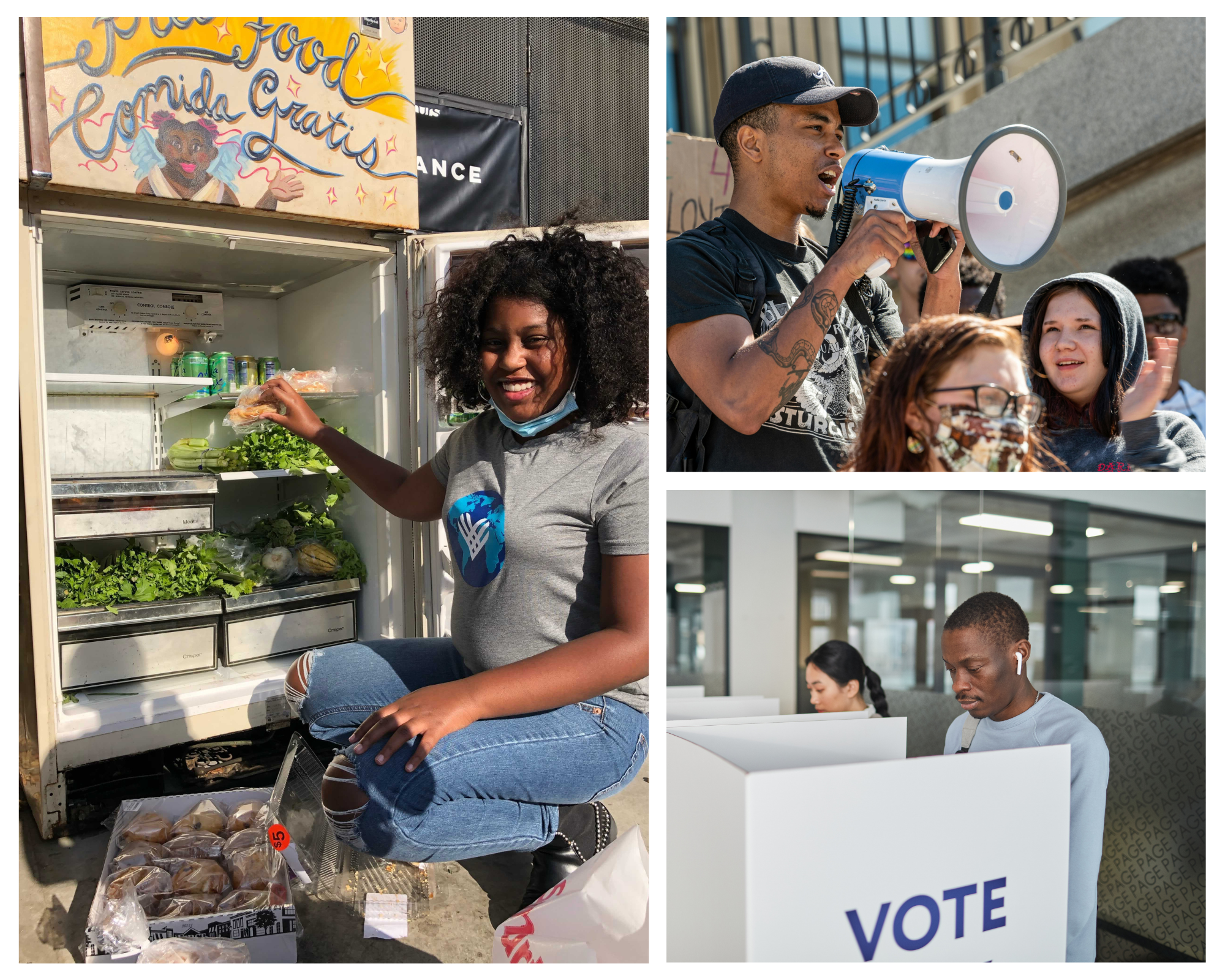
So that’s what I did. I jumped in. I joined the meeting. Attended the rally. Helped people register to vote. I didn’t always know what I was doing. I often felt like the awkward new kid. I had to ask questions to figure things out. But I was there. And in being in the room, I’m learning lessons I can share, noticing gaps that need to be bridged, and beginning to discover pathways that, as imperfect as they may be, might provide next steps for those who come behind me.
Just start somewhere…
So if you want to get involved in civic engagement, I encourage you to just start somewhere. No, you don’t know everything. Yes, it will be awkward and clunky. And that’s OK.
Start at a place that feels accessible. Reach for the low-hanging fruit. It doesn’t have to be ideal; it just has to get you moving.
More specifically, I’d encourage you to start local. There are ample opportunities to participate in civic engagement in Greater Boston, many of which may connect with issues you’re experiencing in your own community. Action that feels proximate and contextualized can be easier to enter into, sustain, and understand.
Emmanuel Gospel Center
Practical next step
Learn more about the following local organizations and join the newsletters of an org that interests you! Joining their newsletter will help you stay informed about upcoming learning and action opportunities.
Boston-based: Prophetic Resistance Boston
North Shore: Essex County Community Organizing
In my experience, as someone who jumped in with far less preparation than I would have liked, I found local groups to be welcoming and happy to answer questions. They even offer trainings to help people learn and grow.
This comes with two caveats, though: I came humbly, and I came to help. I didn’t come to lead—I came to learn. And I learned through action. I wasn’t just bringing my questions, but giving of my time and energy to support the cause at hand.
Recap: When I let my lack of knowledge be a barrier to entry, I didn’t contribute to systemic change. But when I jumped in and took a learning posture, I realized you can learn while making a difference. I don’t need all the answers to get started; I can learn as I go.
“But I need to do something ‘big’!”
I care deeply about issues related to race. My passion is both a motivating force and an expression of God’s heart. But it can also be an obstacle when I feel my action needs to be commensurate with my passion. Just because I care deeply about something doesn’t mean I need to get involved in a big way—at least not to begin!
But this isn’t just about my passion or my experiences as a leader in various spheres. It gets at something deeper within the human psyche, as well as a common obstacle I’ve seen in white folks desiring to contribute to the dismantling of racism.
Often, white people want to do something that feels big or significant. Something they can feel good about or proud to share with a friend. While I could muse on why I think this is, what I know is that this inclination is often a barrier to effective action. In an effort to do something that feels big, we often take on a task outside our capacity. And despite our best intentions, we aren’t able to actually do that “big” thing.
For me, this meant wanting to show up as a committed, ongoing volunteer. But as a ministry director, church leader, and mother of elementary-age children, I never had the capacity to dive in.
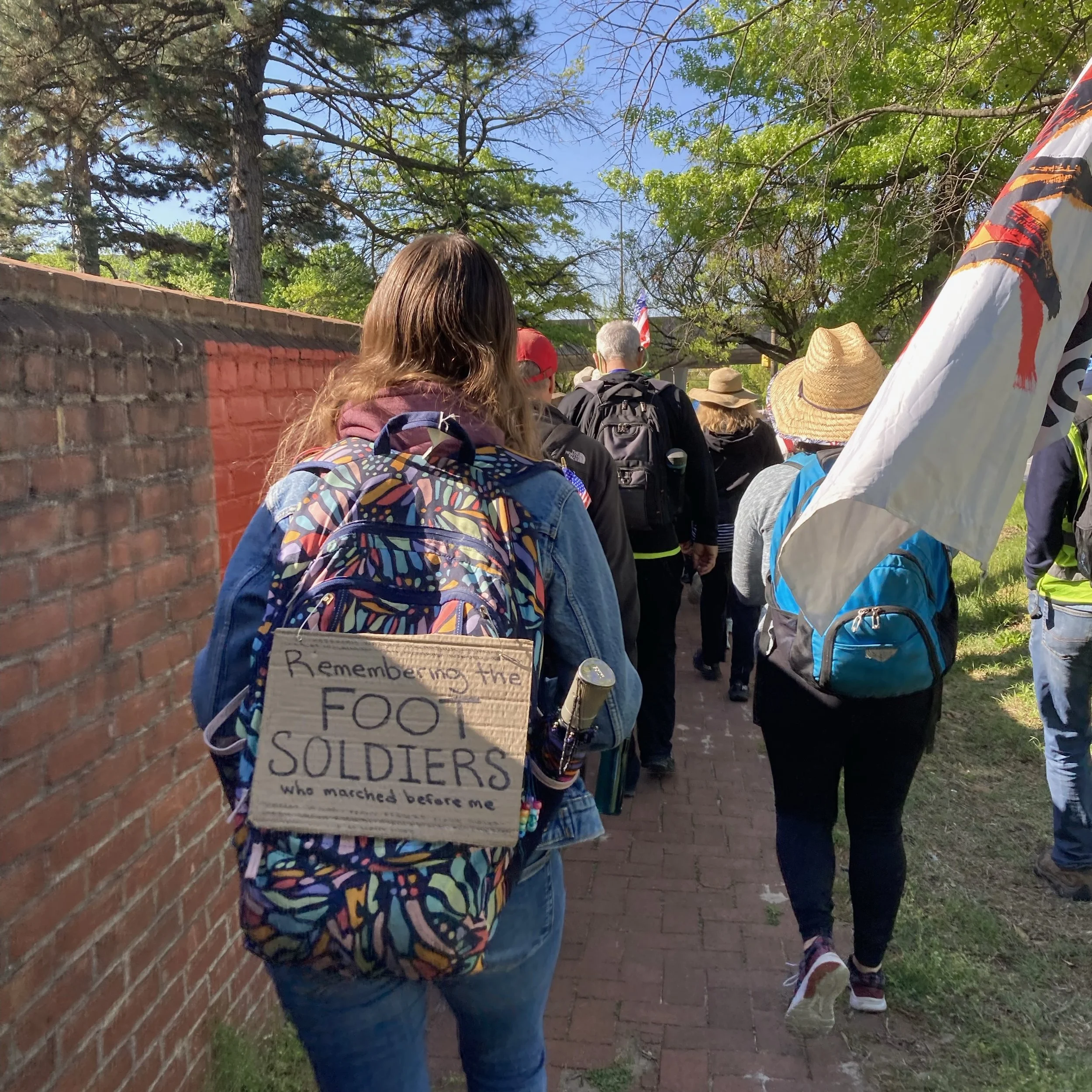
Then I traveled down South and met with foot soldiers from the civil rights movement. I met ordinary people who contributed to real change, not because they had the capacity in their lives to do big shiny things, but because—even in the midst of life—they kept showing up. They kept doing what they could. Many of these people were children and teenagers at the time. They weren’t the leaders of society; they were people who could show up. They were bodies who could be counted. They were volunteers who could help with that one thing.
And if they could do it, I could do it. I would no longer believe the lie that what I had to offer was not big enough.
“Don’t let the desire to do something big prevent you from doing anything at all. ”
Commit to the little things.
So I committed to showing up whenever I could. A phone bank, an email to my senator, a community conversation, a service day. My action wasn’t consistent, but it was persistent. And over time, I ended up doing far more by committing to doing the little things I could, instead of waiting to do something that felt big or shiny.
More importantly, this work had me in the role best suited for me as a white person and as someone not originally from my current community. I didn’t serve as a leader but as a follower of people of color and seasoned activists who best understand the needs of their community.
I encourage you to worry less about doing something that feels big and get involved in ways that simply allow you to take action. The little things make a big difference when we all work together in community!
Practical next step
The next time you see an opportunity to take civic action, do your best to take it. You may not be able to swing it, but try. When you see these opportunities, ask yourself, could I do that one thing? It may not be much on its own, but if you make an honest effort to participate, you’d be surprised by how, despite all the other responsibilities and distractions, you can get it done. And before you know it, that one thing becomes a longer list of small, but significant actions.
Recap: Don’t let the desire to do something big prevent you from doing anything at all. Small actions over time can have a significant impact!
Emmanuel Gospel Center
“Will my contributions even matter?”
Do the little things I do really matter? I mean, when I’m one body, one signature, one vote in a sea of thousands, does it really make a difference if I show up?
These are some of the questions that would go through my mind as I juggled different priorities and did the math on whether or not it was worth showing up. And to be honest, in any singular instant, no, it probably doesn’t matter that much. But collectively, little things make a difference.
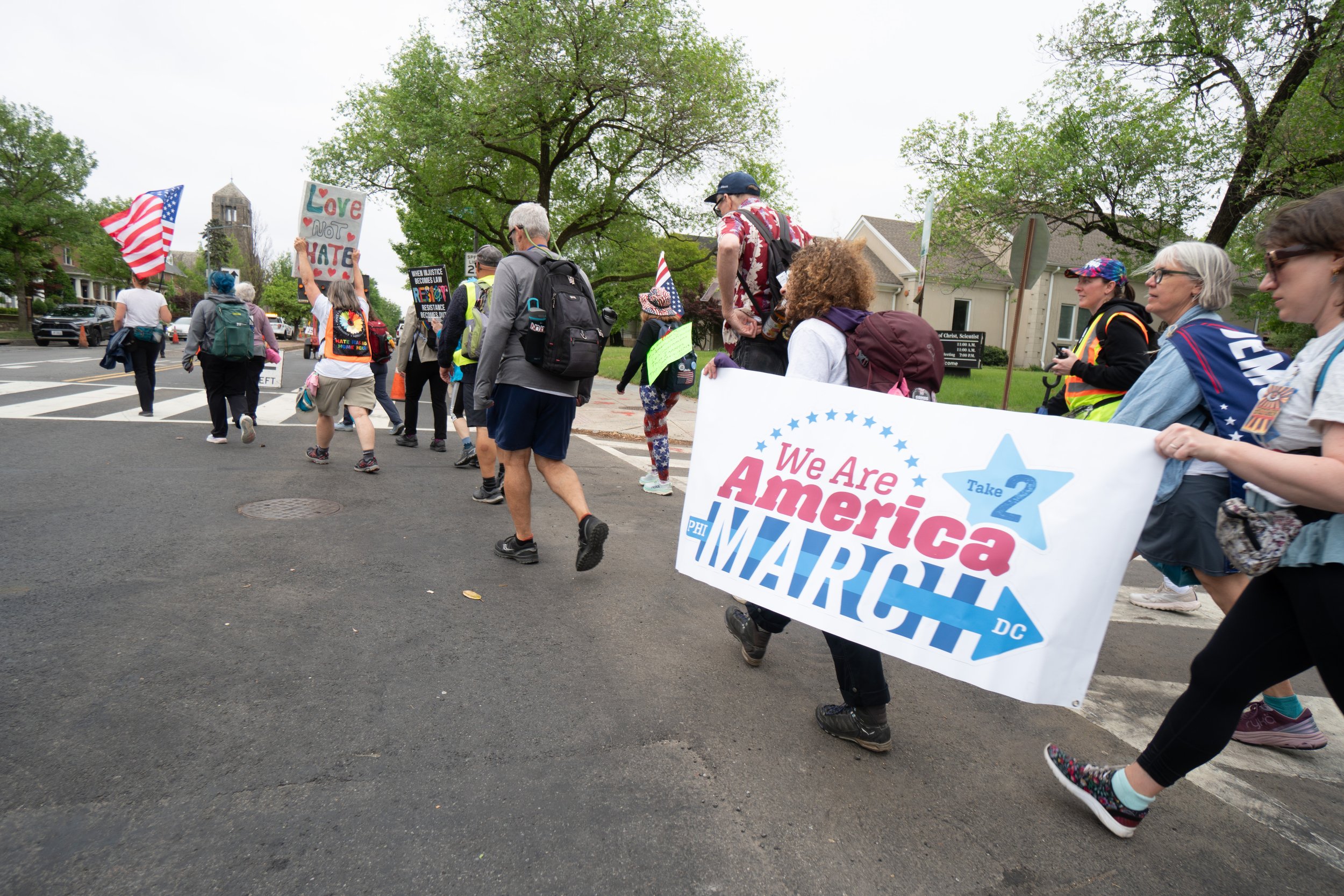
I recently experienced collective power in a deeply encouraging way, reminding me of how little actions can make a big difference. I was one of about 50 marchers who, collectively, walked from Philadelphia to Washington, D.C. While none of us could have done it alone, lots of people did little things to support this massive undertaking. There were people who coordinated, cooked for us, offered us a place to stay, or simply let us use their bathroom. Every day, we all worked together to load or unload our supplies. And little jobs, like driving shuttles that offered individuals a break when needed or making sure that everyone had a name tag, made a felt difference in building an inclusive and welcoming community.
“When everyone does their part, we can accomplish great things through the power of community.”
By themselves, the march wasn’t going to make or break based on whether or not Sister So-and-So brought her casserole to the potluck or that driver honked in support as we marched down the road. But it was the simple acts of kindness that nourished our bodies and souls. It was the little things that made a difference in the day-to-day and, collectively, helped everyday people walk over 160 miles.
Put it in perspective.
When everyone does their part, we can accomplish great things through the power of community. So I encourage you to evaluate your action not by the size of the action itself, but by its impact when added to the collective efforts of a community.
Practical next step
Check out this two-minute video to learn about how the collective power of everyday people contributed to the success of the Montgomery Bus Boycott.
Recap: Individual actions may feel insignificant in isolation, but collective effort—made up of countless small contributions—is what makes big things possible. Showing up matters, even when it doesn't feel like it.
It’s our turn.
Joanne Bland, who set an example through her activism, passed away earlier this year. She is no longer with us to fight for the voting rights she gave so much of her life for. Nor was she alive to hear the recent Supreme Court ruling, which limited the power of the Voting Rights Act—yet again.
But now it’s our turn. At a time when our country is rolling back civil rights and threatening the very practices that make us a democracy, it’s time to take a stand.
We would all like to think that, if we were alive during the civil rights movement, we would have stood on the right side of history. We would have marched like the young Joanne Bland. But the fact of the matter is that what we’re doing now is what we would have done back then.
If you want to take action and contribute to change, you can. Even if you don’t know how to get started, even if you feel you can’t do anything big, and even if you question whether the little you might contribute makes a difference.
It’s not too late. You don’t have to let those obstacles stop you. They stopped me for a while, but I pray that you, too, can overcome.
Want to learn more about how Christian faith calls us to build shalom in our communities? Check out RCCI’s Toward Shalom Workshop Series to explore the biblical and theological foundations for addressing racism today.














Practicing Postures for Shalom
When you march 160 miles, you quickly discover how much you need other people — and how hard it is to let go of control. For white Christians working toward racial justice, that discomfort isn't an obstacle. It’s the point.
Emmanuel Gospel Center
Practicing Postures for Shalom
Invitations from a 160-mile march on how to work toward shalom in the ordinary
by Megan Lietz, Founding Director, Race & Christian Community Initiative
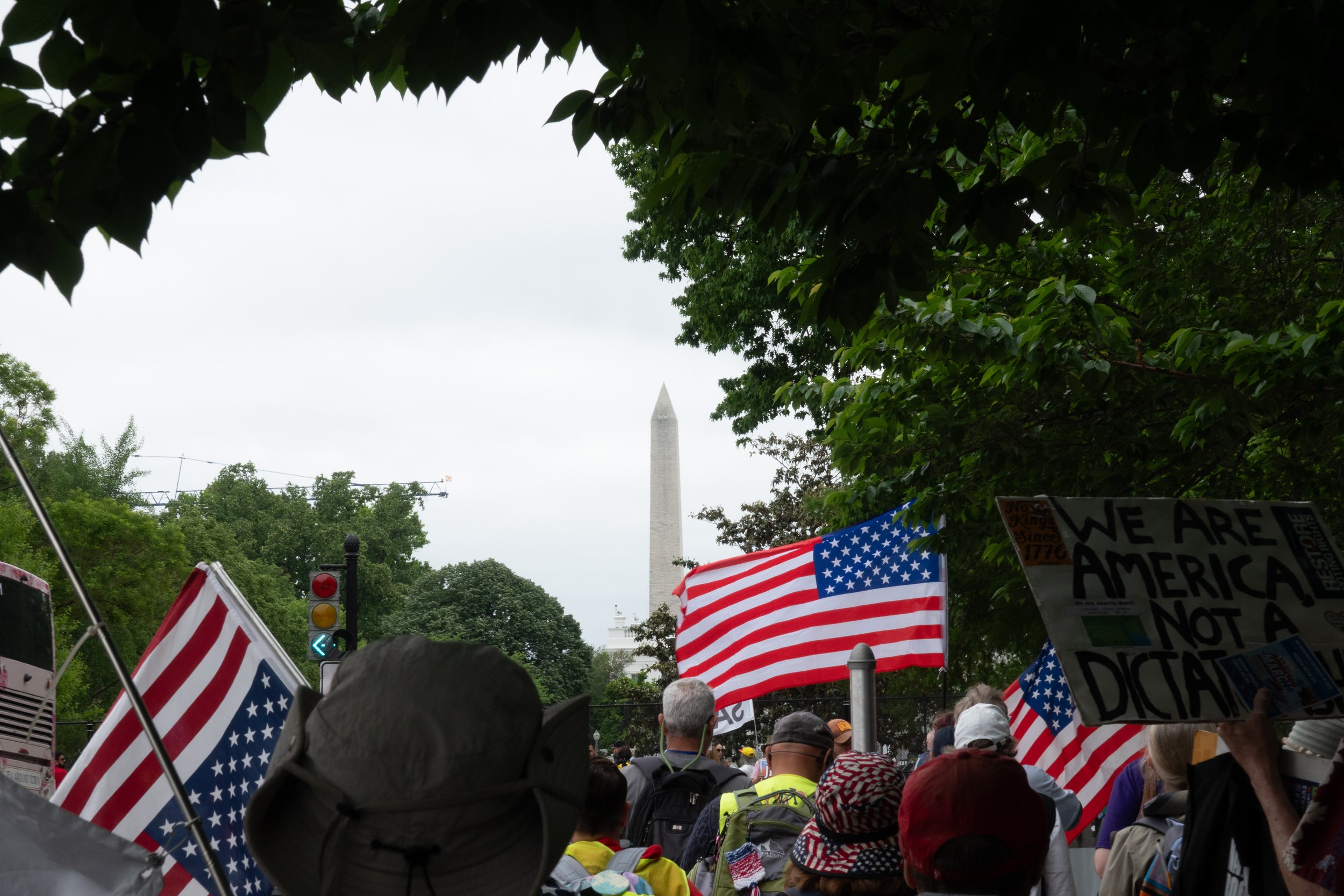
With racism and xenophobia on the rise, the Church must stand up and take action. I had the honor of participating in a portion of the We Are America March: a 160-mile journey from Philadelphia to Washington, D.C.
The one thing that united marchers was a desire to see our country live into our democratic ideals. But with such a diverse group, there were many reasons people participated. I marched to honor those who marched before me, to learn, and to be a faithful witness to Jesus. Throughout the march, I spoke about the foot soldiers of the civil rights movement who inspired me to engage in civic life. I was touched by the power of community and spoke openly about how my faith in Jesus motivates my justice journey.
What struck me most was how the march provided an invitation to practice the postures of shalom-building. This led me to reflect on the importance of Christians practicing these postures today.
Participating in an inter-state march is no small undertaking. It comes at a cost. But I found that the cost was paid back many times over through the way God formed me and the blessings of community. I highlight three areas I feel the march invited participants to grow—areas white Christians need to practice to nurture shalom and invest in our own liberation.
ulzimate
Letting Go of Control
When you’re on a week-long march, there’s much that isn’t in your control. Plans pivot. Weather changes. You don’t always know what you want to know.
I’m someone who likes to be in control. To have a plan. To know what’s next. Though shaped in part by my personality and experiences, I also recognize that this desire for control is a core component of whiteness. From the earliest days of racialization, it motivated racial hierarchy and was used to keep it in place. And whether I realize it or not, I’ve been socialized in ways that lead me to desire, expect, and grasp for control in order to feel OK.
The march was an opportunity to have faith, to know that God is in control, and to release the need to know. When I wanted to check the online schedule or ask how a change would affect the rest of the day, I paused. I don’t need to know. Others are working it out. Trust others to take the lead. I don’t need to be in control.
When I released my desire to be in control to God, I received the gift of being more present to my work that day. I was also better positioned to be formed by my Lord and Savior.
While these dynamics are amplified in an immersive experience like a march, we have—and should take—the opportunity to practice releasing control in the day-to-day.
“While these dynamics are amplified in an immersive experience like a march, we have—and should take—the opportunity to practice releasing control in the day-to-day.”
As white people who desire to contribute to the dismantling of racism, it’s critical that we learn how to let go of control and share leadership. But this is hard to do in real time. We hope we’ll be the kind of people who let go of control when it counts, but how will we do so without practice?! We won’t do it when it counts the most if we aren’t learning to release control in other areas of our lives.
Practical suggestions for learning to let go of control
Next time you’re noticing you’re not in control and feeling anxious about it or like you want to take action to put the ball back in your court, take a breath. Ask yourself, “Do I need to be in control right now?” Questions that can help you determine this include:
Whose comfort is my need for control really serving?
Is my urge to lead coming from competence and calling, or from habit and privilege?
What am I afraid will happen if I'm not in charge?
Have I been invited into leadership here, or have I assumed it?
Noticing when we’re vying for control—and intentionally giving it up—can build our muscle to do so when racial equity is on the line. It helps us practice more liberated ways of being.
This is hard work, but it can be done with God’s help. I offer the following breath prayers as a grounding exercise: Breathe in: “You are God.” / Breathe out: “I am not.”
ulzimate
Trusting for Care and Abundance
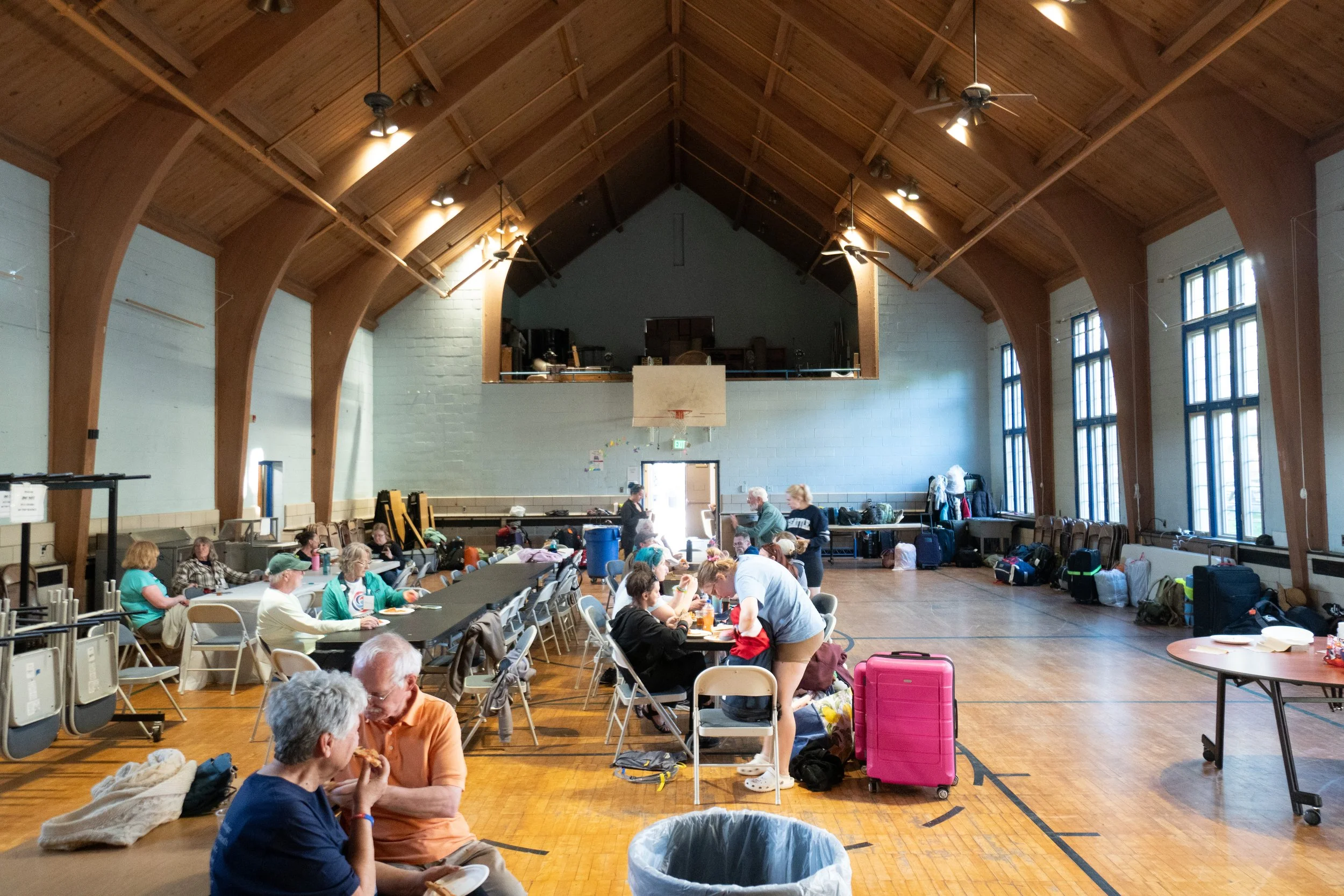
On the march, we would pack up our meager belongings, put on our shoes, and walk an average of 10 miles a day until we reached where we would sleep that night. When we arrived, we would be welcomed by our hosts, fed dinner, and claim a space to set up our sleeping bag. This rhythm reminded me of God’s people on the move in the wilderness, following the cloud by day and pillar of fire by night (Exod. 13:21-22).
When marchers set out each morning, we wouldn’t have everything we needed for the day. We had to trust in the generosity and hospitality of others. Churches that opened their doors. Volunteers who made sandwiches. Medic teams who cared for our feet. And not least of all, my fellow marchers who consistently offered encouragement and kindness, be it helping me carry my luggage, finding a lost pillow, or giving up their own spot so I could have a more comfortable place to sleep.
Marching invited participants to trust God’s providence and care through his people. In doing so, I grew in my faith. I experienced encouragement and healing as I received kindness from strangers. I came to better understand why Jesus would have sent out his disciples with little more than a staff (Mark 6:8), or told the Israelites to only gather enough manna for the day (Exod. 16:4): Because it was an exercise of faith.
So much of the racism and xenophobia in our nation is derived from the belief that there’s not enough to go around. That if one group thrives, there won’t be enough for another. It is counter to God’s heart for mutual thriving and his instructions to seek the peace of the city and pray for it “because if it prospers, you will prosper” (Jer. 29:7).
“Marching invited participants to trust God’s providence and care through his people.”
Especially as people of privilege, many of us can meet our daily needs on our own. But learning to trust others and receive their care is itself a gift. I believe it can reassure us that, even as we are giving generously and sacrificially to others, we can be cared for too. God himself will provide through his people. We are an interconnected, interdependent body (1 Cor. 12:12-27), and are designed to function as such.
For me, the march served as an invitation to embrace our interdependence and lean into community. Like letting go of control, we need to practice doing this. We don’t need to hoard resources or hold things too tightly. We should bless others, because they are God’s blessing to us.
Practical suggestions for trusting in care and abundance
These spiritual practices help me trust that God will care for me, even as I give of myself:
Regularly give tithes and offerings: I can give to God and others and still have enough myself.
Incremental fasting: I can give up things I feel I need, like caffeine or sugar, and still have enough energy and emotional resources to do what God has for me that day.
Ask for help when I need it: This is a hard one, but the more I’m willing to ask for help and receive from others in the small things, the better able I am to embrace the interdependent nature of the body of Christ!
ulzimate
Persevering Through Discomfort
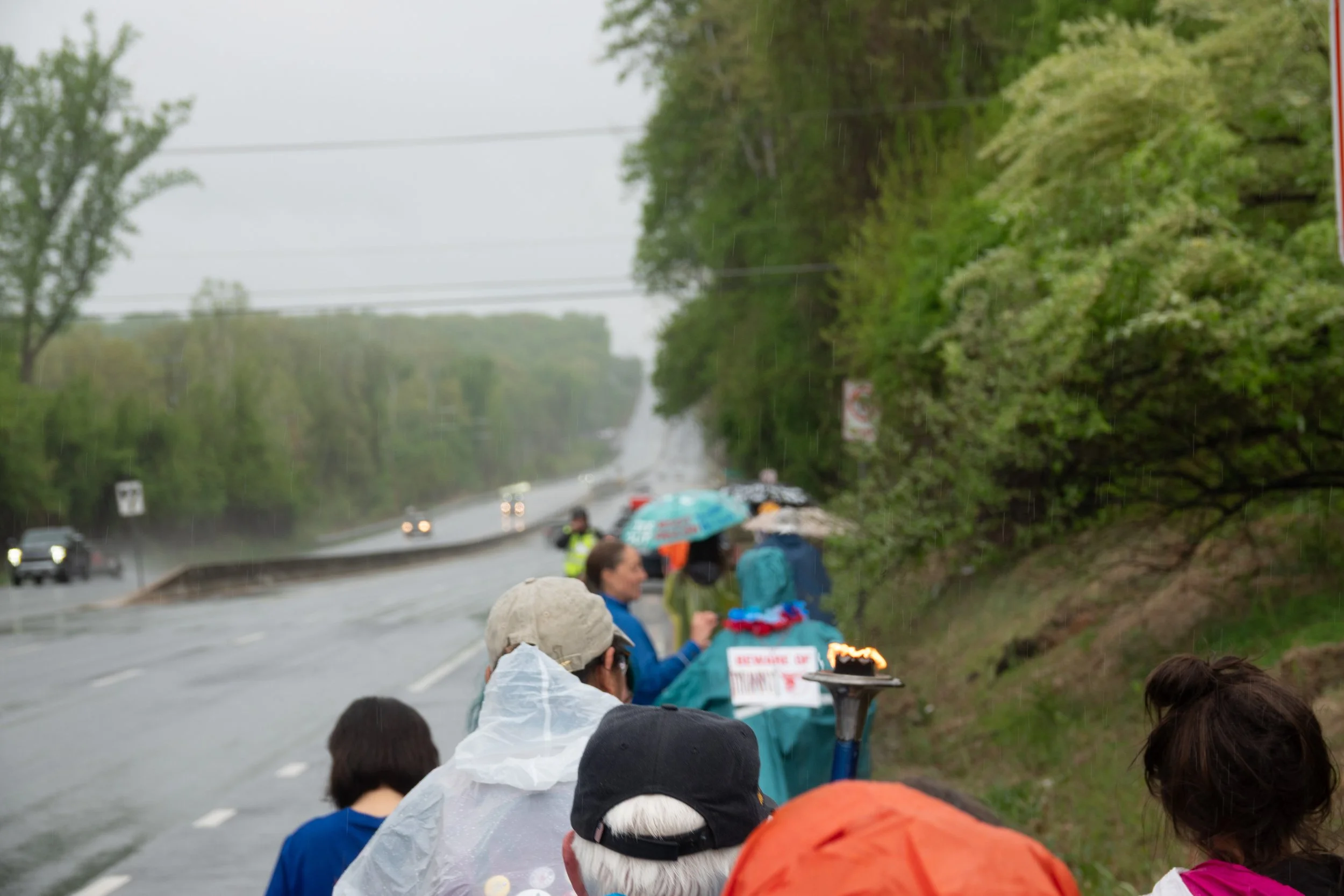
Overall, during the march, I felt comfortable, cared for, and safe. But there were certainly moments of discomfort, like realizing that I’d be sleeping next to strangers, not having all the info I wanted when I wanted it, marching through the rain, or moving stiff muscles and sore feet.
The march provided an invitation to persevere through discomfort. Because white folks are a part of the dominant culture, we are often afforded the opportunity to be in spaces and cultural contexts that are familiar to us and reflect our preferences. When we are not, we can feel uncomfortable. But as white people, too often we associate our discomfort with not being safe. We then tend to center our own emotions until comfort is regained—often while diminishing the needs and feelings of people of color.
“Learning how to persevere through discomfort is necessary to nurture shalom across racial lines.”
Like letting go of control or trusting in God to care for us, shalom-seekers can benefit from learning how to persevere through discomfort. Crossing cultural lines, decentering oneself, or participating in civic engagement is often not comfortable work. It is sacrificial. Learning how to persevere through discomfort is necessary to nurture shalom across racial lines.
Practical suggestions for persevering through discomfort
Some practices I use to persevere through discomfort include:
Noticing when I feel uncomfortable and naming it. (Mindfulness is the first step!)
Doing a body scan to notice where I may be holding tension and/or emotions in my body.
Practicing self-soothing exercises to work through discomfort.
ulzimate
Conclusion: Opportunities for Formation in the Ordinary
It doesn’t take an immersive experience like a march to practice these things. While I found the march to be an invitation to formation, it highlighted the work we need to be doing in the day-to-day. Consider the opportunities to:
Let go of control as you navigate changes in the office or collaborate on a group project.
Show kindness and generosity to a neighbor that extends beyond what you would normally give.
Vote in ways that may seem against your best interest in order to care for vulnerable populations and trust that God will care for you.
Practice self-soothing during a tense conversation with a friend or family member.
Intentionally orient yourself to your day with an open hand and flexibility.
“Lord Jesus, I invite you to form my ways of being. Come set me free. May I be more like you.”
There are opportunities for liberation in the ordinary. Would you look for them with me? Would you learn with me how to let go of control, trust in God’s care and abundance, and persevere through discomfort? I believe, as we invite the Holy Spirit to form us in these ways, we can be better agents of shalom-building. Not because we have what it takes, but because, by God’s grace, he can make us new.
If this resonates with you, I invite you to pray with me, “Lord Jesus, I invite you to form my ways of being. Come set me free. May I be more like you.”
Intro to Civic Engagement in Massachusetts for White Folks
White evangelicals who are moved by their biblical convictions to pursue justice and resist oppression often lack clear direction on how to seek these aims in concrete and tangible ways. This resource is designed to be a launching pad for White evangelicals to learn how to use their time, talents, and treasures for civic engagement.
Created By: Brooke Cohen
Realities of racial injustice and inequity have dominated recent headlines, leaving many White people asking “What can I do?” However, White evangelicals who are moved by their biblical convictions to pursue justice and resist oppression often lack clear direction on how to seek these aims in concrete and tangible ways.
This resource is designed to be a launching pad for White evangelicals to learn how to use their time, talents, and treasures for civic engagement, in service of justice and reconciliation.
We invite you to live out your faith by engaging civically to confront and fight racism in all its forms through these five pathways: local government, legislative advocacy, voting, service, and donations.
LOCAL GOVERNMENT

Participation in democracy is an important way for Christians to love their neighbors and seek justice through policies and leadership. Just as Paul utilized his status as a Roman citizen to promote the Kingdom of God, so too can Christians use their citizenship to influence our governments (Acts 22:26-29; see also Paul’s appeal to the Emperor in Acts 25). While voting is the most commonly discussed way of participating in the democratic process, there are a number of additional ways to make your voice heard locally.
Let us keep in mind the principle of subsidiarity, which grants freedom to develop the capabilities present at every level of society, while also demanding a greater sense of responsibility for the common good from those who wield greater power.
Laudato Si’ (“Praise Be”), Pope Francis, 2015, Chapter 5, #196.
Practical Examples
· Attend a community meeting in your neighborhood.
o Community meetings are held in various neighborhoods around the city to provide a forum for residents to discuss developments and plans for improvement in that area. This is perhaps the most direct way to have a voice in the affairs of your community.
· Observe a city council meeting.
o City council meetings are regularly scheduled gatherings of elected representatives of various geographic districts. Officials discuss and vote on matters of public interest. Generally, meetings are required by law to be open to the community, and a public comment period is included to allow residents to ask questions or opine on relevant topics.
o The Boston City Council hosts meetings to provide a space for residents, community leaders, and other stakeholders to provide feedback and hold their elective officials accountable. This is a great way to encourage local officers to consider racial justice in their policies, and to make sure that they are focusing on the priorities they have committed to.
· Attend a local training on community development and community organizing, such as those offered by the Mel King Institute.
o In the words of the Christian Community Development Association, organizing “is the act of mobilizing voices around an issue that directly affects that group’s community… Organizing seeks to build influence and power, and then mobilize this power to mount campaigns to bring substantive systemic change on issues defined by the people.” Community organizing provides a framework by which activists can leverage the voices of community members to drive the advocacy goals and priorities presented to elected officials.
· Learn about educational inequity in the US, and attend a School Board/Committee meeting to advocate for reform.
o Learn more about the responsibilities of the Boston School Committee and how you can get involved. Consider attending a meeting and participating in the public comment period to advocate for equity through budgetary, hiring, or policy priorities.
LEGISLATIVE ADVOCACY

Christians are commanded to amend our ways in order to practice justice, oppose oppression, and avoid the shedding of innocent blood (Jer. 7:5-7). Our pursuit of Christ’s Kingdom on earth is no passive endeavor. As the woman in Luke 18:1-8 demonstrates, seeking justice requires sustained and committed advocacy that persists in the face of opposition or apathy. The Bible is clear that laws and other political decisions play an important role in facilitating cultures of justice or oppression (Is. 10:1). State and national legislatures are tasked with forming and approving policies that affect racial justice in a number of ways. Examples include allocating funds for police reform, creating remedies for civil rights violations, committing to resettling refugees and asylum seekers, and creating affordable housing and healthcare opportunities.
Woe to those who make unjust laws, to those who issue oppressive decrees, to deprive the poor of their rights and withhold justice from the oppressed of my people…
Isa. 10:1-2
Practical Examples
· Research reforms advocated by leaders/politicians of color. Because these individuals represent the individuals and interests of communities of color, they are best equipped to understand the policy and reform priorities of their constituencies. One way you can do this is through the work of the Massachusetts Black and Latino Legislative Caucus.
· Follow local community organizers that are committed to hearing the voices of the community and amplifying them to work towards change. For example, click here to research legislative organizing updates from the Massachusetts Community Action Network. MCAN is an interfaith grassroots network that advocates in Massachusetts for racially just policies rooted in communal power and accountability.
· Call or write your state legislators to encourage them to make racial justice a priority.
· Advocate for criminal justice reform that seeks to reduce racial inequities in incarceration.
o There are a number of organizations advocating for reform from a faith-based lens, including The Center for Church and Prison, Healing Communities, and Prison Fellowship.
· Encourage your state to require racial impact statements for all criminal justice legislation. These statements would force legislators to consider the impact of a given piece of legislation on people and communities of color before signing it into law.
· Read, sign, and share this statement by the Prayer & Action Justice Initiative. Explore the Partner Organizations committed to advocating for racial justice with biblical conviction.
VOTING

We know we have the right to vote, but what difference does it really make? Christians have an incredible opportunity to steward their political participation to choose candidates and policies that will promote racial justice. While national politics dominate the news cycle, most policies arise at the local and state level. State legislatures and city councils craft laws and regulations with widespread impact, particularly in housing, education, and criminal justice. Furthermore, given their smaller constituencies, they are usually more accessible and responsive to advocacy efforts.
Choose for your tribes wise, understanding, and experienced men, and I will appoint them as your heads.
Deut. 1:13
How?
Voting it not a once-every-four-years endeavor. Local and state elections occur with greater frequency, providing voters with numerous opportunities to leverage their voices to promote the cause of racial justice.
· Register to vote.
· Find your Massachusetts polling place.
· Check out Ballotpedia for information on local elections, both initiatives and candidates. Additionally, learn more about proposed ballot initiatives and constitutional amendments in Massachusetts.
· Election dates and deadlines in Massachusetts.
Which elections matter for racial justice?
· District Attorney (DA)
o The District Attorney is the chief prosecutor for a given county in the Commonwealth, and arguably the most powerful player in the criminal justice system. Following an individual’s arrest, the DA decides whether or not to charge them with a crime, and what crime(s) they should be charged with. A DA who is committed to racial justice will be more willing to hold police accountable for discriminatory or abusive practices, and can request alternatives to incarceration for young offenders. They can also work to ameliorate racial discrepancies in sentencing, and reform cash bail guidelines to avoid over-incarceration of low-income communities. See a video that further explains the difference a DA can make in fighting racial inequities and mass incarceration.
· Attorney General (AG)
o The Attorney General is the chief lawyer for the Commonwealth. The Office of the AG handles civil rights complaints, enforces health care laws, holds government officials accountable, and seeks community engagement throughout the state, among many other responsibilities.
o The Governor’s Council, or Executive Council, is comprised of eight individuals representing geographic districts. They provide advice and consent to the Governor on pardons and commutations, judicial appointments, and appointments of public administrators and members of the Parole Board, among others. Racial bias can often lead to disparate outcomes in a criminal defendant’s sentence or opportunity for parole. Electing individuals who will advocate for racial equity in criminal justice presents and important opportunity for reducing grave inequalities in incarceration.
· Massachusetts General Court (state legislature)
o The Massachusetts legislature is tasked with forming and approving a wide variety of policies and laws that affect racial justice – police reform, allocating budgetary funds to schools and community centers in neighborhoods of color, forming task forces to investigate racial disparities in health outcomes, and promoting housing stability.
· Sheriffs (appointed or elected depending on county)
o County Sheriffs are responsible for enforcing the law in their jurisdiction. These officials have incredibly wide-ranging power over policing in their jurisdictions, and have very little accountability and oversight outside of periodic elections. This critical position is often overlooked – an estimated 60% of sheriffs (who are 90% White men) run unopposed. In Massachusetts, sheriffs oversee the county jail and house of correction, and are tasked with the transport of inmates.
Read a four-part 2020 WBUR investigation on prison deaths in Massachusetts, to learn more about how the decisions of county sheriffs can dramatically impact the life outcomes of prison populations – which are disproportionately people of color.
· City Council
o City Councils create, pass, and amend local laws. Boston has thirteen councilors, four of which are elected at-large, while the other nine represent geographic districts. City Councilors speak into issues including civil rights, education, housing, public health, criminal justice, and small business development. A list of Boston City Council’s committees.
SERVICE

One of the most important ways Christians can learn to love their neighbors as themselves is through becoming proximate to their realities, needs, and desires. Getting involved in your community provides a crucial opportunity to facilitate relationship building among individuals of varied life experiences. Service is also a direct Biblical mandate: we are called to care for the poor and oppressed (Isa. 1:17), to visit the incarcerated (Heb. 13:3), and to look out for the orphans and widows in their distress (Js. 1:27).
“Injustice is not something to be aware of, it is something to engage, because to know is to do.”
Michelle Ferrigno Warren, The Power of Proximity: Moving Beyond Awareness to Action
Local Opportunities
· One legacy of racial injustice is the segregation of communities and fracturing of societal bonds. Open and trusting relationships and conversations are a necessary prerequisite to achieving racial reconciliation.
o Apply for a mini-grant to fund a community development initiative. Grant awardees receive funding from the city to create beautification projects, community gardens, mini free libraries, and other improvements alongside their neighbors. (Learn about ongoing beautification projects throughout the Boston area).
o Host a people’s supper to bring together individuals from different backgrounds and walks of life to engage in a discussion about race. This series of guided conversations is intended for established multiracial communities to come together at a shared table to break down barriers, lament injustice, and work towards collaborative solutions.
o Attend a Neighborhood Dinner through Unite Boston. Unite Boston is a non-profit that seeks to connect Christians from different congregations to build bridges across the work God is doing in Greater Boston. Neighborhood Dinners are opportunities to fellowship with other Christians in your neighborhood through the breaking of bread and sharing of conversation.
o Join with neighbors in neighborhood clean-up days happening twice annual city wide through Love Your Block Neighborhood Cleanups.
· Volunteer at a Massachusetts prison.
o As a tutor.
o Through programs sponsored by the Commonwealth.
o With the Alternatives to Violence Program.
o With the Concord Prison Outreach.
· Serve as a facilitator of restorative justice circles. Restorative justice seeks to move beyond punitive or retributive models of justice and to focus on restoring personal or communal relationships damaged by crime. These processes can be an alternative to lengthy periods of incarceration.
· Join a diversity committee at your workplace – or start one! Diversity committees are a great way to advocate for diverse hiring and cultural competency initiatives.
· More opportunities to serve.
DONATIONS

As Christians, we are admonished against storing up treasures here on earth, and commanded to be openhanded with our resources (Mt. 16:19-21). Christians can also promote economic justice by investing in communities and institutions that have been historically under-resourced and oppressed through racially discriminatory practices like redlining. Giving of our financial resources enables non-profits and initiatives to continue with their justice-seeking work, whether that is through empowering under-resourced communities, supporting the local church, or fighting discrepancies in access to justice or other resources. This is particularly important in the COVID-19 pandemic, as communities of color have borne a disproportionate burden.
But joyful are those who have the God of Israel as their helper, whose hope is in the LORD their God. He made heaven and earth, the sea, and everything in them. He keeps every promise forever. He gives justice to the oppressed and food to the hungry. The LORD frees the prisoners.
Ps. 146:5-7
Practical Examples
Please note that RCCI does not necessarily endorse all of these ministries and/or all that they may advocate or believe. Rather, we seek to provide opportunities for your further exploration and reflection. Please do your own research before giving.
· Support Black and immigrant churches that have been hit hard by the COVID-19 pandemic. Check out the Massachusetts Council of Churches One Church Fund and the Churches Helping Churches fund.
o One Church Fund aims to provide financial, practical, and relational support to churches doing essential ministry in communities which have borne the brunt of systemic inequities since long before COVID-19. One Church Fund will raise resources for immigrant, Black, poor, unhoused, and unaffiliated churches.
o Churches Helping Churches encourages affluent churches to donate to lower-income churches who are at risk of closure, in order to stabilize them and enable them to support their communities as they deal with the economic and health fallouts of the COVID-19 pandemic.
· Donate to Commonwealth Kitchen - Boston's Food Business Incubator.
o Their mission is to build a new food economy grounded in racial, social and economic justice by strengthening the capacity, connections, and collective power of diverse entrepreneurs to start and grow successful food businesses.
· Donate to the Massachusetts Bail Fund.
o In the US, over 60% of the population of local jails are pre-trial detainees – individuals who are legally presumed innocent. An estimated 9 out of 10 of those people are incarcerated because they cannot make bail. Even short-term incarceration can have disastrous results – loss of employment, child custody, or housing. Given that Black adults are incarcerated at six times the incarceration rate for Whites and nearly double the rate for Hispanics, conditioning one’s liberty on their ability to pay further exacerbates racial inequities in the criminal justice system. Contributing to bail funds helps ensure that the accused, which are disproportionately people of color, are not forced to remain incarcerated because of a lack of access to financial resources.
· Support the NAACP Legal Defense and Educational Fund (LDF).
o The LDF uses litigation, advocacy, and education to promote racial justice in a number of spheres: criminal justice, economic justice, education, and political participation. LDF has been a key player in securing and protecting voting rights for African Americans, desegregating public schools, and fighting racial disparities in the use of capital punishment.
· Give to the Equal Justice Initiative.
o This organization, founded by noted author and attorney Bryan Stevenson, represents innocent and unjustly sentenced detainees, with a special emphasis on the death penalty and juvenile offenders. Additionally, EJI works to educate the public on the legacies of slavery, racial terror lynching, and mass incarceration through reports, digital experiences, museums, and memorials.
· Further the mission of Historically Black Colleges and Universities through The Thurgood Marshall College Fund(TMCF).
o TMCF provides college scholarships and internship opportunities to students at Historically Black Colleges and Universities (HBCUs). HBCUs provide top-tier educations at more affordable prices that historically White institutions, as well as a context in which Black students are empowered to thrive. Additionally, TMCF lobbies for educational justice on Capitol Hill to increase funding for HBCUs and students of color in higher education.
· Partner with the National Urban League (NUL).
o NUL is a nonpartisan civil rights and urban advocacy organization seeking to enable “African Americans and other underserved urban residents to secure economic self-reliance, parity, power and civil rights.” NUL helps register people of color to vote and protects their ability to exercise their civic rights, provides civil engagement curriculum to students of color, and helps empower individuals to secure employment, homeownership, and quality healthcare, among other initiatives. NUL has local offices that serve the needs of particular communities, as well as a central Washington Office that advocates on Capitol Hill for policy and legislative change.
· Support the Christian Community Development Association (CCDA).
o The CCDA empowers Christians to live out the three R’s of community development: relocation, reconciliation, and redistribution. CCDA members live, work, and worship in marginalized neighborhoods, adopting a holistic approach to empowerment that is church-based and community-based. Additionally, CCDA organizes and advocates in Washington D.C. to fight injustice, with a focus on three initiatives: Immigration, Mass Incarceration, and Education Equity.
Additionally, consider seeking out opportunities to support Black-owned businesses in Boston. Business ownership is an important avenue for wealth accumulation and job creation. Black-owned businesses have been particularly hurt by COVID-19, with an estimated 41% closing their doors in the economic shutdown. (Additionally, some Black business districts have historically been targeted for destruction, further preventing economic growth in these communities. Learn about the burning of “Black Wall Street” in Tulsa, OK). Purchasing from Black-owned businesses is a tangible way of supporting communities where injustice is occurring and promoting a more equitable distribution of wealth.
Brooke Cohen is a San Diego native who moved to greater Boston in 2017 to attend law school. Brooke studied Political Science and Peace Studies at the University of Notre Dame, and loves to explore the complex relationship between mercy and justice in legal systems and in society. She and her husband, Justin, worship at Aletheia Church in Cambridge and reside in Downtown Crossing.
Keywords
- #ChurchToo
- 365 Campaign
- ARC Highlights
- ARC Services
- AbNet
- Abolition Network
- Action Guides
- Activism
- Administration
- Adoption
- Aggressive Procedures
- Andrew Tsou
- Annual Report
- Anti-Gun
- Anti-racism education
- Applied Research
- Applied Research and Consulting
- Asking for help
- Ayn DuVoisin
- Balance
- Battered Women
- Berlin
- Bianca Duemling
- Bias
- Biblical Leadership
- Biblical leadership
- Black Church
- Black Church Vitality Project
- Book Recommendations
- Book Reviews
- Book reviews
- Books
- Boston
- Boston 2030
- Boston Church Directory
- Boston Churches
- Boston Education Collaborative
- Boston General
- Boston Globe
- Boston History
- Boston Islamic Center
- Boston Neighborhoods
- Boston Public Schools
- Boston-Berlin
- Brainstorming
- Brazil
- Brazilian
- COVID-19
- CUME
- Cambodian