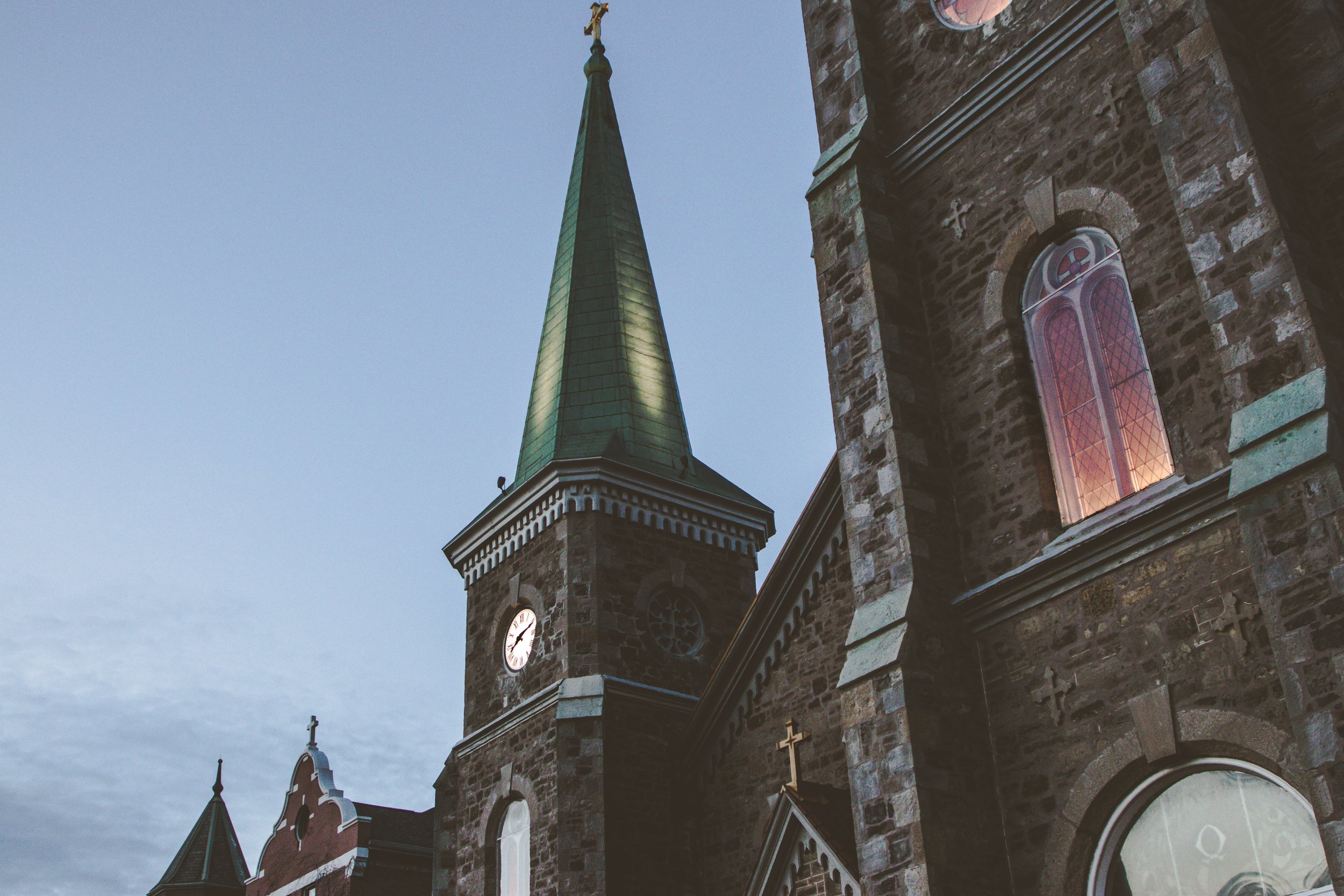
Exploring Church Spaces: Pros and Cons of Renting Versus Owning
(Left to right: personalproducer and personalproducer, via Getty Images)
Exploring Church Spaces: Pros and Cons of Renting Versus Owning
How do I know when to rent or buy space for my church?
by Hanno van der Bijl, Managing Editor, Applied Research
A pastor finds a man outside the church building crying out to God. The pastor knows the building rises as a beacon of hope for this man struggling with substance use. But the church’s leadership struggles with the six-figure cost of maintaining that beacon.
It’s a fraught question many pastors and church leaders face as they discern the physical footprint of the church gathered: do they rent or do they buy?
Boston’s congregations are almost evenly split between property owners and renters, according to EGC’s survey of property records. Just like individuals and families discern whether to pay a landlord or a mortgage, churches have to weigh the risks of renting or buying when looking for space.
But how do you know when it is time to do one or the other? While the decision often simply comes down to financial feasibility and long-term goals, there are other factors to consider. We interviewed over a dozen church leaders with experience and expertise in the Boston area to help churches navigate the real estate scene.
Renting
Many church leaders we surveyed are big fans of the flexibility renting has to offer.
Renters can pay for a worship space only for the hours they need them. They can also buy or rent smaller spaces for other times as necessary.
Renters have the benefit of lower initial costs and less financial burden. They don’t need a major initial capital investment, and they’re not responsible for major repairs and maintenance thereby avoiding costly risks associated with owning property.
When it comes to renting from schools or other churches, the space is often already configured as auditorium and classrooms, so there’s no need to remodel. The landlord may also allow the renter to use items such as sound equipment or kitchen supplies without the expense of purchasing them.
A pastor near the city center said renting is a clear advantage if a church can secure a long-term lease. But that’s a big ‘if’ as schools and other institutions might only offer annual lease agreements.
Then there’s the flexibility to relocate. Churches who rent are nimble enough to meet elsewhere if circumstances dictate a move. If they outgrow their space, they can easily move to another larger location. In our 2025 Church Landscape Review of new church plants over a 10-year period, we found that only three of 21 congregations still rented space in the same building. While some congregations chose to move, some were forced out for various reasons, including COVID impacts.
Renting also allows some churches to meet in prime urban areas where buying is not an option. They can rent different spaces for special events or activities without the need to make a long-term commitment. And with less time and resources spent on property administration and management, they are freed up to focus on other aspects of ministry, service and outreach.
But for every advantage, there is a flip side.
“My idea of keeping the rental is to tell the church that we have to constantly assess ourselves. And also people will constantly assess you, whether you are a benefit to the community. That keeps us humble. Otherwise, we have a job that is not evaluated.”
What renters gain in flexibility, they give up in stability. They could be at the mercy of the personality of their landlords.
They have limited control over the use of the property: they can’t make significant changes to the space and can’t just schedule any activity wherever or whenever they like.
For those who are not renting exclusive space, they have to move equipment around as well as set up and break down furniture for gatherings. It can get old lugging around that heavy loudspeaker every week.
It is harder for those with a long-term lease to move to a new location if necessary. If their space becomes too small for them, they run the risk of losing families with young children who need space to run around.
And then there’s the disruption when the rent goes up, or worse, the lease is not renewed. Or even worse, when they are served an eviction notice. Rising rents in the city center have forced some churches to head for the suburbs.
While they can easily relocate, churches that rent space don’t build equity in property or have a permanent presence in their communities. This instability can make it hard to plan for the long-term.
Congregations who rent could be perceived by the community as not invested in the neighborhood for the long-term. But some church leaders take this as a good challenge. It motivates them to press into serving the community, earning their respect and support by showing them they add value to the neighborhood beyond extra traffic and business for local restaurants.
“My idea of keeping the rental is to tell the church that we have to constantly assess ourselves,” said a pastor serving near the city center. “And also people will constantly assess you, whether you are a benefit to the community. That keeps us humble. Otherwise, we have a job that is not evaluated.”
Buying
Churches with property enjoy the stability and control that comes with owning real estate. While other churches may be forced out of a neighborhood due to ever increasing rent prices, they can stay.
These congregations have the flexibility to schedule events and activities at their convenience as they have full control over how the property is used. They have the freedom to modify their space to meet the specific needs of the congregation and community. And they likely have the space for young families to grow and thrive.
The property itself can be a visible presence in the community. People can come and go for services, counsel, and other ministries in a way that is not possible with a church renting space from institutions such as schools or commercial spaces such as hotels.
A congregation’s long-term investment in real estate builds equity, and they may have opportunities to generate revenue by renting out space to other churches or members of the community.
Their permanent presence and investment in an area also has the potential to develop leverage with the community and city. They are stakeholders with a voice.
When the pandemic hit, congregations with property were able to rent space to others who couldn’t meet in their original locations due to distancing restrictions. And churches, who had paid off their mortgages, were better able to weather a decrease in tithes and offerings. In many ways, COVID affected renters more severely than owners, but congregations with mortgages were at risk of default, foreclosure and bankruptcy. And if they had any deferred maintenance projects that became active problems, they faced greater financial risks.
So, just like with renting, there are drawbacks to owning property.
“If you own a building and you have parking, or if you have some access to land in a really expensive area, you could do things that would benefit the community—that the community would love, that your church would love, that God would love, everybody would love it. It would gain some real momentum for everyone.”
The benefits of owning dramatically decrease when it comes to the high cost of maintenance and repairs, especially with older buildings. Broken boilers, slate roofs with missing tiles, church steeples with rotting wood are all expensive things to repair.
The initial cost of buying church property can be high for a congregation. They also have to factor in ongoing financial obligations such as insurance and utilities. Some experts recommend keeping as much as six months of operating expenses in reserve. There are also higher liability and insurance costs when it comes to owning as opposed to renting. The specter of property taxes looms as a possibility for some churches.
No investment comes without risk. Changes in the market can negatively impact property values and the financial stability of churches.
But depending on their location, there is potential for churches to think creatively and do innovative things with their properties. Many churches are located on prime real estate that community members, city officials, and developers want to capture and activate for other uses. If churches are putting their properties to good use in partnership with local entities, they have a voice in prominent areas of the city. But if congregations only use their buildings two or three times a week, they run the risk of creating dead space on a city block. Church buildings that generate low activity similar to self-storage units or parking lots can be detrimental to the vibrancy of a street or neighborhood.
That is why some pastors are encouraging their peers to think outside the church box and imagine other uses for the land their buildings sit on. They could engage a partner to redevelop the property for a mixed-use project. That would likely entail tearing the building down and replacing it with something the neighborhood wants or needs, such as a non-exploitive housing development. The church would own a worship space on the ground floor and share ownership and profits with the developer in perpetuity.
“If you own a building and you have parking, or if you have some access to land in a really expensive area, you could do things that would benefit the community—that the community would love, that your church would love, that God would love, everybody would love it,” one pastor in Greater Boston said. “It would gain some real momentum for everyone.”
There is potential for your church building to shine as a beacon of hope on a metaphorical hill in your community. The stewardship of church space is a ministry in and of itself. And like any ministry, it presents unique challenges and opportunities to seek first the kingdom of God at this particular time in your particular neighborhood. What could the Holy Spirit be saying to your congregation about the use of the real estate entrusted to you?
Resources
Renting and buying both come with short- and long-term risks. Here are some resources to help you develop the right questions to ask before making a decision.
To Build, Buy, Lease or Rent…that IS the question
by Tim Cool, Smart Church Solutions (March 22, 2019)
https://www.smartchurchsolutions.com/resources/blog/to-build-buy-lease-or-rent-that-is-the-question/
Renting Versus Buying Your Church’s Facility
by Evangelical Christian Credit Union, XPastor (December 5, 2012)
https://www.xpastor.org/finance/banking/renting-versus-buying-your-churchs-facility/
How to Buy a Church Building: The Ultimate Guide to Buying a Church for Sale
by Griffin Church Loans (April 28, 2023)
https://www.church-loan.com/blog/how-to-buy-church
Sacred Space for the Missional Church: Engaging Culture through the Built Environment
by William McAlpine (Wipf and Stock Publishers, 2015)
https://wipfandstock.com/9781608994687/sacred-space-for-the-missional-church/
Top 10 Things to Know When Buying a Church Property
by John Muzyka, Church Realty (May 15, 2020)
https://www.churchrealty.com/top-10-things-when-buying-a-church-property/
How to Rent Well: Helping Congregations Navigate their Economic Future
by Rooted Good (February 22, 2024)