
BLOG: APPLIED RESEARCH OF EMMANUEL GOSPEL CENTER
Crossing the Bridge
Civic engagement can feel overwhelming—especially if no one in your faith community ever modeled it. Here's what one white evangelical learned by jumping in anyway.
Emmanuel Gospel Center
Crossing the Bridge
Lessons l’m learning on the road to civic engagement.
by Megan Lietz, Founding Director, The Race & Christian Community Initiative
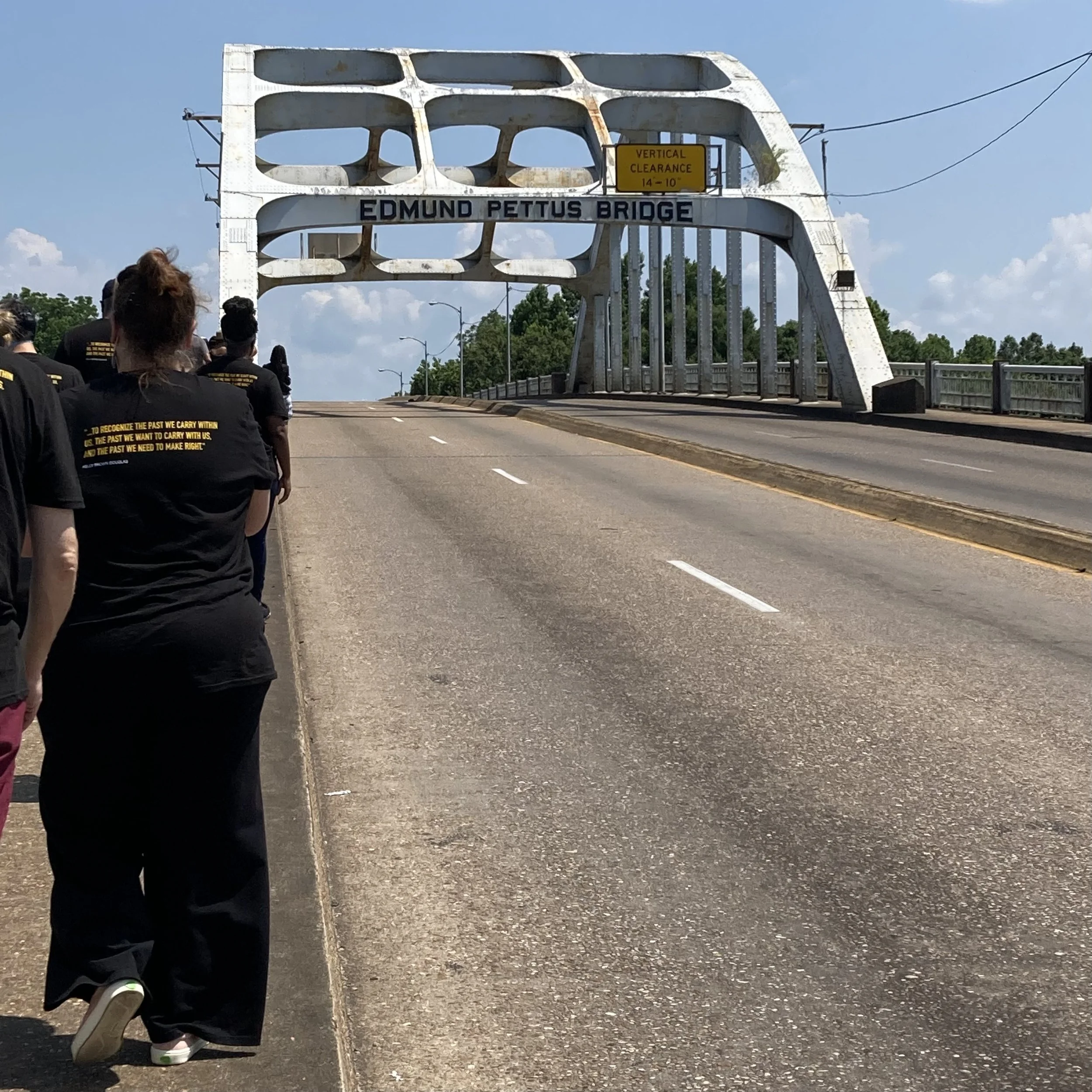
Joanne Bland spoke with wisdom and authority as she recounted her experiences as one of the youngest participants in the 1965 march from Selma to Montgomery. She recalled the events of Bloody Sunday and spoke of her community’s tireless efforts to help preserve this history and the voting rights so many had fought and bled to secure. As she concluded, a participant asked, “So, what should we be fighting for today?”
With clarity and conviction, Ms. Bland said, “The same thing we fought for back then.”
She said this in 2024. I couldn’t have imagined how true her words would ring today.
Many of the deeply rooted problems we see in our country won’t go away through personal transformation alone. The enduring issues that plague our nation are rooted in policies and social systems beyond our immediate control.
One way we can contribute to changing these systems is through civic engagement and political action. I believe these are tools Christians can use to continue Christ’s redemptive work and seek the kingdom of God.
As someone who cares deeply about addressing racial injustice, I’ve long had civic engagement on my radar as a way to make change. But as someone who was also raised as a white evangelical, I encountered obstacles to living out my faith by pursuing systemic change.
As someone still new to civic engagement, I wanted to reach back and share both the obstacles I encountered—and what helped me navigate them. It’s my hope that my story might help others overcome their own barriers to civic engagement and encourage Christians to be more active participants in contributing to the change they want to see.
“I don’t know how to get started!”
This is something I often hear as I talk to white evangelicals; and trust me, I can relate. We didn’t talk about politics in my family growing up. At church, we were encouraged to make a difference for Jesus, but it was assumed that this would happen in our personal spheres. So when I desired to learn more about how to make social change and contribute to the dismantling of systemic racism, I felt like neither my family nor my church had equipped me to enter the civic sphere.
As I sought to learn, I realized I didn’t even know how to get started. I wasn’t sure how change happens or how to get involved. What’s more, I didn’t see others from my evangelical background working to address systemic racism. I didn’t have examples from my own tradition to follow or a pathway from within my community to help me learn.
I lamented that the community I had come to love didn’t speak into matters so close to God’s heart. I lamented the narrow view of God’s redemptive work that had come to inform our practice. I lamented how I felt I needed to leave my people and my homeland in order to more faithfully follow Jesus in a multiracial world.
Sometimes, as Christians, we can feel deeply about something, but let practical barriers keep us from responding to our convictions. I wanted to get involved, but felt I didn’t know how. It was hard enough for me to carve out time to take action. So, finding time to learn about civic engagement felt like a learning curve I just didn’t have the capacity to climb.
But herein lies my first faulty assumption: That in order to get involved, I have to know before I go.
Especially as white people, we’re often used to being informed. To being the knowledge-holders. To having the privilege, before starting an endeavor, to get all our ducks in a row.
But with something as vast and complicated as contributing to systemic change, that’s an unrealistic expectation. While we should do our homework and do our best to be informed, we cannot let this be a barrier to engagement.
Instead of feeling that we need to know everything—or be embarrassed for not knowing—we simply need to get started and learn as we go.
“I don’t need all the answers to get started. I can learn as I go. ”
So that’s what I did. I jumped in. I joined the meeting. Attended the rally. Helped people register to vote. I didn’t always know what I was doing. I often felt like the awkward new kid. I had to ask questions to figure things out. But I was there. And in being in the room, I’m learning lessons I can share, noticing gaps that need to be bridged, and beginning to discover pathways that, as imperfect as they may be, might provide next steps for those who come behind me.
Just start somewhere…
So if you want to get involved in civic engagement, I encourage you to just start somewhere. No, you don’t know everything. Yes, it will be awkward and clunky. And that’s OK.
Start at a place that feels accessible. Reach for the low-hanging fruit. It doesn’t have to be ideal; it just has to get you moving.
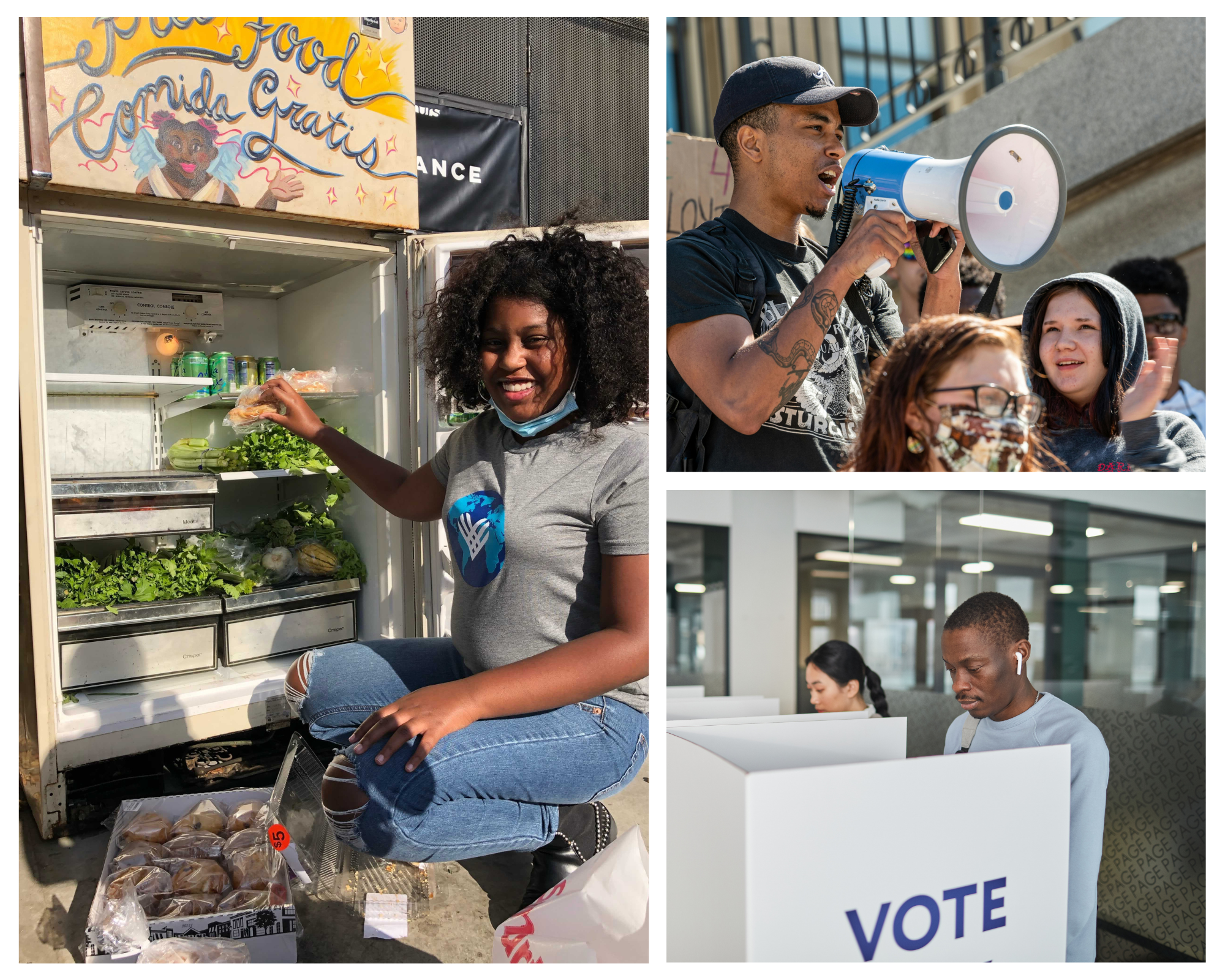
More specifically, I’d encourage you to start local. There are ample opportunities to participate in civic engagement in Greater Boston, many of which may connect with issues you’re experiencing in your own community. Action that feels proximate and contextualized can be easier to enter into, sustain, and understand.
Emmanuel Gospel Center
Practical next step
Learn more about the following local organizations and join the newsletters of an org that interests you! Joining their newsletter will help you stay informed about upcoming learning and action opportunities.
Boston-based: Prophetic Resistance Boston
North Shore: Essex County Community Organizing
In my experience, as someone who jumped in with far less preparation than I would have liked, I found local groups to be welcoming and happy to answer questions. They even offer trainings to help people learn and grow.
This comes with two caveats, though: I came humbly, and I came to help. I didn’t come to lead—I came to learn. And I learned through action. I wasn’t just bringing my questions, but giving of my time and energy to support the cause at hand.
Recap: When I let my lack of knowledge be a barrier to entry, I didn’t contribute to systemic change. But when I jumped in and took a learning posture, I realized you can learn while making a difference. I don’t need all the answers to get started; I can learn as I go.
“But I need to do something ‘big’!”
I care deeply about issues related to race. My passion is both a motivating force and an expression of God’s heart. But it can also be an obstacle when I feel my action needs to be commensurate with my passion. Just because I care deeply about something doesn’t mean I need to get involved in a big way—at least not to begin!
But this isn’t just about my passion or my experiences as a leader in various spheres. It gets at something deeper within the human psyche, as well as a common obstacle I’ve seen in white folks desiring to contribute to the dismantling of racism.
Often, white people want to do something that feels big or significant. Something they can feel good about or proud to share with a friend. While I could muse on why I think this is, what I know is that this inclination is often a barrier to effective action. In an effort to do something that feels big, we often take on a task outside our capacity. And despite our best intentions, we aren’t able to actually do that “big” thing.
For me, this meant wanting to show up as a committed, ongoing volunteer. But as a ministry director, church leader, and mother of elementary-age children, I never had the capacity to dive in.
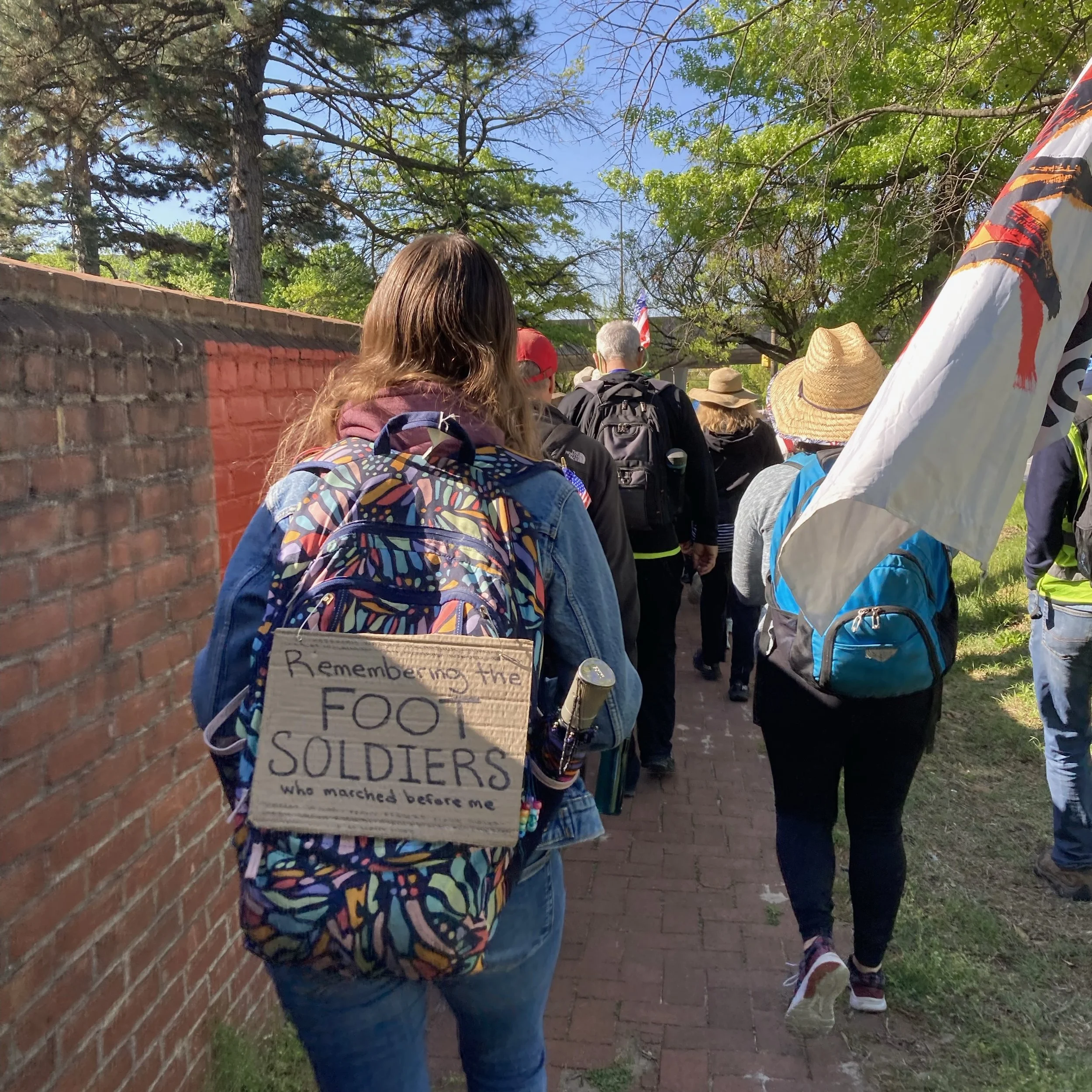
Then I traveled down South and met with foot soldiers from the civil rights movement. I met ordinary people who contributed to real change, not because they had the capacity in their lives to do big shiny things, but because—even in the midst of life—they kept showing up. They kept doing what they could. Many of these people were children and teenagers at the time. They weren’t the leaders of society; they were people who could show up. They were bodies who could be counted. They were volunteers who could help with that one thing.
And if they could do it, I could do it. I would no longer believe the lie that what I had to offer was not big enough.
“Don’t let the desire to do something big prevent you from doing anything at all. ”
Commit to the little things.
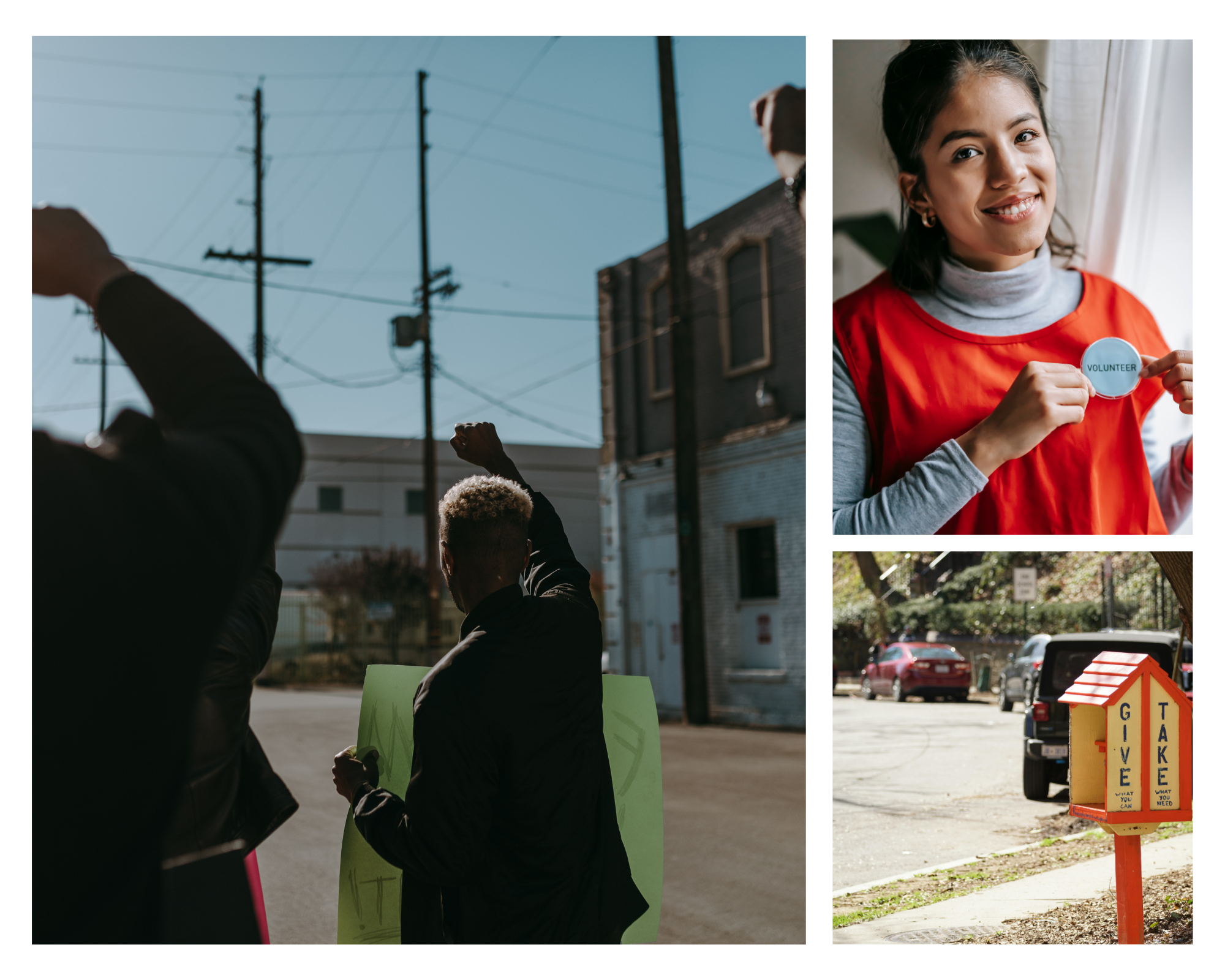
So I committed to showing up whenever I could. A phone bank, an email to my senator, a community conversation, a service day. My action wasn’t consistent, but it was persistent. And over time, I ended up doing far more by committing to doing the little things I could, instead of waiting to do something that felt big or shiny.
More importantly, this work had me in the role best suited for me as a white person and as someone not originally from my current community. I didn’t serve as a leader but as a follower of people of color and seasoned activists who best understand the needs of their community.
I encourage you to worry less about doing something that feels big and get involved in ways that simply allow you to take action. The little things make a big difference when we all work together in community!
Practical next step
The next time you see an opportunity to take civic action, do your best to take it. You may not be able to swing it, but try. When you see these opportunities, ask yourself, could I do that one thing? It may not be much on its own, but if you make an honest effort to participate, you’d be surprised by how, despite all the other responsibilities and distractions, you can get it done. And before you know it, that one thing becomes a longer list of small, but significant actions.
Recap: Don’t let the desire to do something big prevent you from doing anything at all. Small actions over time can have a significant impact!
Emmanuel Gospel Center
“Will my contributions even matter?”
Do the little things I do really matter? I mean, when I’m one body, one signature, one vote in a sea of thousands, does it really make a difference if I show up?
These are some of the questions that would go through my mind as I juggled different priorities and did the math on whether or not it was worth showing up. And to be honest, in any singular instant, no, it probably doesn’t matter that much. But collectively, little things make a difference.
I recently experienced collective power in a deeply encouraging way, reminding me of how little actions can make a big difference. I was one of about 50 marchers who, collectively, walked from Philadelphia to Washington, D.C. While none of us could have done it alone, lots of people did little things to support this massive undertaking. There were people who coordinated, cooked for us, offered us a place to stay, or simply let us use their bathroom. Every day, we all worked together to load or unload our supplies. And little jobs, like driving shuttles that offered individuals a break when needed or making sure that everyone had a name tag, made a felt difference in building an inclusive and welcoming community.
“When everyone does their part, we can accomplish great things through the power of community.”
By themselves, the march wasn’t going to make or break based on whether or not Sister So-and-So brought her casserole to the potluck or that driver honked in support as we marched down the road. But it was the simple acts of kindness that nourished our bodies and souls. It was the little things that made a difference in the day-to-day and, collectively, helped everyday people walk over 160 miles.
Put it in perspective.
When everyone does their part, we can accomplish great things through the power of community. So I encourage you to evaluate your action not by the size of the action itself, but by its impact when added to the collective efforts of a community.
Practical next step
Check out this two-minute video to learn about how the collective power of everyday people contributed to the success of the Montgomery Bus Boycott.
Recap: Individual actions may feel insignificant in isolation, but collective effort—made up of countless small contributions—is what makes big things possible. Showing up matters, even when it doesn't feel like it.
It’s our turn.
Joanne Bland, who set an example through her activism, passed away earlier this year. She is no longer with us to fight for the voting rights she gave so much of her life for. Nor was she alive to hear the recent Supreme Court ruling, which limited the power of the Voting Rights Act—yet again.
But now it’s our turn. At a time when our country is rolling back civil rights and threatening the very practices that make us a democracy, it’s time to take a stand.
We would all like to think that, if we were alive during the civil rights movement, we would have stood on the right side of history. We would have marched like the young Joanne Bland. But the fact of the matter is that what we’re doing now is what we would have done back then.
If you want to take action and contribute to change, you can. Even if you don’t know how to get started, even if you feel you can’t do anything big, and even if you question whether the little you might contribute makes a difference.
It’s not too late. You don’t have to let those obstacles stop you. They stopped me for a while, but I pray that you, too, can overcome.
Want to learn more about how Christian faith calls us to build shalom in our communities? Check out RCCI’s Toward Shalom Workshop Series to explore the biblical and theological foundations for addressing racism today.














Practicing Postures for Shalom
When you march 160 miles, you quickly discover how much you need other people — and how hard it is to let go of control. For white Christians working toward racial justice, that discomfort isn't an obstacle. It’s the point.
Emmanuel Gospel Center
Practicing Postures for Shalom
Invitations from a 160-mile march on how to work toward shalom in the ordinary
by Megan Lietz, Founding Director, Race & Christian Community Initiative
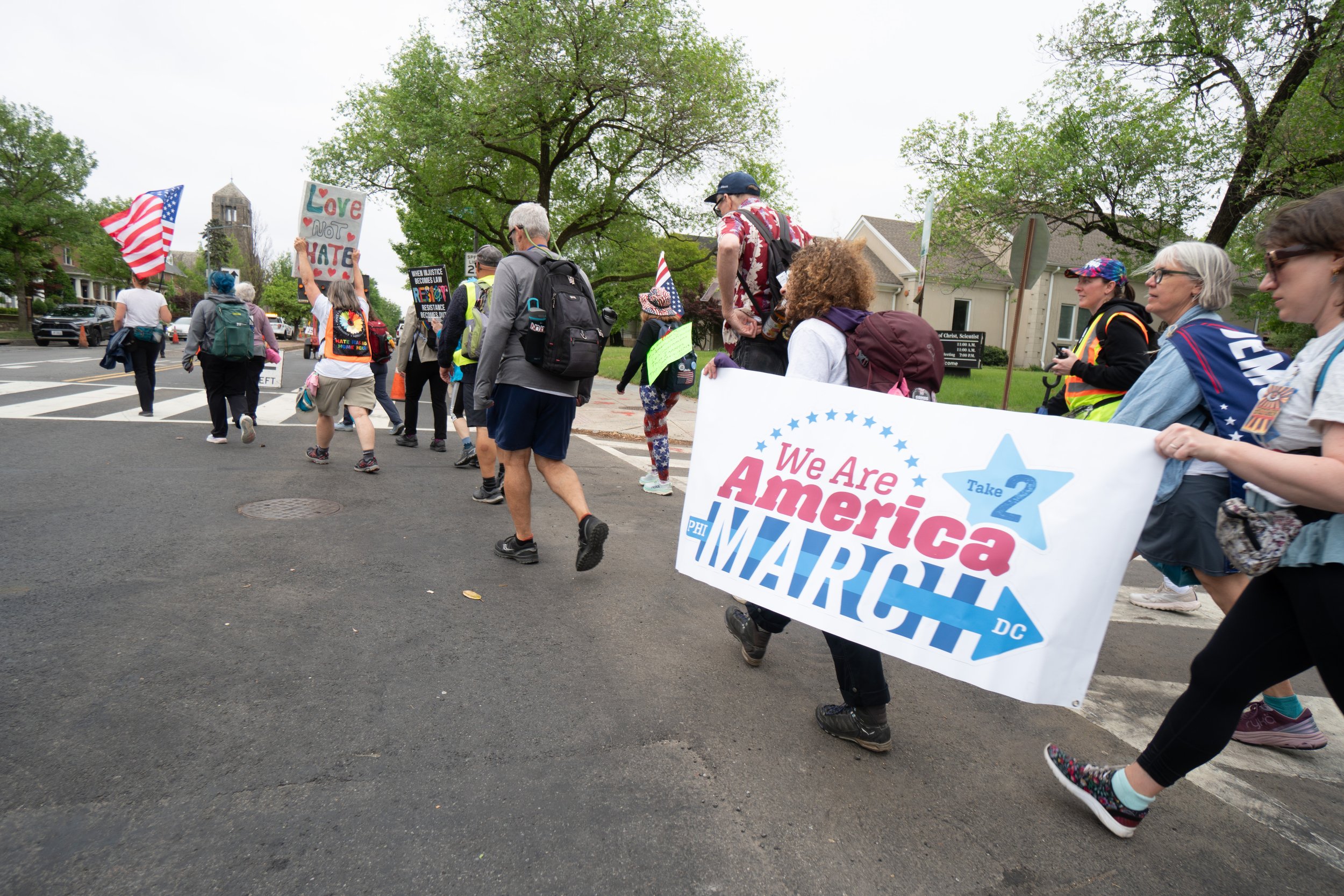
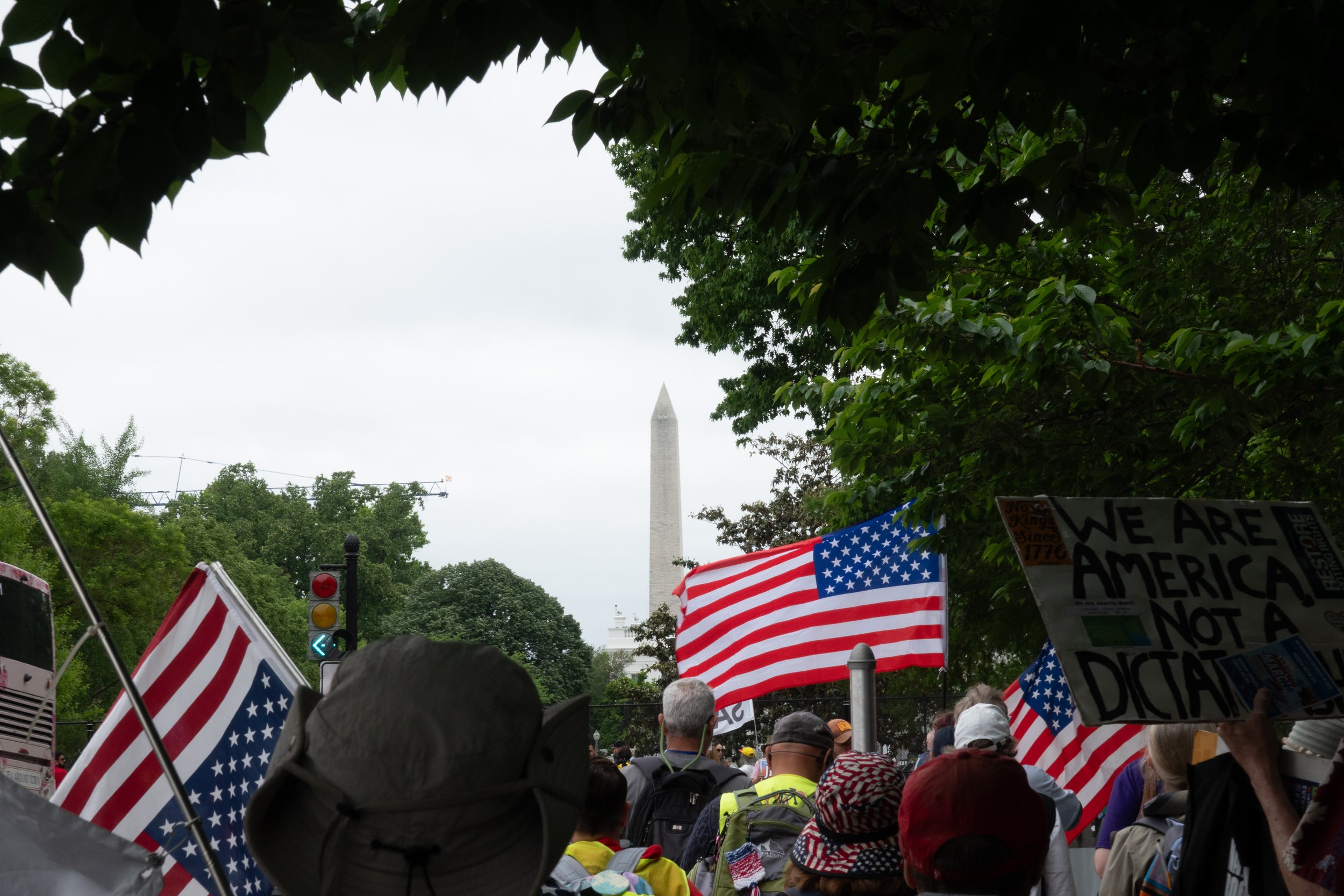
With racism and xenophobia on the rise, the Church must stand up and take action. I had the honor of participating in a portion of the We Are America March: a 160-mile journey from Philadelphia to Washington, D.C.
The one thing that united marchers was a desire to see our country live into our democratic ideals. But with such a diverse group, there were many reasons people participated. I marched to honor those who marched before me, to learn, and to be a faithful witness to Jesus. Throughout the march, I spoke about the foot soldiers of the civil rights movement who inspired me to engage in civic life. I was touched by the power of community and spoke openly about how my faith in Jesus motivates my justice journey.
What struck me most was how the march provided an invitation to practice the postures of shalom-building. This led me to reflect on the importance of Christians practicing these postures today.
Participating in an inter-state march is no small undertaking. It comes at a cost. But I found that the cost was paid back many times over through the way God formed me and the blessings of community. I highlight three areas I feel the march invited participants to grow—areas white Christians need to practice to nurture shalom and invest in our own liberation.
ulzimate
Letting Go of Control
When you’re on a week-long march, there’s much that isn’t in your control. Plans pivot. Weather changes. You don’t always know what you want to know.
I’m someone who likes to be in control. To have a plan. To know what’s next. Though shaped in part by my personality and experiences, I also recognize that this desire for control is a core component of whiteness. From the earliest days of racialization, it motivated racial hierarchy and was used to keep it in place. And whether I realize it or not, I’ve been socialized in ways that lead me to desire, expect, and grasp for control in order to feel OK.
The march was an opportunity to have faith, to know that God is in control, and to release the need to know. When I wanted to check the online schedule or ask how a change would affect the rest of the day, I paused. I don’t need to know. Others are working it out. Trust others to take the lead. I don’t need to be in control.
When I released my desire to be in control to God, I received the gift of being more present to my work that day. I was also better positioned to be formed by my Lord and Savior.
While these dynamics are amplified in an immersive experience like a march, we have—and should take—the opportunity to practice releasing control in the day-to-day.
“While these dynamics are amplified in an immersive experience like a march, we have—and should take—the opportunity to practice releasing control in the day-to-day.”
As white people who desire to contribute to the dismantling of racism, it’s critical that we learn how to let go of control and share leadership. But this is hard to do in real time. We hope we’ll be the kind of people who let go of control when it counts, but how will we do so without practice?! We won’t do it when it counts the most if we aren’t learning to release control in other areas of our lives.
Practical suggestions for learning to let go of control
Next time you’re noticing you’re not in control and feeling anxious about it or like you want to take action to put the ball back in your court, take a breath. Ask yourself, “Do I need to be in control right now?” Questions that can help you determine this include:
Whose comfort is my need for control really serving?
Is my urge to lead coming from competence and calling, or from habit and privilege?
What am I afraid will happen if I'm not in charge?
Have I been invited into leadership here, or have I assumed it?
Noticing when we’re vying for control—and intentionally giving it up—can build our muscle to do so when racial equity is on the line. It helps us practice more liberated ways of being.
This is hard work, but it can be done with God’s help. I offer the following breath prayers as a grounding exercise: Breathe in: “You are God.” / Breathe out: “I am not.”
ulzimate
Trusting for Care and Abundance
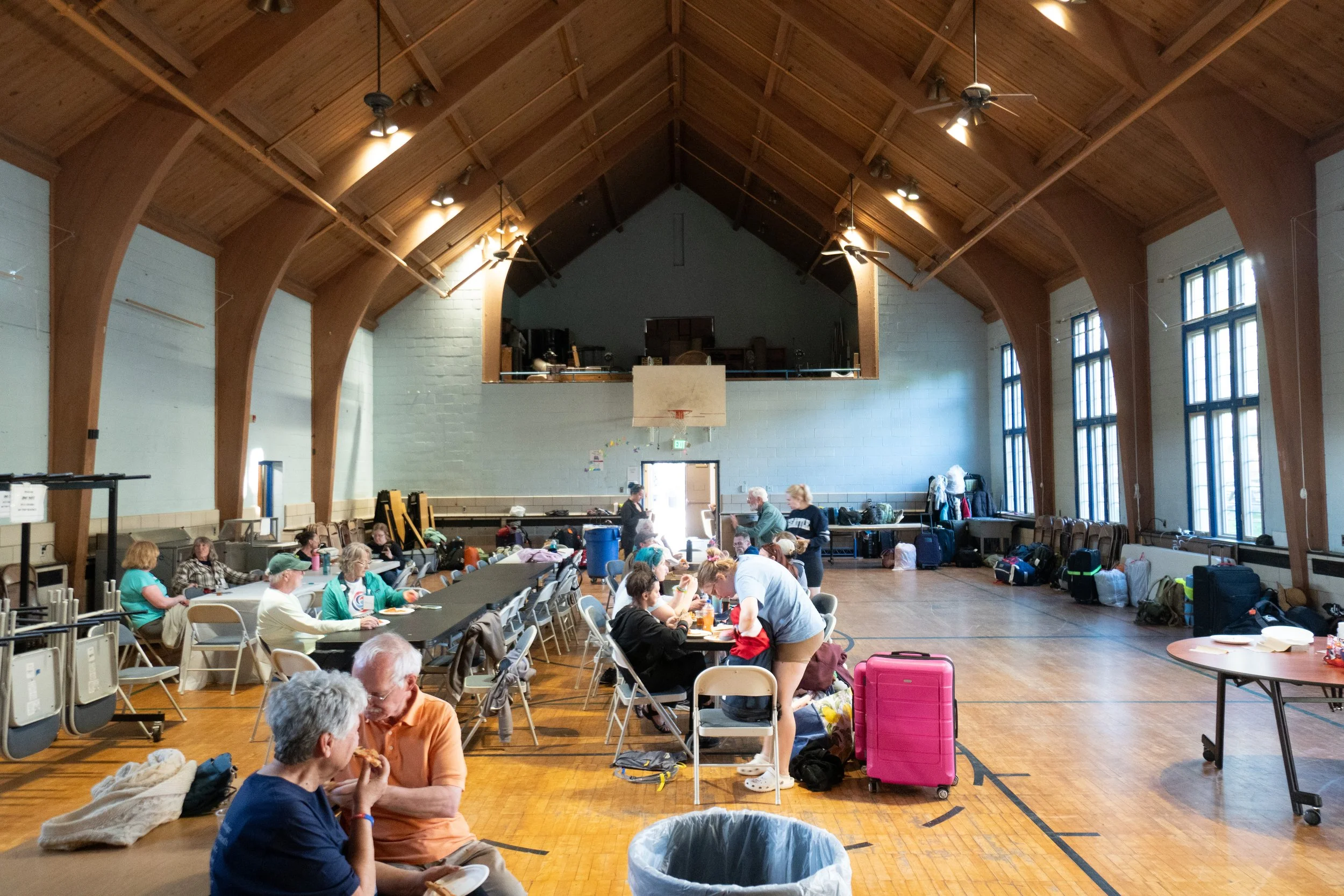
On the march, we would pack up our meager belongings, put on our shoes, and walk an average of 10 miles a day until we reached where we would sleep that night. When we arrived, we would be welcomed by our hosts, fed dinner, and claim a space to set up our sleeping bag. This rhythm reminded me of God’s people on the move in the wilderness, following the cloud by day and pillar of fire by night (Exod. 13:21-22).
When marchers set out each morning, we wouldn’t have everything we needed for the day. We had to trust in the generosity and hospitality of others. Churches that opened their doors. Volunteers who made sandwiches. Medic teams who cared for our feet. And not least of all, my fellow marchers who consistently offered encouragement and kindness, be it helping me carry my luggage, finding a lost pillow, or giving up their own spot so I could have a more comfortable place to sleep.
Marching invited participants to trust God’s providence and care through his people. In doing so, I grew in my faith. I experienced encouragement and healing as I received kindness from strangers. I came to better understand why Jesus would have sent out his disciples with little more than a staff (Mark 6:8), or told the Israelites to only gather enough manna for the day (Exod. 16:4): Because it was an exercise of faith.
So much of the racism and xenophobia in our nation is derived from the belief that there’s not enough to go around. That if one group thrives, there won’t be enough for another. It is counter to God’s heart for mutual thriving and his instructions to seek the peace of the city and pray for it “because if it prospers, you will prosper” (Jer. 29:7).
“Marching invited participants to trust God’s providence and care through his people.”
Especially as people of privilege, many of us can meet our daily needs on our own. But learning to trust others and receive their care is itself a gift. I believe it can reassure us that, even as we are giving generously and sacrificially to others, we can be cared for too. God himself will provide through his people. We are an interconnected, interdependent body (1 Cor. 12:12-27), and are designed to function as such.
For me, the march served as an invitation to embrace our interdependence and lean into community. Like letting go of control, we need to practice doing this. We don’t need to hoard resources or hold things too tightly. We should bless others, because they are God’s blessing to us.
Practical suggestions for trusting in care and abundance
These spiritual practices help me trust that God will care for me, even as I give of myself:
Regularly give tithes and offerings: I can give to God and others and still have enough myself.
Incremental fasting: I can give up things I feel I need, like caffeine or sugar, and still have enough energy and emotional resources to do what God has for me that day.
Ask for help when I need it: This is a hard one, but the more I’m willing to ask for help and receive from others in the small things, the better able I am to embrace the interdependent nature of the body of Christ!
ulzimate
Persevering Through Discomfort
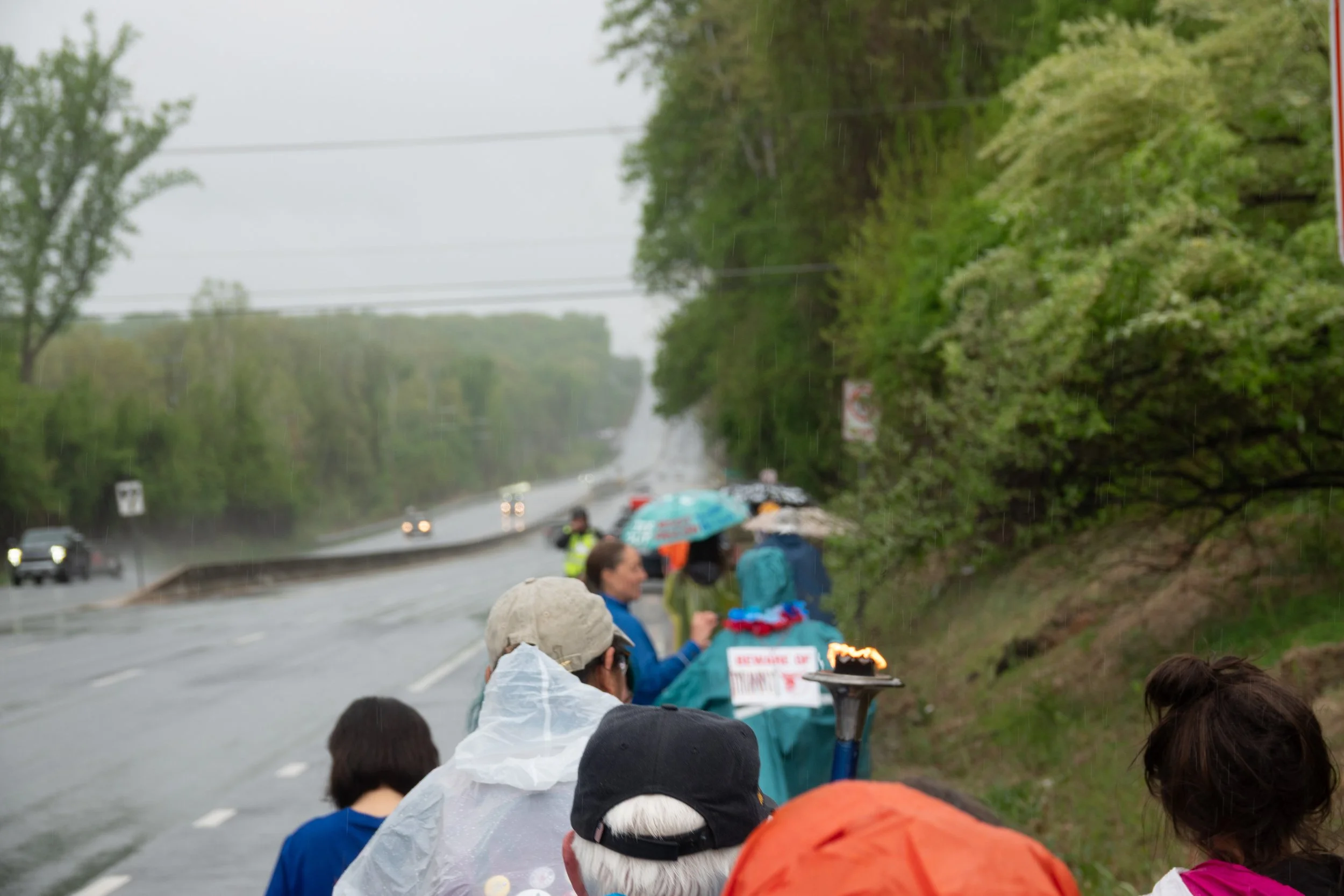
Overall, during the march, I felt comfortable, cared for, and safe. But there were certainly moments of discomfort, like realizing that I’d be sleeping next to strangers, not having all the info I wanted when I wanted it, marching through the rain, or moving stiff muscles and sore feet.
The march provided an invitation to persevere through discomfort. Because white folks are a part of the dominant culture, we are often afforded the opportunity to be in spaces and cultural contexts that are familiar to us and reflect our preferences. When we are not, we can feel uncomfortable. But as white people, too often we associate our discomfort with not being safe. We then tend to center our own emotions until comfort is regained—often while diminishing the needs and feelings of people of color.
“Learning how to persevere through discomfort is necessary to nurture shalom across racial lines.”
Like letting go of control or trusting in God to care for us, shalom-seekers can benefit from learning how to persevere through discomfort. Crossing cultural lines, decentering oneself, or participating in civic engagement is often not comfortable work. It is sacrificial. Learning how to persevere through discomfort is necessary to nurture shalom across racial lines.
Practical suggestions for persevering through discomfort
Some practices I use to persevere through discomfort include:
Noticing when I feel uncomfortable and naming it. (Mindfulness is the first step!)
Doing a body scan to notice where I may be holding tension and/or emotions in my body.
Practicing self-soothing exercises to work through discomfort.
ulzimate
Conclusion: Opportunities for Formation in the Ordinary
It doesn’t take an immersive experience like a march to practice these things. While I found the march to be an invitation to formation, it highlighted the work we need to be doing in the day-to-day. Consider the opportunities to:
Let go of control as you navigate changes in the office or collaborate on a group project.
Show kindness and generosity to a neighbor that extends beyond what you would normally give.
Vote in ways that may seem against your best interest in order to care for vulnerable populations and trust that God will care for you.
Practice self-soothing during a tense conversation with a friend or family member.
Intentionally orient yourself to your day with an open hand and flexibility.
“Lord Jesus, I invite you to form my ways of being. Come set me free. May I be more like you.”
There are opportunities for liberation in the ordinary. Would you look for them with me? Would you learn with me how to let go of control, trust in God’s care and abundance, and persevere through discomfort? I believe, as we invite the Holy Spirit to form us in these ways, we can be better agents of shalom-building. Not because we have what it takes, but because, by God’s grace, he can make us new.
If this resonates with you, I invite you to pray with me, “Lord Jesus, I invite you to form my ways of being. Come set me free. May I be more like you.”
Starter Resources on Race for White Evangelicals
You're White, and you want to engage responsibly and respectfully on race issues. You're an evangelical, and you believe the ministry of reconciliation is part of your calling as a follower of Jesus. Where do you begin? Check out these starter resources recommended by Megan Lietz, a White evangelical committed to helping other White evangelicals on their race journey.
Starter Resources on Race for White Evangelicals
by Megan Lietz
Biblical and Theological Foundations
As with all matters, it’s important that we root our understanding in God’s word. Explore the following resources to better understand the biblical and theological foundation of continuing God’s redemptive work across racial lines.

A Theology of Racial Healing: Though the word “racism” is not used in the Bible, scripture tells the story of God reconciling all people to himself and one another. In this resource, RCCI suggests a Biblically-grounded theology on Christ's redemptive work in the area of race relations.

The Sin of Racism: Though racism is often not named as a sin from the White evangelical pulpit, this article by Tim Keller explains from a biblical perspective how racism is a sin and that it manifests individually and corporately. Though there is disagreement around how to respond to racism, as Christians, we cannot leave this sin unaddressed.

Ethnic Identity: Bringing Your Full Self to God: God gave each one of us ethnic identities that reflect the character and image of God. Explore what the Bible has to say about ethnicity and culture in this self-led Bible study for groups and individuals. It reveals how God sees our ethnic identity and uses it as a part of his redemptive plan.
Race & Racial Hierarchy as the Product of Broken Humanity
While our ethnicities were given to us by God, the social classification of race and the racial hierarchy it serves was a product of a broken humanity. To learn more about how the concept of race developed and was shaped by socio-historical realities, not God’s will, explore the following resources.

Race: The Power of Illusion: This is a three-part PBS documentary that explores the origins of race and how it is not a genetic reality, but a relatively new social construct. Though somewhat dated, the foundation laid here is important to understanding the concept of race. If only one episode is watched, it is recommended to watch Part 2: The Story We Tell. It can be rented on vimeo or is available via Kanopy subscription service, that may be available through a local library.
Our Experience and Identity as White People
In order to engage effectively as white people in issues of race we need to understand how our experiences and perspectives may be different from those of people of color. An important part of this is understanding the racial privilege and power we have as White people because of the color of our skin. For some perspective, check out the following resources.

If you’re looking for a primer on how aspects of our identity like race and gender grant us measures of privilege and how they can impact our lived experience check out Allan Johnson’s book, Privilege, Power, and Difference.

Waking Up White is a memoir by Debby Irving, a white woman who grew up in a predominantly white, wealthy suburb of Boston, about how she came to see and respond to her whiteness. Her journey can offer insights and encouragement for your own.

In, White Awake: An Honest Look at White It Means to Be White, Daniel Hill leads readers through phases of White identity development and offers biblical tools to navigate these seasons of growth. He also offers strong chapters on markers of racial awareness and action steps you can take to progress in your racial awareness journey.
Peggy McIntosh’s article, White Privilege: Unpacking the Invisible Knapsack, is a brief and classic work that gives examples of how white people may experience privilege in their daily life. Simply becoming aware of what privilege looks like and how it can manifest in our lives is a crucial step!
Engaging Issues of Race
As we explore our identity as white people, we need to consider how this shapes our role in engaging issues of race and develop a toolkit for effective action.

Woke Church, by Eric Mason, explores the biblical call to justice that is for all believers and how the Church can regain its prophetic voice and practice to confront racism in the United States.

How to Be Last: A Practical Theology for Privileged People is a blog post by Christena Cleveland that lays a theological foundation for the posture that white people should take as they follow people of color into the work of racial reconciliation.
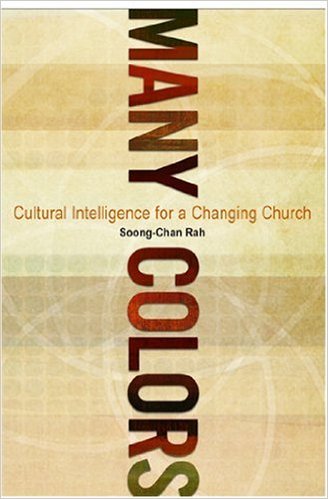
Soong Chan Rah’s book, Many Colors: Cultural Intelligence for a Changing Church, explores what Christians need to know and do to engage across racial lines in ways that are loving and respectful.
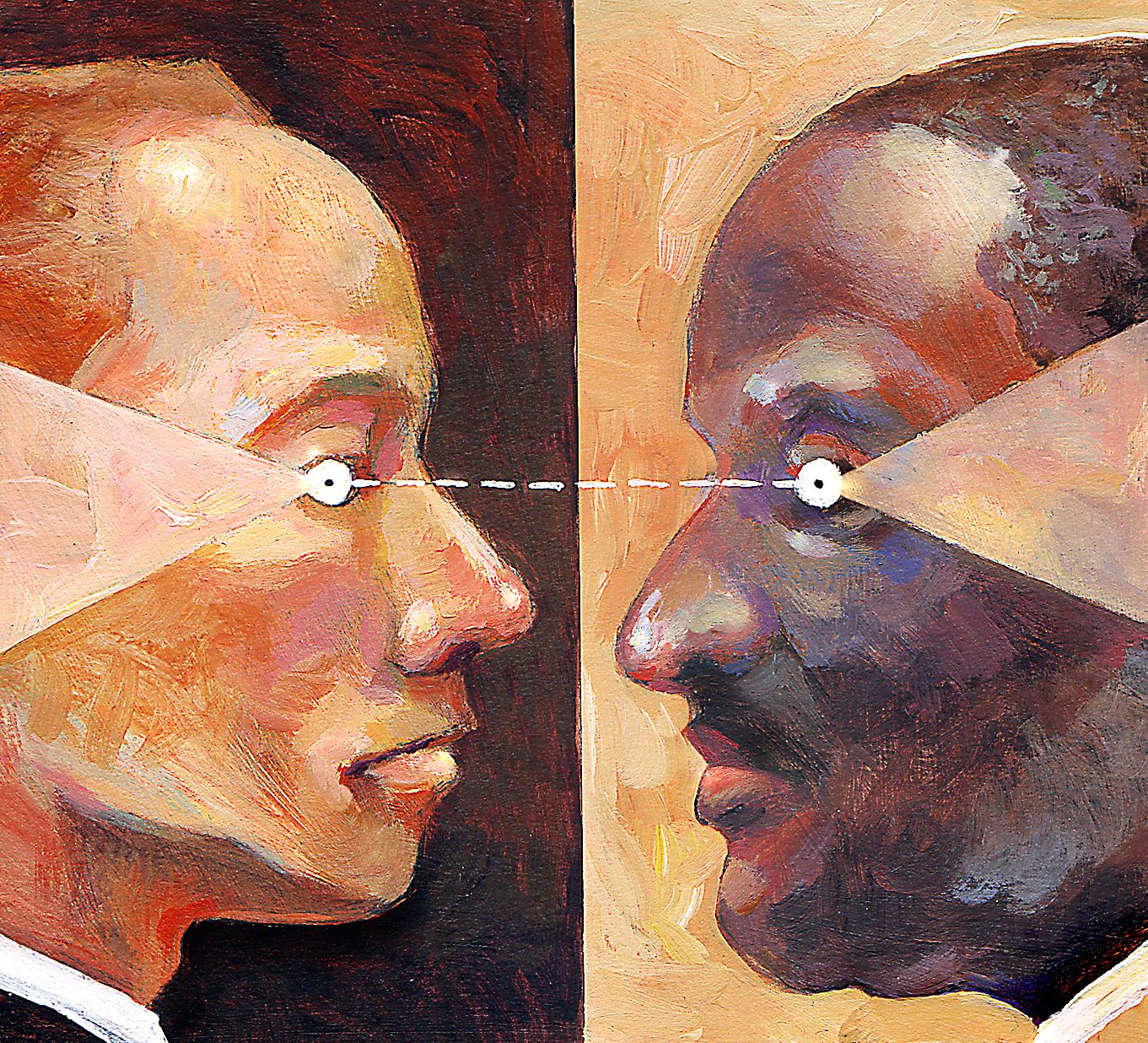
Mark Kramer’s article, Unpacking White Privilege: Feeling Guilty about Racial Injustice Isn’t the Point; the Point Is Doing Something About It complements Peggy’s McIntosh’s article by offering suggestions for how to respond to some of the privileges she identifies.
For additional resources, check out Next Step Resources for White Evangelicals.
Take ACTION
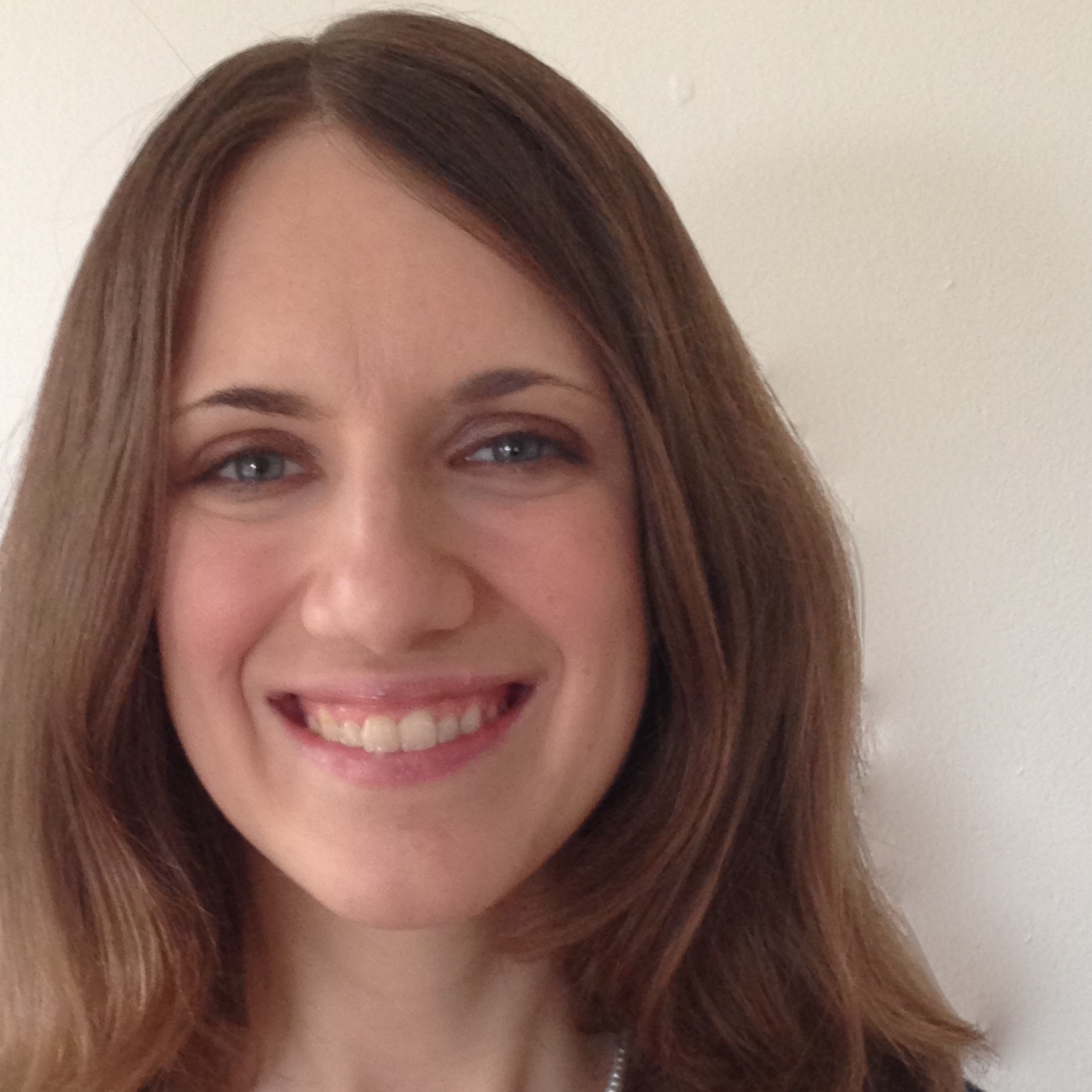
Megan Lietz, M.Div., STM, helps White evangelicals engage respectfully and responsible with issues of race. She is the director of EGC’s Race & Christian Community Initiative.
Churches Engaging Race Issues: Not Perfect but Taking Strides
White evangelicals are going deeper in racial justice, but still have much work to do. Three churches in the Boston area tell their stories.
Churches Engaging Race Issues: Not Perfect but Taking Strides
by Casey Lauren Johnson, Summer 2017 BETA Associate with Race & Christian Community
In March, 2017, Megan Lietz, Director of the new Race & Christian Community Initiative at EGC, released a call to action for White evangelicals to engage in issues of race. As we challenge White evangelicals to engage, we also want to celebrate those who are already doing so, and hold them up as an example for others. In this post we highlight the stories of three local congregations engaging in issues of race. We hope they will inspire you—and encourage you to action.
A Church Awakening to RACE ISSUES
River of Life Church, Boston, MA
There was a long, slow build of momentum as River of Life Church—a predominantly White congregation in Jamaica Plain—began to address the issue of not just racial diversity but racial equality.
It started with the voice of one individual, Ellen Bass, who had been involved with racial reconciliation for some time and wanted to see her congregation join in. Not everyone was on board, but there was enough support within the senior leadership to get some momentum going.
Their efforts began in earnest about two years ago with the formation of a Racial Equity Team. The team strategized about how best to address the issue of race within their congregation. They began with a four-week seminar series on issues of race for the entire congregation in place of worship services.
A few months later, River of Life followed up with a training for their leadership. This culminated more recently with a church retreat, where race was one of the topics addressed.
One of the biggest challenges they faced was that people were at different places on their racial awareness journeys. Some people had no idea that racial inequality was still an issue, while others were actively involved in racial justice efforts.
Emily and Rob Surratt, the leaders of the racial equity team, humbly admit they still have a lot to learn about racial reconciliation. While Rob had a deeper understanding of racial dynamics before taking leadership, Emily felt she didn’t know much, even as she volunteered to lead. In choosing to do so, she wasn’t confident in her own ability to engage issues of race, but was committed to learning more with the support of the community.
“[Emily] wasn’t confident in her own ability to engage issues of race, but was committed to learning more with the support of the community.”
River of Life knows that starting this conversation does not mean they have “arrived.” They want to encourage people by acknowledging that we all have work to do. We can all start where we are and make progress one step at a time.
Though the church views itself at the beginning of a sometimes frustrating and difficult process, they have high hopes for the future. They are eager to see what the Lord will do by his grace.
A Church Responding to Increasing Diversity
Grace Chapel, Multisite in Greater Boston
Grace Chapel—a multi-ethnic, multi-campus church—began addressing its increasingly diverse congregation in 1995. They started with efforts which simply celebrated the diverse expressions of culture within the congregation through luncheons they called the Grace International Fellowship.
Over the course of years, their efforts grew to include ESOL classes, an International Student Ministry Team, and a Cultural and Urban Awareness Weekend. These ministries not only serve the diverse population within their midst, but also help the rest of the congregation learn from diverse perspectives among them.
From these efforts, a Multicultural Initiative was created. Goals include recruiting diverse leadership, facilitating healthy multicultural relationships, creating a visible multicultural environment, and a commitment to ongoing education in these areas.
Grace Chapel recognizes this process as a “marathon and not a sprint.” Creating and committing to these goals has been at times frustratingly slow, but ultimately rewarding.
Grace Chapel's progress on multicultural issues has continued through a consulting engagement with the Interaction Institute for Social Change. They helped the church not only diversify its leadership, but create systems where people of color and people of non-majority cultures have a space at the table where they can share their voice.
“Grace Chapel recognizes this process as a “marathon and not a sprint.””
Dana Baker, the Pastor of Social Justice and Multicultural Ministry, celebrates the fact that Grace Chapel has now successfully planted a campus with no majority culture—a distinct accomplishment for churches who wish to reflect the diversity present in the Body of Christ within their congregations.
Joelinda Johnson, who grew up in the congregation and has served on staff at Grace Chapel, says the church became a completely different place during the years she was away at college from 2007-2012. She saw her church go from having a “pocket of diversity” to having people of color in several areas of leadership. She comments, however, while there are a larger number of people of color serving in lay leadership, there is still a ways to go in hiring staff staff of color.
Grace Chapel is glad for the work God has done and excited for what he will continue to do as they seek to serve the racially diverse communities of Greater Boston.
Churches Forming Friendships Across Racial Lines
North River Community Church, Pembroke, MA & People’s Baptist Church, Boston, MA
For pastors Rev. Dr. Wesley Roberts of People’s Baptist Church (a historically Black congregation) and Paul Atwater of North River Community Church (a predominantly White congregation), racial difference was a reality, but not a motivating factor for their relationship.
An informal connection between the two leaders, while serving on the Congress Committee for Vision New England in 2005, grew into a fruitful “Urban-Suburban Partnership.” They didn’t begin with racial reconciliation in mind—and yet they’ve developed the type of healthy, cross-racial partnership for which many people strive.
Rather than focusing on their differences, the pastors built their relationship on common ground. They connected over shared theology and values. They united in their shared goal to bring the gospel first to the city then to the ends of the earth.
In 2010, that goal began to be realized through their congregations teaming up to serve schools in Roxbury. This partnership allowed their congregants unique opportunities to serve the city of Boston while developing friendships across racial lines.
Both congregations have been able to develop a deep appreciation not only for the strengths, but also for the differences between their congregations. In fact, recognizing and addressing their different approaches to congregational leadership was an integral step in developing their partnership.
The pastors admit they didn’t know just what they were getting into when their partnership began. But they and their congregations have been mutually blessed. Rev. Dr. Roberts and Pastor Atwater hope to see more partnerships between urban and suburban churches, which they believe can happen when pastors simply get to know and appreciate one another.
LEADER TIP
For church leaders looking to develop relationships with leaders from other churches, Kelly Steinhaus of UniteBoston recommends choosing a leader from another church in the same geographical area as yours. You’ll have common ground (literally) as you reach across a dividing line or two and share your common love for Jesus and your city.
“The pastors built their relationship on common ground.”
One of the most rewarding parts of their relationship has been the realization that friendships created between the two congregations will far outlast any formal partnership. These congregations serve as examples of God meeting people where they are and performing the work of reconciliation in hearts and minds.
TAKE ACTION

Casey Johnson is pursuing a Master of Arts in Religion at Gordon Conwell Theological Seminary, and served as a summer 2017 EGC Intern with the Race and Christian Community Initiative. She first became interested in racial reconciliation efforts as a result of missions in Tijuana, Mexico, and service at an urban youth organization through the AmeriCorps. As a White evangelical, she wants to use the unique cross-racial opportunities and relationships she has experienced to help others engage issues of race in meaningful ways.
How Are We Doing?

Keywords
- #ChurchToo
- 365 Campaign
- ARC Highlights
- ARC Services
- AbNet
- Abolition Network
- Action Guides
- Activism
- Administration
- Adoption
- Aggressive Procedures
- Andrew Tsou
- Annual Report
- Anti-Gun
- Anti-racism education
- Applied Research
- Applied Research and Consulting
- Asking for help
- Ayn DuVoisin
- Balance
- Battered Women
- Berlin
- Bianca Duemling
- Bias
- Biblical Leadership
- Biblical leadership
- Black Church
- Black Church Vitality Project
- Book Recommendations
- Book Reviews
- Book reviews
- Books
- Boston
- Boston 2030
- Boston Church Directory
- Boston Churches
- Boston Education Collaborative
- Boston General
- Boston Globe
- Boston History
- Boston Islamic Center
- Boston Neighborhoods
- Boston Public Schools
- Boston-Berlin
- Brainstorming
- Brazil
- Brazilian
- COVID-19
- CUME
- Cambodian