
BLOG: APPLIED RESEARCH OF EMMANUEL GOSPEL CENTER
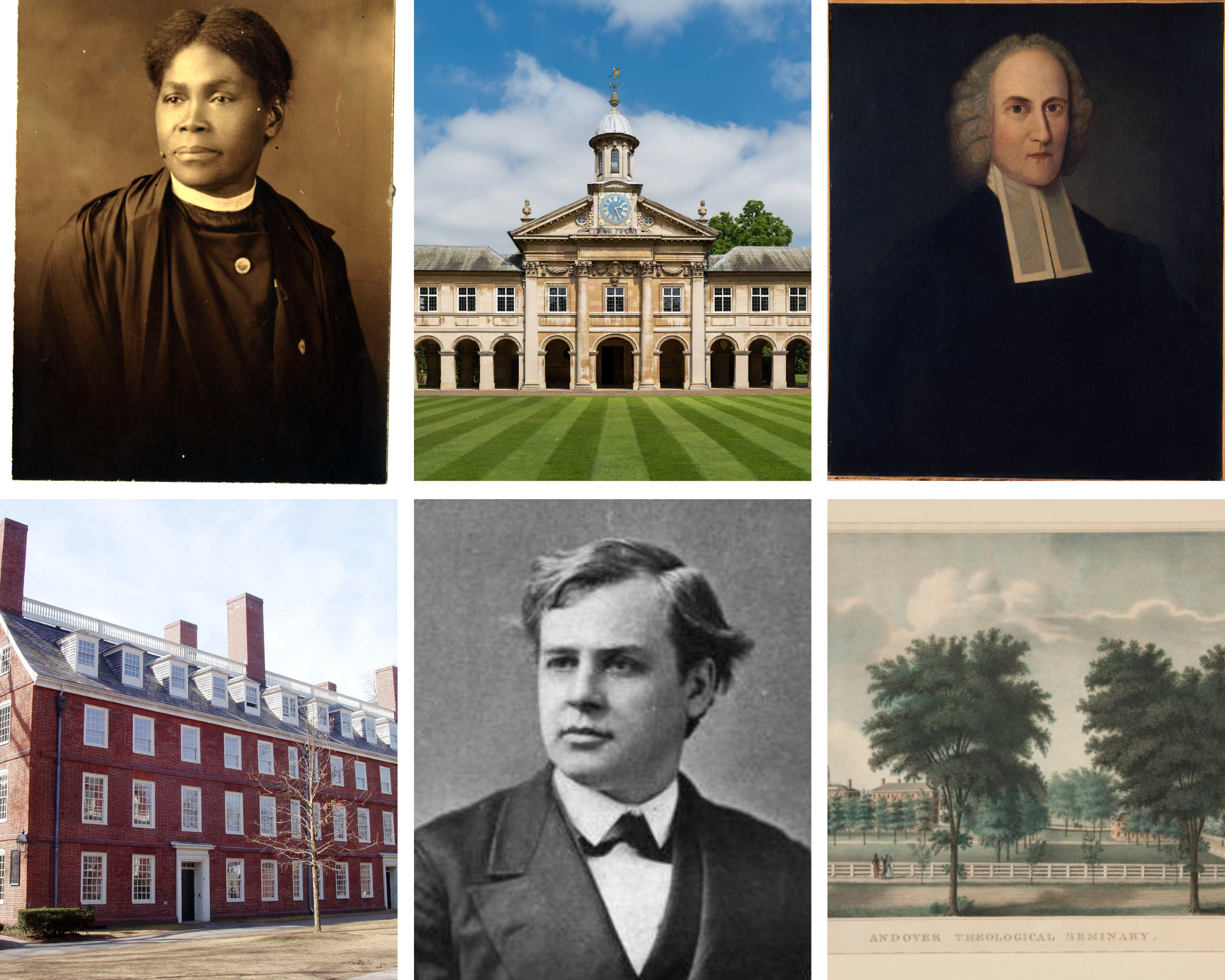
History of Theological Education and Ministry Training in New England
From Harvard College to Bible institutes meeting in churches, Boston and New England have a long history of innovation in theological education and ministry training. The successes and failures of schools in the past can help shape and inspire a new vision for training men and women for gospel ministry.
Emmanuel Gospel Center
New Beginnings: A History of Innovations in Protestant Theological Education and Ministry Training in New England
by Rudy Mitchell, Senior Researcher, Applied Research
Boston and New England have long pioneered innovative models for training pastors, Christian workers, and missionaries, exerting national and international influence on theological education. While some trends in this region have followed cultural and philosophical influences away from biblical orthodoxy, others have strongly supported world evangelism and church growth. By examining the enduring strengths of New England’s innovative approaches, one can discern key principles to guide the future of theological education in Greater Boston, ensuring it remains both adaptive and impactful.
The Days Before Harvard: Theological Education of Boston’s Early Pastors
Understanding the educational background of Boston’s early church leaders offers insight into their approach to differing views and how they designed Harvard College’s program. All first-generation Puritan pastors in Boston attended English universities, and most of the first-generation Boston-area pastors studied at Cambridge University, followed by some pastoral experience in England. (See the Appendix for a list of early Boston-area church leaders along with the education and ministerial training they received.)
The first three leaders of Harvard all attended colleges at Cambridge University. Nathaniel Eaton and Charles Chauncey attended Trinity College, and Henry Dunster attended Magdalene College. Although Boston-area pastors attended several colleges at Cambridge University, a number of influential leaders, including John Wilson, John Cotton, Thomas Hooker, and John Harvard, attended Emmanuel College, founded in 1584 to train young men for the Protestant ministry. It had become an influential center of Puritan education. Cambridge University, therefore, became a fertile seedbed for the growth and education of a large cohort of future New England pastors and leaders.
Laurence Chaderton, a key figure in the Puritan movement, was the Master of Emmanuel College from 1584 to 1622, during which time almost all of the Boston-area graduates of Emmanuel attended. The pastors of the First Churches of Boston, Cambridge, and Charlestown all studied at Emmanuel College. A few pastors, namely the early pastors of the First Church of Dorchester, studied at Oxford University, which was quite similar to Cambridge University at this time. Typically, these early clergy also held a Master of Arts degree, which was conferred on holders of the Bachelor of Arts degree from Cambridge and Oxford after a period of three years, without any further prescribed coursework. Although students, such as John Cotton, spent additional time studying or teaching at the university, others mostly pursued independent study while serving in a parish, since there was no strict residential requirement.
“Boston and New England have long pioneered innovative models for training pastors, Christian workers, and missionaries, exerting national and international influence on theological education.”
The methods of learning at Cambridge were later followed by Harvard. These included lectures, recitations, disputations, declamations, formal sermons, meetings with tutors, and private study. All the formal parts of this education took place in Latin. Students also learned Greek and sometimes Hebrew for Old Testament study.
At Cambridge University, the lectures were organized around questions and articles, with topics and subtopics arranged in a hierarchy of ideas. Public lectures were delivered in the Old Schools,1 and private lectures were given in the colleges. Lecturers were expected to give four lectures a week (although some seemed to be negligent in this).2 The public lectures included theology, medicine, and civil law, among other subjects. Biblical studies, Greek and Latin classics, and mathematics were emphasized. “Lecturers in language, philosophy, dialectics, and rhetoric were held to five lectures per week.”3
Student recitations were oral exercises in which students recited memorized material from texts or previous lectures, translated texts, or explained and defended interpretations. Disputations were informal and formal debates between students. The formal debate sessions lasted four hours, Monday through Friday, during Lent, and were full of ritual, rules, and traditions. Each student was required to participate in four formal debates for the B.A. degree. Students also had to give “declamations” or set speeches in Latin. It was expected that these would exhibit good style and draw quotations from the Greek and Latin classics.

Emmanuel College, Cambridge, England (DAVID ILIFF via Wikimedia Commons. License: https://creativecommons.org/licenses/by-sa/3.0/)
Students would keep notebooks called “Commonplace Books” with their selection of quotations and information on various subjects. Ministerial students would also deliver “Clerums,” formal sermons preached to the clergy on set days. Tutors played an important role in the educational system, providing academic and moral guidance and oversight.
A Cambridge education in this period “was dialectical, Aristotelian, and highly systematized. It was concerned with logic, logical formulations, and disputations.”4 This led to an eagerness “to divide truth from error” and to win debates with adversaries.5
One can see how the elements and tendencies of this educational background carried over to Boston, where disputations on doctrine and Christian practice were common. This educational experience also shaped Puritan leaders’ planning when they developed Harvard College. Some of the strengths of this education were its preparation of students to study the Bible in the original languages, to engage in clear and effective reasoning, and to speak in public.
A Theological School for the Commonwealth: Harvard College (later Harvard Divinity School)
Harvard was established to make sure New England had a well-educated clergy. In 1636, Harvard was founded to “advance learning and perpetuate it to posterity: dreading to leave an illiterate ministry to the churches, when our present ministers shall lie in the dust.”6
Henry Dunster, a graduate of Emmanuel College, Cambridge University, became president in 1640 and developed a course of study adapted from his alma mater. Since instruction and discourse were in Latin, students were required to know Latin before admission. They could prepare for college through private tutoring or at one of the early Latin schools: Boston Latin School (1635), Charlestown School (1636), Mather School in Dorchester (1639), Roxbury Latin School (1645), or Cambridge Latin School (1648).
Greek and Hebrew studies were emphasized in the first two years by daily classes. The purpose of this rigorous language study was to enable students to study the classics and exegete Scripture. The overall curriculum was still centered on the Trivium (grammar, logic, rhetoric) and the Quadrivium (arithmetic, geometry, music theory, astronomy), along with a focus on biblical studies and theology (using The Marrow of Theology by William Ames as a text).

Massachusetts Hall, Harvard University, built in 1720 (Daderot via Wikimedia Commons)
In the first two years, students studied basic mathematics and ethics, as well as logic, using the textbook The Dialectics by Peter Ramus, and rhetoric, using examples from Cicero and Quintilian, to prepare for “declamations” (set speeches in Latin). As they advanced to their third and fourth years, students studied Calvinistic theology, natural philosophy, moral philosophy, and metaphysics. They engaged in weekly “disputations” (debates), prepared sermons, and studied some practical theology.7
Once the first college building was completed, teachers and students lived together, sharing meals, prayers, and recreation. Although there were fewer tutors or teachers, the teaching methods were similar to those at Cambridge University, with disputations, lectures, daily recitations, declamations, and discussions with tutors. Students were expected to engage in daily prayers and devotions, and to learn the catechism.
“After God had carried us safe to New England and we had builded our houses, provided necessaries for our livelihood, reared convenient places for God’s worship, and settled the civil government: One of the next things we longed for and looked after was to advance learning and perpetuate it to posterity; dreading to leave an illiterate ministry to the churches, when our present ministers shall lie in the dust.”
By 1654, Harvard had 50 students. Further ministerial preparation took place after students received their Bachelor’s degrees. “A few students remained at Harvard to read for the Master’s degree, while most apprenticed with local ministers,” and continued independent study. “About half of Harvard students entered the ministry until about 1720.”8
In 1805, Henry Ware was chosen as the Hollis Professor of Theology, signaling a shift toward Unitarianism and theologically liberal views at Harvard. Since the Hollis Professorship of Theology was a key influential position, this was a watershed moment. This change played a role in the founding of Andover Theological Seminary and in the establishment of other later seminaries. In 1816, Harvard Divinity School became a separate school of the university.
Carrying the Torch: Yale College
In 1701 the Collegiate School, known as Yale College after 1718, in Connecticut was founded with a clear purpose: “The founding, suitably endowing & ordering of a Collegiate School within his Majesties Colony of Connecticut wherein Youth may be instructed in the Arts & Sciences who through the blessing of Almighty God may be fitted for Publick employment in both Church and Civil State.”9
.jpg)
Divinity College at Yale before 1870 (Wikimedia Commons)
Ten ministers, led by James Pierpont, took the initiative in bringing the plan to found Yale to the general assembly of Connecticut. They were given funding and the authority to direct its affairs. All but one of these ten founders of Yale were Harvard graduates. During the first several years under the leadership of the Rev. Abraham Pierson, students met together at his church, and instruction was not unlike pastoral mentoring taking place elsewhere during the eighteenth century.
Once the school was firmly established, the early curriculum followed Harvard’s curriculum of the latter 1600s and emphasized theology, the biblical languages, and Bible study. In its early years, Yale was largely focused on training ministers, and even later, when it broadened its focus, the school still trained many influential pastors and theologians: “Whereas almost three-quarters of the early graduates entered the ministry, that proportion fell to around one-half from the 1720s onward.”10
“By examining the enduring strengths of New England’s innovative approaches, one can discern key principles to guide the future of theological education in Greater Boston, ensuring it remains both adaptive and impactful. ”
Those influencing the founding of the college were interested in maintaining the pure Calvinism of the earlier Puritans, since some believed Harvard was becoming liberal in its theology. However, in the decades to follow, Yale would be influenced by revivals and new intellectual currents from England and elsewhere. Jonathan Edwards, a very influential graduate (1720), was a key leader in the First Great Awakening, and Lyman Beecher (1797) was a leader in later revivals in Boston. Jonathan Edwards’ grandson, Timothy Dwight, served as President from 1797 to 1817. His talented and spiritual leadership led to major growth of the college, curriculum improvements, spiritual revival, and influential theological movements, such as the New Divinity and New England Theology under Nathanael Taylor.
A separate Theology Department, which later became Yale Divinity School, was founded in 1822, and Nathaniel Taylor became the professor of theology.
A Broader Table: Brown University
In 1764, Brown University was founded as Rhode Island College. Although the school was open to students of any religious belief, the Philadelphia Association of Baptist Churches had appointed Baptist minister the Rev. James Manning to be President, and Baptist leaders revised the Rev. Ezra Stiles’ draft of the charter for Rhode Island College to ensure Baptists had majority control of the school’s governing bodies.
_2.jpg)
University Hall at Brown University (Wikimedia Commons)
While the college was not designed specifically to train ministers, 43 of its early graduates did become pastors.11 In the early decades, Latin was the common language in most classes and discussions. While theology was not specifically taught, future ministers benefited from Brown’s emphasis on public speaking, orations, and composition. Other parts of the curriculum relevant to their ministerial preparation included logic, Greek and New Testament study, moral philosophy, rhetoric, and general philosophy.12 The educational methods included recitations from texts, lectures, preparing and delivering orations, and disputations (debates) on various theses. Most of the students ate and lived together in the college hall with the tutors and were required to attend morning and evening prayers in the chapel. This learning environment contributed to a sense of community.
A More Personal School: Pastoral Mentoring in New England
Although some mentoring of young prospective pastors occurred throughout New England’s history, this mode of ministerial training seemed to flourish especially after these early colleges were founded and before the establishment of graduate seminary programs such as Andover Theological Seminary.
New England Christian leaders, such as Jonathan Edwards, provided a model of mentoring young graduates in their homes and churches. Typically, when students who felt called to ministry graduated from college, they would seek to study personally with a prominent pastor who would take in a few students to mentor and guide in their further training for the ministry. For example, in 1736, Joseph Bellamy came to study theology with Edwards and live in the family household. Other students followed Bellamy in the Edwards’ household, including Samuel Hopkins in late 1741. Through their study of theology under Edwards, both Bellamy and Hopkins would later become very influential in New England.
.jpg)
Jonathan Edwards by Henry Augustus Loop (1831-1895) after Joseph Badger (Princeton University Art Museum, Public Domain)
This method of study also enabled the students to grow spiritually and learn from the example of their mentor and his wife in handling family life and practical church concerns. When Hopkins was spiritually dejected, Mrs. Sarah Edwards encouraged him, and her “counsel and example in his early spiritual formation had a lasting impact… Hopkins also admired her ‘excellent way of governing her children,’ bringing them to obey cheerfully… Jonathan also showed the greatest calmness as well as the greatest firmness in his discipline, and as ‘a consequence of this, they revered, esteemed, and loved him.’”13 This personal interaction and observation of mature Christians in daily life could be invaluable.
Students mentored in this holistic way received much more than academic information. The Rev. Joseph Bellamy, after settling into a pastorate in Bethlehem, Connecticut, in turn started mentoring many future pastors using questions on theology, evening discussions, and talks. His students would write papers on the questions, and he would respond with corrections or critiques. He had his students give sermons, and they would receive feedback on how to improve. Bellamy strongly encouraged the spiritual life of his students and discussed the joys and trials of ministry with them. Students could observe the pastor in his pastoral duties and could help perform various services in the church. Bellamy served in this way in the latter 1700s and likely had the second-largest number of students of any pastor.14
“This method of study also enabled the students to grow spiritually and learn from the example of their mentor and his wife in handling family life and practical church concerns.”
Others, like the Rev. Smalley, one of Bellamy’s students, followed a similar pattern of ministerial training. One of the Rev. Smalley’s 30 students was Nathanael Emmons, who became an influential proponent of the New Divinity system of theology and mentored nearly 90 students over the years in Franklin, Massachusetts.15 Several of the other prominent pastoral mentors of the period from 1750 to 1810 included the Rev. Samuel Hopkins, the Rev. Timothy Dwight, the Rev. Titus Barton, the Rev. Joseph Lathrop, Dr. Charles Backus, and Dr. Asahel Hooker.16
The pastoral mentoring process had some limitations, including time constraints due to the teacher’s pastoral responsibilities, limited access to books, and the limits of the pastor’s teaching ability and educational background. Nevertheless, this method of ministry training was very important during the period discussed, and has some very valuable elements for any time period.
The Beginnings of the Modern Seminary: Andover Theological Seminary
As Unitarianism gained increasing influence at Harvard and in New England churches in the early 1800s, orthodox Congregationalist leaders grew concerned about the future of sound ministerial training. The appointment of Henry Ware, a Unitarian, as Hollis Professor of Theology at Harvard in 1805 proved to be a watershed moment, prompting several prominent church leaders to pursue the founding of a new school committed to Calvinistic, biblical orthodoxy. Just as Harvard, Yale, and Brown had each been founded in response to a perceived need for faithful Christian education, so this new institution would arise from a similar conviction, and would go on to become the prototype for scores of seminaries founded across America over the next two centuries.
In Andover, Massachusetts, in association with Phillips Academy, the kind of pastoral training that had been flourishing under ministers such as Jonathan Edwards was supported by a scholarship fund. The Rev. Jonathan French mentored groups of students from 1797 to 1808. The Phillips family, who founded Phillips Academy in 1778, planned for the school to teach orthodox Christian doctrine and promote piety and virtue. Although the academy was only a preparatory school, its campus would, in a few decades, become host to Andover Theological Seminary.
The Academy’s first principal was Dr. Eliphalet Pearson. He later became Professor of Hebrew and then interim President of Harvard in the early 1800s. He was opposed to the growing liberal theological and Unitarian movement; therefore, when Henry Ware, a Unitarian, was appointed Professor of Theology at Harvard, Pearson resigned. He returned to Andover and helped spearhead a group seeking to establish a new Calvinistic, orthodox school to train ministers. This Founders Group working in Andover included the Rev. Jedidah Morse, a Charlestown pastor; Mr. Samuel Abbot, a wealthy potential donor; Mrs. Phoebe Phillips and her son, John Phillips, who committed to fund two buildings; Samuel Farrar, a lawyer; the Rev. Jonathan French; and several others.

Andover Theological Seminary by J. Kidder (1813-1823) (Yale University Art Gallery, Public Domain)
Meanwhile, a second group, led by Dr. Samuel Spring of the North Congregational Church in Newburyport, had developed a vision for an orthodox ministry training school. Dr. Spring and potential theology professor, Leonard Woods, had gathered the support of three wealthy “Associate Donors”: Moses Brown, William Bartlett, and John Norris. After lengthy negotiations involving theological differences, financial arrangements, and authority structures to ensure doctrinal fidelity, the two groups merged their vision into one new school at the Phillips Academy campus—the Andover Theological Seminary. Dr. Woods, who was friends with both Dr. Spring and his former teacher, Dr. Pearson, served as a bridge-builder, bringing the two groups to agreement, and was appointed to the important post of Professor of Theology.17
Founded in 1807, this was the first Protestant graduate-level seminary in America, and it became the prototype for scores of seminaries founded over the next 200 years.
Andover’s approach was a three-year curriculum for college graduates who would live on campus and learn from highly qualified professors in residence. Initially, donors even sponsored and built houses for specific professorships. Early professors besides Dr. Leonard Woods included Moses Stuart (Biblical studies, languages, and exegesis), Dr. Edward Dorr Griffin (rhetoric and preaching), the Rev. Ebenezer Porter (preaching), and Dr. Pearson (natural theology). Students studied Hebrew and Greek, hermeneutics, and the principles of exegesis under Dr. Moses Stuart, who “had a powerful influence in promoting in our country the study of the Scriptures in their original languages.”18 Other subjects included church history, theology, preaching, rhetoric, and pastoral duties.
“Just as Harvard, Yale, and Brown had each been founded in response to a perceived need for faithful Christian education, so this new institution would arise from a similar conviction, and would go on to become the prototype for scores of seminaries founded across America over the next two centuries.”
Professors experimented with various teaching methods, including recitations followed by the teacher’s explanations, lectures with free discussions and questions, and writing papers.19 However, Dr. Woods believed the most valuable learning time was the weekly Wednesday evening discussion. These were open discussions on theology and “all matters relating to Christian experience, duty, and comfort.” Moses Stuart led these with Dr. Woods, who said, “We poured out the feelings of our hearts to our beloved students.”20
Professors met with students one-on-one to talk about their spiritual lives, encouraged them to read devotional works, and, in general, placed a high priority on their spiritual growth. Once each term, the seminary would hold a fast with prayer and discussions. Professors such as Dr. Woods would take walks with students, or take groups of six at a time home to a social meal with their families after prayers in the chapel. The professors’ homes were on or near the campus and thus accessible. Andover’s new three-year training process provided extended time for deeper study, access to library resources, housing, and classrooms, while still facilitating personal interaction with the best teachers, who could now devote nearly full-time to their students.
Over the school’s first 38 years, it admitted 1,500 students, and its graduates became pastors, missionaries, and educators, some of whom became presidents, leaders, or founders of other colleges.21 During those early years, the faculty and students played a central role in the founding of the pioneering American Board of Commissioners for Foreign Missions (ABCFM) and in the growing American missionary movement. America’s first foreign missionaries were ordained at Tabernacle Congregational Church in Salem, Massachusetts, on February 16, 1812. Those five pioneering missionaries—Adoniram Judson, Gordon Hall, Luther Rice, Samuel Nott, and Samuel Newell—were all graduates of Andover Theological Seminary, which had nurtured their missionary zeal and supported their efforts to establish the ABCFM.
The First Baptist Seminary: Newton Theological Institute
Under the leadership of Dr. Thomas Baldwin, pastor of the Second Baptist Church of Boston, area Baptists founded the Massachusetts Baptist Education Society in 1814 to help financially support students called to the ministry. This organization advanced the idea that Baptist pastors would benefit from more education.
By May 1825, the Society’s executive committee and Baptist ministers were ready to found a theological school “where the combined powers of two or three or more men of experience, and men of God, can be employed in instructing and forming the manners and habits and character of pious young men for the work of the ministry.”22 From this statement, one can discern the important goal of students’ spiritual formation, not just intellectual instruction.
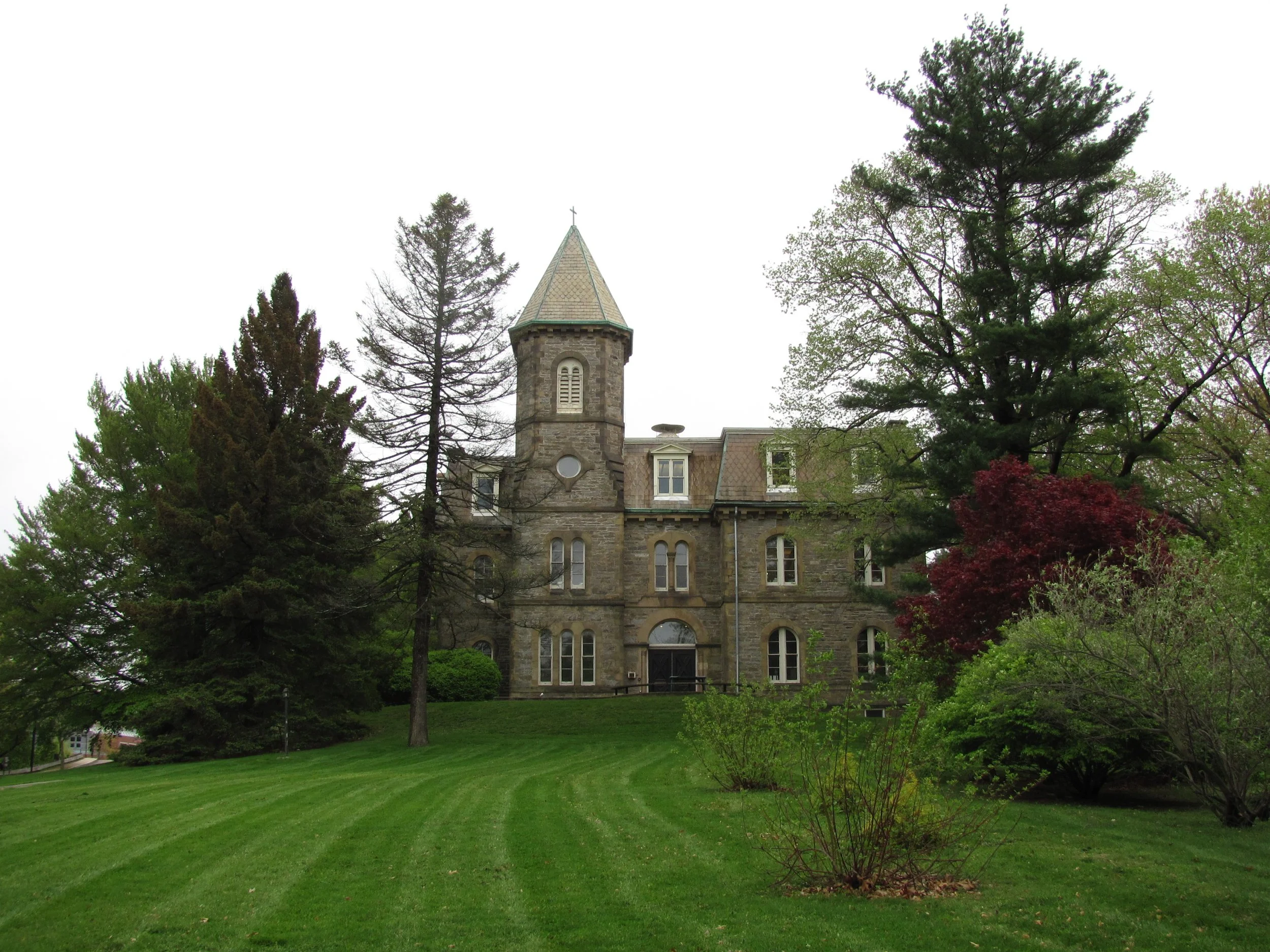
Colby Hall, Newton Theological Institute (John Phelan, 2011, via Wikimedia Commons)
The planning committees moved rapidly, purchasing the 85-acre Peck Estate on a hill in Newton for the campus and hiring the Rev. Irah Chase as Professor of Biblical Theology. The Rev. Chase, who was a graduate of Andover Theological Seminary, began teaching in November at the new Newton Theological Institute.23 The following year, Dr. Henry J. Ripley, also an Andover graduate (1819), became Professor of Biblical Literature and Pastoral Duties. Since both professors were products of Andover, it is not surprising that this new school developed a three-year curriculum and educational process somewhat like that of their alma mater.
The students took courses in Biblical literature, church history, Biblical theology, and pastoral duties. One of the central goals for students was to understand the Bible clearly and teach its lessons effectively. “Newton became the first freestanding post-graduate Baptist seminary to be established in North America, the first Baptist graduate school of any kind.”24 In 1849, Dr. Alvah Hovey began his long and influential career as a professor and later as President of Newton. He continued to defend orthodox theology throughout the last half of the nineteenth century.
A New School for Congregationalists: Hartford Theological Seminary
As the New England Theology was gaining ground, an opposing Pastoral Union group of “Old Calvinist” pastors in Connecticut founded the Theological Institute of Connecticut in East Windsor in 1834. This seminary would later move to Hartford and change its name to Hartford Theological Seminary.
_(14784222972).jpg)
Hosmer Hall, Hartford Theological Seminary (1889) (Wikimedia Commons)
Like Andover, the new seminary, led by Dr. Bennet Tyler, offered a three-year course of study for college graduates. They came from several different states, but were often graduates of Amherst College, Williams College, and Yale College. Tuition, rooms, and the library were free, and by 1843, the school building had rooms for 52 students. By that year, 62 students had graduated and gone on to become pastors or missionaries.25 Although students studied several subjects each year, including church history, the first year emphasized Biblical interpretation, the second year systematic theology, and the third year sacred rhetoric and pastoral theology.26
Ministry Training for Methodists: Boston University School of Theology
In the late eighteenth and early nineteenth centuries, most Methodist pastors did not attend a college or seminary for ministerial training. They basically learned on the job with some guidance from the presiding elder, or district superintendent, and in some places, a list of books to read.
Although Wesleyan College (later University) of Middletown, Connecticut, was originally Methodist, it was not founded to specifically train pastors: “From 1831 to 1870 Wesleyan was a local evangelical enterprise promoted by a town that provided land and buildings and by a few Methodist clergy and laymen who extracted very limited support from a denomination having only a nascent interest in higher education.”27 The school did have Christian objectives, and undoubtedly some Methodist leaders did receive a general college education there, although not specialized ministerial training.
After several years of debate, Methodist leaders at a convention in Boston in 1839 were ready to propose the establishment of a theological school. This group approved the establishment of a seminary and decided to work with and support a new program to be part of a school in Newbury, Vermont. Under the leadership of Osmon C. Baker, the program, called the Newbury Theological Institute, trained pastors until 1847.
“It is intended that the student shall do something more than merely memorize text-books. Whenever a branch of science or a portion of a branch, can be best taught by a fresh original handling...the professors will not shrink from the additional labor which such methods necessarily involve.”
At that time, the students, finances, and library were moved to Concord, New Hampshire, and under a new charter, the school became independent with the new name, Methodist General Biblical Institute (also called the Concord Biblical Institute). John Dempster, a former missionary, became the President, while Osman Baker moved and continued to teach.28 Even in this early period, the seminary had some emphasis on missionary work.29 With the rapid growth of Methodism and the development of a more robust program, the Institute flourished in Concord over the next 20 years.
In 1867, the school relocated to Boston and reorganized as the Boston Theological Seminary. Meanwhile, over the next few years, Methodist leaders were working to establish Boston University, with plans to create four professional and graduate schools. In 1871, the seminary became part of the new university as its first professional school.
The school was designed to have a regular three-year ministerial course and also a three-year course in missionary work. The curriculum had four major sections: exegetical theology, historical theology, systematic theology, and practical theology. Exegetical theology included the study of Hebrew, Greek, exegesis, and archaeology. Special studies were offered in various other languages—including Spanish and Asian languages for missions—plus music, German theology, and medical topics for missions.

Boston University Marsh Chapel (John Phelan, 2011, via Wikimedia Commons)
Teachers were encouraged to use fresh and varied methods of instruction: “It is intended that the student shall do something more than merely memorize text-books. Whenever a branch of science [knowledge] or a portion of a branch, can be best taught by a fresh original handling in the way of written lectures, or by free exposition, or by black-board exercise, or by a Socratic method, or by a combination of any or all of these, the professors will not shrink from the additional labor which such methods necessarily involve.”30
Spiritual life was encouraged by three prayer meetings each week and morning and evening devotions. Missions was generally emphasized, and students were encouraged to attend the meetings of the Missionary Association. The school was a pioneer among seminaries in admitting women. Anna Howard Shaw and Helen Magill White were among the early graduates in the 1870s.
The school was innovative in setting up two divisions. The First Division would only accept students who had earned a B.A. degree. After three years of coursework and passing an examination, they would receive a Bachelor of Divinity degree. The Second Division opened access to students who had completed a secondary education but, for various reasons or due to age, had not been able to earn a B.A. degree. These students could receive a diploma after completing the course of study.
While the Boston University School of Theology followed the basic pattern of other three-year residential seminaries, it introduced several innovative policies and was the first theological seminary of the Methodist Episcopal Church. By 1871, it was the largest seminary in New England. Much later in the 1930s, the seminary, along with the university, moved from Beacon Hill to a new campus along the Charles River.
Ministry Beyond the Pulpit: New England Deaconess Training School
In 1889, the Methodists initiated another training effort, the New England Deaconess Training School (and Deaconess House), located at 45 East Chester Park in Boston’s South End. This was part of a larger movement, beginning in Europe, to revive the formal lay ministry of deaconesses. The program was designed to educate young women for missionary and service work, especially in the city. Mary E. Lunn, the first superintendent, also advocated for a hospital, and in 1896, she founded New England Deaconess Hospital in a South End brownstone.
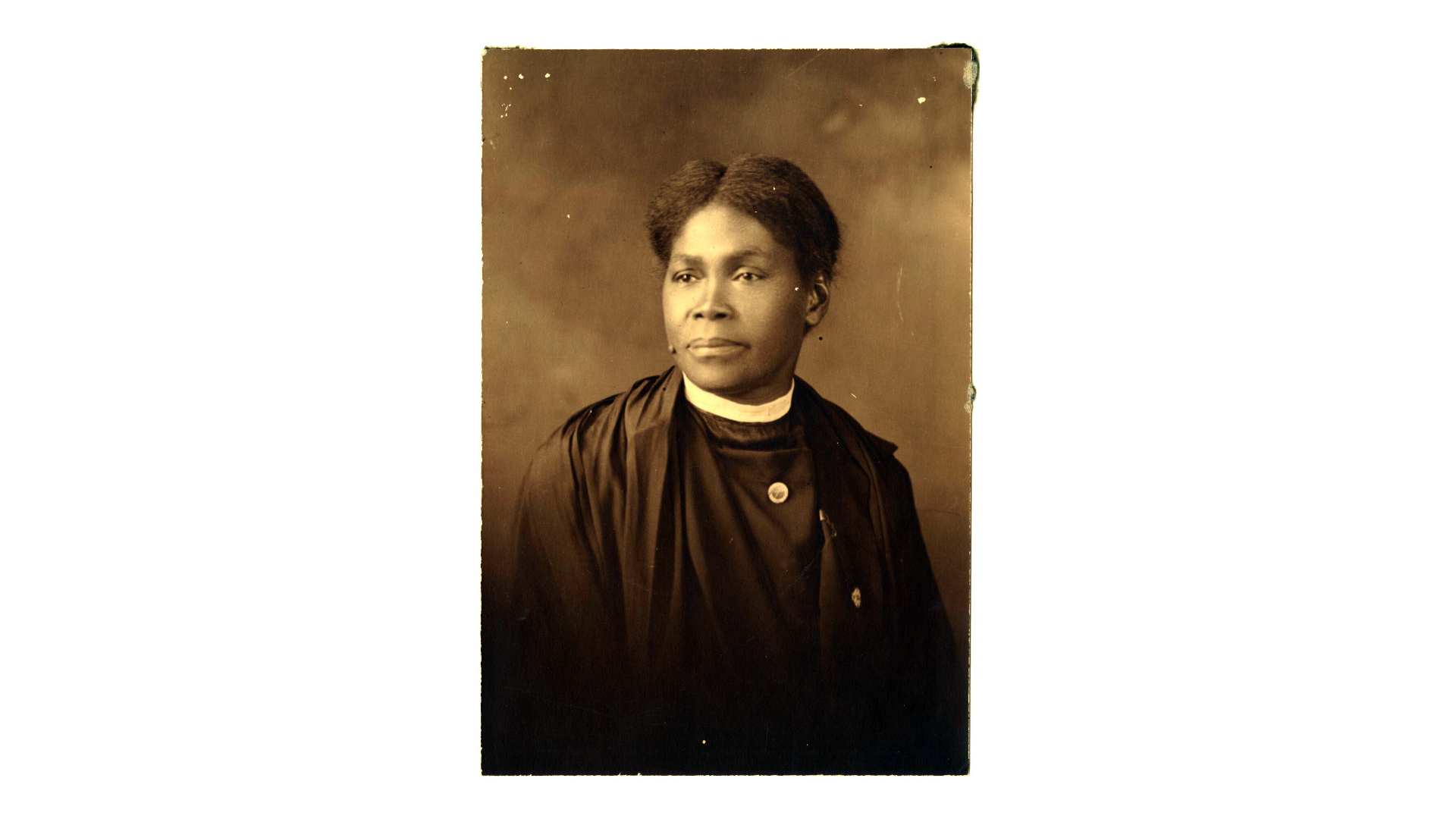
“Anna E. Hall, circa 1900”. Anna E. Hall Collection. Atlanta University Center Robert W. Woodruff Library. http://hdl.handle.net/20.500.12322/auc.119:0077.
The training school offered courses in theology, church history, and other subjects, including sociology in cooperation with Simmons College after 1900. The school’s first African American graduate, Anna E. Hall, became a missionary educator in Liberia, serving for 24 years as director of a girls’ school and home.31 Other deaconesses went on to study at the nursing school associated with the hospital.
In 1918, the Deaconess Training School became a part of Boston University and was renamed the School of Religious Education and Social Service.
An Episcopal School for the Commonwealth: Episcopal Theological School (later Episcopal Divinity School)
In the early nineteenth century, New England Episcopalians who felt called to ministry would often go to New York City to study at the General Theological Seminary. However, a significant number of these students stayed in the New York area after graduation rather than returning to serve in New England. This situation led church leaders in Boston to start planning an Episcopal seminary in Massachusetts. Beginning with a resolution passed at the 1831 Massachusetts Episcopal Convention, several efforts were made over the years to found a theological school in the Boston area.
These efforts failed to bear fruit due to a lack of finances until, finally, in 1867, Benjamin Tyler Reed, a wealthy Boston businessman, committed $100,000 to endow what soon became the Episcopal Theological School.32 He did not want the school to become embroiled in controversies that might arise within the denomination, and so he sought to make it independent of the diocese, its conventions, and its bishop, in part by establishing its trustees as laymen only. They would control temporal matters, while the faculty would have some oversight of theological and academic matters.
Reed called on Dr. Francis W. Wharton, rector of St. Paul’s Church of Brookline, who was a brilliant legal expert, to draw up the school’s constitution, develop its organization, and help gather the first group of faculty. Wharton is thus often considered the founder of the Episcopal Theological School. With his legal background, he emphasized apologetics and Christian evidences in the curriculum. He also taught liturgics, polity, canon law, homiletics, and pastoral care.

Episcopal Theological School, Cambridge, Massachusetts (Wikimedia Commons)
The Rev. John Seeley Stone, a leader among evangelicals and one of the great preachers of the time, became the dean and professor of systematic divinity (theology). Other courses in the three-year curriculum included Hebrew, Greek, Biblical interpretation, and church history.33 Dean Stone “opposed what he called the ‘rationalistic tendencies of our time,’ and meant the school to stand as a bulwark of evangelicalism.”34
At the end of the school year, professors conducted oral public examinations of students in all classes. During the first 10 years, a chapel and other buildings were completed at the Brattle Street campus in Cambridge. The student body at that time averaged only about 12 to 15 students. The school followed the general pattern of other seminaries in establishing a three-year, post-college course on a residential campus, but its governing structure was innovative for a seminary serving a specific denomination but outside its power structure.
To the Ends of the Earth: The Bible School and Missionary Training Institute Movement
After experiencing urban revivals in 1842, 1857-58, and 1877-78, Boston contributed to other growing Christian movements, including the Foreign Missions movement, the Holiness or Higher Life movement, and the Faith Cure or Divine Healing movement. Involvement in these movements led to the founding of other training schools. In addition to Boston University School of Theology, other schools with an emphasis on foreign missions included the Faith Training College and the Boston Missionary Training Institute (eventually named Gordon College after its founder).

Charles Cullis (Wikimedia Commons)
One major new development in Christian ministry training was the Bible School and Missionary Training Institute Movement. These schools offered a shorter course of study, emphasizing Bible study, practical ministry training, and spiritual life to prepare men and women for home and foreign missionary work. Although short-lived, the Boston Faith Training College could be considered the pioneering American institution in what became the Bible College Movement (followed by A.B. Simpson’s Missionary Training Institute [Nyack College] in 1882; Moody Bible Institute in 1886-7; and the Boston Missionary Training Institute [Gordon College] in 1889). A. B. Simpson and his institute became very influential in the Bible College Movement and in missions. Simpson, in turn, was greatly influenced by Charles Cullis. “Probably the American educator with the greatest influence upon A. B. Simpson was Dr. Charles Cullis…. Cullis’ Faith Training College convinced Simpson that he could successfully launch a missionary training college.”35 D. L. Moody was also influenced by his Boston contacts and background.
Faith Training College
Dr. Charles Cullis, the leader of a large network of ministries in Boston, the U.S., India, and China, founded the Faith Training College on Beacon Hill in 1875. The Faith Training College described its efforts as “…to train for Christian work such consecrated men and women as are unable to pursue an extended and thorough course of theological study in the various denominational seminaries, but are desirous of fitting themselves for the highest efficiency in the widening fields of lay activity, which the Head of the Church is wonderfully opening in our age, such as Sunday School instruction, Christian Association work, Bible exposition, exhortation, lay preaching, lay evangelism, home and foreign missionary labor” (1875 Annual Report, p. 90).
The Bible college model emphasized a shorter course of study, a focus on the Bible, practical ministry, witness, and missions. Faith Training College was co-educational and tuition-free.
Dr. Cullis, the founder, had also founded the Boston Consumptives (tuberculosis) Home, the Spinal Home, and the Cancer Home, and he was the most prominent national leader of the Divine Healing Movement. Among the college’s teachers was William Boardman, Professor of Christian Life. He ministered throughout Europe and England, spreading the Higher Life Movement and, along with Robert Pearsall Smith, inspiring the Keswick Conference movement. Boardman was a graduate of Yale University and Lane Theological Seminary. Daniel Steele, a graduate of Wesleyan University, was professor of systematic theology, and A. B. Earle was professor of revivalism, a position that was probably unique to Faith Training College. Another professor was Charles Wesley Emerson, the founder of Emerson College.
Boston Missionary Training Institute: Gordon College and Gordon Divinity School (later Gordon-Conwell Theological Seminary)
In 1889, Dr. A. J. Gordon, pastor of the Clarendon Street Baptist Church in Boston, founded the Boston Missionary Training Institute to help train Christian men and women for missionary work. Pastor Gordon had been inspired by Dwight L. Moody’s months-long evangelistic campaign next door to his church in 1877 and by the great London conference on foreign missions in 1888.
In 1884, Dr. and Mrs. Grattan Guinness, the directors of the Livingstone Inland Mission in the Congo, had offered the mission to the American Baptist Missionary Union. The Rev. A. J. Gordon became the Chairman of the Executive Committee of the Missionary Union and, therefore, was concerned with the Congo mission’s great need for funds and missionary candidates in the late 1880s.36 This was one of the major motives for starting a missionary training school with a short course of studies. Dr. Guinness and the Rev. M. R. Deming of the Bowdoin Square Tabernacle church were also involved in founding the school. Dr. Gordon’s work with Dr. Guinness also would have familiarized him with the details and model of the East London Missionary Training Institute that Guinness had founded in 1873.
“Although many students came from the Boston area, some came from as far away as Kansas, Indiana, and New York.”
Pastor Gordon, like Dr. Cullis at the Faith Training College, saw a need to provide access to ministry training for those who could not follow the rigorous academic path of four years of college and three years of seminary. The school charged no tuition, admitted both men and women, and did not require a high school or college education to enroll. The normal course of study was two years, with classes during the day, but the school also began offering public evening lectures and Bible courses taught by Dr. James M. Gray and Rev. F. L. Chapell. These were attended by hundreds of people.37 Dr. Gray became one of the best-known Bible teachers in the country and later served as President of Moody Bible Institute. Dr. Chapell taught the majority of the core courses during the school’s first ten years.
In some of the early years, women students were in the majority in the daytime classes. Women were also serving as teachers and administrators. Mrs. Maria Gordon served as secretary, treasurer, and a teacher at the school. Other women teachers were Dr. Julia Morton Plummer, Mrs. Susan G. Gray, Mrs. Chapell, and Miss Blanche Tilton.
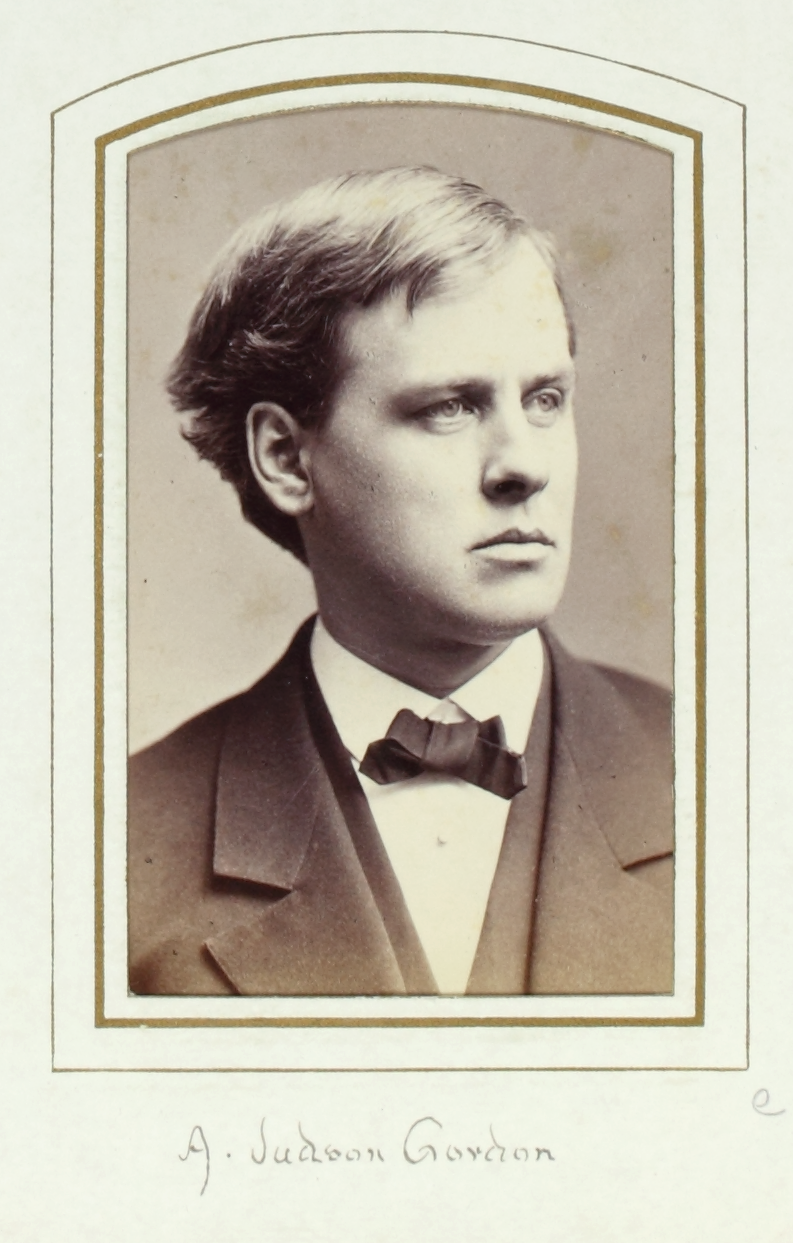
Adoniram Judson Gordon (Library Company of Philadelphia)
The school emphasized the consecrated spiritual life of the students with daily devotional periods, including testimonies and singing. The classes included theology, missions, comprehensive Bible study, music, and Christian Life and Service. Students engaged in extensive practice in Christian work at Clarendon Street Baptist Church, in their own churches, or in the city.
Although many students came from the Boston area, some came from as far away as Kansas, Indiana, and New York. In the first ten years, 500 students attended day classes, 1,000 to 1,500 benefited from evening classes, and about 50 students, both men and women, went on to serve in foreign missions. Also, 50 students became pastors, and at least 200 went into other Christian work.38
The school went through a number of name changes, but the most noteworthy was when it became the Gordon Bible and Missionary Training School after the death of Dr. A. J. Gordon in 1895. In 1927, the state legislature granted the school the authority to award graduate degrees, and, in 1931, the graduate theological course became the Divinity School of Gordon College. After a number of years in the Fenway area of Boston, the divinity school, followed by the college, moved to Wenham, Massachusetts, in the 1950s.
Multiplying Leaders: Boston Young Men’s Christian Association
In 1851, Boston leaders founded the first YMCA in America following the model of the London YMCA. Although this pioneering organization was never a formal ministry training school, it did have classes and, in various ways, trained young men in biblical study and practical ministries.
In its early decades, the Boston YMCA was clearly Christian and trained young leaders to go out to other towns and cities in Massachusetts and New England to start or support other YMCAs. An 1870 report states, “About 118 of the Associations [local YMCAs] in this country are in Massachusetts. Many calls are made for our young men to address public meetings, conventions, etc.”39 In this process, they also did evangelism, and the Boston YMCA was involved in many evangelistic activities and conventions.

YMCA, Berkeley St., Boston (Wikimedia Commons)
After the Civil War, the work was characterized by spiritual fervor, overflowing prayer meetings, and “quite a number of its members were reported as studying for the ministry.”40 Also, in 1885, a YMCA School for Christian Workers was started in Springfield, Massachusetts. It emphasized training YMCA leaders who would lead programs that nurtured the spirit, mind, and body. The school was also notable as the birthplace of basketball. In 1890-91, the name was changed to the International YMCA Training School, which later became Springfield College.
The education department in Boston also grew significantly in the late nineteenth century. Although many of the classes at the Boston YMCA were on practical subjects related to vocations and avocations, there were some Bible classes. By 1896-1898, the education department under Frank Palmer Speare became highly organized into an Evening Institute. The school grew rapidly and evolved, with state approval, in 1916, into Northeastern College, and, in 1922, into Northeastern University, which eventually became independent of the YMCA.
Holiness Unto the Lord: Eastern Nazarene College
Founded as part of the holiness movement in 1900, Eastern Nazarene College was initially called the Pentecostal Collegiate Institute and was located in Saratoga, New York. Lyman C. Pettit served as its first president. Within two years, it moved to North Scituate, Rhode Island. The original plan was to provide a liberal education and ministry training through a preparatory academy, a four-year college, and a seminary.
In the early years, the school was connected to the Association of Pentecostal Churches of America (APCA), a network of Wesleyan-holiness churches. When the APCA merged into the Church of the Nazarene denomination in 1907, the institute became affiliated with the Nazarenes. In 1918, the school was chartered with degree-granting authority in Rhode Island and was renamed Eastern Nazarene College. The following year, it moved to Quincy, Massachusetts, to be near Boston and Harvard University.

Gardner Hall, Eastern Nazarene College (Wikimedia Commons)
The school sought to integrate Christian perspectives across its liberal arts and business curriculum. Although the original plan included a seminary, it was not until 1938 that the school started a graduate program in theology. In 1946, the school was offering 30 courses in Bible and Theology.41 In 1964, the theology program was replaced by a master's degree program in religion.
The college closed in May 2025 due to financial challenges and a declining student body.
Providence Bible Institute / Barrington College
The roots of Barrington College trace back to Bethel Bible Training School in Spencer, Massachusetts, founded in 1900 by the Baptist pastor, Essex W. Kenyon, who “wanted to train young Christians in the Bible and Christian service.”42 Some students went on to be missionaries overseas.
In 1923, the school moved to Dudley, Massachusetts, and was renamed the Dudley Bible Institute. The following year, after Kenyon resigned, Howard W. Ferrin became president (Ferrin’s mentor, Paul Rader, was nominal president in absentia). In 1929, under his leadership, the school moved to Capitol Hill, Providence, Rhode Island, and was renamed Providence Bible Institute.

Barrington College, Barrington, Rhode Island (Kenneth C. Zirkel via Wikimedia Commons)
Ferrin came to the school after serving in a multifaceted ministry with Paul Rader at the Chicago Gospel Tabernacle. He had experience in urban ministry, evangelism, and using radio. Thus, Providence Bible Institute became an urban school within a sphere of multiple ministries that Ferrin developed. In addition to a radio ministry, traveling student music groups, conferences, and evangelistic outreach events, he developed evening Bible schools in Boston, New York City, and Providence.
In 1950, the school purchased a 150-acre campus in Barrington, Rhode Island, for $331,001, winning the bid by one dollar. From 1950 to 1960, the school operated two campuses in Providence and Barrington, but then consolidated its work at Barrington and was renamed Barrington College. In 1985, the college merged with Gordon College and sold the campus to Zion Bible Institute.
Pentecostal Fire: Zion Bible Institute / North Point Bible College
In 1924, the Rev. Christine A. Gibson founded a Pentecostal missionary training school in East Providence, Rhode Island. In its early years, the school was called The School of the Prophets, but in 1936, it was renamed Zion Bible Institute. The school has had an emphasis on studying the Bible and preparing young people for Pentecostal ministry.
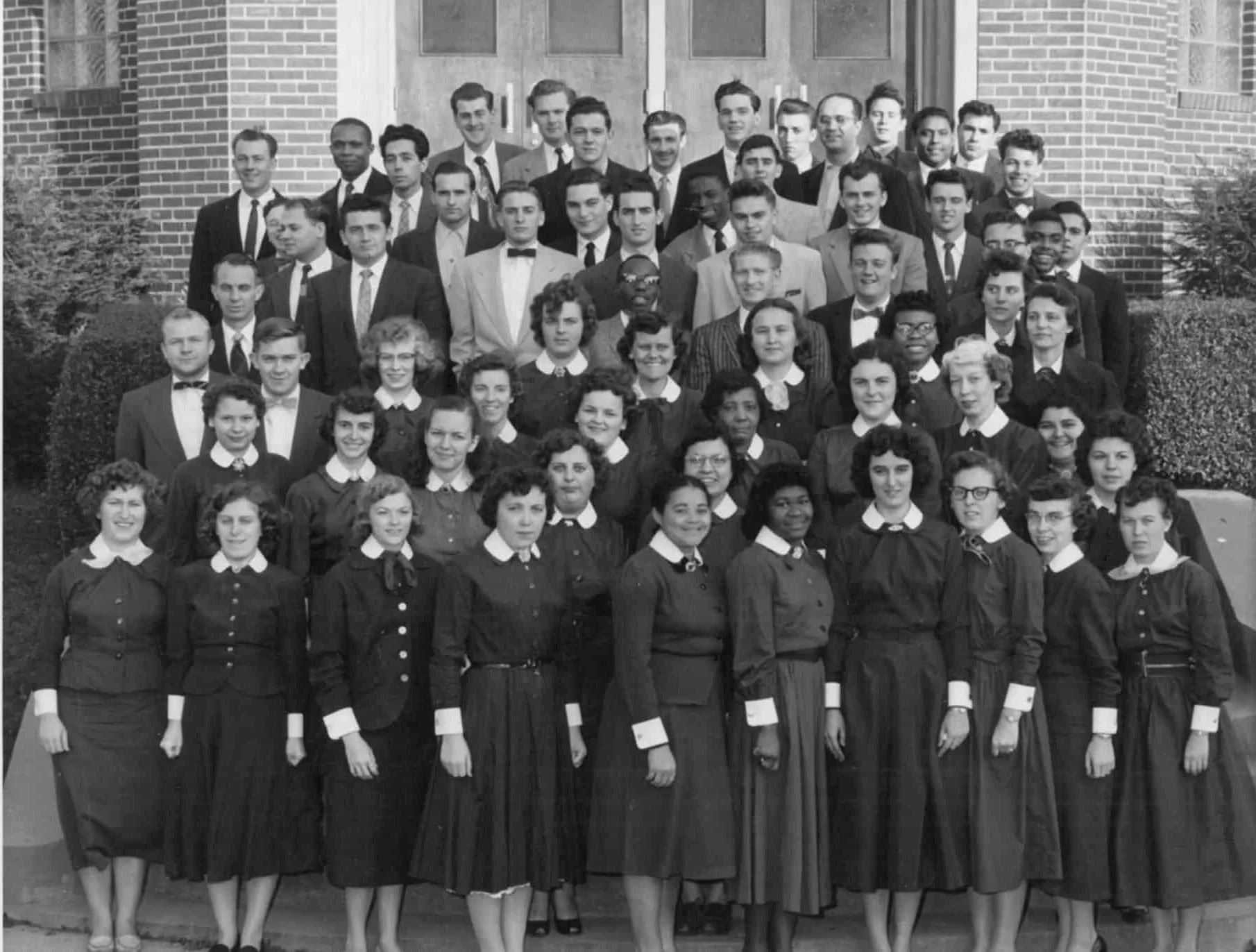
Northpoint Bible College
When Barrington College merged with Gordon College in 1985, Zion bought their former campus. Then, in the summer of 2008, the school relocated to the former campus of Bradford College in Haverhill, Massachusetts. David Green, a wealthy Christian businessman, had purchased the campus the year before and gave it to the college for $1.00, along with funds for renovations.43
Bradford College, founded as Bradford Academy in 1803, helped educate a number of missionaries in the nineteenth century, including Ann Hasseltine Judson (Burma), John Taylor Jones (Thailand), and Lucy Goodale Thurston (Hawaii). In 2011, after the move to the Bradford campus, the school received approval to offer a Master of Arts in Practical Theology program that focuses on church planting and revitalization, as well as spiritual formation.44 Later, in 2013, Zion officially changed its name to Northpoint Bible College and Graduate School.
Rooted in the City: Theological Training for the People
Boston also developed models for training lay leaders of city churches. Two of these models were the Boston Evening School of the Bible and the Center for Urban Ministerial Education, which has trained both lay leaders and pastors. In addition, many smaller Bible Institutes have been held in local churches, offering courses in Spanish or English.
Boston Evening School of the Bible
In the fall of 1942, Harold J. Ockenga, Pastor of Park Street Church, and Howard W. Ferrin of Providence Bible Institute established the Boston Evening School of the Bible. “It was their desire to help Christian people in all churches, irrespective of denomination, to secure a thorough and systematic knowledge of the Bible and practical training for various kinds of Christian work.”45
Classes were held at Park Street Church from November to April, and classes followed a six-year curriculum. Classes thoroughly covered the Bible and also included Christian doctrine, church history, archaeology, evangelism, teacher training, and other ministry topics. The first dean was Dr. Morton C. Campbell, a former professor at Harvard Law School.46 Major goals of the School of the Bible were to address biblical and theological illiteracy and to prepare laypeople for church ministry. The average pastor was overburdened and could not provide the depth and range of training needed.47 This was not just an enhanced Sunday School, but a major educational program involving hundreds of students and excellent teachers. The successor to this was called the Boston Center for Christian Studies.
“The principles of Theological Education by Extension were developed and adapted in some programs during this period.”
During the period from the 1960s through the 1980s, American cities were experiencing many changes and challenges, and Christians responded with new models of theological education. Cities were going through racial transition, facing many problems, and receiving an influx of new immigrants from Latin America, the Caribbean, and Asia. Theological education needed to be contextualized to address urban issues, scheduling constraints of bi-vocational leaders, language needs, and other concerns.
The principles of Theological Education by Extension (TEE)48 were developed and adapted in some programs during this period. Several urban training efforts used experiential, action-reflection, or action-training models of urban education. Some examples of urban ministry training programs of that time were the Urban Training Center for Christian Mission (UTC, Chicago), New York Theological Seminary programs led by Bill Webber, Seminary Consortium for Pastoral Education (SCUPE, Chicago), the Center for Urban Theological Studies (CUTS, Philadelphia), and the Center for Urban Ministerial Education (CUME, Boston).
Center for Urban Ministerial Education (CUME): The Boston Campus of Gordon-Conwell Theological Seminary
Following a 1969 merger of Gordon Divinity School and Conwell School of Theology, the merged school sought ways to train leaders for urban ministry. In the early 1970s, the Rev. Michael Haynes of Twelfth Baptist Church, Doug Hall of the Emmanuel Gospel Center (EGC), and Dr. Stephen Mott of Gordon-Conwell helped establish an Urban Middler Year program enabling residential students to spend their middle year in the city of Boston with classes at EGC and field education in various city churches or ministries. However, this effort was not meeting the need for in-service training of Black and Hispanic leaders already in ministry.
Therefore, when Eldin Villafane was hired in 1976, he began developing what became the Center for Urban Ministerial Education (CUME). CUME was a new model for linking with a seminary rather than a college, and for its many methods of contextualizing theological education for urban leaders. As Villafane studied various programs, he incorporated ideas from action-reflection biblical models, urban Bible institutes, and Theological Education by Extension.49 “Extension education,” Villafane said, “is not merely a matter of conducting the same classes with the same educational methods and the same teachers in a different location.”50
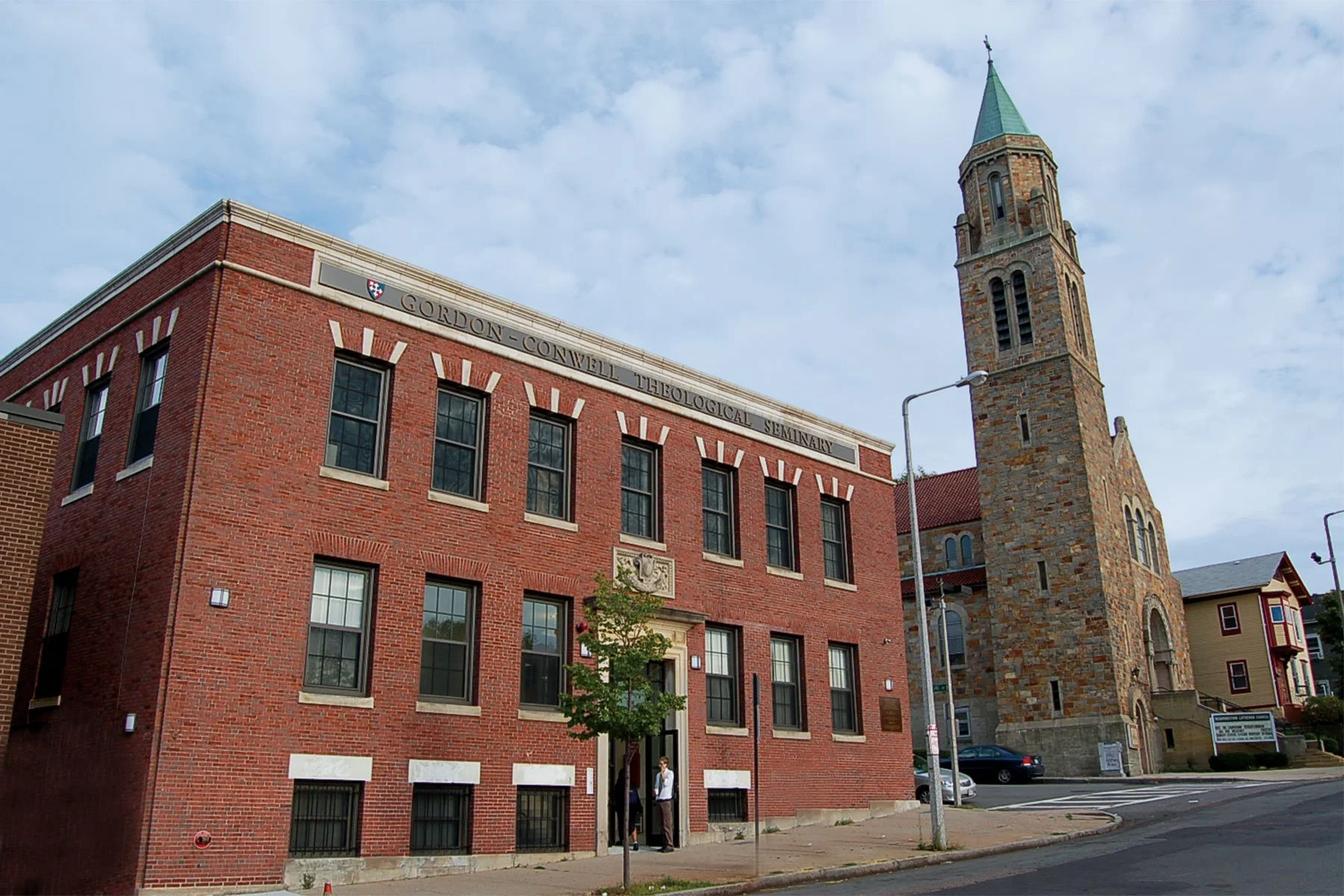
Center for Urban Ministerial Education, Roxbury, Massachusetts
The CUME program provided access to an accredited seminary education for Christian pastors and lay leaders who were called, gifted, and experienced in ministry, but, for socio-economic and other reasons, had been excluded from a residential program. Even if they could have attended a traditional seminary program, it would not have been contextualized to the needs of their urban and immigrant church ministries. The CUME program was located in the heart of the city,51 with a diverse administration and faculty, and offered contextualized coursework in Spanish, Portuguese, French (for Haitians), and English. All classes were held in the evenings and on weekends when bi-vocational leaders could attend. To reduce economic barriers, tuition was reduced, and scholarships were available. The student body included leaders from many backgrounds, including Hispanic, Black, Brazilian, Haitian, Chinese, Korean, and Anglo churches of many denominations. This had the added benefit of promoting interchurch fellowship and ministry collaboration.
By 1983, the program had 177 students from 104 churches, and in subsequent years it more than doubled in size. Over the years, CUME has offered certificate and diploma programs, as well as M.A., M.R.E., and Master of Divinity programs, along with Mentored Ministry for the practical application of coursework. The program has declined greatly in recent years, but much can be learned from the ideals and principles of this model of theological education.
Conclusion: A Legacy of Innovation
These individual stories of the beginnings of new schools and training programs for Christian leaders reveal educational innovations and adaptations that can inspire current theological education initiatives. In founding Harvard University in 1636, Boston-area leaders used the curricula and learning methods they were familiar with from Cambridge and Oxford Universities. However, as they developed the first institution of higher education in North America, they pioneered adaptations to the new environment and their limited resources. They also paved the way for other early colleges. The strengths of the English and early American collegiate forms of ministry training included active learning of effective reasoning, rhetoric, and logic; an emphasis on biblical study with training in Greek and Hebrew; and residential community life with tutors and devotional practices.
Especially in the eighteenth and early nineteenth centuries, pastoral mentoring was a vital form of ministerial education. This method had some limits tied to the pastor’s limited time, library, breadth and depth of knowledge, and teaching ability. However, pastoral mentoring had strengths, including personal interaction with the pastor and the opportunity to observe how he handled the trials and joys of life and ministry. Students also received practical instruction and opportunities to preach and serve in ministry with coaching and feedback. This personalized education was also well-suited to encourage personal spiritual growth.
The founders of Andover Theological Seminary (1807) sought to maintain traditional Reformed theology and biblical views in their training. However, Andover was innovative in establishing the first American model of a three-year, graduate-level residential seminary. This model was the prototype for scores of later theological seminaries. The strengths of this form of training, at least ideally, included providing distinguished professors with a depth of knowledge who could teach general and specialized courses and interact with students in class and out of class. In this type of residential seminary, students and faculty could focus much of their time on studies with less distraction. A residential seminary could provide a good library, residences, classrooms, and community life to encourage spiritual growth.
“These individual stories of the beginnings of new schools and training programs for Christian leaders reveal educational innovations and adaptations that can inspire current theological education initiatives.”
In the late nineteenth century, cities and their churches were rapidly growing, and the need for foreign missionaries increased as that movement expanded. These factors led to a need for new forms of accessible ministry training for those who couldn’t afford a full college and graduate seminary program. In response, Boston-area leaders founded some of the early Bible and missionary training institutes and schools. These were the early prototypes of the Bible School Movement. Faith Training College and the Boston Missionary Training Institute (later called Gordon College) offered shorter courses of study, with the advantage of preparing lay leaders and missionaries with free tuition, with low entry requirements, and with more practical, Bible-centered courses. Courses were offered for both men and women and were sometimes available in the evening. Several other area schools started as similar Bible institutes and, over the years, evolved into Christian colleges.
More recently, Boston-area leaders have developed ministry training programs contextualized to the changing city with its various social needs and growing immigrant populations. Gordon-Conwell Theological Seminary developed the Center for Urban Ministerial Education. Among its strengths were accredited classes in several languages, held in the evenings and on weekends to accommodate lay leaders and bi-vocational pastors, and reduced tuition costs. The model drew on principles of Theological Education by Extension and action-reflection learning to integrate ministry preparation with ongoing involvement in the students’ own churches. Course content and topics were designed to address the needs of the urban context. This innovative program also became a model for other cities.
While other models could be cited, these examples demonstrate how Boston and New England schools have built on the past and created new innovations in theological education. These efforts in training pastors, lay leaders, and missionaries have had a worldwide impact and paved the way for the founding of many other ministry training schools.
Appendix
The following list identifies the education and ministerial training of early Boston-area church leaders.
-
John Wilson, pastor at First Church of Boston, studied at Kings College at Cambridge (BA, 1610) and Emmanuel College at Cambridge (MA, 1613). Wilson served as a chaplain to prominent families, was a pastor in Sudbury, England, and also studied law.
John Cotton, teacher at First Church of Boston, studied at Trinity College at Cambridge (BA, 1603) and Emmanuel College at Cambridge (MA, 1606). Cotton studied another five years at Cambridge after 1606 and received a BD in 1613. He studied under William Perkins, was pastor of St. Botolph’s in Boston, England, and was a friend of Thomas Hooker at Emmanuel College.John Wheelwright studied at Sidney Sussex College at Cambridge (BA, 1614/1615; MA, 1618). Wheelwright served as vicar of Bilsby, England, and was a friend of John Cotton and Oliver Cromwell. In 1636, Wheelwright came to Boston but was later banished, along with his sister-in-law, Anne Hutchinson, in the Antinomian Controversy. He preached at the First Church of Boston on occasion but was not the pastor. He served in Wollaston/Quincy; Exeter, New Hampshire; and Wells, Maine.
-
John Maverick, pastor at First Church of Dorchester, studied at Exeter College at Oxford (BA, 1599; MA, 1603). Maverick served as a curate to his uncle Radford Maverick and then as rector of the church at Beaworthy, both in Devonshire, England.
John Warham (or Wareham), pastor at First Church of Dorchester, studied at St. Mary Hall at Oxford (BA, 1614; MA, 1618). He pastored churches in Crewkerne and later at St. Sidwell's, Exeter, England. In 1635, he led many of his Dorchester congregation to Windsor, Connecticut.
Richard Mather, pastor at First Church of Dorchester, studied at Braesnose College at Oxford. Mather attended Oxford but did not graduate. He served as a master of two English schools and preached at Toxteth, Liverpool. He was the father of Increase and grandfather of Cotton Mather. -
Thomas Welde, pastor at First Church of Roxbury, studied at Trinity College at Cambridge (BA, 1613-1614; MA, 1618). Welde served as a minister in Terling, Essex, England, and as the first pastor at Roxbury from 1632 to 1641. He was an overseer of Harvard College and helped produce the Bay Psalm Book. He later returned to England.
John Eliot, pastor and teacher at First Church of Roxbury, studied at Jesus College at Cambridge (BA, 1622). Eliot served as a teacher with Thomas Hooker in England. Known as the “Apostle to the Indians,” he came to Boston in 1631. -
Thomas Hooker, pastor at First Church of Cambridge (Newton), studied at Emmanuel College at Cambridge (BA, 1608; MA, 1611). Hooker held the Dixie Fellowship at Cambridge until 1619. He served in St. George’s Church in Escher and St. Mary’s Church in Chelmsford, England. In 1636, he led a group to found Hartford, Connecticut.
-
Thomas James, Sr., pastor at First Church of Charlestown (1632-1634), studied at Emmanuel College at Cambridge (BA, 1615; MA, 1618). James served in Charlestown from 1632 to 1634 and then pastored in New Haven, Connecticut, before returning to England.
Zechariah Symmes, pastor at First Church of Charlestown (1634-1671), studied at Emmanuel College at Cambridge (BA, 1620/1621; MA, 1624). Symmes served as a teacher at St. Antholin, London, and as rector of Dunstable, Bedfordshire, before emigrating to Boston in 1634.
John Harvard, assistant minister at First Church of Charlestown, studied at Emmanuel College at Cambridge (BA, 1631/1632; MA, 1635). Harvard arrived in Charlestown in 1637, where he became a teacher and assistant pastor. He donated his library and half his estate to the college that was later named for him.
-
George Phillips, pastor at First Church of Watertown, studied at Caius College at Cambridge (BA, 1613; MA, 1617). Phillips served as vicar of Boxted, Essex, England. He came with Saltonstall to found Watertown in 1630, and later became an overseer of Harvard.
-
John Allin, pastor at First Church of Dedham, studied at Caius College at Cambridge (BA, 1615; MA, 1619). Allin served as curate of the parish church at Wrentham, England. He came to Dedham in 1637 and founded the First Church of Dedham.
-
Roger Williams, pastor at Church at Plymouth and First Church of Salem, studied at Pembroke College at Cambridge (BA, 1627). After he was banished from Massachusetts in late 1635, Williams began Providence Plantations in 1636. In 1638, he formed the First Baptist Church in America. He was first a Puritan and then a Separatist.
-
Nathaniel Eaton, first master and teacher at Harvard, studied at Trinity College at Cambridge (BA), the University of Franeker, and the University of Padua (MD, PhD, 1647). Eaton studied under the Puritan theologian, William Ames, at the University of Franeker. He was (Head)Master at Harvard after its founding from ~1637 to 1639.
Henry Dunster, president of Harvard and interim pastor of First Church of Cambridge, studied at Magdalene College at Cambridge (BA, 1631; MA, 1634). Dunster served as curate at the Church of St. Mary the Virgin, Bury, England. He was the first president of Harvard (1640-1654) and pastored the First Church of Scituate, Massachusetts.
Charles Chauncy, second president of Harvard and pastor at Plymouth and Scituate, Massachusetts, studied at Trinity College at Cambridge (BA, 1614; MA, 1617). Chauncy served vicar of St. Mary’s Church, Ware, and vicar of Marston St. Lawrence, Northamptonshire, England. He served as president of Harvard from 1654 to 1672.
Footnotes
- The “Old Schools” were groups of older buildings used for university-wide lectures, disputations, libraries, and administration. They were distinct from the colleges where students and tutors lived, ate, and listened to what were called private lectures.↩︎
- William T. Costello, The Scholastic Curriculum at Early Seventeenth Century Cambridge (Cambridge, Mass.: Harvard Univ. Press, 1958), 12.↩︎
- Ibid., 13.↩︎
- Ibid., 8.↩︎
- Ibid.↩︎
- New England’s First Fruits (London: R.O. and G.D. for Henry Overton, 1643).↩︎
- New England’s First Fruits., for the 1642 Statutes of Harvard, and see also the 1655 “Lawes of the Colledge published publiquely before the Students of Harvard Colledge,” Colonial Society of Massachusetts, accessed 9 Dec. 2025, https://www.colonialsociety.org/node/429. These statutes give more details than the above summary about the studies and requirements in the early years of Harvard.↩︎
- Roger Geiger, “The First Century of the American College: 1636-1740,” in The History of American Higher Education: Learning and Culture from the Founding to World War II (Princeton, N.J.: Princeton University Press, 2016), 7.↩︎
- Preamble to the Collegiate School’s First Charter, approved by the General Court of the Colony of Connecticut (the Connecticut legislature), 1701.↩︎
- Geiger, 11.↩︎
- Walter C. Bronson, The History of Brown University 1764-1914 (Providence, R.I.: Brown University, 1914), 129.↩︎
- Ibid., 103.↩︎
- George M. Marsden, Jonathan Edwards: A Life (New Haven, Conn.: Yale University Press, 2003), 250-51.↩︎
- Leonard Woods, History of the Andover Theological Seminary (Boston: James R. Good, & Company, 1885), 19-20.↩︎
- Ibid., 21-22.↩︎
- Ibid., 19-24.↩︎
- Leonard Woods, History of the Andover Theological Seminary (Boston: James R. Good, & Company, 1885).↩︎
- Ibid., 153.↩︎
- Ibid., 160-161.↩︎
- Ibid.↩︎
- Ibid., 137.↩︎
- Board of Trustees, Newton Theological Institute: A Sketch of Its History (Boston: Gould and Lincoln, 1866), 6-7.↩︎
- Ibid., 11.↩︎
- Margaret Bendroth, A School of the Church: Andover Newton across Two Centuries (Grand Rapids, Mich.: Eerdmans, 2008), 29.↩︎
- General Catalogue of the Theological Institute of Connecticut at East-Windsor, 1843 (Hartford: Elihu Geer, 1843), 14.↩︎
- Ibid., 15.↩︎
- David B. Potts, Wesleyan University: 1831-1910 (Middletown, Conn.: Wesleyan University Press, 1992), xv.↩︎
- “A People’s History of the School of Theology,” Boston University website, https://www.bu.edu/sth-history/graduates/concord-students/.↩︎
- Ibid., https://www.bu.edu/sth-history/alphabetical-index/albert-l-long-1857/. (For example, Albert L. Long, class of 1857, became a missionary to Bulgaria.)↩︎
- Annual Report of the School of Theology of Boston University, 1873. (Cambridge, Mass.: Riverside Press, 1873), 18.↩︎
- “Anna E. Hall, (1870-1964): Long-Time African-American Missionary Educator In Liberia,” Boston University School of Theology, History of Missiology, March 2020, https://www.bu.edu/missiology/2020/03/02/hall-anna-e-1870-1964/.↩︎
- James Arthur Muller, The Episcopal Theological School: 1867-1943 (Cambridge, Mass.: Episcopal Theological School, 1943), 8.↩︎
- Ibid., 31-32.↩︎
- Ibid., 45.↩︎
- Phillip Douglas Chapman, “The Whole Gospel for the Whole World: A History of the Bible School Movement within American Pentecostalism, 1880-1920” (Ph. D. thesis, Michigan State University, 2008), 105-6.↩︎
- Nathan R. Wood, A School of Christ (Boston: Halliday Lithograph, 1953), 11-12.↩︎
- Ibid., 25.↩︎
- Ibid., 27. (Only about 150 students completed the full two-year course of study.)↩︎
- L. L. Doggett, History of the Boston Young Men’s Christian Association (Boston: Young Men’s Christian Association, 1901), 43.↩︎
- Ibid.↩︎
- Donald Dewart, Educational Institutions of New England (Boston: Bellman Publishing Company, 1946), 127.↩︎
- Gordon College, “The History of Barrington College,” https://www.gordon.edu/about/history/barrington-history, accessed 14 Jan. 2026.↩︎
- “Northpoint History,” Northpoint College Student Handbook (2020-2021), 5. https://northpoint.edu/wp-content/uploads/2021/01/2020-2021-Student-Handbook.pdf.↩︎
- Currently this degree program offers concentration on pastoral leadership, preaching and spiritual formation.↩︎
- Garth M. Rosell, Boston’s Historic Park Street Church (Grand Rapids, Mich.: Kregel Publications, 2009), 142.↩︎
- Ibid., 42-43.↩︎
- Ibid., 44.↩︎
- These principles were illustrated with the analogy of a fence: (1) local weekly group meetings served as the fence posts; (2) independent self-study often using programmed texts between group meetings served as one fence rail; and (3) immediate practical ministry application served as the second fence rail.↩︎
- Eldin Villafane and Rudy Mitchell, “The Center for Urban Ministerial Education,” Urban Mission 2, no.2 (Nov. 1984):32.↩︎
- Ibid., 35.↩︎
- Some classes were also held in Lawrence, Springfield and New Bedford, Massachusetts.↩︎
Bibliography
“Anna E. Hall, (1870-1964): Long-Time African-American Missionary Educator in Liberia,” Boston University School of Theology, History of Missiology, March 2020, https://www.bu.edu/missiology/2020/03/02/hall-anna-e-1870-1964/.
Annual Report of the School of Theology of Boston University, 1873. Cambridge, Mass.: Riverside Press, 1873.
Bendroth, Margaret. A School of the Church: Andover Newton across Two Centuries. Grand Rapids, Mich.: Eerdmans, 2008.
Board of Trustees. Newton Theological Institute: A Sketch of Its History. Boston: Gould and Lincoln, 1866.
Bronson, Walter C. The History of Brown University: 1764-1914. Providence, R.I.: Brown University, 1914.
Chapman, Phillip Douglas. “The Whole Gospel for the Whole World: A History of the Bible School Movement within American Pentecostalism, 1880-1920.” Ph. D. thesis, Michigan State University, 2008.
Costello, William T. The Scholastic Curriculum at Early Seventeenth Century Cambridge. Cambridge, Mass.: Harvard Univ. Press, 1958.
Dewart, Donald. Educational Institutions of New England. Boston: Bellman Publishing Company, 1946.
Doggett, L. L. History of the Boston Young Men’s Christian Association. Boston: Young Men’s Christian Association, 1901.
Geiger, Roger. ”The First Century of the American College: 1636 -1740,” in The History of American Higher Education: Learning and Culture from the Founding to World War II. Princeton, N.J.: Princeton University Press, 2016.
General Catalogue of the Theological Institute of Connecticut at East-Windsor, 1843. Hartford: Elihu Geer, 1843.
Gordon College. “The History of Barrington College.” https://www.gordon.edu/about/history/barrington- history, accessed 14 Jan. 2026.
“Lawes of the Colledge published publiquely before the Students of Harvard Colledge,” 1655. Colonial Society of Massachusetts, accessed 9 Dec. 2025, https://www.colonialsociety.org/node/429.
Marsden, George M. Jonathan Edwards: A Life. New Haven, Conn.: Yale University Press, 2003.
Morison, Samuel Eliot. The Founding of Harvard College. Cambridge, Mass.: Harvard University Press, 1935.
Muller, James Arthur. The Episcopal Theological School: 1867-1943. Cambridge, Mass.: Episcopal Theological School, 1943.
New England’s First Fruits. London: R.O. and G.D. for Henry Overton, 1643.
“Northpoint History,” Northpoint College Student Handbook: 2020-2021. https://northpoint.edu/wp-content/uploads/2021/01/2020-2021-Student-Handbook.pdf
“A People’s History of the School of Theology, Boston University website, https://www.bu.edu/sth-history/graduates/concord-students/.
Potts, David B. Wesleyan University: 1831-1910. Middletown, Conn.: Wesleyan University Press, 1992.
Preamble to the Collegiate School’s First Charter, approved by the General Court of the Colony of Connecticut (the Connecticut legislature), 1701.
Rosell, Garth M. Boston’s Historic Park Street Church. Grand Rapids, Mich.: Kregel Publications, 2009.
Villafane, Eldin, and Rudy Mitchell. “The Center for Urban Ministerial Education,” Urban Mission 2, no.2 (Nov. 1984):32.
Wood, Nathan R. A School of Christ. Boston: Halliday Lithograph, 1953.
Woods, Leonard. History of the Andover Theological Seminary. Boston: James R. Good, & Company, 1885.

College Ministries and Churches Serving University Students
This guide includes Boston-area Christian campus ministries and a sample of churches serving college students.
Skyler via Lightstock
College Ministries and Churches Serving University Students in Boston
by Rudy Mitchell, Senior Researcher
With its 150,000 students and 35 colleges and universities, Boston has long been known as one of the leading college towns in America. The greater Boston area has about 50 colleges and universities and over 250,000 students. Known as the Athens of America, Boston also hosts many thousands of international students, scholars, and researchers.
Here is a selective guide to some Boston-area Christian campus ministries and a sample of churches serving college students.
If you are a prospective student, parent, youth worker, or advisor, this information can help you find a Christian group or staff worker. If you believe God is calling you into campus ministry, Boston is a strategic area with many opportunities for ministry. If you have a concern to pray for Boston-area campuses, students, and ministries, this guide provides an overview and some information to start with. Current students with questions about God or the Christian faith can use this guide to find fellow students or campus workers to talk to or meet with.
General Campus Ministries
InterVarsity Christian Fellowship (IVCF)
"The purpose of InterVarsity Christian Fellowship is to establish and advance at colleges and universities witnessing communities of students and faculty who follow Jesus as Savior and Lord: growing in love for God, God’s Word, God’s people of every ethnicity and culture, and God’s purposes in the world." — IVCF, Our Purpose
Leadership: Susan Park, Area Director
Contact: newengland@intervarsity.org
InterVarsity has ministries, groups, or staff covering the following campuses: Babson College, Berklee College of Music (including Boston Conservatory), Boston College, Boston University, Brandeis University, Bunker Hill Community College, Harvard University, Massachusetts Institute of Technology (MIT), Massachusetts College of Pharmacy and Health Sciences (MCPHS), New England Conservatory, Northeastern University, Radcliffe College, Tufts University, and the University of Massachusetts Boston.
Some ministries on various campuses are focused on serving specific undergraduate or graduate groups. For example, Harvard Graduate School Christian Fellowship serves Harvard graduate students in the Law School, Business School, and others.
For contacts and information on staff or groups, visit intervarsity.org/chapters.
Cru Boston
“Cru is a caring community passionate about connecting people to Jesus Christ. Our purpose is helping to fulfill the Great Commission in the power of the Holy Spirit by winning people to faith in Jesus Christ, building them in their faith and sending them to win and build others. We help the body of Christ to do evangelism and discipleship in a variety of creative ways. We are committed to the centrality of the Cross, the truth of the Word, the power of the Holy Spirit and the global scope of the Great Commission. … Cru offers spiritual guidance, resources and programs tailored to people from all cultures in every walk of life.” — Cru, What We Do
Website: cruboston.com
Leadership: Sharon Kumar, Cru Team leader in Boston
Staff contacts: cruboston.com/contact
Cru has groups, ministries, or staff covering the following campuses: Babson College, Berklee College of Music (including Boston Conservatory), Boston College, Boston University, Brandeis University, Bunker Hill Community College, Emerson College, Emmanuel College, Harvard University, Lesley University, Massachusetts College of Art and Design (MassArt), Massachusetts College of Pharmacy and Health Sciences (MCPHS), Massachusetts Institute of Technology (MIT), New England Conservatory of Music, Northeastern University, Roxbury Community College, Simmons University, University of Massachusetts Boston, Wellesley College, and Wentworth Institute of Technology.
Navigators
“The Navigators Christian Fellowship at Boston University is a community of students and friends who want to know God and Jesus Christ and who want to love and encourage each other while walking through life together in Boston.” — The Navigators Christian Fellowship at Boston University
The ministry has weekly small-group Bible studies and large-group meetings.
Navigators is a 90-year-old international, interdenominational Christian ministry known for its emphasis on discipleship and its motto, “to know Christ and to make him known.”
Website: bunavs.org
Craig Parker, City Leader
Rich Brzoska, Campus Director
Chi Alpha
Chi Alpha is a campus ministry that seeks to reconcile students to Christ and build a strong foundation for a lifelong relationship with Him. It is affiliated with the Assemblies of God denomination.
In Boston, there are Chi Alpha Christian Fellowships at Boston College, Boston University, and Massachusetts Institute of Technology (MIT).
Website: chialpha.com
Christian Union
Christian Union seeks to “bring spiritual transformation and renewal to campus by seeking the Lord, growing in knowledge and love of His Word.” Staff teach “intellectually rigorous Bible courses, disciple students one-on-one, and coach students to develop as Christian leaders.” — Christian Union
Christian Union ministers at Harvard University and Harvard Law School.
Website: cuglorialaw.org
Leadership
Don Weis, Christian Union Director of Undergraduate Ministry at Harvard
Justin Yim, Christian Union Ministry Director at Harvard Law
Contact: glorialaw@christianunion.org
Coalition for Christian Outreach
Coalition for Christian Outreach is a national student ministry partnering with local churches. Its vision is to see students empowered by the Holy Spirit to live out the public implications of their personal transformation in every sphere of life. They love Jesus intimately, view the world Biblically, live obediently, join in Christ’s restoration of all things, and invite others to do the same.
Locally, the ministry serves students at Boston College and Berklee College of Music and partners with the Church of the Cross.
Leadership: Garrett Rice, Campus Minister, Boston College
International Students Inc. (ISI)
“International Students, Inc. exists to share Christ’s love with international students and to equip them for effective service in cooperation with the local church and others.” — International Students, About Us
Leadership: Steve Hope, ISI Boston City Director
Boston International Student Ministry
“Our mission is to collectively serve international students, scholars, and their families by providing valuable services and activities. … The services we offer consist primarily of friendship partners, holiday host families, seminars, tourism, and ESL classes (conversational and academic). Spiritual activities such as Bible studies and church participation are also offered for those who are interested.” — Boston International Student Ministry, About Us
Website: ismbostonwest.org
Contact: Michael Dean
For more information on international student ministry in Boston, see the Emmanuel Gospel Center’s New England’s Book of Acts, Section 2, pp. 103-113.
Reformed University Fellowship (RUF)
“Reformed University Fellowship - (RUF) is a campus ministry that reaches college students from all backgrounds with the hope of Jesus Christ. College is a time when beliefs are explored, decisions are made, and lives are changed. We invite students into authentic relationships and the study of God’s Word.” — Reformed University Fellowship
Boston University
Website: rufbu.com
Campus minister: Nathan Dicks
Harvard University
Website: ruf.org/ministry/harvard-university
Campus minister: Michael Whitham
Massachusetts Institute of Technology
Website: ruf.org/ministry/massachusetts-institute-of-technology
Campus minister: Solomon Kim
Sojourn Collegiate Ministry
Sojourn is a New England campus ministry with a focus on community, justice, and faith. Serving Northeastern University, Boston University, University of Massachusetts, Boston and Tufts University (Bread Coffeehouse).
Website: sojourncollegiate.com
Leadership
Boston Lead: Linsey Field
Executive Director: Tim Hawkins
The Archdiocese of Boston has a Campus Ministry Office with links and information about its many Catholic campus ministries: bostoncatholic.org/chaplaincy-programs/college-campus-ministry.

Athena Grace via Lightstock
Churches with college student ministries or serving college students
Abundant Life Church, Cambridge
A number of college students attend this church led by Pastor Larry Ward. Associate Pastor Kadeem Massiah is experienced in campus ministry.
Website: alccambridge.org
Phone: (617) 864-2826
Bethel AME Church
College Corner is Bethel AME’s college ministry.
Website: bethelame.org/church-school
Facilitators: Sis. Shironda White & Rev. Carrington
Phone: (617) 524-7900
Boston Chinese Evangelical Church (BCEC)
BCEC has a long history of serving college students.
Website: bcec.net
College ministry staff
Ryan So, Director Young Adult & College Ministries, (617) 426-5711, x219
Chris Horte, Director of Student Ministries, Newton Campus, (617) 243-0100 x207
Central Square Church, Cambridge
The conveniently located congregation tends to have many college students attending.
Website: centralsquare.church/youngadults
College ministry staff
Jean Shim, Pastor of Young Adults & Ministries
Phone: 617-420-2232
Email: info@centralsquare.church
Christ the King Church, Cambridge
Christ the King is centrally located between Harvard and MIT at 99 Prospect St. in Cambridge and supports several Reformed University Fellowship groups on campuses.
Website: ctkcambridge.org/college
Phone: (617) 864-5464
Church of the Cross
The campus ministry is a partner with Coalition for Christian Outreach, which is a national student ministry partnering with local churches: ccojubilee.org/about-us.
Website: cotcboston.org/staffandclergy
College ministry staff
Garrett Rice, Director for Collegiate and Young Adult Ministry
City Life Church
City Life Church serves students from many campuses with community groups, monthly city-wide meetings, and retreats.
Website: citylifeboston.org/university
Hyunjo Park and Jamie Lee, University Ministry Interns
Cornerstone Church of Boston
Cornerstone has both young adults and students in its congregation. Its campus ministry contact person is Danny Yoon.
Jubilee Christian Church
Jubilee’s College & Young Adult Ministry is called “Influence.”
Website: jubileeboston.org/influence
Phone: (617) 296-5683
Email: connect@jubileeboston.org
Park Street Church (PSC)
PSC partners with Cru Boston to reach undergraduates and InterVarsity to reach graduate students on campus, but college students involved at Park Street Church also participate in other on-campus ministries.
Ministries
College community: parkstreet.org/ministries/college/
Internationals: parkstreet.org/ministries/internationals
Boston Healthcare Fellowship: healthcarefellowship.org
Staff
Polo Kim, Minister to Internationals
Symphony Church
The Symphony College Congregation meets at 967 Commonwealth Ave. in Boston.
Website: symphonychurch.com/college
Email: admin@symphonychurch.com
Staff
Michael Oh, College Pastor
*For more complete information on churches, see our online Church Directory.

Aimee Whitmire via Lightstock
College Campuses & Christian Ministries Serving Them
Babson College
Cru, IVCF
Berklee College of Music
Cru, IVCF, Coalition for Christian Outreach, Berklee House of Prayer
Boston College
Cru, IVCF, Coalition for Christian Outreach, Chi Alpha, Asian Baptist Student Koinonia (ABSK)
Boston University
Cru, IVCF, Navigators, Reformed University Fellowship, Sojourn Collegiate Ministry, Chi Alpha, Asian Baptist Student Koinonia (ABSK)
Brandeis University
Cru, IVCF, Asian Baptist Student Koinonia (ABSK)
Bunker Hill Community College
Cru, IVCF (Christian Fellowship)
Curry College
IVCF - Crossroads, JAM, Office of Spiritual Life
Emerson College
See nearby Park Street Church, City Life Church, & Cornerstone Church
Center for Spiritual Life: emconnect.emerson.edu/organization/spirituallife
Emmanuel College
Cru, IVCF, Mission and Ministry (including Community Service)
Harvard University
Cru, IVCF, Christian Union Gloria, Southern Baptist Chaplaincy, Foursquare Church Chaplain, Reformed University Fellowship (PCA), Asian Baptist Student Koinonia (ABSK), and other denominational chaplaincies. Radcliffe also has an IVCF group.
Lesley University
Massachusetts College of Art and Design (MassArt)
Cru, IVCF
Massachusetts College of Pharmacy and Health Sciences (MCPHS)
Cru, IVCF
Massachusetts Institute of Technology (MIT)
Cru, IVCF, Reformed University Fellowship, Chi Alpha (Baptist Student Fellowship), Asian Baptist Student Koinonia, Octet Collaborative-Christian Study Center, Cambridge Roundtable on Science and Religion (for faculty, contact: dyamash@mit.edu)
New England Conservatory of Music
Cru, IVCF (NEC Christian Fellowship)
Northeastern University
Agape Christian Fellowship (CRU), InterVarsity Christian Fellowship, Asian Baptist Graduate Student Koinonia, Chinese Christian Fellowship, Open Table (Lutheran-Episcopal Campus Ministry), Sojourn Collegiate Ministry, Youth Empowerment Ministry, and YWAM Friends (International Students)
Roxbury Community College
Cru
Simmons College
Cru
Suffolk University
Youth Empowerment Ministry
See nearby Park Street Church, City Life Church, and Cornerstone Church
Tufts University
C. Stacey Woods Programming Board (Partnering with IVCF), University Chaplaincy, Sojourn Collegiate Ministry (Bread Coffee House)
University of Massachusetts, Boston
Cru, IVCF, Sojourn Collegiate Ministry, UMB Christians On Campus, First Love UMass, and Life On Campus
Wellesley College
Cru, IVCF, Asian Baptist Student Koinonia (ABSK), Wellesley Symphony Church group, Awaken the Dawn (Christian Acapella Group), Wellesley CityLife Church group
Wentworth Institute of Technology
Cru, Alpha Omega
To find further information about specific campuses and groups, you can typically use a search with the following pattern: “name of school” and “student organizations” (category: religious & spiritual).

Christian Creatives and the Church
The arts are an important opportunity for spiritual formation. How can churches reach unbelievers through the arts while caring for the creatives in their pews at the same time?
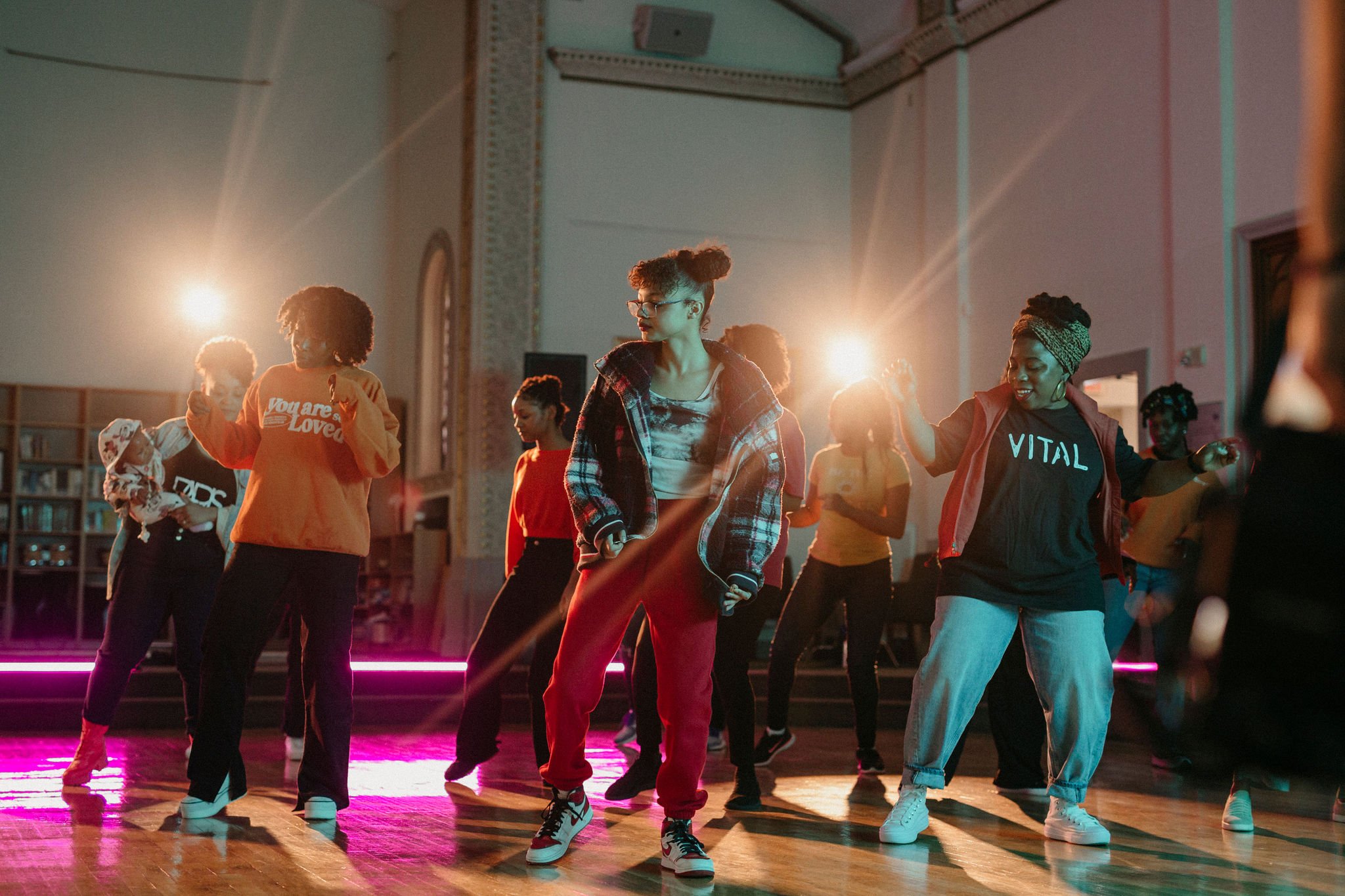
Photography by R9 Foto for The Emmanuel Gospel Center
Christian Creatives and the Church
It’s time for the two to support each other.
by Hanno van der Bijl, Managing Editor, Applied Research & Consulting
Armani Alexis Acevedo is an artist, designer, entrepreneur, and hip hop artist. Everything he does is to glorify God, but at one point in his life, he just could not see a home inside the Church for his creative passion.
He is thankful for the spiritual foundation he received from his church growing up but he didn’t feel fully supported in his calling until recently. A lot of that has to do with the buy-in of his pastors, including Davie Hernandez, co-senior pastor of Restoration City Church.
“It definitely is an encouragement to know that your pastors support you in that way, from the little things, even sharing my posts, or my songs, or our collections — he's probably wearing one of our tees right now,” Armani said. “Those things really mean a lot.”
But Armani still hears parishioners voicing their disapproval: “I don’t think this glorifies God” or “This art is too loud.” These moments don’t come without pain as Armani invests hours and heart into his creative projects.
“As artists, I feel like we do see things a little differently and appreciate detail more and the commitment behind it,” he said.
Christian creatives like Armani intentionally pursue their vocations as believers and artists, actively integrating their faith and work.
They live in the tension of a Church trying to stay faithful in a changing world. They’re caught between competing visions of what the Church should look like and how it should operate.


They don’t always feel seen. Many feel like spiritual orphans in a world that neither understands nor values their faith and a Church that neither acknowledges nor appreciates their gifts.
Some church leaders do see them. They say Christian artists are an untapped resource.
Pastor Valerie “Val” Copeland, pastor of Neighborhood Church of Dorchester, said God has given every Christian gifts and skills for a reason.
“Christian creatives sit in church without their gifts being used, without space being made for their gifts, while they sort of dry up on the vine,” she said. “If we need a singer or guitarist or drummer, we'll search them out. But where's the imagination to say if they are gifts that God has given you, then it's incumbent upon us to figure out how to make room for them?”
“Christian creatives sit in church without their gifts being used, without space being made for their gifts, while they sort of dry up on the vine.”
It hasn’t always been this way. Historically the Church has been a driving force for the arts, integrating it in its worship, teaching, and architecture. In some places marked by post-Christianity, the churches may be empty but their beauty continues to bear witness.
The arts have the power to speak to people in ways that sermons can’t. The Christian creatives sitting in the pews could help address some of the biggest challenges facing churches today. This is an opportunity for churches to support creatives while at the same time mobilizing them for mission.
In an effort to help churches do that, we connected with Christian creatives and pastors to learn from them how churches can support and equip the artists sitting in the pews.
A creative God
Christian creatives say they draw inspiration from the Creator — and that churches should too.
“God is the first artist,” Pastor Val said. “The beauty of art and the drama of art calls our hearts to something greater than ourselves and reminds us that God’s design is intentional: the way that he uses color, the way that he uses the drama of thunder and lightning, the way that he calls us to be creative in how we love the world.”
God’s creation is not only beautiful, it's also unique. He made humans in his image to reflect his creativity. For Michael “Mike Mack” McPherson, founder of Elevation Conference, the rich diversity of God’s created order is the “essence of creativity.”
“God is the first artist. The beauty of art and the drama of art calls our hearts to something greater than ourselves and reminds us that God’s design is intentional.”
“He could have easily made every single bug the same — every single ladybug could have the same amount of spots, and he decided that he would splatter and make them all look so different and so unique,” Mike Mack said. “But then we come into the Christian world and we look at art and music and we're like ‘It's supposed to sound like this.’”
Creatives embrace the call to “sing a new song.” They thrive on expressing themselves through their work, improvising to bring something new out of the old.


Many creatives feel that a lot of churches function exactly the opposite way. The familiarity of traditions provide safety and stability; however, if churches hold them too tightly there can be little room for something new. The tension between creative expression and commitment to tradition can often be at odds.
“The overarching problem is that the Church is terrified of so much. The Church creeps around so much,” Mike Mack said. “The Church still has — despite what Paul said — a 'taste not, touch not' mentality (Col. 2:20-23) about almost everything that could be considered sin and is probably not actually sin.”
Christian creatives often face the impossible task of producing art that checks all the boxes for churches theologically and for the world aesthetically. Placing restrictions on artists that don’t concern the core message of the gospel chokes creativity.
A creative Church
The COVID-19 pandemic forced churches to get creative. The crisis compounded the new challenges with long-standing issues that surfaced and threatened division. Many people did not return to worship services after lockdown measures were lifted, and increasingly younger generations don’t want anything to do with the institutional church.
To minister in this new reality, Pastor Val said “our missiology has to shift.”
“I talk to a lot of folks who are just really hanging onto the Church by a string,” she said.
Christian ministry is often geared to preaching that appeals to the head, but it is missing out on the power of the arts to reach the heart.
“This is definitely an area that the Christian Church has fallen asleep on,” Pastor Val said. “We've sort of limited God to the area of our brain: think about it, write about it, talk about it.”

Pastor Valerie Copeland
But with the state of the broader culture, this will not be enough to communicate the gospel effectively to many people. The call of Jesus’ Great Commission is to “go” to people instead of telling them to “come” to the Church.
“I think too often we're waiting for people to meet our criteria — and it's completely backwards,” Pastor Val said. “This idea — I'm willing to do whatever it takes to tell you about God: a God that loves you, a God that inspired all of this beauty, and a God that finds beauty in you — I'm willing to do whatever it takes. You've got to be willing to do whatever it takes.”
Pastor Val said Grace Chapel’s passion week display was a moving example of how God can use the arts to “preach” the message of the gospel. The display included beautiful art installations with quiet spaces for reflection.
“The last installation is just an empty tomb, and I can't tell you how that thing just brought me to my knees,” she said. “I've heard many sermons about the empty tomb that didn't bring me to my knees. Seeing that empty tomb brought me to my knees.”
In addition to proclaiming the Good News in different ways, Pastor Val said Christian creatives have the opportunity to help heal the fallout from broken or false views of God. Images have power, and when they’re not created to look like the people they’re meant for, it can have a lasting negative impact. Creatives can step in to redirect the image and narrative that disaffected people have of God.
“Give them platform, stop hiding them, stop discouraging them, be more encouraging, give them opportunities to present — especially on Sunday mornings. If you look around your congregation, there’s probably people who do all sorts of really cool, really unique things.”
“One of the ways that Christian creatives can be helpful is in bringing these important issues to light but also in correcting the narratives that have been associated with these images, and redirecting the narrative towards what is true and who we are as Christian believers,” Pastor Val said.
For churches that want to take the risk and change their approach to ministry, it will likely mean a painful period of adjustment, she said. But church leaders who worry about how to reach the unbelievers in their community may not realize that God has already provided them with the answer right there in the pews.
God has equipped Christian creatives in their congregations with gifts to preach the beauty of the gospel. But they must be empowered, not exploited.
“Give them platform, stop hiding them, stop discouraging them, be more encouraging, give them opportunities to present — especially on Sunday mornings,” Mike Mack said. “If you look around your congregation, there's probably people who do all sorts of really cool, really unique things.”
Creatives have their own ideas for how churches can begin to support them as they live out their calling to glorify God. They stress that this will mean a change in the usual mindset and approach to ministry. Of the many ways they can help, churches can start praying and thinking creatively about how they approach their finances, building space, and ministry staff.
Creative with support
One of the basic ways churches can begin to think creatively about equipping the artists in their pews is by supporting them financially.
An economy shaped by modern technology and social media has conditioned us to expect things to be free. Coupled with the tendency in churches to spiritualize volunteerism as Christian service, this dynamic puts Christian creatives in a difficult spot. They’re often expected to use their gifts and skills for free. And not complain about it.
“One of the things that does concern me is the inability for creatives, in general, particularly Christian creatives — particularly Christian creatives of color — to make a living,” Pastor Val said.
“We’ve got to start seeing people as an investment in the kingdom versus their output as the investment.”
It’s not fair the way churches impoverish Christian artists as they pursue their ministries, Pastor Val said.
“Christian creators contribute so much more to our economy than they get back,” she said. “They contribute so much more to the economy of the Church than they get back.”
When churches exploit the work of their people, it compromises the Church’s witness to the world.
“Justice starts in the house of the Lord. We cannot be out there fighting for justice and defending the rights of the poor and the exploited and then be exploiting people within the house of the Lord,” Pastor Val said. “We've got to start seeing people as an investment in the kingdom versus their output as the investment.”








Individual Christians can also think creatively about their tithing and giving. Mike Mack is confident that there are believers in the area who want to “make sure that New England’s a hub for artistry” and that Christian creatives have the tools and access they need to thrive.
“Somebody out there has that heart, but they've probably been told that the only way that you can give is to give it directly into the Church,” he said.
Being open to think creatively when it comes to finances is an opportunity to walk in step with the Spirit and partner with what God is doing on the ground.
“Are you listening to the voice of God? Do you ever wake up in the morning and say, ‘What does my city need? What do I gotta do?’” Mike Mack said. “Do you ever see somebody who's a creative and just think to yourself, ‘Wow, this person could really use assistance. I believe in what they're doing — let me help them out’?”
Creative with space
Boston is not kind to Christian artists and creatives looking for event space. They can have a tough time finding venues that will meet their needs at an affordable rate.
Many churches have significant real estate footprints with resources that could be used to support the work of creatives. Stewarding those resources well has kingdom implications.
Mike Mack said that along with everyone else, church leaders will one day have to give an account for what they received and what they did with it — “especially the stuff that we prayed for.”
“You look around and it’s like, what resources is the church sitting on? What young, up-and-coming rapper is actually the greatest preacher in your church, and you’re just not utilizing him because you don’t like the way that he does it?”
“‘Lord, I need this, please give me this.’ And he's like: ‘You just want it for yourself, you wicked servant. You just want it so you can hoard it. Why should I give it to you?’” Mike Mack said. “Somebody's praying for their building fund right now — got money coming in from everywhere — and have no plans of using it for the people who gave to it.”
Churches can use their spaces to host concerts, exhibits, and other artistic events. They can work collaboratively with creatives to further the kingdom in their local communities with the use of their building space.
Creative with staff
Beyond physical assets and resources, churches can build out their ministry staff with Christian creatives who feel called to serve in the church.
“Put the creatives in your church on staff. Pay for their position,” Pastor Val said. “Put people on staff so that they're actually able to do what they need to do and also support the life that they need to live.”
Bringing creatives on staff may not come intuitively to some church leaders. It may mean interrogating our ideas of what a church staffer looks like.
“You look around and it's like, what resources is the church sitting on?” Mike Mack said. “What young, up-and-coming rapper is actually the greatest preacher in your church, and you're just not utilizing him because you don't like the way that he does it?”
“Church” may not look exactly the same anymore. Christian creatives may have interests that don’t naturally align with the way many churches usually approach the arts. They might not play a musical instrument or want to lead the children’s Christmas play.
“It’s glorifying God just in a different approach. I think once people can realize that, they’ll definitely leave more space for more opportunity for creatives like myself and others.”
“We have to start — and I'm hoping even at my church — making room for the ministries — no matter how unique they are — so that this is a place where they can flourish,” Pastor Val said. “This is a place where we will financially invest in that ministry just like we're going to invest in the summer camp, the food pantry, the marriage retreat.”
Pastor Val said church leaders should recognize that creatives are also theologians. They should invite creatives to look for ways they can visually bring to life what is being taught or preached from the pulpit.
“One of my dreams is that someone would do a dramatic piece of the encounter between Jesus and Satan in the desert, where they have this word battle, and Jesus literally drops the mic at the end. It is done. It's a wrap,” she said. “It's so dramatic. This interaction between Jesus and Satan is intense, it's high stakes. And I'm like, why hasn't this been made into a dramatic piece yet?”
Creatives like Acevdeo are confident churches can make use of them and support them at the same time. He encourages creatives to be plugged into a local church community, rooted and grounded in Christ alone. He believes this spiritual vitality will help shift hearts and minds within congregations to make room for artists with unique gifts who relate in different ways.
“It's glorifying God just in a different approach,” Armani said. “I think once people can realize that, they'll definitely leave more space for more opportunity for creatives like myself and others.”
WATCH: Church & Creatives
Have you ever experienced music or art that has helped you feel closer and more connected to God? For many people, creativity and artistic expression have become an important part of their faith. The Emmanuel Gospel Center connected with Christian creatives and pastors to learn from them how churches can support and equip the artists sitting in the pews. Watch this video that dives into this world of faith and creativity while highlighting opportunities for support and collaboration.


Too Much Feel-Good Funding—Nonprofits' Recipe for Disaster
Non-profits need sustainable funding for their long-term health. Avoid common pitfalls and learn about a balanced funding strategy.
Too Much Feel-Good Funding—Nonprofits' Recipe for Disaster
By Nika Elugardo, EGC Leadership Systems Architect
Most people enjoy the immediate gratification of giving money to organizations that count impact in letters from children, goats delivered, or shoes donated. Grant-making organizations, too, want to see as much as possible of their money going towards visible impact in the community.
For this reason, non-profits and ministries often fund much of their work through "project" grants and donations. Project funding covers a specific event, program, or service, allowing organizations to add immediate value to the people they serve. If the project funding is properly aligned to a ministry's mission, it also keeps the ministry attuned to their near-term impact outside their walls.
But serious problems arise if a ministry relies too heavily on project money to fund their entire organization.
RECIPE FOR DISASTER: 4 PROBLEMS WITH a PROJECT-HEAVY FUNDING STRATEGY
1. Priority Drift
Project funding can create incentives for ministries to “follow the money", instead of working to discern which ministry activities would most strategically advance the vision. This "feel-good funding" at times may be driven more by emotion or trends than by commitment to system-wide, sustainable impact.
2. Custom Evaluation + Reporting
While project monitoring and evaluation are necessary for any ministry, project funding often creates additional burdens on the ministry to track special types of changes the funder cares about most. Such customized reporting requires additional personnel hours to satisfy, eroding the bottom-line benefit of their funding dollars.
3. Short-term Gains
Project funding often measures impact in near-term project outcomes, not in markers of sustainability. Focus on funding for short-term success can distract us from the equally important need to fund the longer-term viability and ultimate impact of the project and the organization.
4. Unfunded Sustainability Work
“Their dollars go further when they invest in ministries with the discipline for proper organizational self-care.”
Project funding is restricted to use on staffing and expenses for specified projects, defined activities, and target populations. Activities critical for organizational health, like partner development and project redesign, may be invisible to project investors. Organizations who value long-term sustainability—and all healthy organizations do—still must spend significant time and resources on these activities—but unfunded.

Broken for Good, a new documentary film about why non-profits are paralyzed because of the way we think about funding.
THE ANTIDOTE: BALANCE PROJECT + STRATEGIC FUNDING
1. Make the Case
Ministry leaders must make the case to funders that investing in ministry sustainability is just as important as saving babies, or whatever the ministry goals may be. Successful return-on-investment is about more than short-term outcomes—it's also about how the funding is ensuring the organization's health and stability for long-term impact. Demonstrate for funders how their dollars go further when they invest in ministries with the discipline for proper organizational self-care.
2. Report on Organizational Health + Sustainability
Wise strategic funders see the crucial role of activities like professional and leadership development, collaboration building, and communications, and they want to see regular progress in those areas.
Healthy organizations and their funders need reports with concrete indicators of sustainability work as the tangible fruit of their investment. For example, report on leadership trainings, new partnerships, and progress in vital infrastructure.
3. Look for Funders Who Value R+D
No two communities are the same—each demands contextualized services and relationships. Keeping up to date with the changing needs and priorities of the community requires significant, ongoing investment. Ministries that last:
“When a ministry is new or growing, strategic investment funding is even more critical than project funding.”
keep their finger on the pulse of community demand for their work
continue to learn from new models and best practices
build relationships with stakeholders who care about the community at all levels
recruit and develop leaders who will invest in long-term community transformation
craft stories and multimedia to communicate the real-time impact of their work
Strategic investors will underwrite the critical cost of research, development, and innovation that allow ministries to function robustly over the long-term.
When a ministry is new or growing, strategic investment funding is even more critical than project funding. Cultivating local ministry relevance grounded in data, strong leadership, and communication takes time and money—long before visible community impact.
4. DON'T BE AFRAID TO SPEAK BUSINESS LANGUAGE
Philanthropists with a business background understand that you have to pay for innovation if you want to a company to survive. Investing in leadership development, partnerships, infrastructure, technology, and communications is essential practice for most for-profit entrepreneurial ventures.
But these investors may not be accustomed to viewing non-profit ministry this way. You can draw on the management values they understand intuitively, in service of a humanitarian goal.
New and growing ministries, who work tirelessly for the well-being of the community, deserve no less than the basic supports required—in any sector—for a robust impact.

Nika Elugardo
EGC's Leadership Systems Architect, Nika began her career as a coalition-builder and advocate in 1996, managing the National Consumer Law Center’s Foreclosure Prevention Project, a research-driven, private-public sector partnership. Nika’s work since has focused on equipping corporate, nonprofit, and public leaders to work together to plan and impact sustainable and data-informed social movements. She holds a B.S. from MIT, a Master’s in Public Policy from Harvard’s Kennedy School of Government, and a J.D. from Boston University. Before attending law school in 2007, Nika worked at EGC for seven years in development and consulting. She has also served on EGC’s Board of Directors.


![Connecting Multi-Site Church Leaders [PhotoJournal]](https://images.squarespace-cdn.com/content/v1/57ff1c7ae58c62d6f84ba841/1513116581077-WOWU94O437SJAKKAMZMA/DSC_0438-for-header.jpg)


![Beyond Church Walls: What Christian Leaders Can Learn from Movement Chaplains [Interview]](https://images.squarespace-cdn.com/content/v1/57ff1c7ae58c62d6f84ba841/1550010291251-EVMN3KQ15A70OBTAD4JQ/movement-chaplaincy_outdoorcitygroup.jpg)

Beyond Church Walls: What Christian Leaders Can Learn from Movement Chaplains [Interview]
People who profess no faith affiliation, often called "nones," as in "none of the above", comprise nearly 23% percent of the U.S.'s adult population. How do we develop meaningful connections with a generation that may never enter a church building? We sat down with anti-racism activist and spiritual director Tracy Bindel to discuss this question.
Beyond Church Walls: What Christian Leaders Can Learn from Movement Chaplains [Interview]
by Stacie Mickelson, Director of Applied Research & Consulting
People who profess no faith affiliation, often called "nones”—as in "none of the above"—comprise nearly 23% percent of the U.S.'s adult population. How do we develop meaningful connections with a generation that might never enter a church building? We sat down with anti-racism activist and spiritual director Tracy Bindel to discuss this question.
“How do we develop meaningful connections with a generation that might never enter a church building?”
SM: Can you tell me a little bit about yourself – what you do with your time?
TB: I spend a lot of time bolstering and equipping social justice activists in the Boston area and beyond. I do that through Lenten spiritual direction, and I also run Circles (supportive contemplation-action groups) mostly for young people—Millennials who are engaged in some sort of justice work in the world.
SM: You use the term ‘Nones’. Can you explain what that is?
TB: It seems to be a word that is quite popular among faithful Millennials. There’s a group of people who are deeply spiritual and longing for deep and faithful community, and they aren’t willing to be affiliated with large institutional religions.
SM: What is Movement Chaplaincy?
TB: It’s an emergent field. It’s somewhere at the intersection of the multi-faith chaplaincy that you would see in a university and the traditional chaplaincy like in hospitals. It recognizes that people are in the world doing work together and need support—and more dynamic support—to do this work for the long haul.
At SURJ Boston, when we have meetings, between 3 to 500 people show up. When you have five hundred people anywhere, you need all kinds of support, you don’t just need programming. Conflicts come up. Interpersonal stuff comes up. People don’t know how to navigate bigger questions on race, privilege, etc. Those are actually spiritual questions.
“[Movement Chaplaincy is] somewhere at the intersection of the multi-faith chaplaincy (that you would see in a university) and traditional chaplaincy (like in hospitals).”
There are a lot of deeply faithful people thinking about, How do we actually shepherd this movement towards health and wellness, as we seek to dismantle systems of injustice?
SM: Are there places for churches to engage in movement chaplaincy?
TB: I think there’s a huge need for churches to follow the leadership of people in movement building work right now. But there’s hesitancy I see.
I don’t have a lot of criticism of the church. But I think we could be doing more if we would trust that the Spirit is working outside of our walls, and that it’s okay for us to wander out and not be afraid of what could happen. I think the hesitancy I see mostly has to do with fear of “those people”—a separation between spiritual and secular people, which I don’t believe really exists.
TIPS FROM THE FRONT LINES
If you’re interested in learning more about engaging ‘nones’ or getting involved in anti-racism work, Tracy has some practical tips for you:
1. Learn New Spiritual Language.
Listen to the podcast “On Being”, which brings together intersections in spirituality. It will give you the language to access people outside of the spiritual language that you currently have.
2. Check Your Fear.
Consider what you internally fear in people who don’t have the same values and faith that you do, because God is not afraid of that. Ask yourself: How much of my discomfort is just language translation? Where do I need to learn how to speak a different language to reach and connect genuinely with these people? And where do I fear our differences in values?
3. Support & Learn from Those Doing Frontline Ministry in the 21st Century.
I think most people in the United States know it’s bad to be racist. But most people don't actually know what it means to live into a practice of anti-racism. Go and find the people who do. I guarantee there are people in your community who are trying, whether that’s through meditation or policy work or legislation. There are different ways people are committed to practicing that value. Go and learn from them—that is applied spirituality.
4. Look For God Already at Work.
If we were to pose the question as, “What do you know about God?” rather than, “Do you know him or not?”, we would enter into a much more dynamic conversation. I just like to put on my curious exploration hat and say, “I wonder where God might be at this meeting? Maybe I’ll go see.”
5. Invest in Church-Based Community Organizers.
Anti-racism work is deeply spiritual. But there are thousands of people outside church walls who are also talking about it, and churches need to be in relationship with them—we need to be more coordinated and connected. Will your congregation support someone to spend dedicated hours each week coordinating with other parts of the movement to do this work well? My really big hope is for churches to hire community organizers to connect and organize congregations around these social issues.
Take Action

TRACY BINDEL
Tracy is an anti-racism activist and spiritual director who describes her work as Movement Chaplaincy, an emergent stream of chaplaincy that supports activists and social justice movement builders. She is a co-founder of Freedom Beyond Whiteness, a nationwide network of contemplative action circles, and she works locally with the Boston chapter of Showing Up for Racial Justice (SURJ), a network of 3500+ people that is comprised of many small issue-based working groups.
How Are We Doing?

High-Rise Gospel Presence: A Case for Neighborhood Chaplains
Neighborhood Chaplaincy is an innovative approach to ministering the love of Jesus in emerging communities. Steve Daman makes the case for how Boston would benefit from neighborhood chaplains.
High-Rise Gospel Presence: A Case for Neighborhood Chaplains
By Steve Daman
In recent blogs, we’ve been talking about Boston’s soon coming population increase and asking how the Church might prepare for that growth. Will some of Boston’s 575 existing churches rise to the challenge and create relational pathways to serve the many new neighborhoods being planned and built in Boston?
We hope they will, and that church planters will pioneer new congregations among Boston’s newest residents. But can we do more? Might there be other ways to bring the love of Jesus into brand new communities?
Asking the Right Questions
Dr. Mark Yoon, Chaplain at Boston University and former EGC Board Chairman, starts with a question, not an answer. “The first question that comes to my mind is: who are the people moving into these planned communities? Why are they moving there? What are the driving factors?”
According to Dr. Yoon, thoughtful community assessment would be the obvious starting point. To launch any new outreach into these neighborhoods will require “serious time and effort to get this right,” he says. “Getting this right” will likely require innovative solutions.
Let’s assume, for example, that a community analysis shows that many of Boston’s newest residents are young, urban professionals. Dr. Paul Grogen, President & CEO of the Boston Foundation, noted recently, “Boston is a haven for young, highly educated people. Boston has the highest concentration of 20-to-34-year-olds of any large city in America, and 65 percent of Boston’s young adults have a bachelor’s degree or higher”, compared with 36 percent nationally.
If the people moving into these new communities are affluent, educated young people, it is likely that many may be what statisticians are calling nones or dones.
Nones are people who self-identify as atheists or agnostics, as well as those who say their religion is “nothing in particular.” Pew Research finds nones now make up 23% of U.S. adults, up from 16% in 2007.
Sociologist Josh Packard defines dones as “people who are disillusioned with church. Though they were committed to the church for years—often as lay leaders—they no longer attend,” he says. “Whether because they’re dissatisfied with the structure, social message, or politics of the institutional church, they’ve decided they are better off without organized religion.”
Adopting New Church-Planting Models
It would seem likely that the dones and nones won’t be looking for a church in Boston—at least not the kind of church they have rejected.
“To make inroads into these communities,” Dr. Yoon continues, “one’s gospel/missional perspective will be paramount. Most of our church leaders have old church-planting models that focus on certain attractions they roll out.”

What will be required instead, he says, is a church-planting model “built on vulnerability and surrender, and skill on how to engage, and prayer.” This combination, he feels, although essential for the task, will be “a rare find!”
What, then, might be some non-traditional ideas for establishing a compelling Gospel presence in a brand new, affluent, high-rise neighborhood?
Neighborhood Chaplaincy
What if Christians embed “neighborhood chaplaincies” into emerging communities? Rather than starting with a church, could we start with a brick-and-mortar service center, positioned to help and serve and love in the name of Jesus Christ?
Imagine a church, or a collaborative of churches, sending certified chaplains into new communities to extend grace and life in nontraditional ways to new, young and/or affluent Bostonians. Could this be a way to implant a compelling Gospel presence among this population?
Picture a storefront in sparkling, new retail space—a bright, colorful, inviting and safe space where residents in the same building complex might make first-contact. I envision a go-to place for any question about life or spirit, healing or wholeness, a place where there is no wrong question, where Spirit-filled Christians are ready to listen and offer effective help.

The neighborhood chaplaincy office may serve as a non-denominational pastoral counseling center, offer exploratory Bible classes, and sponsor community-building events. As with workplace chaplains, neighborhood chaplains may serve as spiritually aware social workers, advising residents about such issues as divorce, illness, employment concerns, and such. They may be asked to conduct weddings or funerals for residents. As passionate networkers, they would serve residents by pointing them to local churches, agencies, medical services, and the like.
Community Chaplain Services (CCS) in Ohio provides one intriguing ministry model. According to their website, CCS “is designed to offer assistance to those in need, serving the spiritual, emotional, physical, social needs of individuals, families, businesses, corporations, schools, and groups in the community.” This ministry grew from a community-based café ministry into a full-service educational resource and pastoral service provider.
Other than this one example, a quick web survey uncovers little else. Given the ongoing worldwide trend toward increased urbanization, coupled with the biblical mandate to make disciples of all nations, including the urbanized communities, the lack of neighborhood chaplaincy models is surprising. One would think the idea of embedded chaplaincy among the affluent would have taken root by now.
CURRENT Chaplaincy Models
Certainly, the core idea of chaplaincy has been around a long time and has seen various expressions around the world. One can find chaplaincy venues such as workplace and corporate, hospitals and institutions, prison, military, public safety (serving first responders), recovery ministry chaplains, and more.

Community chaplaincy in high-crime or low-income neighborhoods is also widespread. Here in Boston, the go-to person for this kind of urban community chaplaincy is Rev. Dr. LeSette Wright, the founder of Peaceseekers, a Boston-based ministry working to cultivate partnerships for preventing violence and promoting God’s peace, and a Senior Chaplain with the International Fellowship of Chaplains.
Through Peaceseekers and other partners, Rev. Dr. Wright initiated the Greater Boston Community Chaplaincy Collaborative, which has trained over 100 people to serve as community chaplains. Rev. Dr. Wright says their main work is to be a prevention and response team, “quietly serving in diverse places" to provide spiritual and emotional care among New England communities.
Trained chaplains minister "everywhere from street corners to firehouses to homeless shelters, barber shops, nursing homes, boys’ and girls’ clubs; meeting for spiritual direction with crime victims, lawyers, nurses, police officers, doctors, construction workers, students, children, clergy, etc.”
“We do not have a focus on the affluent or the new high rises,” Rev. Dr. Wright admits. “We do not exclude them, but they have not been a primary focus.”
Who Will Pay For It?
Rev. Dr. Wright says that the biggest challenge she has faced establishing a network of community chaplains in Boston is funding. Some churches and denominations have provided missionary funding for chaplains. She says the interest and openness from the community for this initiative is high, and “with additional funding and administrative support in managing this effort we will continue to grow as a chaplaincy collaborative.”
If Boston were to plant neighborhood chaplaincy programs in new, emerging, affluent districts, funding would still be an issue.
Rev. Renee Roederer, a community chaplain with the Presbyterian Church in Ann Arbor, Michigan, has been writing about this kind of outreach, asking the same questions. “What if we could call people to serve as chaplains for particular towns and neighborhoods, organizing spiritual life and community connections in uncharted ways?” she writes. “Who will pay for it?”
Rev. Roederer further considers, “What would be needed, and what obstacles would have to be cleared, in order to create such roles? What if some of our seminarians could serve in this way upon graduation?”
“I’m a realist, knowing it would take a lot of financial support and creativity to form these kinds of roles,” she says, “but the shifts we're seeing in spiritual demographics are already necessitating them.”
TAKE ACTION
Attend a Discussion Group
Are you interested in joining a follow-up discussion with other Christian leaders on the potential for Neighborhood Chaplaincy in Boston?
Go Deeper
We have more questions than answers! Check out the questions we're asking as we consider fostering a Neighborhood Chaplaincy movement in Boston.
Learn More
WHAT DID YOU THINK?


Christ@Work: An Overview of Faith-Work Integration Ministries
Christ@Work (C@W) ministries help Christians live out their faith through their work: in their workplace relationships, work ethic, and professional impact on the world. This birds-eye view gives a glimpse of the scope of C@W ministries thriving nationwide today.
Christ@Work: An Overview of Faith-Work Integration Ministries
By the ARC Team
What’s a Christ@Work Ministry?
Committed Christians want to live into their faith seven days a week, not just during Sunday worship or mid-week groups. Those committed to loving God with all their heart, soul, mind, and strength acknowledge that we spend a majority of our weekly time and energy in our work life.
Christ@Work (C@W) ministries, also known as Faith at Work, Faith-Work Integration, or the more limiting term Marketplace Ministry, help Christians live out their faith through their work: in their workplace relationships, work ethic, and professional impact on the world.
By no means a comprehensive list, this birds-eye view should give you a glimpse of the scope of C@W ministries thriving nationwide today.
Overview of Christ@Work Ministries
1. Ministries to Bless the Christian Worker
Personal Ethics
Christians in skilled professions may face ethical dilemmas and professional challenges for which pastors without specialized knowledge aren’t equipped to offer counsel. These ministries offer literature or seminars on personal ethics. Speciality-specific convenings, such as medical ethics for Christian doctors, help Christians connect their faith to the specialized decisions they face.
Spiritual Care
Work life, like all aspects of life, can be a means of personal transformation and spiritual formation. These ministries offer counsel, chaplaincy, and coaching about spiritual development through work.
Spiritual Practices at Work
Some ministries offer materials or guidance for holding prayer meetings or Bible studies in the workplace. Such gatherings can provide workers otherwise unavailable for church groups opportunities for Christian formation. Such gatherings can also connect Christians in the workplace for mutual support.
Vocational Discernment
Christians with a robust theology of work can pursue the glory of God in anything from janitorial tasks to stock portfolio management. These ministries honor the dignity and theological meaning of the work itself, helping workers discern their gifts and calling, and align their career choices accordingly.
Christian Professional Networking
Skilled workers may find themselves the only Christian in their workplace. These ministries convene Christians in the same field for fellowship and peer support amidst professional or personal challenges to their faith.
2. Ministries to Bless Coworkers and the Company
Workplace Evangelism
What Christians often imagine when they first hear phrases such as Marketplace Ministry or Faith at Work, workplace evangelism-focused ministries help Christians have a positive relational impact on their colleagues. They support Christians working in secular settings to develop respectful and authentic relationships with their co-workers, to reflect God’s love, and to invite spiritual seekers in their sphere of influence towards a saving relationship with Jesus Christ. They may also hold workplace seminars or Bible studies as opportunities for spiritual conversation.
Corporate Ethics and Transformation
An unhealthy corporate culture not only makes life difficult for the employees, but it also undermines the long-term viability of the company. These ministries offer guidance for wisely challenging unhealthy corporate dynamics and taking practical initiative towards a lasting transformation of company values towards just, ethical, sustainable, and humanizing practices for the health of the organization.
3. Ministries To Bless the Community, Culture, and Planet
Professional Excellence Societies
To have a respected voice in the culture, those in artistic and creative professions may wish to hone excellence in their craft. These ministries promote Christian professional skill excellence to inspire and lead culture shift towards godly values, including the progress of their art to the glory of God.
Social Advocacy
Companies and organizations may have a just or unjust impact on human thriving and environmental sustainability, both locally and around the world. Christians are called to be faithful stewards of the earth and advocates for vulnerable populations. These ministries offer social impact analysis and promote social responsibility in company employment, vendor, environmental, and investment practices.
Mobilizing Professional Skill
Vulnerable populations may not have access to much needed but highly skilled services, such as dentistry. These ministries organize the donation of professional skill for under-served people.
Employment Facilitation
For some categories of people, significant barriers exist to securing employment. These ministries promote the God-given dignity of work for all by organizing Christians to offer job opportunities and entrepreneurship support for vulnerable populations, such as minorities, refugees, or those returning from incarceration.
WHAT DID YOU THINK?




Neighborhood Chaplaincy: 8 Open Questions
Want to explore Neighborhood Chaplaincy as a fresh way to bring the gospel into emerging neighborhoods? There are questions to address before fostering a Neighborhood Chaplaincy movement in Boston. Explore with us.
Neighborhood Chaplaincy: 8 Open Questions
By Steve Daman
Neighborhood Chaplaincy is an innovative approach to ministering the love of Jesus in emerging communities. In High-Rise Gospel Presence: A Case for Neighborhood Chaplains, I share why I believe Boston would benefit from neighborhood chaplains.
But we have more questions than answers. Here are the major issues we believe will need to be addressed on the way to fostering a Neighborhood Chaplaincy movement in Boston.
1. Culture CHANGES
What shifts in spiritual attitudes and lifestyles are happening with the emerging neighborhood demographics of Boston? How do we as the dynamic Church in this city respond, as we yearn to bring the love and life of Jesus to every Bostonian?
2. BEYOND FIRST CONTACT
If we establish physical space in a new neighborhood, what’s next? Do we plant churches out of that space? Or do we exclusively refer people to existing churches?
3. Online Presence
Is a physical space enough? What kind of web- and social media presence will a neighborhood chaplaincy require in order to generate a flow of people seeking services?
4. Funding
From where might a stream of funding for neighborhood chaplaincy be sustainable?
5. Job Requirements
What would be the duties of a neighborhood chaplain? What about credentials? How and where will neighborhood chaplains be trained and certified? Are local seminaries preparing graduates for nontraditional, outside-the-box, Kingdom-of-God building ministry?
6. Community Relations
How do we sell this idea to a community development enterprise? Of what value is a neighborhood chaplaincy program to a high-rise development complex? Can it be demonstrated that a spiritually and emotionally healthy neighborhood is a better neighborhood and a neighborhood chaplaincy can produce a healthier community?
7. Recruiting
How will we attract those rare individuals whom Mark Yoon envisions would pursue a contemporary church-planting model “built on vulnerability and surrender, and skill on how to engage, and prayer”?
8. What's Happening Now
Is anyone in the Boston area already doing Neighborhood Chaplaincy, or something similar? Are there leaders or groups regularly praying about it? Has anyone begun work towards such a movement?
TAKE ACTION
Are you interested in joining a follow-up discussion with other Christian leaders on the potential for Neighborhood Chaplaincy in Boston?
What Did You Think?

Developing Safe Environments for Learning and Transformation
Do you want to see transformation in your organization? You might want to give some thought to the importance of creating a safe environment, where your team can learn together to trust, practice confidentiality, become good listeners, stop judging, and develop a culture of patience, forgiveness, and celebrating the best in one another.

Resources for the urban pastor and community leader published by Emmanuel Gospel Center, Boston
Emmanuel Research Review reprint
Issue No. 80 — July 2012
by Rev. Dr. Gregg Detwiler, Director, Intercultural Ministries, EGC
I would like to address a question that we have been asked over and over again by Christian leaders and organizations that we have consulted and collaborated with in our work. It goes something like this: How does our organization (or church, denomination, school, etc.) develop a safe environment where our capacity to see personal and corporate transformation in and through our organization (church, denomination, school, etc.) is greatly enhanced? Or to put it another way, how can we experience transformation in our organization so that we have greater capacity to be an agent of transformation in our world?
A Model for Personal and Organizational Transformation
Over the past decade, we have with consulted many organizations on the topic of organizational change. In this process, I have often shared a model—or archetype1 — that describes the elements necessary for personal and organizational transformation. I say “personal and organizational” transformation because it is impossible to have one without the other. In our context, we often apply these principles to intercultural work but they are transferable to any desired change.The elements involved can be illustrated in the following Venn diagram:
Figure 1: Model for Transformation
A brief definition of each element follows:
Prophetic Vision is seeing God’s intention for a given situation and seeing the present reality as it really is. Our primary source for prophetic vision is the Word of God, but there are other sources that are also important: the community of faith, the leading and illumination of the Holy Spirit, and social/systems analysis. This prophetic seeing will always reveal a “gap” representing the distance between God’s high calling and where we are in relationship to that high calling. This prophetic seeing must be done with humility, recognizing that as humans we “know in part and prophesy in part.” Hence, prophetic vision is best done in community where others are permitted to share their perspective to help the learning organization fill in the picture as completely as possible and to arrive at “shared vision.”
Prophetic Voice is declaring what we believe God would have us do at this point in time and space. Like prophetic vision, prophetic voice must also be shared and affirmed by a particular Christian community/organization for it to have any traction. While prophetic vision and prophetic voice can arise from anyone within a given Christian community/organization, it must be embraced and endorsed by the “authorizing voice” of that community/organization for it to gain legitimacy and traction.
A Functional Infrastructure must be put in place to carry out the prophetic vision and voice. The core of this infrastructure is an aligned functional team and the necessary support structures to do the work.
A Safe Environment is the necessary context for any and all three of the elements above to work and, hence, is perhaps the most important of the four elements. It is also, in my experience, the element most missing in Christian ministry, and the one that most often derails personal and organizational transformation. A safe environment is necessary for a community/organization to come together to understand prophetic vision, agree on prophetic voice, and build and maintain a functional infrastructure. A safe environment involves establishing, honoring and maintaining honest and loving relationships that have the capacity to sustain and learn from the inevitable conflicts that always arise in the journey of transformation.
Reflections on How To Develop a Safe Environment
The main question of this paper deals with this fourth element: a safe environment. Time and time again in our consulting practice, we hear our clients say something like this: “We clearly see the necessity of creating a safe environment for learning and transformation but we have one question, how exactly do we develop a safe environment?” What follow is a first step in attempting to answer that question.
What a Safe Environment Is and Is Not
Before answering that question, however, let’s first describe what a safe environment is and is not.
When I am consulting with a Christian group, I often get the group to reflect on this question by taking them to what I call “the most unpracticed verse of the Bible”—James 5:16. I read to them the verse from the New International Version: Therefore confess your sins to each other and pray for each other so that you may be healed. Or, my preferred rendering of this verse from the Message paraphrase: Make this your common practice: Confess your sins to each other and pray for each other so that you can live together whole and healed.
I then ask them a series of questions: Do we really “do” this verse in the church? Is it our “common practice”? The answer, “No, not so much.”
Then I follow with, “Why don’t we practice it?” The reply: “Because people don’t feel safe enough to do it.”
I then ask, “What would it take to make it safe enough to actually do it, to make this our common practice? What are the qualities that describe a safe environment?” The lists of qualities are always very similar, things such as:
Trust
Confidentiality
Being a good listener
Not judging others
Patience and longsuffering
Considering the best in one another
Not looking down on those who confess their sins/temptations/weakness
Not “defining” others by "freeze-framing” their identity by the sins/temptations they confess
Avoiding “cross-talk” (being too quick to give unsolicited advice to others)
Focusing on our own “stuff” rather than on others' “stuff”
Gaining trust and asking permission before attempting to speak into someone else’s life
A commitment to one another’s growth
It is also important to explicitly state what a safe environment is NOT. Many people identify the elements above but still misconstrue what a safe environment is because they do not understand the subtler elements of what a safe environment is not.
A safe environment is NOT:
A pain-free environment (growth is often painful)
Only about “me” feeling safe (it is also about helping “others” feel safe)
Uniformity of opinion (a truly safe environment welcomes different perspectives)
A permission slip for being obstinate, unyielding, and unwilling to work for the common good
A “free-for-all” for expressing raw emotions without considering the effect this sharing will have on others
Steps To Developing a Safe Environment
After describing what a safe environment is and is not, the next issue is how to get there. It is one thing to be able to describe a safe environment, it is another thing altogether to be able to create and nurture it. The following diagram describes the process I have observed in creating, nurturing and reproducing safe environments.

Figure 2: The Process of Creating & Reproducing a Safe Environment
Let’s now describe each of the stages of the cycle in more detail.
1. Willingness: A Community/Organization That Desires to Create a Safe Environment
The first step required to enter this journey is “willingness.” As the common quip goes, “A man convinced against his will, is of the same opinion still.” Not many high-level organizational leaders will say that they do not want a safe environment within their organizational culture, but many simply have never experienced a safe environment themselves to the degree that they can provide the necessary leadership to cultivate it within their organization.
So the first step, plain and simple, is to find an organization or a community or (more likely) a subset within an organization/community that is willing to pursue a greater intellectual and experiential understanding of what a safe environment really is. In some cases—in a highly dysfunctional organization, for instance—the starting point may necessitate seeking out a safe environment outside of the organization.
2. Skilled Leadership to Guide in Nurturing a Safe Environment
The importance of skilled leadership cannot be overstated. This leadership may come from within the community or from outside it. The real issue here is the quality of leadership. There are certain prerequisites that a leader must have in order to serve as a guide to others in a journey toward a safe environment.
The first and foremost indispensable quality is that the leader must have already experienced the power of a transformational safe environment herself. It is impossible to reproduce and to guide others in what we ourselves have not experienced. The best guides are those who have tasted deeply of the refreshing waters of a safe environment for themselves.
The second quality is that the leader must be whole enough.2 “Whole enough” to have a healthy self-awareness, to appropriately share their journey with others, and to assist others in their journey. The term “whole enough” means that the leader is self-aware of her own brokenness and has already taken significant steps in her own healing journey. Some of the characteristics of a “whole enough” leader are as follows:
The whole enough leader is one who knows and can articulate her own self-identity in all of her complexity—good, bad and ugly. This self-awareness is demonstrated in her ability to see that she is (as we all are) “wonderful, wounded and wicked” and that God has taken this total package and has begun a process of healing and transformation. As such, the whole enough person can freely acknowledge her brokenness while at the same time seeing her goodness as a beloved child of God made in his image.
The whole enough leader is one who has learned how to appropriately share his own healing journey as a gift to others. As the whole enough one is secure in the love of God, he is able to share not only his strengths with others but also his weaknesses. As weaknesses are shared, others are called out of darkness and hiding into a place of safety, light and healing.
The whole enough person has been exposed to a safe environment to a sufficient degree that she understands the structural and spiritual elements necessary for nurturing a safe environment for others. In other words, the whole enough person is familiar enough with the air of a safe environment to recognize what it feels like and is skilled enough to know how to foster such an environment for others.
3. Group Learning About the Qualities of a Safe Environment
It is not enough for a leader to merely embody a safe environment; he must also lead a group of willing souls to consider together what a safe environment is and is not, what it looks like and feels like.
The aforementioned exercise (Group Reflection on James 5:16: confessing our sins to one another) is one of the most effective means I have found for leading a group into a better shared understanding of the qualities that comprise a safe environment.
Another technique is to get members of the group to consider the safest environments they have every encountered in their lives—places where personal and corporate transformation was made possible—and to get them to describe the qualities that were present in those environments.
4. Skilled Leadership that will Model & Maintain a Safe Environment
Once the group has reflected together and has a shared vision of what a safe environment looks like, the leader must lead the way by modeling a willingness to be vulnerable in sharing his own journey. The leader must be willing to share personal testimony that is authentic, transparent and bears witness to the power of transformation within a safe community. Not only must the leader model this, he must remind the group of the qualities of a safe environment and establish some basic ground rules that can help maintain it.3
It is also important to add here that creating and maintaining a safe environment is not like taking a straight-line stroll to the top of a mountain, but is more like a circuitous path of hills and valleys. It is often hard work because it involves fallen creatures that sometimes rub one another the wrong way. In truth, a journey toward a safe environment is not for the fainthearted; it requires ample supplies of humility, long-suffering, repentance, grace, and growth. It is important for participants to understand that this is the nature of the journey and that this reality, in fact, is part of what makes it transformational.
5. Reality Check: A Community/Org that is willing to be Honest About Where They are in the Journey
As a group reflects together on what a safe environment looks and feels like, and as the leader models and seeks to nurture a safe environment, the group will naturally begin to reflect on whether their group and their larger organization/community is a safe place. This sober assessment needs to be encouraged. If a community or organization is unwilling to honestly evaluate where they are in the journey, there will be little hope to see progress within the larger community. In many cases, safe environments must first take hold in smaller subsets of a community/organization before the larger community can be affected to any significant degree.
6. Continued Practice Through “Action-Reflection” Learning
The task of creating and nurturing a safe environment is not a destination but a continuous journey of “action-reflection.” Action-Reflection learning means that there is continuous effort given to putting into practice the qualities of a safe environment and continuous commitment to reflection, learning and evaluation throughout the journey. We learn how to be a safe community by practicing.
7. Reproduction: Members of the Community/Organization Reproduce Safe Environments in their Spheres of Influence
As members of a community/organization taste of the transforming power of a safe learning environment, they will naturally be drawn to bring its influence into their spheres of influence. In fact, I have found that people who have tasted of a safe environment will have a thirst for more and will want to bring it to others within their community/organization and beyond. This point goes back to the Genesis design that God’s creatures “reproduce after their own kind.”4 People who have experienced a safe environment, making personal and corporate transformation possible, will naturally seek out other willing souls and begin the cyclical process described in this paper over again.
Conclusion: Make this your common practice
When the three elements described in the Transformation Model (Figure 1) are practiced within the context of a safe environment, personal and corporate transformation is made possible. Examples of this transformation abound in both the personal and corporate spheres. I have experienced this in my own life, in our own work in Intercultural Ministries, and in our consulting with other organizations. A familiar example—on the personal level—that many people in our society would recognize is Alcoholics Anonymous, but there are many others.5
FOOTNOTES
1 In the discipline of Systems Thinking, a systems archetype is a structure that exhibits a distinct behavior over time and has a very recurring nature across multiple disciplines of science. The foundational text that Systems Thinkers often refer to is The Fifth Discipline: The Art and Practice of the Learning Organization, by Peter Senge (Currency Doubleday: New York: 1990).
2 I learned the term “whole enough” as a participant in a healing ministry called Living Waters. Living Waters is one of the most effective programs I am aware of in nurturing a safe healing environment, especially for those who have experienced relational and/or sexual brokenness. To learn more about Living Waters, visit http://desertstream.org.
3 These qualities and ground rules were mentioned previously in this article under the subheading “What A Safe Environment Is & Is Not.”
4 Genesis 1:11-12
5 For copies of these case studies please contact the author.

Rev. Dr. Gregg Detwiler is the Director of Intercultural Ministries at Emmanuel Gospel Center. The mission of Intercultural Ministries is “to connect the Body of Christ across cultural lines…for the purpose of expressing and advancing the Kingdom of God… in Boston, New England, and around the world.” Gregg works with a wide cross-section of leaders from over 100 ethno-linguistic groups. His ministry largely involves applied research, training, consulting, networking, and collaboration, especially related to intercultural ministry development.
Prior to joining the staff of EGC in 2001, Gregg served for 13 years as a church planter and pastor of a multicultural church in Boston and was elected as the overseeing Presbyter for the Northeast Massachusetts Section of the Assemblies of God. He served for five years as the Pastor of Missions & Diaspora Ministry at Mount Hope Christian Center in Burlington, Massachusetts. He earned his Doctor of Ministry in Urban Ministry in 2001 from Gordon-Conwell Theological Seminary in Ministry in Complex Urban Settings. His thesis, Nurturing Diaspora Ministry and Missions in and through a Euro-American Majority Congregation, has provided much of the direction of his ministry in recent years. Raised in Kansas, Gregg graduated from Evangel University and the Assemblies of God Theological Seminary in Springfield, Missouri. Gregg and his wife, Rita, live in the Boston area and have three children.
Click to Learn more about EGC's Intercultural Ministries.


![Hidden Treasures: Celebrating Refugee Stories [photojournal]](https://images.squarespace-cdn.com/content/v1/57ff1c7ae58c62d6f84ba841/1512579164575-AKNVCYX4Q5DW8IN2CNYP/P1070998.jpg)


Keywords
- #ChurchToo
- 365 Campaign
- ARC Highlights
- ARC Services
- AbNet
- Abolition Network
- Action Guides
- Activism
- Administration
- Adoption
- Aggressive Procedures
- Andrew Tsou
- Annual Report
- Anti-Gun
- Anti-racism education
- Applied Research
- Applied Research and Consulting
- Asking for help
- Ayn DuVoisin
- Balance
- Battered Women
- Berlin
- Bianca Duemling
- Bias
- Biblical Leadership
- Biblical leadership
- Black Church
- Black Church Vitality Project
- Book Recommendations
- Book Reviews
- Book reviews
- Books
- Boston
- Boston 2030
- Boston Church Directory
- Boston Churches
- Boston Education Collaborative
- Boston General
- Boston Globe
- Boston History
- Boston Islamic Center
- Boston Neighborhoods
- Boston Public Schools
- Boston-Berlin
- Brainstorming
- Brazil
- Brazilian
- COVID-19
- CUME
- Cambodian