
BLOG: APPLIED RESEARCH OF EMMANUEL GOSPEL CENTER

After the President's Refugee Order: Greater Boston Refugee Ministry Update
An update from Gregg Detwiler, Director of Intercultural Ministries at EGC, regarding the executive order reducing and temporarily ceasing the U.S. Refugee Admissions Program. Some points to consider, and how you can take action to love and serve refugees who are already here.
Gaining Perspective in the Light of Executive Orders
Upcoming Refugee Ministry Training Opportunities
by Gregg Detwiler, Director, Intercultural Ministries, EGC
Hello friends, I want to give you an update on our ministry and hopefully encourage you as well.

As you might guess, this has been a really intense time of ministry for us in the Greater Boston Refugee Ministry. Since President Trump gave his initial executive order on January 27, 2017, and his new executive order on March 6, reducing and temporarily ceasing the U.S. Refugee Admissions Program (USRAP), the debate and even the rancor of our nation has really ramped up. I recognize that those of you reading this report may have a variety of opinions on this and other issues. Regardless of your personal position, I want to encourage you, even as I encourage myself and our team, that we would have the proper moorings to keep us steady and faithful in this season of debate.
I want to give you four things to consider:
1. GET WELL INFORMED
First of all, it is my hope that we would all seek to be well informed, that we would make sure that we get our facts and information from balanced and well-founded sources. One example of a good resource is to review the refugee vetting process already in place. You can see an infographic of that process at this site.
If you have questions or concerns about refugees coming into the United States and how that process works, please reach out to us. We will be happy to point you to some resources that we feel are reputable and accurate to help you understand what exactly happens. You can either send us a message through the “Contact EGC” button on this page: https://www.egc.org/take-action or call us during regular business hours at 617-262-4567 and ask to speak to someone in the Greater Boston Refugee Ministry.
2. ENGAGE IN POSITIVE ACTION
Secondly, regardless of where you may stand about whether refugees should continue to come in or whether the number should be decreased or increased, the fact is we already have refugees here! And the scriptural mandate for us to welcome and serve refugees—the foreigner, the alien, the stranger, the widow, the orphan—those mandates have not changed. And so even as this debate rages, I would encourage you to direct your energy toward acting and doing something positive right now regarding this population, and there are many opportunities for you to get involved. If you are in the Boston area, we would love to help direct you toward that positive action. Please get in touch with us. If you live to the west of Boston, contact our partners at WARM, the Worcester Alliance for Refugee Ministry. And if you live in other places around the country, I will try to point you toward people serving refugees where you are.
3. ATTEND A GBRM TRAINING
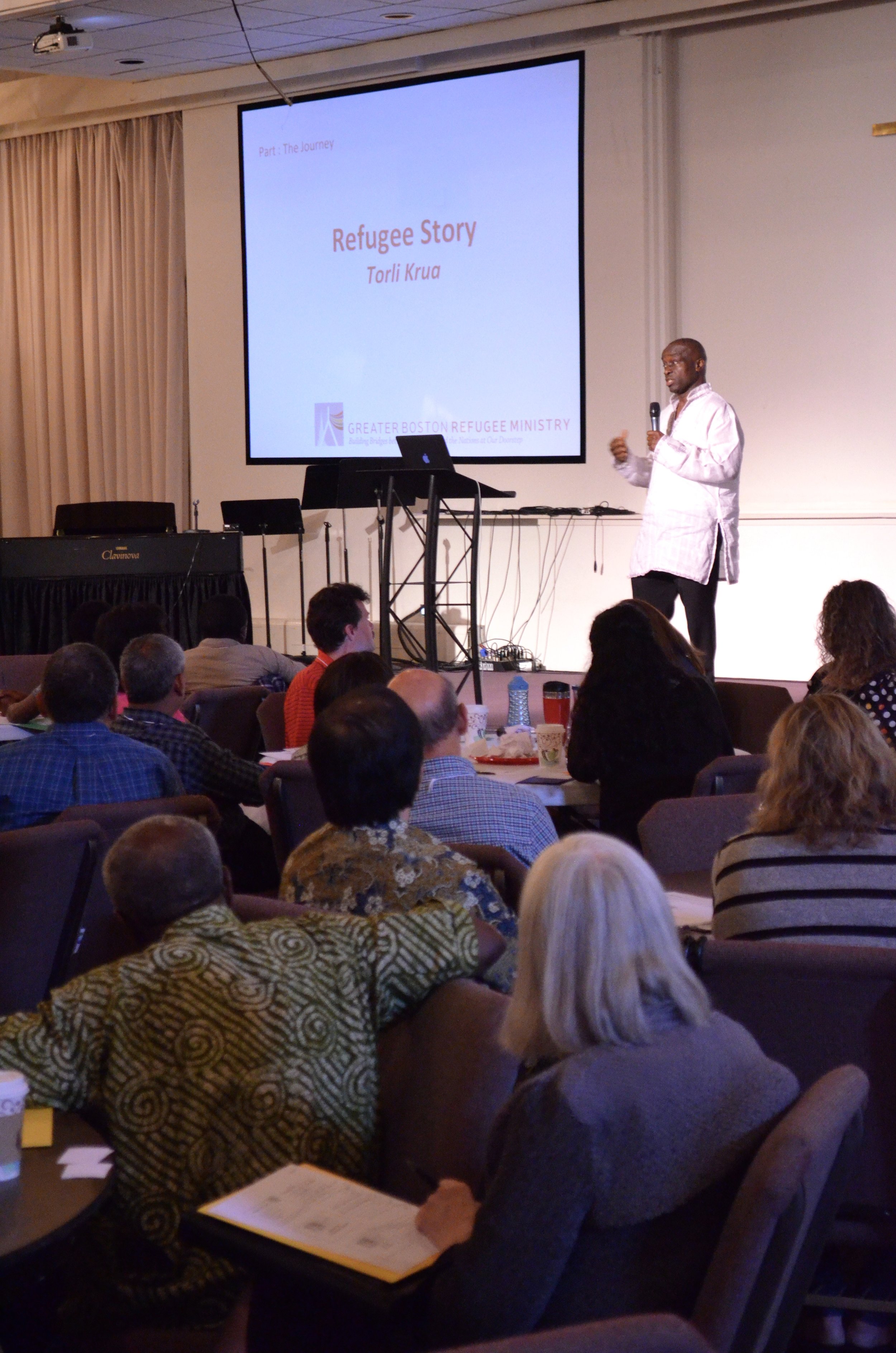
Thirdly, in order to take action in ways that are really helpful and not harmful, it’s very important we are first trained. This month, we are offering several trainings in the Greater Boston area. In the coming months, there will be more. Please visit our web page at https://www.egc.org/refugee for a list of current opportunities. On March 11, 2017, we will be at Gordon-Conwell Theological Seminary. On March 18 and April 29 we will be in Belmont, Mass. Contact us to ask for details about these, or check our website.
4. LISTEN TO THE STORIES OF REFUGEES
One excellent way that we can get better informed about the real story is to hear from refugees themselves. The Greater Boston Refugee Ministry was invited to be part of a news feature story produced by NBC Boston on January 29, 2017. They asked us to bring some of our refugee friends, and so we brought a refugee couple, a Christian family from Syria, who talked about their reactions to the executive order and how those events were making them feel. I am sure you would find this short video informative and inspiring as you view this couple’s story linked here.
Thank you for your active partnership in serving refugees with us. Your prayers, encouragement and financial support help us equip churches in Greater Boston to serve the many families who have recently arrived and are trying to settle in.
For the GBRM Team,
Gregg
To support the work of EGC settling refugee families, click here.
To learn more about EGC’s Greater Boston Refugee Ministry, click here.

![Hidden Treasures: Celebrating Refugee Stories [photojournal]](https://images.squarespace-cdn.com/content/v1/57ff1c7ae58c62d6f84ba841/1512579164575-AKNVCYX4Q5DW8IN2CNYP/P1070998.jpg)


![Saffron: A Refugee Story [VIDEO]](https://images.squarespace-cdn.com/content/v1/57ff1c7ae58c62d6f84ba841/1549999821579-83XWBWFG0C5QT4ARUXM3/Screenshot+2019-02-12+14.30.04.png)

A Word to White Evangelicals: Now is the Time to Engage Issues of Race
We are at a critical moment in the history of our nation—a time not when new problems have arisen, but when old problems have been revealed. The violence against young Black men, the tension that inspired the killings of police officers, the division surrounding a heated election, and the exclusion of the Muslim community are just a few indicators that things are not well. How will we respond in our increasingly diverse nation as racial tensions flare across our land?

PERSPECTIVES
by Megan Lietz, ARC Research Associate
We are at a critical moment in the history of our nation—a time not when new problems have arisen, but when old problems have been revealed. The violence against young Black men, the tension that inspired the killings of police officers, the division surrounding a heated election, and the exclusion of the Muslim community are just a few indicators that things are not well.
How will we respond in our increasingly diverse nation as racial tensions flare across our land?
Like a doctor removes a bandage to reveal a festering wound, these national incidents are exposing deep-seated racial inequities. As a physician exposes a wound to provide treatment, so does exposing these inequities create opportunity for healing. How will we respond to this opportunity? In our choices, we are accountable to the Lord.
The Current Reality
The racial diversity of our nation is increasing. The US Census Bureau projects that by 2043 more than half of the nation will be people of color. We have already seen this shift occur in Boston when we became a “minority majority” city in 2000. Diversity is our future, and the future is indeed here.
With this diversity also comes division. Some division comes from the differences inherent in diverse cultures, such as disparate worldviews or languages. These types of differences are not inherently bad. Other divisions, however, happen because disparities exist between White people and people of color. These disparities have a profound impact on people’s daily lives and foster tension and fear.
Consider the racial disparities in education, health care, and financial well-being in Boston. In 2016, rates of graduation from the Boston Public School System in four years were 13 percentage points lower for Black students, and 15 percentage points lower for Hispanic students, than their White counterparts. In 2015, a 2011 health report found that, compared to White people, Black and Hispanic people in Massachusetts have higher rates of infant mortality, cardiovascular and circulatory system related deaths, and diabetes.
Most notably, in 2015 the median net worth for White families in the Boston area ($247,500) towered over that of Hispanic ($3,020 for Puerto Ricans, $2,700 for other Hispanics) and Black families ($12,000 for “Caribbean Blacks” and $8 for “U.S. Blacks”). Furthermore, there is little hope of this improving without significant change, as these national wealth gaps by race have remained relatively consistent for the last 50 years.
These inequalities shape the future ministry of the Church and invite White evangelicals to the work of racial reconciliation. The invitation is open. Our city isn’t waiting. Will we see the problem before us? Will we respond in a Christ-like way to the hurt and division across our land?
Stepping Up
I believe it is time for White evangelicals to step up in this moment of crisis and walk into the opportunity for conciliation it provides. As a White evangelical myself, I am choosing to step up. Neither my faith nor my conscience allows me to do otherwise.
“These inequalities shape the future ministry of the Church and invite White evangelicals to the work of racial reconciliation.”
I am stepping up by calling other White evangelicals to join me on a journey toward racial reconciliation, and I am committing to walking with them along the way. More specifically, I am developing an initiative at the Emmanuel Gospel Center called Race and Christian Community. I’m designing the initiative to meet White evangelicals where they are and help them take concrete steps to engage in racial issues respectfully and responsibly.
While my primary motivators for action are God’s Word (e.g. Eph. 2:11-14, John 17:20-23, Jer. 29:7) and the grave need, my desire to engage is also personal. There was a time when I was unaware of my race and privilege and culture, when I didn't know what God's Word had to say about the racism and division and discord that sullies our land. At that time, I had fellow Christians come alongside me as I began my own journey towards racial reconciliation.
Born and raised in a predominantly White, rural town, growing up I never imagined myself in multiracial ministry. It was not until I was immersed in communities of color during my college years that I wrestled with my own race and culture. It was not until then that I had considered how racial reconciliation related to my faith.
“I had fellow Christians come alongside me as I began my own journey towards racial reconciliation.”
As I reflect on my involvement in those early days, I recall my desire to help, my good intentions, my uncertainty about what to do, and my remarkable ignorance. At the same time I recall God’s faithfulness. He extended me grace and guided me, through the Spirit and the saints.
In this space I came to discover my culture and racial identity. I began to genuinely appreciate the cultures of others. My view of God expanded, and I began to more fully live out my faith.
Similar to how the Lord used others to lead me on my journey toward racial reconciliation, it is my hope that I can partner with the Lord to guide others who are starting out.
Join the Journey
I invite you to join me in reflecting on the racial tension our nation is experiencing and to consider how you might respond. As the inequities and divisions are coming to light in ways that White evangelicals can no longer deny, we are posed with the question, "What will you do about it?" It is a question that, though powerful, is often brushed off by a barrage of competing priorities: the problem of good people having too many good things to do.
I challenge you to not brush off the question of how you will respond too easily. In our complacency, we hurt both people of color and ourselves. After centuries of being largely disengaged from pursuits of racial equity, now is the time for White evangelicals to begin to change our legacy.
Perhaps the incidents of violence and upheaval that cross our television screens are a means of God’s grace to us. Perhaps God is using these incidents to interrupt our daily routine with moments of clarity—moments that invite us to engage in the reconciling work that is not a partisan issue but is essential to the work Christ did on the cross (Eph. 2:11-21).
“Now is the time for White evangelicals to begin to change our legacy.”
Will you join me, broken and faulty as I am, on a journey toward racial reconciliation? Will you join me, with wounds and fears and insecurities? Will you join me with confidence, not in our ability to bring about reconciliation, but in Christ’s ability to work through those who say, “Yes, Lord, send me”?
Take Action
I invite you to :
Attend an EGC small group conversation for White evangelicals. Saturday, April 1, 10 am - noon, at Emmanuel Gospel Center, 2 San Juan Street, Boston. Discuss obstacles and insights you’ve encountered in your own engagement of race, and brainstorm how EGC could support you to do so more effectively.
Speak into the development of EGC’s Race & Christian Community initiative by connecting with me personally. I value your perspective and want this initiative to be shaped by the voice of the community!
Explore my recommended resource list to begin learning about race and how to engage these issues.
Refer a church, organization, or individual who is already engaging racial reconciliation. I’d like to connect with them, learn from them, and explore how what we do at EGC can complement, not duplicate, their efforts.
Offer financial support to EGC’s Race and Christian Community initiative.
If you are willing to join me, I welcome you to the journey. May we walk it together, bearing the good news of Jesus' reconciling power and allowing him to use us as his hands and feet.





Jamaica Plain's Journey Through Time: History + Resources
From progressive education policies in the late 1600s, to the arrival of immigrants and industry in the 1800s, to the establishment of diverse housing projects and churches up to the present day, Jamaica Plain has had a colorful and action-filled past.
Jamaica Plain Over Time: History + Resources
by Rudy Mitchell, Senior Researcher
From progressive education policies in the late 1600s, to the arrival of immigrants and industry in the 1800s, to the establishment of diverse housing projects and churches up to the present day, Jamaica Plain's colorful and action-filled past is worth exploring as part of Boston's unique history.
Some Jamaica Plain Firsts
THEATER The Footlight Club of Jamaica Plain is the oldest community theater in the country.
ANIMAL WELFARE In 1868 George Angell published the first magazine on the humane care and welfare of animals, “Our Dumb Animal Friends: We Speak for Those Who Cannot Speak for Themselves.” He was also the founder of the M.S.P.C.A. whose animal hospital is on South Huntington Avenue.
MEDICAL On Oct. 16, 1846, Dr. John C. Warren, a Jamaica Plain resident, performed the first surgery publicly demonstrating the use of ether on a patient.
Historical Overview

Map of Jamaica Plain showing sub-neighborhoods. Boston Redevelopment Authority, Jamaica Plain District Profile…, Boston, 1979, 5
Boston’s Jamaica Plain neighborhood was a part of the separate town of Roxbury from 1630 until 1851. An influential center of West Roxbury, the town was annexed in 1874 to the city of Boston. Early settlers, like William Curtis who built his house in 1639, were mostly farmers and fruit growers.
The Eliot School was established in 1676 with a grant of land from the Thomas and Ruggles families and later an endowment from Rev. John Eliot, Apostle to the Indians. The donors “stipulated that the school be open to all children, white, black, and Indian.” [1] The current Eliot School building dates to 1832.
The first church in Jamaica Plain, the Third Parish in Roxbury, was established in 1769. Rev. William Gordon, its first pastor, served as chaplain in the Provincial Congress in 1775.
The Loring-Greenough House was built in 1760 for Joshua Loring, a British Naval Commodore and loyalist appointed to the governor’s council. In 1774 after opposition from his neighbors, Loring fled from his house to join with the British in Boston. The home was later used by Washington's troops as a hospital during the Revolutionary War.
[1] Eugene Green, Jamaica Plain. Boston 200 Neighborhood Series (Boston: Boston 200 Corp., 1976), 7.
Early Infrastructure: Water Supply & Transportation Systems

In 1796 after the Revolutionary War, the Jamaica Plain Aqueduct Company developed an important water supply system from Jamaica Pond to Fort Hill serving Boston’s water needs. The system used gravity flow from the pond through miles of wooden pipes.
Transportation developments in the 19th century influenced the growth of Jamaica Plain. The Boston and Providence Railroad was constructed through Jamaica Plain in 1834 with a station at Green Street opening in 1841.
By the 1870s horse drawn street cars were serving the growing community, and later electric streetcars took their place. For more insights on the impact of these on neighborhood development see Sam Bass Warner’s book, Streetcar Suburbs.

Early Factories
Also during the late 19th century and early 20th century various factories and 24 breweries were built in Jamaica Plain, mostly in the Heath Street and Stoney Brook areas.
In 1876 the B. F. Sturtevant fan company expanded and moved to Jamaica Plain, and by 1901 it was employing 650 men and manufacturing many products.
The Thomas G. Plant Shoe Company had one of the world’s largest shoe factories on the site of the current Stop and Shop plaza from 1896 to 1976. In the 1920s the Moxie soft drink company developed a factory complex called Moxieland nearby at the site of today’s Bromley Heath Housing Project. In those days Moxie outsold CocaCola.

Iglesia Metodista “San Andres” (St. Andrew’s Methodist Church)
Immigration, Population Growth & Churches
Immigrant groups from Ireland, Germany, Latvia, and other countries contributed to neighborhood growth and provided workers for these industries.
Several large churches and many smaller ones started up to serve the spiritual needs of the growing population. The German churches included the First German Baptist Church (now River of Life Church), the German Methodist Episcopal Church (now St. Andrew's Methodist), and the German Reformed Christ Church. Other churches started during the 1800s including St. John’s Episcopal (1841), Central Congregational (1853), Boylston Congregational Church (1879), First Baptist (1842), Blessed Sacrament Church (1891), and St. Thomas Aquinas Church (1869).
Jamaica Plan: Population vs. Year
Although the population of Jamaica Plain continued to grow during the first half of the 20th century, many of the factories and breweries experienced declines, fires, closures, or relocation. The elevated Orange Line tracks along Washington Street had a negative impact on nearby businesses and residences. The 1930s Depression and later redlining also had negative impacts on housing and housing construction in the community.
An important new development in housing took place with the opening of the Heath Street public housing in 1942 and the Bromley Park housing project in 1954. Although Bromley was opened with some fanfare and tours in 1954, it later developed a variety of problems.

Primera Iglesia Bautista Hispana was started in 1975.
By the 1960s and 1970s many Spanish speaking immigrants from Cuba, Puerto Rico, and other places were moving into Jamaica Plain. These new residents started many small businesses along Centre Street and Washington Street.
Spanish speakers also added vitality to the spiritual life of the neighborhood by starting many new churches, including Primera Iglesia de Dios Pentecostal (1969), Iglesia de Dios Pentecostal “Roca de Consolacion” (1969), Iglesia Metodista “San Andres” (1971), Primera Iglesia Bautista Hispana (1975), and Iglesia Comunitaria de Boston (1988).
While Jamaica Plain’s population was becoming more diverse during the 1960s and 1970s, it was also declining during that period.
Jamaica Plain IN RECENT DECADES: Current & Future Developments

J.P. Licks ice cream shop
In recent decades the elevated Orange Line was taken down. The scars left from demolition for the never-built Southwest Expressway were healed with the Southwest Corridor Park and new building development.
These physical changes along with other improvements have brought renewal in Jamaica Plain. Some older industrial buildings have been renovated, and newer businesses like J.P. Licks (ice cream shop and café) have made Centre Street an attractive and lively neighborhood center.

The future Jackson Square Recreation Center.
Recently, transit-oriented housing developments have sprung up around the Forest Hills MBTA train station. Hundreds of new residential units have been completed or are under way.
The JP/Rox Plan for the Washington Street and Columbus Avenue areas is likely to bring additional changes in the coming years. While Jamaica Plain continues to transition into the future, its beautiful green spaces will keep it true to its nickname as the “Eden of America.”
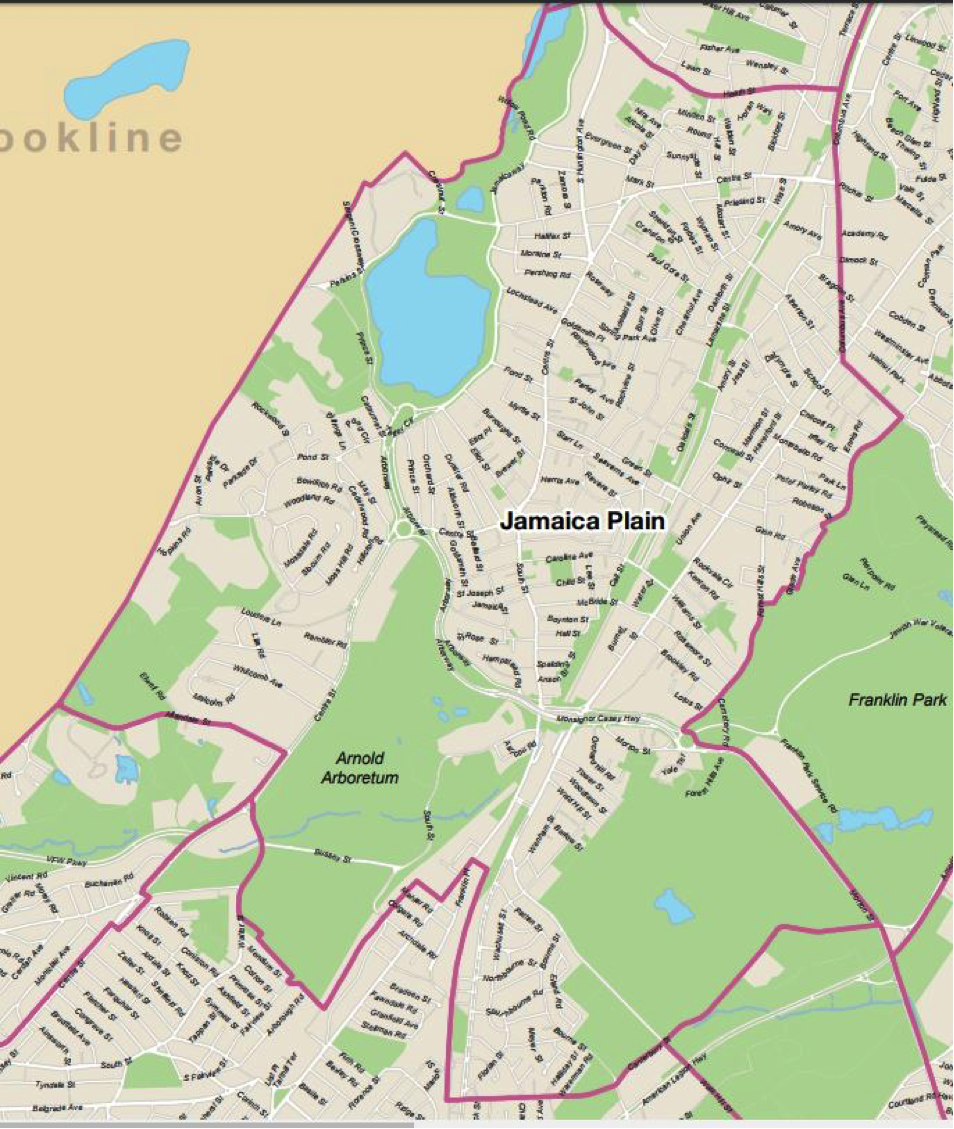
Map of Jamaica Plain, Boston Planning and Development Agency
Recommended Resources

Green, Eugene. Jamaica Plain. Boston 200 Neighborhood Series. Boston: Boston 200 Corporation, 1976.
This 24 page booklet weaves oral histories together along thematic lines and adds some early history of Jamaica Plain. Pictures and illustrations from many eras enhance the text.
When the interviews were made over 40 years ago, the protests to stop the Southwest Expressway were fresh in people’s minds. This and other issues of those days are brought to life in the oral histories recorded here.

Hirsch, Kathleen. A Home in the Heart of the City: A Woman’s Search for Community. New York: North Point Press, 1998.
Kathleen Hirsch's first-hand account of Jamaica Plain in the 1990s is well-written. The author writes about finding and building community in an urban neighborhood, as well as many perennial concerns like balancing career and parenting.
Although Hirsch encounters and writes about the diverse aspects of Jamaica Plain, her perspective is basically that of a professional from the Back Bay who is trying to connect with the everyday life of a gentrifying neighborhood. Some of her writing explores the spiritual dimension of community, at least in a general way.
She writes, “When I moved here, I didn’t expect that my quest for community would lead me to craftsmen, much less drug dealers or humble Xerox-shop managers, or that a world of Mondays would come to echo the wisdom of the Psalms” (86).
After getting a coffee on Sunday morning at Sorella’s café, she reflects on the meaning of Sabbath rest, “To be at rest is to observe the bones of God’s work through man in the world laid bare. To be at rest is to see with clarified vision. And this vision forces me to contemplate not what I am meant to do with my days in this place on earth, but what I am meant to be. To what, here and now, am I to be faithful” (79)?

Hoffman, Alexander von. Local Attachments: The Making of an Urban American Neighborhood, 1850-1920. Baltimore: The John Hopkins University Press, 1994.
No other book presents such a detailed historical and social analysis of any Boston neighborhood as Hoffman’s Local Attachments does for Jamaica Plain. The author concludes, “if ever we are going to cope with the problems of our cities, we need to understand better the historic neighborhood and how it functioned within the urban system of late nineteenth and early twentieth centuries” (248).
The book mines many primary sources including church records to develop a full picture of the social networks and civic spirit that composed a strong sense of local community and public culture in this neighborhood. Its historical perspective “traces the dramatic transformation of Jamaica Plain into a modern urban neighborhood” (xxii).
Hoffman explains and documents how “the most important voluntary institutions in any late nineteenth-century American community, and especially in the historic land of the Puritan, were those connected with religion” (122).
While Jamaica Plain has continued to change significantly in the last twenty years, this book is still essential reading for anyone seeking to understand the neighborhood.
Von Hoffman, Alexander Carl. The Making of the Modern City: The Development of Jamaica Plain, Massachusetts, 1632-1920. Ph. D. dissertation, Harvard University, 1986.

Rogovin, Janice. A Sense of Place/ Tu Barrio: Jamaica Plain People and Where They Live. Translated by Yolanda Rivas. Boston: Mercantile Press, 1981.
The text (in English and Spanish) is by various JP residents, with editing and photos by Janice Rogovin.
Many of the stories bring to life the experiences of residents in the late 1970s up to 1981 as they reflected on community life, their homes, and being forced to move when new people bought the buildings they were living in. The book includes many photos and glimpses into the lives of families who were facing difficult times.

Sammarco, Anthony Mitchell. Jamaica Plain. Images of America Series. Charleston, SC: Arcadia Publishing, 1997. Reissued in 2004.
Topics covered in the chapters of these books include churches, schools, natural features, community service organizations, transportation, early settlers and their estates and houses. Pictures of the early years of the Boston Children’s Museum illustrate the valuable educational role it played in the community.
At one time German groups, clubs, and churches served immigrants working in the neighborhood. Clubs such as the Jamaica Club and the Tuesday Club were once more prominent than today. Churches also sprouted up all over the neighborhood as the population grew. Other important institutions documented with pictures include hospitals such as the Faulkner Hospital and the Veteran’s Administration (VA) Hospital.
If you are curious about the history of the Loring-Greenough House or Curtis Hall or you wonder about the origins of Jamaica Plain names like Spring House and Peter Parley Road, these books will give you brief answers.

Sammarco, Anthony Mitchell. Jamaica Plain: Then & Now. Charleston, SC: Arcadia Publishing, 2003.
The pictures in this volume often repeat the ones in Sammarco’s Images of America book on Jamaica Plain. However, as the title suggests, this work also pairs up old photos with modern photos of more or less the same view.

Whitcomb, Harriet Manning. Annals and Reminiscences of Jamaica Plain. Cambridge, Mass.: The Riverside Press, 1897. 64 pages.
Whitcomb shares many details of pioneering families and their homes in Jamaica Plain. In the process she connects the community to many historical events in Boston and America.

Hay, Ida. Science in the Pleasure Garden: A History of the Arnold Arboretum. Boston: Northeastern University Press, 1995.
This well illustrated and comprehensive work details every aspect of the arboretum and its history. The book touches on both science and history in tracing the development of one of North America’s most important arboretums.
WEB SITES
Remember Jamaica Plain blog – http://rememberjamaicaplain.blogspot.com/
Jamaica Plain Historical Society – www.jphs.org



EGC 365 Campaign
We have initiated the 365 campaign to help EGC be sustainable, day in and day out, 365 days a year. We are seeking investment to strengthen our work, as well as 365 new monthly donors. We invite you to join us in this important work of strengthening Christian leaders by investing in EGC or by becoming a monthly donor.
EGC 365 Campaign
by Jeff Bass, Executive Director

Dear Friends,
In a season when our nation and Greater Boston are facing ever increasing challenges, do you believe that God is at work? Do you believe God is at work through his Church? Do you believe God is at work through you?
Since the mid-1960s, God has used immigrants, migrants, students, businessmen and businesswomen, and even some home-grown Bostonians to revitalize his Church. EGC gets behind Christian leaders of all types and helps the Church:
Love refugee families and people who are affected by homelessness
Fight human trafficking and the exploitation of women
Partner together to strengthen our public schools
Proclaim the good news of Jesus to a growing city
EGC is a “backbone organization” that others depend on for learning, connection, technical support, and strategic assistance. We have been doing this work for many years, and the fruit is seen throughout urban Boston and beyond.
Of course, this work depends on partners like you who support the Church and EGC with your prayers, finances and involvement. The work we do is staff intensive. It takes time to develop and maintain relationships and to do the hard work of learning, thinking, planning and working together, especially across the lines of community, race, denomination and ministry approaches/interests. We need steady, dependable support to be effective over the long term.

We have initiated this EGC 365 campaign to help EGC be sustainable, day in and day out, 365 days a year. We are seeking investment to strengthen our work, as well as 365 new monthly donors. We invite you to join us in this important work of strengthening Christian leaders by investing in EGC or by becoming a monthly donor.
Rev. Eva Clarke, Chair of the Board & Jeff Bass, Executive Director
PS - EGC’s work has never been more needed! Please join us in strengthening Christian leaders to serve urban communities.

EGC Strengthens Christian Leaders to Serve Urban Communities
We believe healthy leaders lead to healthy churches and related systems, which lead to healthy communities and positive change in the world.
We strengthen leaders by helping them:
Learn: by taking time to understand the city and the systems in which we operate.
Connect: by getting to know the people involved and facilitating strong working relationships, and by connecting the dots of stories and narratives to facilitate understanding.
Equip: by providing teaching, training, tools and resources for effective ministry, and by helping others learn and connect. Learn, Connect and Equip always work together and lead to action.


EMMANUEL GOSPEL CENTER HIGHLIGHTS
Seeking God, to understand the times and seasons
EGC’s learning has fueled Christian ministry in Boston and the New England region for decades. The city is constantly changing, the world is becoming increasingly urban, and the pace of change everwhere seems to be accelerating. Living System Ministry is needed now more than ever, so Christian leaders can understand and cooperate with how God is at work through the larger social systems in which we operate. Living System Ministry provides strong roots and soil for effective evangelism and outreach, and is critical for churches and communities to effectively understand and systemically address homelessness, youth violence, education, and the critical issues of our day.
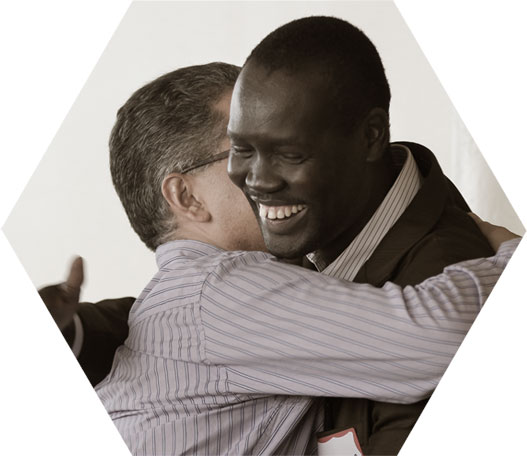
A Growing Collaboration, that reflects the diversity in our city
The Abolitionist Network Director Sarah Dunham leads two cohorts consisting of 16 Christian leaders dedicated to increasing their church and ministry impact on human trafficking through education, prevention, safe and effective response, and holistic community to support survivors. Sarah and the cohort have led the charge in training over 30 churches, including the Emmanuel Baptist Church of Norfolk which is now taking the lead in their community in the fight against sex and labor trafficking.
The Boston Education Collaborative teamed up with Bethel AME Church’s Generation Excel Program to implement the Peer Mediation Program in a Boston public school that had recently experienced several tragic student deaths. This program trained 14 student mediators and served close to 70 students, providing them a healthy outlet to resolve peer conflicts or heal from trauma.
The Greater Boston Refugee Ministry (GBRM) trained over 200 Christian leaders from 50 congregations on how to conduct refugee ministry. After taking leaders through the training, GBRM assisted with deploying these leaders by creating and supporting functional teams dedicated to serving refugees through resources, fellowship, and social integration.
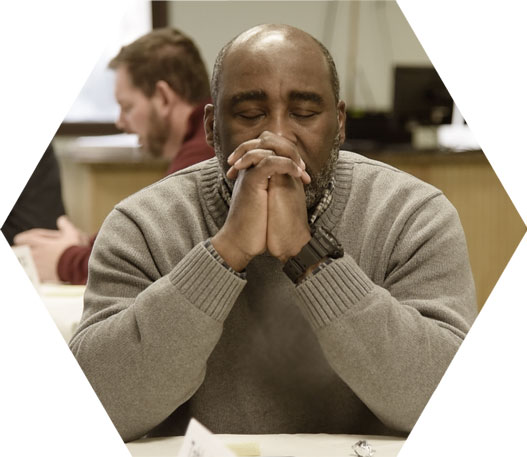
Sharing God’s story, to see hearts changed & renewed
In February 2017, EGC partnered with Vision New England and Greater Things for Greater Boston to host the second annual New England City Forum. This brought together 103 participants representing 32 churches and 30 nonprofits to discover what God is doing in the region, learn from each other, and plan for collaboration between Christian leaders.
WHAT LEADERS ARE SAYING ABOUT EGC

“I have had the privilege of partnering with the Emmanuel Gospel Center for many years in strengthening youth ministry in Boston. EGC’s applied research has been a catalyst for all kinds of ministry development in our region. EGC plays a vitally important role, and I am grateful for their ongoing work.” – Rev. Ray Hammond, MD, Pastor of Bethel AME Church, Jamaica Plain

“For decades and for many of us, EGC has been an anchor, one cohesive place in the city that helps hold us together like family to grow together across multiple generations and seasons of ministry.” – Rev. Lorraine Anderson, retired Senior Pastor of International Community Church, Allston

“Emmanuel Gospel Center’s leadership in research plays an important role in helping to understand our largest cities. EGC provides a best-of-class model of the power of applied research based on decades of work in Boston. Their model is inspiring similar efforts in other cities, including New York City.” – Dr. Mac Pier, Founder and CEO of the New York City Leadership Center

“I’ve had the privilege to observe and appreciate deeply EGC’s critical role as servant-leaders of the Church in this city for almost 40 years. Going beyond theoretical biblical knowledge, my friends at EGC have struggled to discern and align themselves and their ministry to the Word and Spirit in the city, its people, and its systems.” – Rev. Eldin Villafañe, PhD., Founding Director, Gordon- Conwell Theological Seminary’s Boston campus
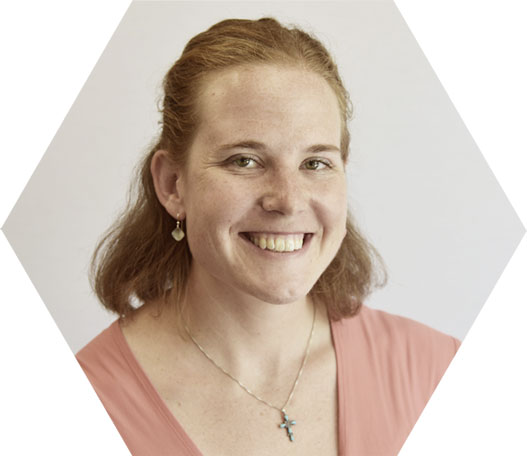
“Building bridges across various Christian traditions and cultures can be extremely difficult. EGC came alongside me in cultivating the vision for Christian unity that God has given me. Without their support and encouragement to persevere, I wouldn't be the leader I am today.” – Kelly Steinhaus, Founding Director, UniteBoston
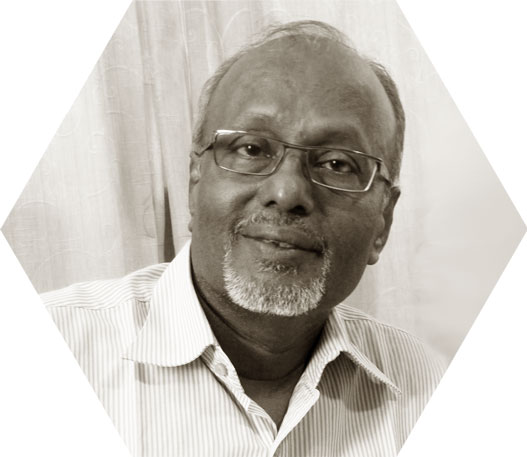
“When I visited the EGC team, I saw a model of a ministry that had city-wide vision and impact. It was a synchronistic moment, as I had a vision on my heart for something similar when I returned home to Mumbai, India, to put into practice some of their principles. I saw the Center bring together the church in Boston while developing new patterns of ministry which effectively combined proclamation with praxis.” – Rev. Viju Abraham, Co-founder and Chairman, Association for Christian Thoughtfulness (ACT), Mumbai, India

OPPORTUNITY TO PARTNER WITH EGC
EGC’s work is staff intensive. As Boston becomes more and more expensive, it becomes more and more challenging for an urban ministry like EGC to retain, and fairly compensate the talented people we need for the time-demanding work that we do.
Currently, our funding base is strong. We are grateful for the 1,000 individuals and 100 churches that support EGC regularly, for the major donors that invest in our work, and for the foundations that entrust us with grants. However, there is a lot of opportunity for growth, and you are invited to partner with us. We lack an endowment to provide stability as project support ebbs and flows, and our current support base is not large enough to adequately support critical staffing needs going forward. For EGC to continue to be strong and do the important work we are called to do, our funding base needs to grow.

SUSTAINING SUPPORT
Become a monthly donor!
You can become a foundational part of EGC’s funding by becoming a monthly donor. This will make you part of EGC’s most valuable (and stable!) form of support. You will be joining 75 donors who currently give a total of almost $5,000 each month. Growing sustained giving to the General Fund is a major priority, as it supports and strengthens all that EGC does.
Our goal is to find 365 new monthly donors to support EGC’s General Fund. Will you support EGC with a gift of $10, $25, $50, $100 or any amount per month, and become a core sustaining partner of EGC?
# of Donors Monthly Annual
25 $100 - 500 $60,000
75 $100 $90,000
100 $ 50 $60,000
100 $ 25 $30,000
65 $ 5-24 $10,000
__________________________________________
365 $250,000

STRATEGIC INVESTMENT
Become a strategic investor!
Perhaps you are interested in a strategic investment in EGC’s heart of innovation. EGC is seeking $250,000 per year for the next 3 years to invest in our core capacity to learn about how God is at work in urban Boston, and connect and get behind those making a difference. This is the engine which drives EGC forward.
Your investment will help EGC continue to build long-term sustainable collaborations across urban ministries and churches. Your return on investment will be evidenced in terms of both community outcomes and indicators of collaborative urban ministry growth. Your investment makes the Church more unified and relevant.
Will you help us reach our goal of $250,000 annually for the next three years for EGC’s heart of innovation?

LONG-TERM STRENGTH
Leave a lasting legacy!
You may be more interested in being part of ensuring EGC’s long-term health. Ultimately, EGC will be most sustainable with a healthy endowment. A $5 million endowment will replace the need for ongoing investment and provide $250,000 of income per year to fund EGC’s core capacities.
At this time, such an endowment is the stuff of dreams and prayers. We know several people have included EGC in their estate plans, so perhaps one day this dream will become a reality.
If making a long-term impact by endowing EGC’s core capacity is exciting to you, or if you have ideas about how to make this happen, please talk with us!

EGC 365 Campaign
Strengthening Christian Leaders to Serve Urban Communities
35 Staff • $2 million Annual Budget • 200+ Churches Served Annually
500+ Leaders Served Annually
2 San Juan Street, P.O. Box 180245, Boston MA 02118 • 617.262.4567 • egc.org • Jeffrey Bass, Executive Director jbass@egc.org
Our Principles
We seek the Lord's leading and timing in making ministry decisions.
We seek to build relationships with those to whom and with whom we minister.
We seek to build the Kingdom of God in Boston, not just an individual, group, church or ministry (including our own).
We draw on the resources that the Lord provides and we are confident that God will provide the people and the resources to do his work.
We choose to take a fiscally conservative approach, and strive to maintain high standards of fiscal management.
We seek long-term results.
For more of the story visit us at egc.org

Examples of Collaboration in the Greater Boston Church Community
There has been a rich history of ministry collaboration in the Greater Boston Christian community. This document gives a brief description of some of the significant ministry initiatives in urban Boston that involved a broad coalition of ministry partners, and/or involved significant partnering across sectors. Much more could be said about each of the ones listed, and many more initiatives, projects and ministries could be added to this list.
Compiled by the Emmanuel Gospel Center for Greater Things for Greater Boston Retreat October 8 – 10, 2017
There has been a rich history of ministry collaboration in the Greater Boston Christian community. This document gives a brief description of some of the significant ministry initiatives in urban Boston that involved a broad coalition of ministry partners, and/or involved significant partnering across sectors. Much more could be said about each of the ones listed, and many more initiatives, projects and ministries could be added to this list. Please send additions or other feedback to Jeff Bass (jbass@egc.org).
The 1857-1858 Prayer Revival spread to Boston when the Boston "Businessmen's Noon Prayer Meeting" started on March 8, 1858, at Old South Church (downtown). There was considerable doubt about whether it would succeed, but so many turned out that a great number could not get in. The daily prayer meetings were expanded to a number of other churches in Boston and other area cities. Wherever a prayer meeting was opened, the church would be full, even if it was as large as Park Street Church. While the revival was noted for drawing together businessmen, it also involved large numbers of women. For example, the prayer meetings of women at Park Street Church were full to overflowing with women standing everywhere they could to hear.
When Dwight L. Moody came to Boston in 1877, he led a cooperative evangelism effort among many churches. This three-month effort drew up to 7,000 people at a time to the South End auditorium for three services a day, five days a week. Moody encouraged a well-organized, interdenominational effort by 90 churches to do house-to-house religious visitation, especially among people who were poor. Two thousand people were spending a large part of their time in visitation, covering 65,000 of Boston’s 70,000 families. The home visitations served the practical needs of mothers and children as well as their spiritual needs. The Moody outreach also related to workers in their workplaces. Meetings were established for men in the dry-goods business, for men in the furniture trade, for men in the market, for men in the fish trade, for newspaper men, for all classes in the city.[1]
[1] These first two are from History of Revivalism in Boston by Rudy Mitchell; 50 pages of fascinating and inspiring reading. Use hyperlink or search at egc.org/blog.
One of the most important organizations in Boston for the healthy growth of the church has been Gordon-Conwell Theological Seminary’s Boston Campus, commonly known as CUME (the Center for Urban Ministerial Education). A short version of its interesting history is that it came about because of the joint hard work of leaders in the city (particularly Eldin Villafañe and Doug Hall) and leaders at the Seminary (particularly Trustee Michael Haynes, pastor of Twelfth Baptist Church in Roxbury). CUME officially opened with 30 students in September 1976 at Twelfth Baptist Church in Roxbury. CUME currently serves more than 500 students representing 39 denominations, 21 distinct nationalities, and 170 churches in Greater Boston. Classes are taught in English, Spanish, French Creole and Portuguese, with occasional classes in American Sign Language. (from GCTS website).
The Boston TenPoint Coalition was formed in 1992 when a diverse group of urban pastors was galvanized into action by violence erupting at a funeral for a murdered teen at Morning Star Baptist Church. Reaching beyond their differences, these clergy talked with youth, listened to them and learned about the social, economic, moral and ethical dilemmas trapping them and thousands of other high-risk youth in a cycle of violence and self-destructive behavior. In the process of listening and learning, the Ten-Point Plan was developed and the Boston TenPoint Coalition was born.
The “Boston Miracle” was a period in the late 1990s when Boston saw an unprecedented decline in youth violence, including a period of more than two years where there were zero teenage homicide victims in the city. Much has been written about The Boston Miracle (and a movie starring Matt Damon is in the works), but there are competing narratives about what caused the violence to decline. Certainly the work of Boston police, the Boston TenPoint Coalition, Operation Ceasefire, and supporting prayer all played major roles.
In response to the first Bush administration’s faith-based initiative in the early 1990s, a group of funders (led by the Barr and Hyams foundations) brought together leaders from the Black Ministerial Alliance (BMA), Emmanuel Gospel Center (EGC), Boston TenPoint Coalition, and the United Way to respond to a Federal request for proposals. Out of this conversation, the Boston Capacity Tank was formed, and we were able to successfully secure a Federal grant ($2 million per year for three years, then funding from federal, state, local, private sources afterwards). The Tank was led with input from the founding partners, and built the capacity of more than 350 youth serving organizations over 10 years.
Victory Generation Out-of-School Time Program (VG) was created by the Black Ministerial Alliance in 1992 in response to the educational disparities documented between youth of color and their suburban counterparts. The BMA partnered with 10 churches to provide academic enrichment to students in the Boston Public Schools in order to improve their grades and test scores. Ninety-four percent (94%) of students consistently participating in VG were found to increase one full letter grade in achievement and, for those not at grade level, achieve grade level. Most remarkable is that although this is a church-centered program, upwards of 80% of the students attending VG are not members of any church.
In the 1990s, Vision New England hosted three-day prayer summits for male pastors that was attended by as many as 90 leaders. The goal was to focus purely on seeking God through prayer, worship and reading Scriptures with no speakers, only facilitators keeping things on track. They were not only well attended but powerful times that were blessed by the Holy Spirit. In 2000, leaders in Boston met to discuss holding a similar prayer summit that also would include female leaders in the Boston area. Thus began the Greater Boston Prayer Summit, which ran two-day prayer retreats for up to 75 pastors and ministry leaders in the spring, with a smaller one-day prayer gathering in the fall. The Summits were effective in connecting leaders around Greater Boston, and promoting unity in the church across various church streams. Energy for the Summit faded in recent years, and the planning team disbanded in 2016.
In the mid-1990s, there was a group of pastors and business leaders who met several times to talk about issues in the city and potential partnering. The business leaders challenged the city leaders to agree on an issue to address. “If the city leaders agree, resources will flow!” Partly in response to this challenge, EGC worked with a broad coalition of churches and youth leaders to start the Youth Ministry Development Project (YMDP). The goal, set by the coalition, was to see the Boston churches grow from only one full-time church-based youth worker to twenty over ten years, and to provide much better support for church-based youth work. Funding was provided primarily by secular foundations, and the YMDP project was well-funded and met its 10-year goals.
Boston Capacity Tank’s Oversight Committee (including funders and faith leaders) challenged itself to look at the systemic issues of youth violence in Boston. The Committee asked EGC to take the lead in forming the Youth Violence Systems Project (YVSP) that partnered with Barr, youth leaders in several key Boston neighborhoods, local organizations such as the Dudley Street Neighborhood Initiative (DSNI), the Boston TenPoint Coalition (to interview gang members), and a nationally known Systems Dynamics expert (Steve Peterson). The work influenced many leaders to take a more systemic view of their activities, and the project approach was published in a peer review journal.
In 1997, United Way of Massachusetts Bay (UWMB) collaborated with local faith leaders to initiate the Faith and Action (FAA) Initiative. UWMB had traditionally only worked with secular organizations. The Faith and Action Initiative was envisioned as funding faith-based programs for youth precisely because of their spiritual impact on participants. Churches—especially Black churches—in some hard-to-reach Boston neighborhoods were serving youth in a way that more traditional agencies were not. FAA would direct small grants to these religious organizations on a trial basis. No grant recipient would be allowed to proselytize. But each would be required to include spiritual transformation in its program as a condition of winning a grant (from Duke case study on FAA).
The Greater Boston Interfaith Organization (GBIO) is an organization of 50 religious congregations and other local institutions that joined together in 1998 in order to more powerfully pursue justice in Massachusetts. Since its founding, GBIO has played a critical role in securing Massachusetts health care reform; helping to roll over $300 million into the construction of affordable housing in the state; and supporting local leadership in efforts to attain worker protections, school renovations, adequate access to school textbooks, as well as other major victories (from GBIO.org).
The Institute for Pastoral Excellence (IEP) was planned and implemented in 2002 as an initiative of the Fellowship of Hispanic Pastors of New England (COPAHNI). COPAHNI is a regional fellowship of Hispanic churches and ministries. The purpose of IEP was to help Hispanic pastors and lay leaders in New England build their foundation for effective and resilient ministry. IEP was funded with two multi-year grants from the Lilly Endowment ($660,000 and $330,000, respectively). IEP maintained strong partnerships with Emmanuel Gospel Center (fiscal agent, consulting, and administrative support) and the Center for Urban Ministerial Education and Vision New England (consulting, speakers, and materials).
In 2004, a group of suburban leaders met with urban leaders to see if we could provide resources so connecting would be easier. “The answer can’t be that you have to talk with Ray Hammond to get connected.” Out of those conversations, CityServe was born. The goal was to create online resources for connecting, coupled with staff support for the process. Harry Howell, president of Leadership Foundations, offered to donate a couple days a week to get this off the ground, and EGC raised some funds and hired a staff person to get things started. Harry, however, had a heart attack and was not able to follow through on his commitment, the project never found its footing in the community or with donors, and the experiment ended in 2007.
In 2004 and 2005 there was a growing sense among many believers that God was about to move powerfully in the New England region. Covenant for New England was formed to promote the functional unity, spiritual vitality, and corporate mindset that would prepare the way for a fresh movement of God’s Spirit. In 2006, Roberto Miranda, Jeff Marks, and others involved inCovenant for New England met with British prayer leader Brian Mills to discuss how to broaden the Covenant network to include all of New England. In February of 2007, the New England Alliance was formed consisting of representatives from all 6 New England states. This group began meeting monthly in various places around the region. One unique aspect of Alliance gatherings was they always began with an hour or two of prayer before any other business was brought up for discussion.
From 2008 to 2010, a multi-ethnic group of urban and suburban church leaders worked together to plan and prepare for the national Ethnic America Network Summit, “A City Without Walls.” The conference was jointly hosted in April 2010 by Jubilee Christian Church International and Morning Star Baptist Church. The Summit featured local speakers (including Dr. Alvin Padilla of CUME and Pastor Jeanette Yep of Grace Chapel) and national speakers with deep Boston roots (including Rev. Dr. Soong-Chan Rah). The Summit brought together many diverse partners and established relationships that last today.
In 2010, Boston Public Schools Superintendent Dr. Carol Johnson created a community liaison position to foster more school partnerships with faith-based and community-based organizations. The opportunity for church/school partnerships led to some significant urban/suburban church partnerships, such as Peoples Baptist/North River, and Global Ministries/Grace Chapel. EGC’s Boston Education Collaborative currently supports about 40 church/school partnerships in Boston.
Greater Things for Greater Boston grew out of the initial desire of several key urban and suburban pastors to see broader connections between pastors and churches in Greater Boston. Central to developing the vision were biennial “Conversations on the Work of God in New England” which highlighted local and national pastors and networks joining with God to do innovative work to reach their city. The first conversation was held in May 2010. Topics have included “Why Cities Matter?”, church/school partnerships, community trauma, and much more. The identity and mission of GTGB is: “We are a diverse network of missional leaders stubbornly committed to one another and to accelerating Christ’s work in Greater Boston.”
There were at least two precursors to Greater Things for Greater Boston. The Boston Vision Group formed in 2001 “to see in the next 5 – 10 years, Boston will be a place where there is infectious Christian Community wherever you turn.” The Greater Boston Social Justice Network, formed in 2004, was “committed to eradicating social injustices that impede the advancement of God’s kingdom on earth.” Both groups included a variety of urban and suburban leaders, and both were active over several years.
In January 2017, EGC and the BMA worked with Jamie Bush and Drake Richey to convene a group of mostly professional under-40s, in the financial district, to consider what God has been doing in Boston over the last 30 years. This led to another meeting of the same group in March to hear from Pastors Ray Hammond and Bryan Wilkerson about what the Bible says about engaging your talents and the needs of society, with small-group discussion, pizza and wine. In May, the group met again at the Dorchester Brewing Company for a discussion of seeking God's purpose for your life and prayer. Again with food (and, of course, beer). Next steps, including hopefully meeting for prayer, are being considered.

Hope for Lenox Street: Pastors' Breakfast with the Melnea Cass Network
New in Lower Roxbury--Pastors and leaders serving the Lenox Street area met to consider a wider collaboration with the Melnea Cass Network, a group dedicated to "eliminating youth violence and poverty, one neighborhood at a time."
Hope for Lenox Street: Pastors' Breakfast with the Melnea Cass Network
by Megan Lietz and Jess Mason, Research Associates
The Lenox Street neighborhood in Lower Roxbury is home to many creative and resilient people, but also has a reputation for drug activity and violence. On November 8th, 2016, leaders serving youth in this community met for a simple breakfast with a not-so-simple purpose — to share insights about how they could together help change Lenox Street’s reputation.

Pastors and community leaders serving in the Lenox Street area consider the appeal of the Melnea Cass Network.

Pastor Rolland Cooper warmly welcomes the MCN to his congregation, Shawmut Community Church.
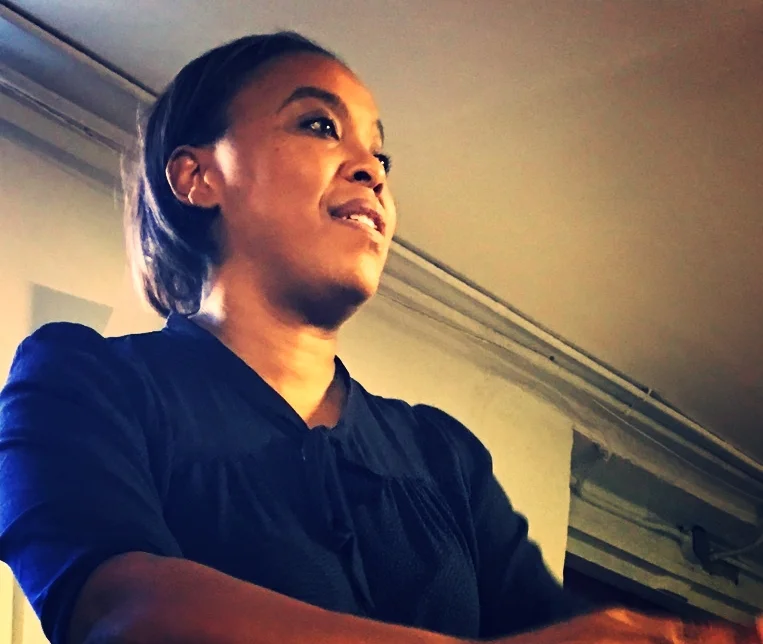
Nika Elugardo, Director of Applied Research and Consulting at Emmanuel Gospel Center, introduces the work of the Melnea Cass Network to area pastors and community pillars.

Brent Henry of Vibrant Boston shares his passion for youth and tells moving stories about the need and hope in the Lenox Street community.

Sarah Gautier shares her journey of connecting with the Lower Roxbury community through her ministry to youth at Congregation Lion of Judah.

Lauren Thompson of Crosstown Church describes the hopes of a developing church plant to impact the neighborhood youth for Jesus.
Not uncommon in the world of urban ministry and action, this was a gathering during a short window of opportunity in a space that was available. The cozy basement of the Shawmut Community Church, with its well-worn furniture and faithful kitchen, provided a warm environment for this multiracial gathering of 25 leaders ranging in age from their 20’s to their 80’s. Each of these neighborhood youth workers, Christian youth pastors, community leaders and academics had answered an invitation from the Melnea Cass Network (MCN) — a developing network “committed to ending poverty and violence one neighborhood at a time”.
MCN cast the net wide. Whether leaders simply wanted to hear about opportunities to connect or were ready to co-lead the initiative, all would have a place at the table — for egg casseroles and coffee cake that morning, and for shared learning and action in the coming months.
This was a room full of people who, compelled by the need and opportunity of Lenox Street, wanted to respond. Leaders listened as representatives of CrossTown Church, Congregation Lion of Judah, Vibrant Boston, and host Shawmut Community Church shared their journeys of challenge and hope in reaching out to area youth. The tone of the gathering was casual, but sincere.
Brent Henry, who works with over 150 youth per year in Lower Roxbury, told the story of “Licita”. A straight-A student, her mother worked so many jobs that Licita had to take primary responsibility for raising her brothers and sisters. Henry shared how MCN has connected him to church leaders to support his work.
Lauren Thompson of the CrossTown Church plant recalled her faith family's experience with area youth. She shared their sense of calling as a church to further engage young people in the Lenox community.
In response, bold voices spoke up first to suggest the need to bring the youth into the churches. These leaders implied that if youth could enter a relationship with Jesus and participate in Christian activities, their lives could be transformed. Other voices seemed to prefer going into the community and showing God’s love by serving the tangible needs of youth and families on their own turf. Others, struck by the weight and complexity of the need, asked for an immediate pause. They led the whole room in prayer for “Licita” and youth like her in that moment.
As insights built upon insights throughout the morning, a shared desire emerged. Leaders agreed they wanted to build a resilient social network that can support young people in the Lenox Street community. The question of what such support would look like remained unresolved.
Some leaders left the breakfast enthusiastic and ready to connect further. Others wanted to learn more before committing. Most agreed on the wisdom of further intentional dialogue and collaborative visioning.
MCN has now connected Brent Henry to leaders from 6 of 12 area churches, so that pastors and churches can offer practical support and advocacy for Licita and families like hers.
Take Action


![What Women Leaders "Shouldn't" Want [Infographics]](https://images.squarespace-cdn.com/content/v1/57ff1c7ae58c62d6f84ba841/1482182315765-UMIZ38Z5JK74HBSVE773/WOV2016_DSC_1839.jpg)
What Women Leaders "Shouldn't" Want [Infographics]
What do Christian women leaders report hearing or believing that they "shouldn't" want or need if they were a good leader? What kinds of life-giving connections to Christian women leaders want more of?
What Christian Women Leaders "Shouldn't" Want [Infographics]
by Jess Mason
Boston area Christian women leaders report that access to supportive networks — spaces for life-giving connection — is vital for healthy life balance. Our data reveal that there is a support gap for many of these leaders.
But more troubling is the discovery of a cultural validation gap, where women leaders know what support they need, but their culture is telling them that strong leaders “shouldn’t” need that kind of support.
The infographics below capture these support and cultural validation gaps.
The first infographic captures the negative lens, answering: What kinds of support are these women perceiving their culture saying healthy leaders “shouldn’t” need?
What Leaders “Shouldn't” Need
The second graphic captures the positive lens — this is the ask from Christian women leaders: What kind of support would help women leaders toward healthy life balance? Notice the substantial overlap between the disregarded/forbidden kinds of support in the first graphic and the desired kinds of life-giving connection in the second.
What Christian Women Leaders Want More of
The final graph tallies these same requests for life-giving connections by category, which may suggest a relative weight of urgency or felt need.
By far the most requested kinds of support fell into the category of “grace spaces” — opportunities to be transparent, accepted and not judged. Christian women leaders would value more opportunities to be open about their weaknesses, their doubts, and their failures without concern for undermining their effectiveness as a leader.
The second most requested kind of support included encouragement and strategies related to gender-based challenges.
Perhaps in connection to both of the top two concerns, women also craved the opportunity to share stories with other Christian women leaders — including stories of failure and redemption.
TAKE ACTION
![Hard Steps Toward the Light: Meet Bonnie Gatchell [Interview]](https://images.squarespace-cdn.com/content/v1/57ff1c7ae58c62d6f84ba841/1524836375191-XIDDMMVWWA04WYY5D1L6/3+a.+Route+One-+Bonnie+Tedx.png)

![Women In Christian Leadership [Resource List]](https://images.squarespace-cdn.com/content/v1/57ff1c7ae58c62d6f84ba841/1503082489913-T7DT6XUHEQE5DLCQ91UP/pexels-womanleader.jpeg)


![2016 WOVEN CONSULTATION [Photojournal]](https://images.squarespace-cdn.com/content/v1/57ff1c7ae58c62d6f84ba841/1476666331174-5QUVROVZFAWEBDXCU15P/Screen+Shot+2016-10-16+at+6.05.15+PM.png)

Self-Care Resources for Anti-Trafficking Leaders
Self CareResources for Leaders Fighting against Human Trafficking
A. LOCATIONS FOR RETREAT:
List from Harvard Div School: https://hds.harvard.edu/life-at-hds/religious-and-spiritual-life/retreats-and-quiet-places
St. Joseph's Abbey, Spencer MA,
Agape Community, Ware MA
The Emery Guest House at SSJE, near Newburryport, MA
B. BOOKS ON BURNOUT PREVENTION AND SABBATH:
Silent Compassion: Finding God in Contemplation, by Richard Rohr
The Rest of God:Restoring your soul by restoring Sabbath, by Mark Buchanan
Sabbath: finding rest, renewal and delight in our busy lives, by Wayne Muller
Sabbath as resistance: saying no to a culture of now, by Walter Brueggemann
Community and Growth: Jean Vanier
Leading on Empty : Wayne Cordiero
Trauma Stewardship: Laura Van Dernoot Lipsky
![Voices of Human Trafficking [VIDEO]](https://images.squarespace-cdn.com/content/v1/57ff1c7ae58c62d6f84ba841/1549999751750-FPJ37PZW2U4UHY6OVXSH/Screenshot+2019-02-12+14.28.40.png)


Resources For Churches about Anti-Human Trafficking
Resources about Human Trafficking for Churches.
International Justice Mission: ijm.org/churches
Let my People Go Network: www.lmpgnetwork.org
Greater Boston Prayer and Action Network: gbpan.wordpress.com
Safe Church training: diomass.org/inside/learning/safe_church
Safe Families Resources: http://www.safefamilies.org/
Domestic Violence survivor support: Hagar’s Sisters: hagarssisters.org
Domestic Violence Response Training: Safe Havens : interfaithpartners.org
Response to Child Abuse in a Christian Context: www.netgrace.org
Support for healing from sexual brokenness: Living Waters Ministry, Boston
Sexual addiction, Men’s accountability groups: nathanproject.net
Domestic Violence Abuser education, EMERGE: www.emergedv.com
Confronting the Exploiters - by One Life Matters: onelifematters.org
Fair Trade Products for Churches: Equal Exchange: shop.equalexchange.coop/organization-orders
Mentoring Toolkit - Elevate: taking your life to the next level By Rebecca Bender and Kathy Bryan
Hands that Heal training - faastinternational.org/hands-that-heal
OTHER BOOKS/RESOURCES FOR LEADERS WE RECOMMEND:
When Helping Hurts - Steve Corbett
Helping without Hurting - Steve Corbett
Generous Justice - by Tim Keller
Trauma and Recovery - Judith Hermon
The Wounded Heart - Dan Allender
Real Sex - Lauren Winner
Resources to Learn More About Human Trafficking
Books, Websites, Documentaries, and other Educational Resources on Human Trafficking.
A. RECOMMENDED BOOKS
Remember to order through Amazon Smile and support an organization fighting human trafficking.
The Just Church - Jim Martin
The Diary of Jasmine Grace - Jasmine Grace Marino
Girls Like Us - Rachel Lloyd
The Slave Next Door - Kevin Bales
Blood and Earth: Modern Slavery, Ecoside and the secret to saving the earth - Kevin Bales
Sex Trafficking: Inside the Business of Modern Slavery - Siddharth Kara
Not For Sale - David Batstone
A Crime So Monstrous - Ben Skinner
The Locust Effect - Gary Haugen
The Good News about Injustice - Gary Haugen
Half the Sky- Nicholas Kristof
Justice Awakening: How you and your church can help end human trafficking - Eddie Byun
The White Umbrella: walking with survivors of sex trafficking - Mary Frances Bowley
Roadmap to Redemption, 10 week Workbook for survivors - Rebecca Bender
Collaborating against human trafficking - Kirsten Foot
The Essential Abolitionist: What you need to know about human trafficking and modern slavery - John Vanek
Undaunted: Daring to do what God calls you to do - Christine Caine
Unstoppable: Running the race you were born to win - Christine Caine
Unashamed: Drop the baggage, pick up your freedom, fulfill your destiny- Christine Caine
B. RECOMMENDED DOCUMENTARIES:
A path appears (Episode 1 features Boston, and MLMC)
Voices of human trafficking 2017 (short video produced by EGC Films)
C. INFORMATIONAL WEBSITES:
polarisproject.org (USA)
Enditmovement.org (USA)
mceht.org (MA state coalition)
slaveryfootprint.org (labor trafficking)
betterworldshopper.org (fair trade resources)
D. EDUCATIONAL RESOURCES FOR SCHOOLS:
Love 146 Not a Number Prevention Curriculum
CAASE Chicago toolkits: The Chicago Alliance Against Sexual Exploitation (CAASE) provides comprehensive toolkits for teachers, writers, churches, students, doctors, etc who want to spread the word about human trafficking in their spheres.
Learn2Impact social justice curriculum: Learn2Impact offers a free high school curriculum focused on social justice. The curriculum is planned out according to a semester long class schedule and includes units on human trafficking and fair labor.
IJM Social Justice Curriculum for High School Students. International Justice Mission has created a complete curriculum for high school students dealing with social justice--particularly modern day slavery. Includes lesson plans, handouts, and homework assignments.
Human Trafficking 101 for School Administrators and Staff Human Trafficking 101 Factsheets from the Blue Campaign with useful resources for trafficking awareness for schools.
Human Trafficking Toolkit for High School Students and Educators A collection of downloadable resources about human trafficking to be used in a high school setting.
IV. Resources For Churches:
International Justice Mission: ijm.org/churches
Let my People Go Network: www.lmpgnetwork.org
Greater Boston Prayer and Action Network: gbpan.wordpress.com
Safe Church training: diomass.org/inside/learning/safe_church
Safe Families Resources: http://www.safefamilies.org/
Domestic Violence survivor support: Hagar’s Sisters: hagarssisters.org
Domestic Violence Response Training: Safe Havens : interfaithpartners.org
Response to Child Abuse in a Christian Context: www.netgrace.org
Support for healing from sexual brokenness: Living Waters Ministry, Boston
Sexual addiction, Men’s accountability groups: nathanproject.net
Domestic Violence Abuser education, EMERGE: www.emergedv.com
Confronting the Exploiters - by One Life Matters: onelifematters.org
Fair Trade Products for Churches: Equal Exchange: shop.equalexchange.coop/organization-orders
Mentoring Toolkit - Elevate: taking your life to the next level By Rebecca Bender and Kathy Bryan
Hands that Heal training - faastinternational.org/hands-that-heal
OTHER BOOKS/RESOURCES FOR LEADERS WE RECOMMEND:
When Helping Hurts - Steve Corbett
Helping without Hurting - Steve Corbett
Generous Justice - by Tim Keller
Trauma and Recovery - Judith Hermon
The Wounded Heart - Dan Allender
Real Sex - Lauren Winner
Organizations Working Against Human Trafficking in the Boston Area
Resources to help leaders join the fight against Human Trafficking. (Includes: 1. Who is involved in the Abolitionist Network 2. Who else is fighting Human Trafficking locally 3. Learning about Human Trafficking (recommended books, movies, websites) 4. Resources for Churches and 5. Self Care Resources for Leaders.
I. Who is involved in the Abolitionist Network?
A. Churches in the Abolitionist Network:
City Church, Brighton MA (Has an Abnet cohort)
Church of the Cross, Brighton, MA (Seeking the welfare of the city)
Christian Fellowship of Boston, Brazilian Church in Somerville MA (live2Love movement)
Defenders Church, Dorchester Boston MA (rose of Sharon ministry)
Emmanuel Baptist Church, Norfolk, MA (Sanctity of Life ministry)
Reunion Church, Boston and Somerville, MA
United Church of Christ Norwell, Norwell, MA (South Shore coalition)
B. Churches involved in the movement against Trafficking:
CCFC, The Harbor, and The River (Unbound.org)
Bethel AME (Bethel Institute for Social Justice: Shatter the Silence network) Boston MA
C. Christian Ministries in the greater Boston area addressing human trafficking:
All Hands In - We are committed to making a difference in our community by providing educational awareness and events on the issue of human trafficking in addition to seeking opportunities to assist survivors of Human Trafficking.
Amelia’s Light - Prevention education, community awareness and vocational support for our sisters in Uganda
Amirah - Amirah (\a-meer-ah\) is a non-profit organization located in the Boston area dedicated to providing effective, whole person aftercare for survivors of commercial exploitation.
Art Speak (Highrock North shore)
Bags of Hope Ministries /Jasmine Grace, at EGC
Bethany Christian Services of Southern New England
BLOOM by Teen Challenge New England - short term residential housing for girls 12-18 in South-Eastern MA
Gathering For Hope, Lexington and North Shore (Grace Chapel)
Live2Love Worship ministry (Christian Fellowship of Boston Church)
Rose of Sharon Ministry (Defenders Church)
Route One Ministry, at EGC - The vision of Route One is to minister to women exploited by the sex industry
SOBO project (see the one be the one) in Quincy MA
Shatter the Silence and the Shatter Project
The Bakhita House - a safehouse for women over 18 coming out of sex trafficking or labor trafficking
The Nathan Project : support for men recovering from sex and porn addiction
The Well Coffee House, In South Station, Boston MA (The Well Church)
II. Who else is fighting Human Trafficking locally? (Abnet partners)
A. Coalitions/ Networks:
Connecting and Equipping MA to Prevent, Identify and End Human Trafficking!
DEMAND Abolition This site focuses on the demand side of human trafficking and how to stop this cycle. The site includes important and helpful information on why this approach could be the answer to this major problem
CEASE Network Boston A network working to lessen the harm inherent to the illegal sex industry by reducing the demand for paid sex. Through initiatives targeting sex buyers the CEASE Network will cut the illegal sex trade by 20%, in every city it operates in, within two years.
Not on Our Watch: Lower Roxbury Coalition, Dumas.LaFontant@wshc.org
MA Department of Public Health task force, led by Linda Brown. Quarterly gatherings, focusing especially on labor trafficking and public health
The High Risk Youth Network Monthly meetings and “speakers series” to connect agencies, NGOs and community leaders working with “high risk youth” in Boston.
B. Labor Trafficking / Immigration activists:
MA Interfaith Worker Justice We are a network of people of faith that calls upon our religious values in order to educate, organize, and mobilize the religious community in the United States on issues and campaigns that will improve wages, benefits and conditions for workers, and give voice to workers, especially low-wage workers.
MataHari: Eye of the Day This site will connect you with many different social issues that are faced on a daily basis such as “internalized and institutional racism, heterosexism, classism, xenophobia, partner and sexual violence and exploitation as it occurs within our communities of color, immigrant communities and within our social justice organizations”. They are seeking justice for the many people who are abused in our community today.
MIRA: The Massachusetts Immigrant and Refugee Advocacy Coalition. MIRA’s work encompasses policy and advocacy analysis, institutional organizing, training and leadership development, and communications.
Boston Faith and Justice Network We believe you need to “Live gratefully, change our community, and Advocate” for the cause. Resources available such as the “Lazarus at the Gate” curriculum, looking at financial Stewardship, justice and generosity.
C. Academia / Research:
Carr Center for Human Rights: programing on Human Trafficking through out the year
Intercollegiate convention against modern slavery : network of Boston area schools coming together to end modern slavery
Melissa Farley - Northeastern University
Donna Hughes - University of RI
D. Aftercare for Youth:
My Life My Choice - We empower youth to find their voice and create a positive life path: through Survivor mentoring, groups, advocacy, and community trainings.
The SEEN Coalition - wrap around model for case management for CSEC girls
BLOOM, by teen Challenge - short term residential housing for girls 12-18
E. System involved youth:
Roxbury Youthworks - BUILD program, for boys and trans youth survivors of Commercial Sexual Exploitation
Germaine Lawrence- Group home for high risk girls in Foster Care
F. Homeless youth:
Y2Y shelter in Harvard Square
G. Aftercare for Adults:
Housing and case management for survivors of human trafficking:
RIA house Case management and survivor support groups for women over 18 who are coming out of commercial sexual exploitation
The Eva Center Case management and housing for women over 18 who are coming out of commercial sexual exploitation. House has some capacity for women with children.
Amirah whole-person, wrap around care and housing for women over 18, domestic, coming out of sex trafficking/ commercial sexual exploitation
Procopio Consulting and Counseling : male survivors of commercial sexual exploitation
Bethany Christian Services of Southern New England - case management for labor and sex trafficking
MataHari:eye of the Day - case management for labor trafficking especially
H. Addiction recovery for adults:
I. Domestic Violence/ Rape crisis support:
J. Healthcare Resources:
Boston Medical Center Clinic for DV and human trafficking
HEAL trafficking- National network of resources and trainings for healthcare providers on human trafficking
Education For Health Care Services:
Human Trafficking: Guidebook on Identification, Assessment, and Response in the Health Care Setting
Article : responding to the needs of a human trafficking survivor
K. Law enforcement and Legal services:
Federal law enforcement task force including the FBI and DHS
Peter DiMarzio hosts Quarterly victims assistance network meetings for New England
Attorney General’s Office, Human Trafficking Prosecutors team
Family Justice Center - A location housing several non-profits and police units, under the same roof to foster collaboration
III. Learn more about human trafficking:
A. Recommended Books
Remember to order through Amazon Smile and support an organization fighting human trafficking.
The Just Church - Jim Martin
The Diary of Jasmine Grace - Jasmine Grace Marino
Girls Like Us - Rachel Lloyd
The Slave Next Door - Kevin Bales
Blood and Earth: Modern Slavery, Ecoside and the secret to saving the earth - Kevin Bales
Sex Trafficking: Inside the Business of Modern Slavery - Siddharth Kara
Not For Sale - David Batstone
A Crime So Monstrous - Ben Skinner
The Locust Effect - Gary Haugen
The Good News about Injustice - Gary Haugen
Half the Sky- Nicholas Kristof
Justice Awakening: How you and your church can help end human trafficking - Eddie Byun
The White Umbrella: walking with survivors of sex trafficking - Mary Frances Bowley
Roadmap to Redemption, 10 week Workbook for survivors - Rebecca Bender
Collaborating against human trafficking - Kirsten Foot
The Essential Abolitionist: What you need to know about human trafficking and modern slavery - John Vanek
Undaunted: Daring to do what God calls you to do - Christine Caine
Unstoppable: Running the race you were born to win - Christine Caine
Unashamed: Drop the baggage, pick up your freedom, fulfill your destiny- Christine Caine
B. Recommended Documentaries:
A path appears (Episode 1 features Boston, and MLMC)
Voices of human trafficking 2017 (short video produced by EGC Films)
C. Informational Websites:
polarisproject.org (USA)
Enditmovement.org (USA)
mceht.org (MA state coalition)
slaveryfootprint.org (labor trafficking)
betterworldshopper.org (fair trade resources)
D. Educational Resources For Schools:
Love 146 Not a Number Prevention Curriculum
CAASE Chicago toolkits: The Chicago Alliance Against Sexual Exploitation (CAASE) provides comprehensive toolkits for teachers, writers, churches, students, doctors, etc who want to spread the word about human trafficking in their spheres.
Learn2Impact social justice curriculum: Learn2Impact offers a free high school curriculum focused on social justice. The curriculum is planned out according to a semester long class schedule and includes units on human trafficking and fair labor.
IJM Social Justice Curriculum for High School Students. International Justice Mission has created a complete curriculum for high school students dealing with social justice--particularly modern day slavery. Includes lesson plans, handouts, and homework assignments.
Human Trafficking 101 for School Administrators and Staff Human Trafficking 101 Factsheets from the Blue Campaign with useful resources for trafficking awareness for schools.
Human Trafficking Toolkit for High School Students and Educators A collection of downloadable resources about human trafficking to be used in a high school setting.
IV. Resources For Churches:
International Justice Mission: ijm.org/churches
Let my People Go Network: www.lmpgnetwork.org
Greater Boston Prayer and Action Network: gbpan.wordpress.com
Safe Church training: diomass.org/inside/learning/safe_church
Safe Families Resources: http://www.safefamilies.org/
Domestic Violence survivor support: Hagar’s Sisters: hagarssisters.org
Domestic Violence Response Training: Safe Havens : interfaithpartners.org
Response to Child Abuse in a Christian Context: www.netgrace.org
Support for healing from sexual brokenness: Living Waters Ministry, Boston
Sexual addiction, Men’s accountability groups: nathanproject.net
Domestic Violence Abuser education, EMERGE: www.emergedv.com
Confronting the Exploiters - by One Life Matters: onelifematters.org
Fair Trade Products for Churches: Equal Exchange: shop.equalexchange.coop/organization-orders
Mentoring Toolkit - Elevate: taking your life to the next level By Rebecca Bender and Kathy Bryan
Hands that Heal training - faastinternational.org/hands-that-heal
Other books/resources for leaders we recommend:
When Helping Hurts - Steve Corbett
Helping without Hurting - Steve Corbett
Generous Justice - by Tim Keller
Trauma and Recovery - Judith Hermon
The Wounded Heart - Dan Allender
Real Sex - Lauren Winner
V. Self Care Resources for Leaders:
A. Locations for retreat:
List from Harvard Div School: https://hds.harvard.edu/life-at-hds/religious-and-spiritual-life/retreats-and-quiet-places
St. Joseph's Abbey, Spencer MA,
Agape Community, Ware MA
The Emery Guest House at SSJE, near Newburryport, MA
B. Books on burnout prevention and sabbath:
Silent Compassion: Finding God in Contemplation, by Richard Rohr
The Rest of God:Restoring your soul by restoring Sabbath, by Mark Buchanan
Sabbath: finding rest, renewal and delight in our busy lives, by Wayne Muller
Sabbath as resistance: saying no to a culture of now, by Walter Brueggemann
Community and Growth: Jean Vanier
Leading on Empty : Wayne Cordiero
Trauma Stewardship: Laura Van Dernoot Lipsky

EGC Financial Statements & Annual Reports
EGC takes very seriously our responsibility to be excellent stewards of the resources the Lord provides.The Emmanuel Gospel Center is audited annually by an independent accounting firm. Financial statements and annual reports for the last ten years are listed below.

EGC Financial Statements & Annual Reports
by Stacie Mickelson, Executive Director
The Emmanuel Gospel Center is audited annually by an independent accounting firm. Financial statements and annual reports for the last eighteen years are listed below. Our most recent financial statement is available here. Our most recent annual report is here.
We are grateful to the many individuals, couples, families, churches, foundations, and organizations that support the Center every year. On behalf of the Board of Directors and staff, thank you for your partnership with us in ministry through your financial support and your prayers.
2025 Financial Statement & Annual Report
2024 Financial Statement & Annual Report
2023 Financial Statement & Annual Report
2022 Financial Statement & Annual Report
2021 Financial Statement & Annual Report
2020 Financial Statement & Annual Report
2019 Financial Statement & Annual Report
2018 Financial Statement & Annual Report
2017 Financial Statement & Annual Report
2016 Financial Statement & Annual Report
2015 Financial Statement & Annual Report
2014 Financial Statement & Annual Report
2013 Financial Statement & Annual Report
2012 Financial Statement & Annual Report
2011 Financial Statement & Annual Report
2010 Financial Statement & Annual Report
2009 Financial Statement & Annual Report
2008 Financial Statement & Annual Report
2007 Financial Statement & Annual Report
Who Is Involved in the Abolitionist Network?
I. Human Trafficking Resource List [Churches, Leaders, & Ministries involved in the Abolitionist Network]
I. Who is involved in the Abolitionist Network?
A. CHURCHES IN THE ABOLITIONIST NETWORK:
City Church, Brighton MA (Has an Abnet cohort)
Church of the Cross, Brighton, MA (Seeking the welfare of the city)
Christian Fellowship of Boston, Brazilian Church in Somerville MA (live2Love movement)
Defenders Church, Dorchester Boston MA (rose of Sharon ministry)
Emmanuel Baptist Church, Norfolk, MA (Sanctity of Life ministry)
Reunion Church, Boston and Somerville, MA
United Church of Christ Norwell, Norwell, MA (South Shore coalition)
B. CHURCHES INVOLVED IN THE MOVEMENT AGAINST TRAFFICKING:
CCFC, The Harbor, and The River (Unbound.org)
Bethel AME (Bethel Institute for Social Justice: Shatter the Silence network) Boston MA
C. CHRISTIAN MINISTRIES IN THE GREATER BOSTON AREA ADDRESSING HUMAN TRAFFICKING:
All Hands In - We are committed to making a difference in our community by providing educational awareness and events on the issue of human trafficking in addition to seeking opportunities to assist survivors of Human Trafficking.
Amelia’s Light - Prevention education, community awareness and vocational support for our sisters in Uganda
Amirah - Amirah (\a-meer-ah\) is a non-profit organization located in the Boston area dedicated to providing effective, whole person aftercare for survivors of commercial exploitation.
Art Speak (Highrock North shore)
Bags of Hope Ministries /Jasmine Grace, at EGC
Bethany Christian Services of Southern New England
BLOOM by Teen Challenge New England - short term residential housing for girls 12-18 in South-Eastern MA
Gathering For Hope, Lexington and North Shore (Grace Chapel)
Live2Love Worship ministry (Christian Fellowship of Boston Church)
Rose of Sharon Ministry (Defenders Church)
Route One Ministry, at EGC - The vision of Route One is to minister to women exploited by the sex industry
SOBO project (see the one be the one) in Quincy MA
Shatter the Silence and the Shatter Project
The Bakhita House - a safehouse for women over 18 coming out of sex trafficking or labor trafficking
The Nathan Project : support for men recovering from sex and porn addiction
The Well Coffee House, In South Station, Boston MA (The Well Church)
Who else is fighting Human Trafficking locally?
State and Local Organizations, Ministries, and other Programs working with the Abolitionist Network in the fight against Human Trafficking.
Who else is fighting Human Trafficking locally? (Abnet partners)
A. COALITIONS/ NETWORKS:
Connecting and Equipping MA to Prevent, Identify and End Human Trafficking!
DEMAND Abolition This site focuses on the demand side of human trafficking and how to stop this cycle. The site includes important and helpful information on why this approach could be the answer to this major problem
CEASE Network Boston A network working to lessen the harm inherent to the illegal sex industry by reducing the demand for paid sex. Through initiatives targeting sex buyers the CEASE Network will cut the illegal sex trade by 20%, in every city it operates in, within two years.
Not on Our Watch: Lower Roxbury Coalition, Dumas.LaFontant@wshc.org
MA Department of Public Health task force, led by Linda Brown. Quarterly gatherings, focusing especially on labor trafficking and public health
The High Risk Youth Network Monthly meetings and “speakers series” to connect agencies, NGOs and community leaders working with “high risk youth” in Boston.
B. LABOR TRAFFICKING / IMMIGRATION ACTIVISTS:
MA Interfaith Worker Justice We are a network of people of faith that calls upon our religious values in order to educate, organize, and mobilize the religious community in the United States on issues and campaigns that will improve wages, benefits and conditions for workers, and give voice to workers, especially low-wage workers.
MataHari: Eye of the Day This site will connect you with many different social issues that are faced on a daily basis such as “internalized and institutional racism, heterosexism, classism, xenophobia, partner and sexual violence and exploitation as it occurs within our communities of color, immigrant communities and within our social justice organizations”. They are seeking justice for the many people who are abused in our community today.
MIRA: The Massachusetts Immigrant and Refugee Advocacy Coalition. MIRA’s work encompasses policy and advocacy analysis, institutional organizing, training and leadership development, and communications.
Boston Faith and Justice Network We believe you need to “Live gratefully, change our community, and Advocate” for the cause. Resources available such as the “Lazarus at the Gate” curriculum, looking at financial Stewardship, justice and generosity.
C. ACADEMIA / RESEARCH:
Carr Center for Human Rights: programing on Human Trafficking through out the year
Intercollegiate convention against modern slavery : network of Boston area schools coming together to end modern slavery
Melissa Farley - Northeastern University
Donna Hughes - University of RI
D. AFTERCARE FOR YOUTH:
My Life My Choice - We empower youth to find their voice and create a positive life path: through Survivor mentoring, groups, advocacy, and community trainings.
The SEEN Coalition - wrap around model for case management for CSEC girls
BLOOM, by teen Challenge - short term residential housing for girls 12-18
E. SYSTEM INVOLVED YOUTH:
Roxbury Youthworks - BUILD program, for boys and trans youth survivors of Commercial Sexual Exploitation
Germaine Lawrence- Group home for high risk girls in Foster Care
F. HOMELESS YOUTH:
Y2Y shelter in Harvard Square
G. AFTERCARE FOR ADULTS:
Housing and case management for survivors of human trafficking:
RIA house Case management and survivor support groups for women over 18 who are coming out of commercial sexual exploitation
The Eva Center Case management and housing for women over 18 who are coming out of commercial sexual exploitation. House has some capacity for women with children.
Amirah whole-person, wrap around care and housing for women over 18, domestic, coming out of sex trafficking/ commercial sexual exploitation
Procopio Consulting and Counseling : male survivors of commercial sexual exploitation
Bethany Christian Services of Southern New England - case management for labor and sex trafficking
MataHari:eye of the Day - case management for labor trafficking especially
H. ADDICTION RECOVERY FOR ADULTS:
I. DOMESTIC VIOLENCE/ RAPE CRISIS SUPPORT:
J. HEALTHCARE RESOURCES:
Boston Medical Center Clinic for DV and human trafficking
HEAL trafficking- National network of resources and trainings for healthcare providers on human trafficking
Education For Health Care Services:
Human Trafficking: Guidebook on Identification, Assessment, and Response in the Health Care Setting
Article : responding to the needs of a human trafficking survivor
K. LAW ENFORCEMENT AND LEGAL SERVICES:
Federal law enforcement task force including the FBI and DHS
Peter DiMarzio hosts Quarterly victims assistance network meetings for New England
Attorney General’s Office, Human Trafficking Prosecutors team
Family Justice Center - A location housing several non-profits and police units, under the same roof to foster collaboration

The Chinese Church in Greater Boston
From just two Chinese churches in greater Boston 50 years ago, the number has grown to more than 25 congregations serving an expanding Chinese population. The growth of the Chinese church in and around the Boston area is something to celebrate. Its strength and integrity, and the quality of its network—unified for prayer, for youth and college ministry, and for international missions—stand as a model for other immigrant and indigenous church systems.
The Chinese Church in Greater Boston
by Dan Johnson, Ph.D., and Kaye Cook, Ph.D., with Rev. T. K. Chuang, Ph.D.
From just two Chinese churches in greater Boston 50 years ago, the number has grown to more than 25 congregations serving an expanding Chinese population. The growth of the Chinese church in and around the Boston area is something to celebrate. Its strength and integrity, and the quality of its network—unified for prayer, for youth and college ministry, and for international missions, among others—stand as a model for other immigrant churches and indeed for other indigenous churches as well.
What does the Chinese church in Boston look like? What are the strengths and weaknesses as well as the clear opportunities and threats that face these churches at the start of the 21st century?
Students and immigration

Click to open interactive map
In 2016, as many as 350,000 students and visiting scholars from China were actively working in the U.S., a population that dwarfed the number who came from Taiwan and Hong Kong. Over 30% of all international students studying in the U.S. are from China, according to the Institute of International Education (www.iie.org). Not surprisingly, thousands of these are regularly drawn toward Boston-area colleges and universities, as well as to the opportunities available to them in the region’s “knowledge economy.” The 2010 U.S. Census found that the Chinese population of the greater Boston area numbered nearly 123,000, some two and one-half times as many as were present just 20 years before.
Of these, it is estimated somewhere between 5% and 8% identify as Christian. Many of the Chinese newcomers to the area each year are already Christian when they arrive, in which case the Chinese church provides them a primary community to ease the transition to life in a new place. The others are generally quite open to the Christian message. Indeed, to this day Chinese students are routinely found to be the most receptive group to Christian outreach efforts on local campuses. As a consequence, this influx of new immigrants and students from China has brought significant numeric growth to the Chinese church over the last 25 years. Most notably, most of the established Mandarin-speaking congregations experienced 20-80% growth over the decade of the 1990s. Such growth has generally plateaued since then, but new church plants have continued apace.
Church planting
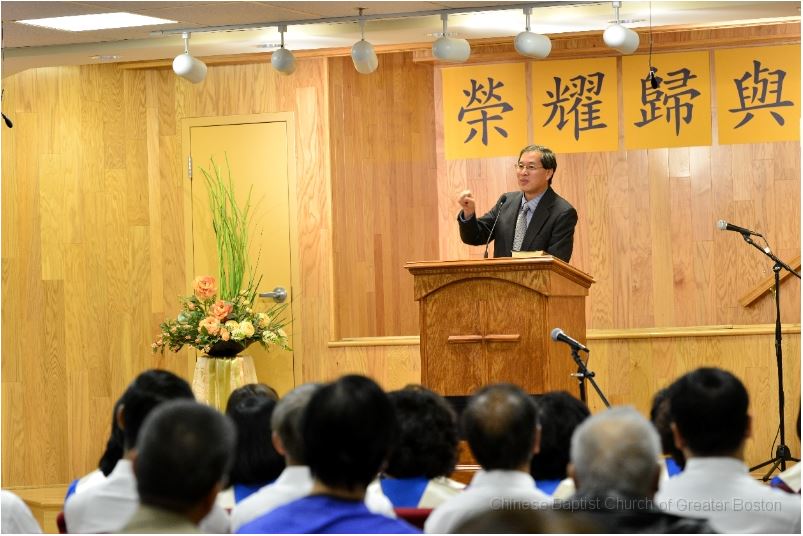
Chinese Church of Greater Boston
Since 1990, more than fifteen new Chinese churches have been planted, mostly Mandarin-speaking, and mostly serving small, geographically distinct communities and congregations. From a mere two Chinese churches in the entire region 50 years ago, today the Chinese church in the greater Boston area includes more than 25 separate congregations. The steady stream of newcomers from mainland China has also reshaped the character of the Chinese church in the region. The most obvious change is the shift from predominantly Cantonese-speaking congregations to predominantly Mandarin-speaking ones.
As noted, most Chinese church plants over the last 25 years have been established to serve newly settled Mandarin-speaking communities. In a few other instances, older churches that originally served Cantonese-speakers have seen their ministries to the Mandarin-speaking community expand dramatically while their Cantonese populations have dwindled or disappeared altogether. This transformation is more than just linguistic in nature. The Mandarin-speaking newcomers from mainland China are mostly first-generation Christians and new converts. Their formative experiences were generally in a more materialist, atheistic culture, and they often identify primarily with the values and orientations of the academic and professional cultures in which they are immersed. This general lack of church experience has made basic biblical education and discipleship a more pressing need in the congregations that serve them. The fact that very few are ready to step into leadership and ministry roles in the church also creates a gulf between the new generation of Chinese Christians and the established church leadership. By virtue of their formal theological training, deep spiritual commitments, and long habituation in the relatively more developed Christian communities of Hong Kong, Taiwan, and the United States, church leaders in Boston’s Chinese communities often find it harder to connect with the felt needs and mentality of their newest congregants. The challenge is made even more difficult by the fact that many of Boston’s second-generation Chinese Christians, who might otherwise be there to welcome these newcomers into the Chinese church, have chosen instead to become members of American or Asian-American churches.
These social dynamics provide the backdrop for the analysis that follows of the current state of the Chinese Christian church in the greater Boston area. Beyond its identifiable strengths and weaknesses, and the clear opportunities and threats that it faces, is the simple realization that this is a seventy-year-old church undergoing a significant growth-induced transformation.
STRENGTHS
Interchurch collaboration
One of the greatest strengths of the Chinese church in the Boston area is that the various churches that comprise it mostly get along and have forged important collaborative relationships. The largely non-denominational character of the churches has minimized theological frictions between them, and the numerous personal ties between individuals across congregations—often forged in common spaces, such as the Boston Chinese Bible Study Group at MIT—help to smooth inter-congregational relationships more generally. The collaborative efforts that have resulted include regular prayer gatherings, shared missions programs, joint sponsorship of career missionaries, evangelistic meetings, and a gospel camp. Such programs are often initiated and organized by individual churches and then opened up to other area churches, as the Chinese Bible Church of Greater Boston (Lexington) did for many years with its annual gospel camp. The fact that even the largest churches in the community (including the Boston Chinese Evangelical Church and CBCGB) have been willing to sponsor and participate in such joint efforts has gone a long way toward ensuring their success.

Cultural centers
The Chinese church also serves as a primary reference group for many newcomers to the area, as they have become some of the most active and well-organized social institutions within the Chinese community. Many new immigrants naturally turn to the church for help. The familiar language, cultural references, and social structures they encounter in the church are key factors in securing their sense of identity when all else around them is unsettled. The larger churches’ programs for children and youth also attract immigrant families.
An ethic of evangelism
Another strength of the Chinese church in the area is the ethic of active evangelism that has long been cultivated in its constituent congregations. For many years, this ethic has animated large-scale, seeker sensitive programs that have encouraged and enabled church members to put it into practice, aggressively evangelizing their kinspeople. Many of these programs—such as the CBCGB’s annual gospel camp—have since disappeared, and it remains an open question whether the evangelistic focus of the church can be sustained in their absence. Nonetheless, the inspiring heritage of evangelistic activity is itself a strength of the Chinese church in and around Boston.
A place for Mandarin-speaking immigrants
Lastly, the very fact that so many Chinese churches in the area were either founded to serve Mandarin speakers or have since developed vibrant ministries for the Mandarin community is a significant strength. Not every Chinese community around the world is so prepared to welcome and minister to the steady stream of Chinese immigrants from the mainland that inundates them today. The Boston area’s dense network of Mandarin-speaking churches marked by an intellectual richness and a strong professional class leaves it well positioned to meet the needs of the future church in Boston.
WEAKNESSES
Cultural Isolation
Historically, a lack of interaction with people who are not Chinese has probably been the most significant weakness in the Chinese church in and around Boston. The founding members of the most established churches have minimal contact, if any, with the non-Chinese community. Moreover, Chinese churches have rarely tried to hold joint events with other groups, with CBCGB being the one noteworthy exception. Such isolation from the surrounding society has been an obvious problem for the further development of the Chinese churches. This problem has abated somewhat, however, with the infusion of a larger professional class into the church over the last 25 years. This population generally has stronger ties to the secular professional networks in which they are immersed than to the ethnically-rooted churches they happen to attend.
Yet with this more worldly orientation comes the other problem of a widespread shallowness in the understanding of and commitment to the historic Christian faith. The church is in dire need of addressing this problem through basic Christian education and discipleship.
The generational divide
Another weakness besetting the established Chinese church is the deepening of the generational divides that separate older from younger Christians, first-generation immigrants from second-generation, and so on. While such divides have always been present, in recent years they have grown in ways that lead to the exodus from the Chinese church of those who were brought up in it. As noted, many of those who leave find their way to American churches that seem to address their needs more effectively. Many others, however, end up leaving the church altogether.
Small churches
Lastly, the problem of small congregational sizes hampered by resource constraints remains as prevalent today as ever. While the explosive growth of the last 25 years clearly benefited a handful of churches, the emergence of smaller congregations with an emphasis on ministry to their particular local communities has left many vulnerable. More than half of the Chinese congregations have less than 100 attendees, and these struggle financially with limited personnel. Many of them face such problems as a lack of volunteer workers, limited or no youth and children’s programs, and the difficulty of reaching a minimum threshold size to sustain growth. For some, it is challenging enough to remain viable. In this respect, a revival of the spirit of collaboration among the Chinese churches, with conscientious participation by the larger churches in the area, may be a key to the continued survival of these vital congregations.
OPPORTUNITY
Immigration continues
The steady and deepening stream of Chinese immigration from the mainland shows no signs of slowing in the coming years. The educational environment and the high-tech job market in the area will continue to attract many, providing an ongoing inflow of immigrants. Some of these newcomers are eager to attend a church, but many are not. Given the numbers, the proliferation of Chinese churches over the last few decades may continue, but careful observation and strategic planning will be needed to identify emerging pockets of Chinese newcomers who could be well served by a local Chinese church.
Changing cultures and thought systems
The arrival of more recent groups of graduate school students, scholars, and other professionals pose new challenges based on their distinctive generational experience and worldview. The factors that led many Chinese radicals of an earlier generation to explore and embrace Christianity—namely, the simple impulse to distance oneself from Maoism and communism, or the desire to secure an identity and existential anchor by identifying with “Western” institutions and thought systems, or even the hope of getting ahead in the modern world by adopting ways of thinking that are more prevalent outside China—have all been undermined in various ways.
The Chinese immigrants of today have grown up in a consumerist society that understands itself to have arrived, fully modern and ready to conquer the world. To the extent that such a mindset generates less of a felt need to turn to God, we might expect the boom in Chinese conversions to Christianity in the years following the Cultural Revolution and the massacre in Tienanmen Square will slow. Yet the Chinese church should seize it as an opportunity to develop new ways of sharing the Gospel so that it will be heard by those who have new ears.
Collaborative missions and outreach
Finally, the opportunity still remains for the Chinese church in greater Boston to develop a more aggressive, coordinated missions strategy that reaches beyond New England. These churches have a history of joining together for small-scale, collaborative missions programs, both short-term and long-term. Their initiatives include the now 20-year-old “Boston to Beijing” program for sending teams to teach English in mainland China, short-term missions/outreach groups working in England, and the joint sponsorship of career missionaries by multiple congregations. While all of this represents a good start, more can be done. Especially in light of the common passion of new converts to share their faith with others, a more deliberate mobilization of the Chinese churches to engage missions efforts in China and among the Chinese diaspora could help to draw those new converts more deeply into the activities of the church. Of course, when it comes to engaging in missions work or establishing relationships with churches in communist China, the larger the effort the more carefully its participants must tread. Even so, the opportunities for mutual support, growth, and understanding are too significant to pass up.
THREATS
Curiously, the most significant threats facing the Chinese church in the Boston area may be those imported from mainland China. The general lack of theological training within the Chinese house church movement and the prevalence of Buddhist, Taoist and folk religious traditions in most areas served by the house church make it a potential breeding ground for syncretistic beliefs and practices that can lead their followers away from the historic Christian faith. Insofar as many immigrant Christians from house churches on the Chinese mainland are incorporated into local congregations, the potential exists for such problematic religious understandings to gain a foothold here. While the generally high level of education in the Boston Chinese church of today perhaps mitigates this possibility, it is nonetheless a matter that warrants vigilance.
CONCLUSION
The growth of the Chinese church in and around the Boston area is something to celebrate. Its strength and integrity, and the quality of its network—unified for prayer, for youth and college ministry, and for international missions, among others—stand as a model for other immigrant churches and indeed for other indigenous churches as well. Although the Chinese church is relatively isolated from those around it, its impact is significant. Its unique history in a world educational hub and key center of the early evangelical missions movement has meant mature leadership in a world-wide Chinese church that is relatively young and whose leadership is often relatively untrained. Its extensive growth out of local campus Bible study groups gives it access to a more professional population that poses unique challenges but also unique opportunities. Add in the fact that it has unparalleled opportunities to reach with the necessary care and discretion into mainland China—one of the largest and most receptive populations for evangelical outreach today—and it is clear that the Chinese church in the greater Boston area is poised to play an outsized role in shaping the future of the church world-wide.
_________
by Dan Johnson, Ph.D., and Kaye Cook, Ph.D., both of Gordon College, with T. K. Chuang, Ph.D., former senior pastor, Chinese Bible Church of Greater Boston. This chapter was originally written by T. K. Chuang and published as part of Emmanuel Gospel Center’s New England’s Book of Acts (2007). Extensively updated in 2016 by Dan Johnson and Kaye Cook in conversation with Rev. Dr. Chuang.
_________
More resources:
Map. For an interactive map of Chinese churches in Greater Boston, click here.
Church listing. For a listing of Chinese churches in Greater Boston, click here.
![Ethiopian Churches in Greater Boston [map]](https://images.squarespace-cdn.com/content/v1/57ff1c7ae58c62d6f84ba841/1506113852983-TSLLC1FENTJJGZYIO7MM/orthodox+cross+church.jpeg)


Keywords
- #ChurchToo
- 365 Campaign
- ARC Highlights
- ARC Services
- AbNet
- Abolition Network
- Action Guides
- Activism
- Administration
- Adoption
- Aggressive Procedures
- Andrew Tsou
- Annual Report
- Anti-Gun
- Anti-racism education
- Applied Research
- Applied Research and Consulting
- Asking for help
- Ayn DuVoisin
- Balance
- Battered Women
- Berlin
- Bianca Duemling
- Bias
- Biblical Leadership
- Biblical leadership
- Black Church
- Black Church Vitality Project
- Book Recommendations
- Book Reviews
- Book reviews
- Books
- Boston
- Boston 2030
- Boston Church Directory
- Boston Churches
- Boston Education Collaborative
- Boston General
- Boston Globe
- Boston History
- Boston Islamic Center
- Boston Neighborhoods
- Boston Public Schools
- Boston-Berlin
- Brainstorming
- Brazil
- Brazilian
- COVID-19
- CUME
- Cambodian
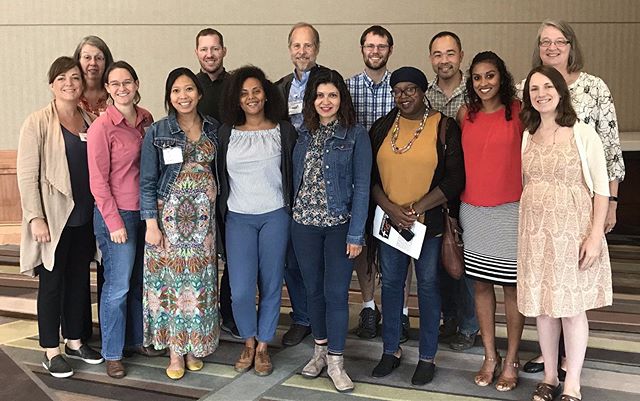

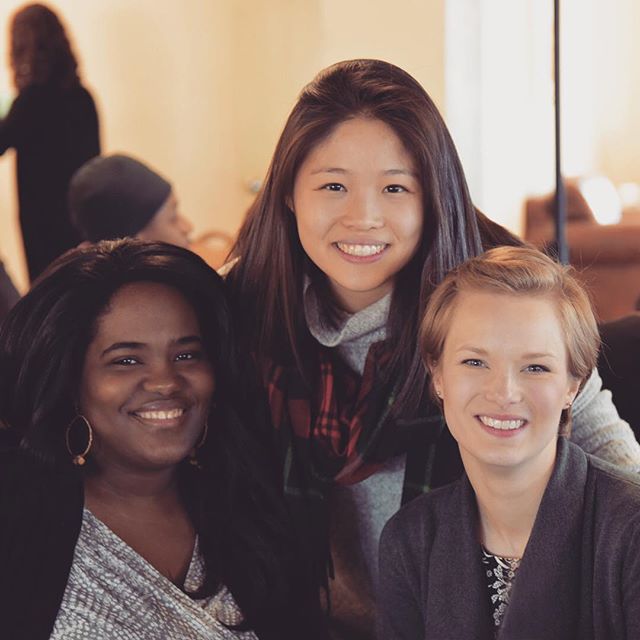

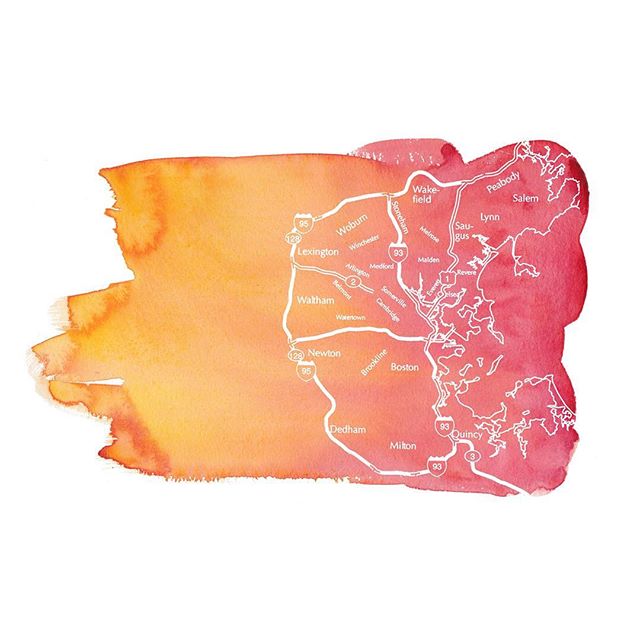


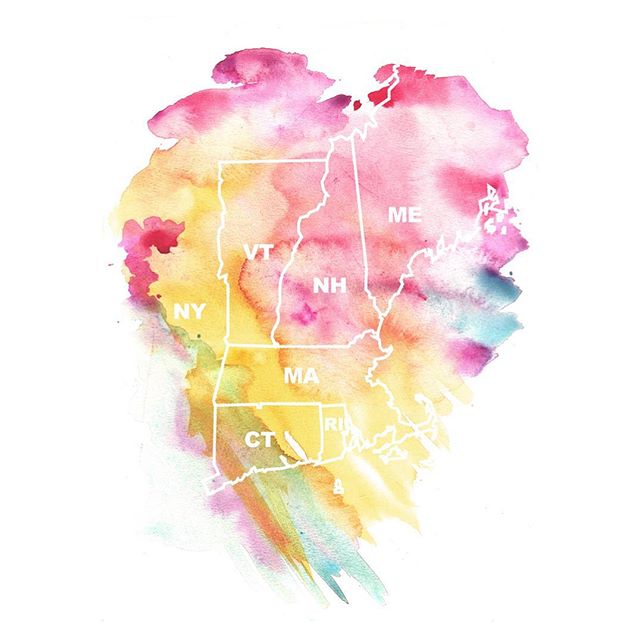
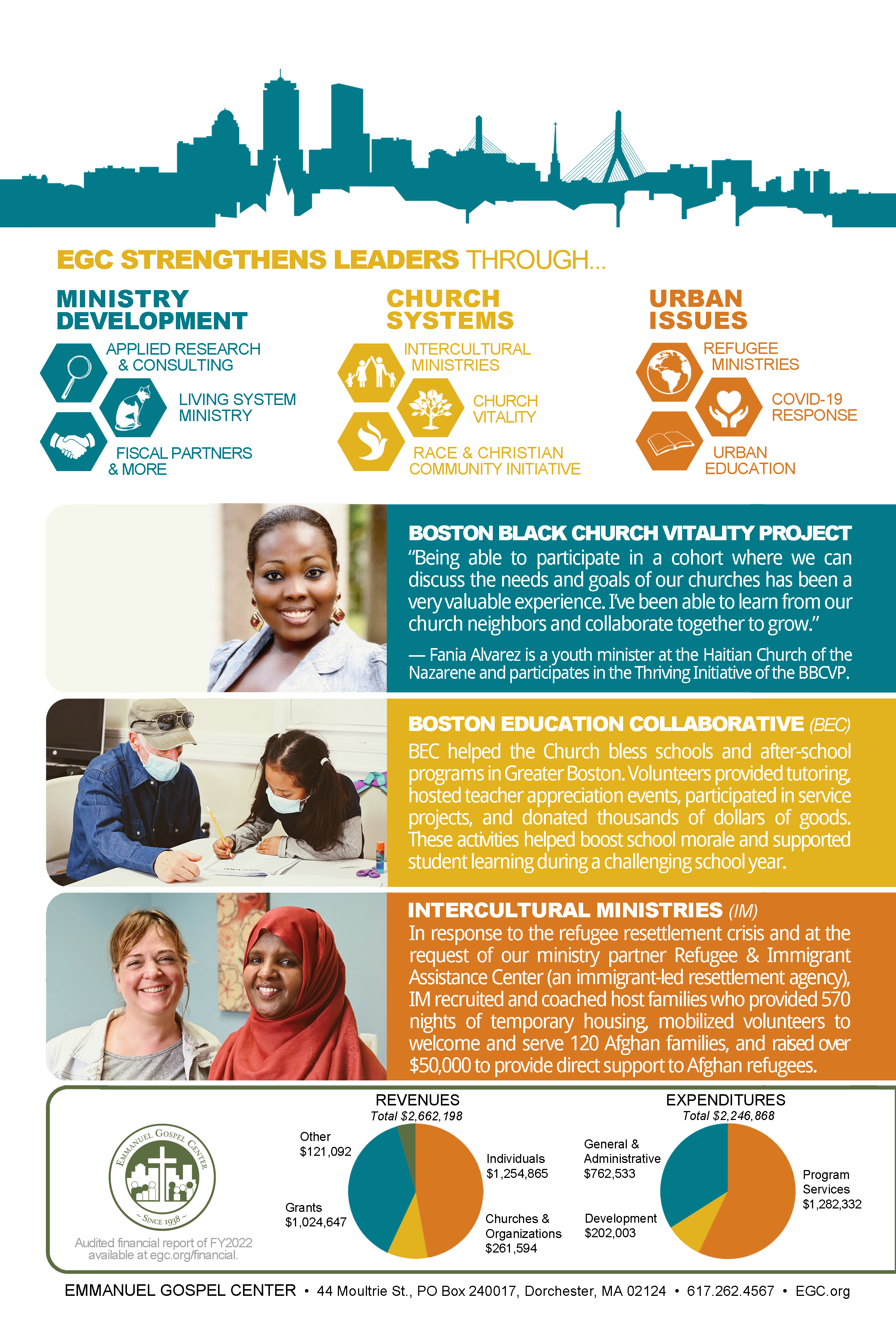
Building bridges between the Church & the nations at our doorstep.