

BLOG: APPLIED RESEARCH OF EMMANUEL GOSPEL CENTER

Why Christian Activists Wait For God
As a busy Christian social activist or leader, do you know the practical, strategic, and relational benefits of waiting for God? Here are the perspectives of 10 Christian change-makers on why they wait for God in their work.
Why Christian Activists Wait for God
by Jess Mason
Christian social activists are a busy bunch. They’re action-oriented, and the world never lacks work for those concerned with the suffering, the marginalized, and the oppressed. But if Christian social activists run on the same steam as everyone else, they’re not actually making Christ’s difference in the world.
At a worship gathering of over 30 EGC leaders and social activists, the worship leader posed the question, “In all that we have going on, what’s the value of waiting for God?” I was moved by the breadth of responses. I felt it such a rare privilege to be in the company of so much gathered wisdom that I wanted to give other Christian leaders in Boston a taste.
I pray that these perspectives encourage you in your waiting for God—possibly the most strategic action we can take to make a lasting difference in the city.

Nika Elugardo, Chief Growth Officer
I feel personally transported to another dimension when I move into a quiet space of recognizing God's presence. In those moments, it's not that I am invited into God's reality, but that I invite myself into an awareness of reality itself.
This deeper awareness seems to unlock the constraints of our physical world and release God—who seems to restrain himself by the very laws he created—to be who he is in this (our) world, where our sin has closed us off to him. It’s in stillness and quiet that new buds of faith flower.

Brian Gearin, EGC Missionary
We wait for God so that we can "be with Him" and know His purposes for each issue we face. I think that He desires us to "know Him" and respond to issues with His guidance.

Liza Cagua-Koo, Assistant Director
I wait for God for the same reasons I ask my kids to wait for me.
First, it's dangerous without me—There's a street to be crossed ahead! Also, I want them to value that staying together is more important than getting something done, or getting there first—No one gets left behind! The importance of togetherness with God can't be overestimated. He waits for us, though we often think we're having to wait for him!
When I am the one having to wait for my kids, when I see how small they are, or how much practice it takes to learn something, I am reminded of how patient and steadfast God is with my own growth. He never leaves me behind. He waits for me.
When I wait on him, I become present to those realities, which in turn fills my tank for being able to wait on others—and be patient with myself—as we all travel this pilgrim road.
Sarah Blumenshine, Co-Director of Greater Boston Refugee Ministry
Waiting puts us in a posture of receiving. God is the main actor, and we act as we receive direction. Waiting trains us to discern his voice. It requires us to back away from our impulses and evaluate, “Is this God leading, or is it me, or something else?"

Caleb McCoy, Development Manager
God is outside of time. Waiting on him helps us to reconnect with the mystery of His timing and submit our plans to his will.
Jeffrey Murray, Director of Operations
Any response or action taken without waiting before God runs the risk of being idolatrous. We are— intentionally or unintentionally—elevating our thought processes and plans above God's intentions.
God's commandment clearly instructs us, “You shall have no other gods before me" (Ex 20:3, Deut 5:7; NIV). To take action (i.e. move, do, respond, etc.) prior to—and thus outside of—seeking God's will is a way of going against his instructions for us.
Jeff Bass, Executive Director
In 1 Kings, Elijah is running from God. God comes to meet him, but not right away. God was not in the wind, the earthquake, or the fire. He came after, quietly. Elijah had to wait to experience him that day.
God's timing is often not our timing. We want things now, but God's plans take time. God called David to be King, and Samuel anointed him. But he didn't get to be king until years later, after Saul was removed. We need to wait if we want to stay connected with God's plans.

Gregg Detwiler - Director of Intercultural Ministries
Waiting on God is a gift from God—it’s rest for our souls.
In God’s presence, we also become more self-aware of our inner world, the broken and darker parts of our being, and our motivations. There we can submit our lives and our plans to God to lay them in his hands, so that we can give him glory for anything good that comes out of our action.
Even youths get tired and weary; even strong young men clumsily stumble. But those who wait for the Lord’s help find renewed strength. They rise up as if they had eagles’ wings. They run without growing weary. They walk without getting tired. - Isaiah 40:30-31 (NET)

Sarah Dunham, Former Director of Abolitionist Network
Waiting on God helps us remember that we are not in control. We need to stop striving, and running around trying to make things happen.
Once we step back and remember who is really in control, then we can really join God in what He is doing. Christian social action is not about a frenzy of doing things for God—it’s knowing God, and allowing him to work in and through us.

Elijah Mickelson, Director of Communications
We see in part, God sees the whole.
RESPOND
The Psalms Vigil
Waiting on God is both healthy and strategic. The Psalms Vigil is a simple, ancient practice that helps focus our hearts with God. I have found the Psalms Vigil to be a powerful form of active waiting on God. The vigil has a simple, three-part rhythm:
Read a psalm.
Talk or journal to God about any emotions or issues come up in your heart from what you’ve read.
Rest in silence for anything else the Holy Spirit may want to do in your heart.
When you feel ready, you can move on to a new psalm, repeating the three-part rhythm with as many different psalms as you like.

Jess Mason is a former licensed minister and spiritual director. She is currently a ministry innovation strategist in Applied Research & Consulting at EGC, and the chair of Christian Formation at a church in Jamaica Plain. Her passion is to see God’s goodness revealed to and through Christian leaders and pillars in the Boston area.

![Inner Life Of A Leader [Resource List]](https://images.squarespace-cdn.com/content/v1/57ff1c7ae58c62d6f84ba841/1503082360379-C5ZBYKU7T85I40JH5WMS/pexels-inner-life-airballoon.jpg)
![Intercultural Leadership [Resource List]](https://images.squarespace-cdn.com/content/v1/57ff1c7ae58c62d6f84ba841/1503082407845-5YCT4DLA93VIGHBSAN1R/pexels-intercultural.jpeg)
![Modern Classics on Leadership [Resource List]](https://images.squarespace-cdn.com/content/v1/57ff1c7ae58c62d6f84ba841/1503082448262-DU5B4OH1ZP625DKJRZHH/pexels-modernclassics.jpeg)
![Women In Christian Leadership [Resource List]](https://images.squarespace-cdn.com/content/v1/57ff1c7ae58c62d6f84ba841/1503082489913-T7DT6XUHEQE5DLCQ91UP/pexels-womanleader.jpeg)
![Pastoral Leadership [Resource List]](https://images.squarespace-cdn.com/content/v1/57ff1c7ae58c62d6f84ba841/1505489535138-EG2UJ0K00MI0BXPQTNZ5/pexels-pastor.jpg)
![Leadership Strategies & Models [Resource List]](https://images.squarespace-cdn.com/content/v1/57ff1c7ae58c62d6f84ba841/1505489580322-W3YPVU5W1AKQXXNOLFUM/pexels-strategyleadership.jpeg)

From the Bible Belt to Boston: What God's Doing in New England
Are you ministering in a spiritual desert? In a recent study, Boston was ranked one of the most “Post-Christian” cities in the U.S. Kathryn Hamilton, an EGC communications intern from West Texas, weighs in about her experience with Boston’s spiritual climate and Christian vitality.
From the Bible Belt to Boston: How God’s Moving in New England
by Kathryn Hamilton
Do the numbers lie?
In the most recent “post-Christian” study by Barna Group, a research organization focused on the intersection of faith and culture, Boston ranked 2nd among “The Most Post-Christian Cities in America: 2017.” In fact, eight out of the top 10 are located in the Northeast, five of which are located in New England.
To qualify as “post-Christian” for Barna’s study, individuals had to meet nine or more of Barna’s 16 criteria that indicate “a lack of Christian identity, belief and practice, including, individuals who identify as atheist, have never made a commitment to Jesus, have not attended church in the last year or have not read the Bible in the last week.”

https://www.barna.com/research/post-christian-cities-america-2017/
As I reflect on my two months interning for EGC and prepare to return home to my “Bible-Belt” town in West Texas, I find myself a bit baffled, as my experience has been far from spiritually dry and Godless.
“Saying you’re a Christian in Boston is weighty. There is no cultural norm influencing your religious affiliation. ”
Knowing the Lord was calling me to Boston, it was seeing numbers Barna posted in 2015 that sparked my initial interest – that Boston ranked 4th among the top dechurched cities. However, as I settled into my temporary home in Cambridge and plugged into a local church there, I was in awe of how “Christian” the Christians in the Boston area were.
Cultural Christianity is prominent in my region of Texas. You grow up “Christian,” go to church on a regular basis (or at least on Christian holidays) and hold to what you consider “good Christian morals.” You hear the Gospel preached so much that the meaning numbs and you fall prey to the comfort and ease of day-to-day life.
Let me disclaim, this is a broad generalization. I'm where I am spiritually because of devoted and loving Christian parents and mentors that demonstrated the hands and feet of Jesus. I generalize the culture of the Bible Belt to make the point that saying you’re a Christian in Texas and saying you’re a Christian in Boston can reveal starkly different fruit. Saying you’re a Christian in Boston is weighty. There is no cultural norm influencing your religious affiliation. You’re a Christian because you choose to follow and live for Jesus.
The Christian community that I have found here in Boston is unlike anything I’ve seen or experienced before. The community seen in the early church of Acts is still alive, and, from my experience, flourishing. It’s small but strong.
They devoted themselves to the apostles’ teaching and to fellowship, to the breaking of bread and to prayer. Everyone was filled with awe at the many wonders and signs performed by the apostles. All the believers were together and had everything in common. They sold property and possessions to give to anyone who had need. Every day they continued to meet together in the temple courts. They broke bread in their homes and ate together with glad and sincere hearts, praising God and enjoying the favor of all the people. And the Lord added to their number daily those who were being saved.
Acts 2:42-47 has been my Boston.
Where I thought there was going to be nothing but pluralistic, moral relative doctrine, I have found sound, Gospel-oriented teaching. Where I expected to see scattered believers, I have seen great unity. Where I knew social injustices and needs to be present, I saw the church on the front lines. Where I expected to be a lone believer and disheartened by the lack of believers, I’ve been the one nurtured and influenced.
“Where I expected to see scattered believers, I have seen great unity. Where I knew social injustices and needs to be present, I saw the church on the front lines.”
So if Boston Christian community is anything like the early church, the Lord is going to “add to their number daily” those who are being saved.
I’m sure that Barna’s numbers are accurate, and that Boston is in fact one of the most post-Christian cities in America. But as church planters who come to Boston because of that number partner with and learn from the Christian vitality already here, the fruits of both their labors are multiplying.
Seeds are being sown on good soil in Boston, and a revival is growing roots.
RESPOND
Are you from the Bible Belt? Do you agree? Disagree? Have a different experience? I'd love to hear from you!
Are you interested in internships with EGC? We have volunteers, interns, associates, and fellows working with us each semester.

About the Author
Kathryn Hamilton is a Summer 2017 Communications BETA at EGC. She graduates in 2018 with an Advertising and Public Relations major from Abilene Christian University. Growing up in the church in Dallas and Abilene, TX, she developed a heart for missions among unreached people groups. After graduation, she plans to work in the non-profit sector or with corporate social responsibility. In Boston, she has enjoyed the diverse culture, the "T", lots and lots of J.P. Licks and, of course, the people.
![God Met Me in Boston [Interview]](https://images.squarespace-cdn.com/content/v1/57ff1c7ae58c62d6f84ba841/1529427271630-4CUDW0ICCL9D8IQ4SV4I/Ruth+%26+Cherchaela+2.jpg)
![[Video] The Power of Story: Defying the 'Godless New England' Narrative](https://images.squarespace-cdn.com/content/v1/57ff1c7ae58c62d6f84ba841/1521656472413-O4GQ2EDB7BBZW7QYAYX3/Stacie+Caleb+GO.jpg)

Neighborhood Chaplaincy: 8 Open Questions
Want to explore Neighborhood Chaplaincy as a fresh way to bring the gospel into emerging neighborhoods? There are questions to address before fostering a Neighborhood Chaplaincy movement in Boston. Explore with us.
Neighborhood Chaplaincy: 8 Open Questions
By Steve Daman
Neighborhood Chaplaincy is an innovative approach to ministering the love of Jesus in emerging communities. In High-Rise Gospel Presence: A Case for Neighborhood Chaplains, I share why I believe Boston would benefit from neighborhood chaplains.
But we have more questions than answers. Here are the major issues we believe will need to be addressed on the way to fostering a Neighborhood Chaplaincy movement in Boston.
1. Culture CHANGES
What shifts in spiritual attitudes and lifestyles are happening with the emerging neighborhood demographics of Boston? How do we as the dynamic Church in this city respond, as we yearn to bring the love and life of Jesus to every Bostonian?
2. BEYOND FIRST CONTACT
If we establish physical space in a new neighborhood, what’s next? Do we plant churches out of that space? Or do we exclusively refer people to existing churches?
3. Online Presence
Is a physical space enough? What kind of web- and social media presence will a neighborhood chaplaincy require in order to generate a flow of people seeking services?
4. Funding
From where might a stream of funding for neighborhood chaplaincy be sustainable?
5. Job Requirements
What would be the duties of a neighborhood chaplain? What about credentials? How and where will neighborhood chaplains be trained and certified? Are local seminaries preparing graduates for nontraditional, outside-the-box, Kingdom-of-God building ministry?
6. Community Relations
How do we sell this idea to a community development enterprise? Of what value is a neighborhood chaplaincy program to a high-rise development complex? Can it be demonstrated that a spiritually and emotionally healthy neighborhood is a better neighborhood and a neighborhood chaplaincy can produce a healthier community?
7. Recruiting
How will we attract those rare individuals whom Mark Yoon envisions would pursue a contemporary church-planting model “built on vulnerability and surrender, and skill on how to engage, and prayer”?
8. What's Happening Now
Is anyone in the Boston area already doing Neighborhood Chaplaincy, or something similar? Are there leaders or groups regularly praying about it? Has anyone begun work towards such a movement?
TAKE ACTION
Are you interested in joining a follow-up discussion with other Christian leaders on the potential for Neighborhood Chaplaincy in Boston?
What Did You Think?
![Beyond Church Walls: What Christian Leaders Can Learn from Movement Chaplains [Interview]](https://images.squarespace-cdn.com/content/v1/57ff1c7ae58c62d6f84ba841/1550010291251-EVMN3KQ15A70OBTAD4JQ/movement-chaplaincy_outdoorcitygroup.jpg)


What's Next: My 5 Dreams For Church Planting in Boston
Rev. Ralph Kee, animator of the Greater Boston Church Planting Collaborative, has been giving a lot of thought to this idea: What may be the Church’s dreams for Boston for the next few decades? What should be the Church’s priorities? Where are the Church’s growth edges? In this article, Ralph offers his own five basic ideas, his five dreams about church planting for Boston’s future.
What’s Next: My 5 Dreams for Church Planting in Boston
by Rev. Ralph Kee, Animator, Greater Boston Church Planting Collaborative
Where are we headed as the Church in Boston? What might be some goals, dreams, and potential growth points for the Body of Christ in Boston over the next several decades?
As I’ve engaged with the Boston 2030 initiative, I’ve been giving a lot of thought to what it means for Christians in the next several decades. Here are my dreams about Boston’s church planting future:
Dream #1: Holistic Churches Multiplying Churches
I see Boston filled with Gospel-permeated, holistic churches.
By holistic churches, I mean those that serve the city with the whole Gospel by ministering to the whole person. I think that’s what God dreams and wants for Boston, because that’s what he wants for all his created people. Paul writes, “God has made known to us the mystery of his will,” and his will is “to bring all things together in Christ, both things in the heavens and things on the earth.” (Eph. 1:9,10)
Learn More: Where to Plant a Church in Boston: Areas of Growth
Boston is staged to grow. I moved to a Boston of 641,000 in 1971. By Boston’s 400th birthday in 2030, the population is expected to jump to 724,000 or more. In light of this growth, we at the Greater Boston Church Planting Collaborative have been asking two key questions:
Where will these new Bostonians live? Whole new neighborhoods are underway to house several thousand people each, all within Boston’s city limits.
Where will these new Bostonians go to church? Will the Church be ready? Who will lead the way in envisioning new expressions of the Church for new Bostonians? The apostolic task of the Church, a leading task from Ephesians 4:11, is to multiply communities of faith—churches multiplying churches. Let’s do it!
Learn More: Multiplying Churches in Boston Now
Dream #2. Both Gentrifiers and Born-Bostonians Playing a Part
I see Gospel-entrenched gentrifiers and neighborhood-based Christian activists together salting the city.
Boston is becoming more and more gentrified. Researchers spot gentrification where census tracts show increases in both home values and in the percentage of adults with bachelor’s degrees. I’ve had to come to terms with the fact that in the neighborhood where I’ve lived for 46 years, I, too, am a gentrifier.
Today, gentrifiers include young Christian professionals moving into older neighborhoods all over the city to be salt and light, to love their neighbors, to do Jesus-style thinking and living in their neighborhoods. These folks can be “entrenched gentrifiers,” incoming residents who, in their own minds and hearts, want to appreciate and have purposeful “attachment to the local meanings, heritage, history, and people” they are now living near.
For example, intentional Christian communities—where several families or singles live together in shared commitment to each other and to their neighbors—are flourishing.
Boston’s “Gospel-entrenched gentrifiers”, as I call them, are not pioneers, but reinforcements. They join embedded Kingdom builders—second-, third-, and many-generation Bostonians—Christ-followers who are dreaming big dreams for their neighborhoods.
“Boston’s Gospel-entrenched gentrifiers, as I call them, are not pioneers, but reinforcements.”
One such Kingdom builder is Caleb McCoy, a fourth-generation Dorchester resident and EGC’s Development Manager. Caleb has a homegrown knowledge of and love for the city. He says, “I believe my role in the church is to help make the Gospel relevant and personal to people that may not feel that God’s plan applies to them.”
Caleb’s vision is to use his musical and communications gifts to inspire “a revival of young and middle-aged adults, joined together, exemplifying the Gospel through preaching and the arts.”
I am excited about Caleb’s vision. I have a dream that such neighborhood-based Christian activism will be the engine to drive effective ministry today and tomorrow.
Dream #3. Relevant, Hands-On Ministry of Reconciliation
I see today’s Boston’s Kingdom citizens reconnecting what has been severed by sin.
I am dreaming that Boston’s visionary, prophetic Christians will, with God-inspired imagination, help build new communities of faith. These newly imagined churches will demonstrate the Kingdom of God in today’s urban context.
The prophetic task, as I see it, is to cast a vision for a redeemed creation. Empowered by the Spirit of God, today’s prophets can work to reconnect what was disconnected by sin.
When sin entered the world, it entered the whole world—not just the human heart, but the very heart of the created order. Original sin instantly caused four original schisms (Learn More: The Prophetic Task):
humanity separated from God
humanity separated from the created order
man separated from woman
people separated from people
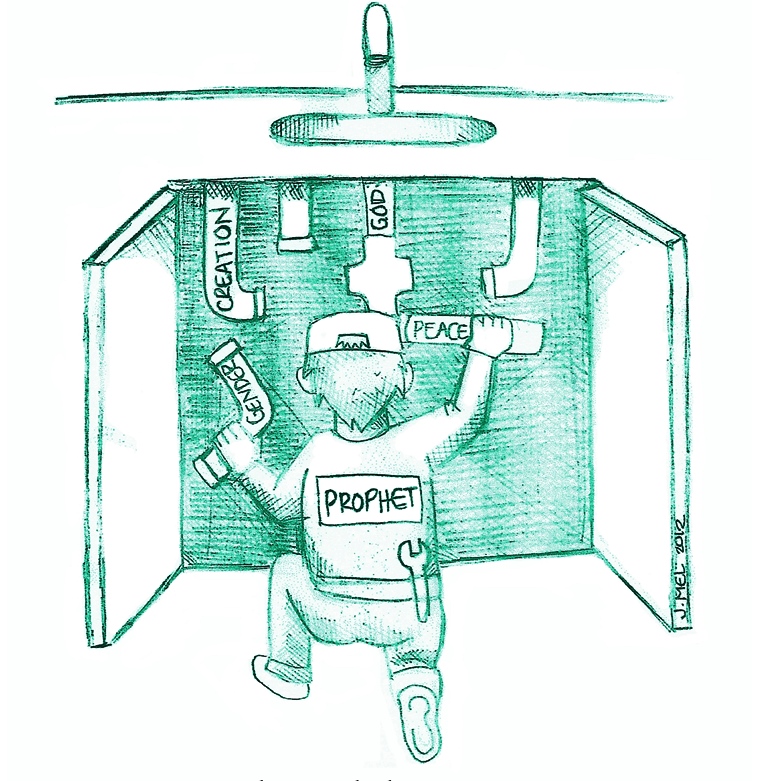
What is to be done about these painful schisms? Thankfully, they are all resolved in Christ, as we the Church fulfill the prophetic task! We proclaim the Kingdom of God, and partner with God in his work of connecting, redeeming, healing, and bringing Kingdom-of-God life and peace to every facet of Boston.
Consider the refugees coming to Boston today. What will they find? Will they experience more schism in their torn lives? Or will some neighborhood church in Boston welcome them, embrace them as valued people loved by God, and begin to effectively reverse the curse of schisms in their lives by loving them well? (Learn more: Greater Boston Refugee Ministry).
And if some Boston residents were to observe Christians living in their neighborhood, reversing the curses of the four schisms, would these observers not be more ready to listen to the spoken Gospel message?
Dream #4: The Good News Proclaimed in Boston’s Heart Languages
I believe God is calling evangelists to speak the Gospel in the languages of Boston.
I want to see Boston gifted with many evangelists, men and women who can speak and live out the Gospel in the languages of Boston’s old-timers, of second- and third-generation Southies, or Townies, or Dorchesterites. Who will speak the Gospel to:
the retired men of South Boston who hang at the coffee shop every day?
the women who gather at Ramirez Grocery or Rossi Market?
the generations of men and boys who gather at the corner barbershop?
the freshmen or grad students at BU or BC or MIT?
those who speak the 100+ languages of newcomers arriving from the four corners of the earth?
We know the Gospel is two handed: word and deed. We need to do both: preach the Word and do the Gospel.
Today particularly, we need to be careful not to focus only on meeting basic needs and neglect preaching. One follows the other. After neighborhoods see the Gospel in action, I think they will be more ready to have someone fully explain it to them and invite them to believe in Jesus themselves. Show and tell.
Who of those already living in Boston are called to evangelistic preaching in Boston specifically? Who yearns to spend their lives preaching the Gospel in Boston? Do you?
In Romans, Paul asked, “And how can they believe in the one of whom they have not heard? And how can they hear without someone preaching to them? And how can anyone preach unless they are sent? As it is written: ‘How beautiful are the feet of those who bring good news!’” (Rom. 10:14,15)
Dream #5. Church Planters Collaborating Closely
I want to see church planters in Boston thinking of themselves as players on a Boston-wide team.
The Greater Boston Church Planting Collaborative started gathering in 2000, and we chose the word “collaborative” intentionally. In the Book of Acts, the story of early church planting, we see nothing but collaborative ministry efforts. One church, one basic team, one overarching goal everyone shared and worked toward—that’s the Acts of the Apostles.
Collaboration is basic to church planting—and so it should be in Boston. I want to see Boston’s church planters meeting face-to-face, setting shared goals, being mutually accountable, and being passionately focused.
I imagine church planters setting Boston-wide church-growth and church-planting goals collaboratively. I envision shared strategies to cover ground and to plan over time—setting 6-month, 12-month, 2-year, and 15-year goals.
“How long will it take you to build the wall, Nehemiah?” King Artaxerxes asked (Neh 2:6). Nehemiah, a slave in a foreign land under a tyrant, was the last person in a position to guarantee any purpose-driven time goals. But he did set a time goal for Artaxerxes because he had to. And they met it—the collaboration of faithful residents working side by side in Jerusalem finished the wall in fifty-two days!
Let’s collaborate, set some prayerful goals, and see the work get done!
To see the full-length article, click here: I’m Dreaming About Boston’s Future—Are You?
TAKE ACTION
So those are my five big church planting dreams for Boston. What do you think? Are you dreaming with me? Dream big! When we get some more ideas, we’ll share them in a future post. Send me an email—I would love to hear from you.
Are you a church planter? I invite you to join us at the Greater Boston Church Planting Collaborative!

Ralph Kee came to Boston in 1971 to help plant a church emerging out of the Emmanuel Gospel Center’s neighborhood outreach. Starting churches became his clear, lifelong calling. He was involved in launching or revitalizing dozens of churches in and around Boston. In 2000, Ralph started the Greater Boston Church Planting Collaborative, a peer mentoring fellowship to encourage and equip church planters. He mentored church planters, mostly one-on-one, usually over coffee for many years. He passed away on February 4, 2026, at the age of 90.


Christianity in Boston 2030: What's The Church's Vision?
The City of Boston has released “Imagine Boston 2030,” a comprehensive vision to prepare for an expected population surge by the city’s 400th anniversary in 2030. Can the church articulate a similar vision for what the Kingdom of God could look like in Boston 13 years from now?
Christianity in Boston 2030: What's The Church's Vision?

The City of Boston has released “Imagine Boston 2030,” a comprehensive vision to prepare for an expected population surge by the city’s 400th anniversary in 2030. Can the church articulate a similar vision for what the Kingdom of God could look like in Boston 13 years from now?
“Boston needs dreamers.”
Rev. Ralph Kee, veteran church planter and animator of the Greater Boston Church Planting Collaborative at EGC, thinks Boston needs dreamers. “God has a big dream,” he says, “and people have dreams. When people start to share their dreams, that builds enthusiasm.”
THE TASK AHEAD
Imagine Boston 2030 has articulated goals in the social, economic, cultural, and physical realms. Through the Prophet Jeremiah, God instructed exiled Israelites to “seek the peace and prosperity of the city to which I have carried you into exile. Pray to the Lord for it, because if it prospers, you too will prosper.” Urban Christians can seek the prosperity of our city and the success of these goals, finding ways to join in.
At the same time, we have the privilege and mandate to discern together goals and desires God has for our city.
Population growth alone should get our attention. With significant growth in Boston’s population recently and projected into the future, Boston’s churches will need to consider how to expand their outreach and service, as well as replication into new congregations.
Between 2010 and 2030, Boston could add from 84,000 to more than 190,000 new residents. Reaching and serving that many new people would require growing our present churches and planting new ones.

Image from Imagine Boston 2030 draft, p. 19; data source: ACS 1-Year Estimates (2011-2015), U.S. Census Bureau; BPDA Research Department, September 2016
DREAM INNOVATION
What church solutions would best fit the city in the coming decades? More meeting spaces would be a must—though many new churches may never own a building.
“More meeting spaces would be a must—though many new churches may never own a building.”
New churches could take a variety of forms, including small groups, house churches, and cafe churches. Larger traditional churches could meet in a variety of traditional and nontraditional spaces and contexts.
A collaborative of churches could own or rent some multi-use space in Boston’s new neighborhoods. Some developers may already be creating community meeting spaces in new neighborhoods that could be rented by local church groups.
Can we start to envision the possible? What would it take to make the dreams happen?
“Should we convene Christians to talk about Boston 2030,” Ralph Kee asks, “including bankers, architects, real estate agents, construction executives? Can these leaders get together? The city is going to grow. Even what was Suffolk Downs is going to be a mini city. How are we going to get churches there?”
TAKE ACTION
What is your vision for Christianity in Boston in 2030? Would you weigh in by filling out a brief survey? We’d love to hear from you!
Contact Rudy Mitchell, Senior Researcher, to continue the conversation.
Get to know veteran church planter Rev. Ralph Kee and plan to visit the next Greater Boston Church Planting Collaborative gathering.

Resource List for Reconciliation in Troubled Times
The following list of resources, recommended by Professor Dean Borgman during his lecture “Reconciliation in Troubled Times,” provides ideas on how one might respond to the racial divisions of our time.
Resource List for Reconciliation in Troubled Times
Compiled by Megan Lietz and Dean Borgman
Prof. Dean Borgman mentioned these resources during his lecture – “Reconciliation in Troubled Times” – as one way that we might learn about how to respond to the division of our time.

The New Jim Crow: Mass Incarceration in the Age of Colorblindness by Michelle Alexander
The New Jim Crow is a powerful and provocative book that explains how the racism associated with the Jim Crow era has not been removed, but redesigned and perpetuated through the social ill of mass incarceration. This is a must-read for understanding how systemic racism still has a profound impact on communities of color today.

The Righteous Mind: Why Good People Are Divided by Politics and Religion Jonathan Haidt (2012)
In The Righteous Mind, social scientist Jonathan Haidt argues that our moral, political, and religious positions come more from our “gut feelings” than reason. He considers the implications this has on how we interact with people of differing persuasions and offers perspectives that can help us learn how to cooperate across dividing lines,

Roadmap to Reconciliation: Moving Communities into Unity, Wholeness and Justice by Brenda Salter McNeil
Rev. Dr. Brenda Salter McNeil presents a roadmap describing the journey people go through when working towards biblical reconciliation. This book helps people better understand the journey they may be on and equip themselves to progress on to personal and social transformation.

Toxic Inequality: How America’s Wealth Gap Destroys Mobility, Deepens the Racial Divide & Threatens Our Future by Thomas M. Shapiro
Sociologist Thomas Shapiro explores how the historically high economic inequality our country is experiencing must be understood in light of racial inequality. Together, this combination creates “toxic inequality” that must be named, understood, and addressed together to create a more just society.

Preaching Politics: Proclaiming Jesus in an Age of Money, Power, and Partisanship by Clay Stauffer
How can you address the divisive issues of our time in a politically diverse congregation? Preaching politics talks about how issues that underlie our differences, such as our view of money, materialism, and power, impact faith and can be responded to through the teachings of Jesus.

Exclusion and Embrace: A Theological Exploration of Identity, Otherness and Reconciliation by Miraslav Volf
Croatian theologian, Miraslav Volf, addresses how we see “the other” in a negative light and calls us to move from a position of excluding those who are different from us to embracing them with the love of Jesus. He provides a theology of reconciliation that he believes, when lived, allows people to experience the healing power of the Gospel.





Tips for Developing Church Leadership
Starting a new church, but short on leaders? A few years ago, we interviewed a number of Greater Boston’s church planters to ask how they were developing new leaders for their churches. Here are some of their tips for raising new leaders.
Tips for Developing Church Leadership
by Rudy Mitchell and Steve Daman
Starting a new church, but short on leaders?
A few years ago, we interviewed a number of Greater Boston’s church planters to ask how they were developing new leaders for their churches. Here are some of their tips for raising new leaders.
1. Pray first. While you might be thinking you need people with particular skills, what you really need are people with spiritual maturity and Christ-like character. These foundational qualities take time to develop and time to discern. Lining up leadership should not be rushed. Do what Jesus did before he chose his team. Get up on the mountain and pray.
2. Examine and test. You don’t want to rush into appointing someone as a leader until you have thoughtfully and prayerfully assessed their potential and discovered their passion. To get there, you’ll need sufficient face time to begin to listen to their hearts.
- Motives: Ask them to tell you their story about their calling to serve Christ and his church, and see if you can discern their motives for accepting a leadership role.
- Beliefs: Are their beliefs sound and consistent with Scripture and with the church’s vision?
- Character: Are they teachable? Faithful? Humble? Do they love Jesus?
- Skills: Talk openly about the candidate’s strengths and potentials, but also weaknesses and limits. (You might go first in this one.)
- Vision: Ask them about their vision for the position and brainstorm together what it might look like for them to take leadership over a particular ministry. See how that conversation goes.
Don’t be afraid or embarrassed to implement this type of assessment as it may save both you and the candidate much pain and difficulty if, in fact, it turns out they are not the right person for the job. For scriptural precedent on testing, read 2 Corinthians 13.
3. Make disciples. Developing leaders can look exactly like making disciples.
- Replicate yourself: Move beyond the rigid supervisor/supervisee relationship and consider that your goal is to replicate yourself, to pass the torch to others who can learn to do the work even better than you do.
- Spend time together: Training, discipling and mentoring require that you and the emerging leader spend time together and become part of each other’s lives in a deep and meaningful way.
- Lean in: Lean in to the relational aspect of leadership development. Make yourself available. Listen well. From listening will grow understanding, spontaneous prayer, love, and maturity.
- Huddle up: Add a regular Bible study time with your mentee with an eye toward applying what you learn reflecting on Scripture to ministry and life situations. This kind of intentional discipling can be one-on-one or in small huddles of three or more.
- Grow yourself: With humility, remember that iron sharpens iron, and through this relationship, you’ll be changing and growing, too.
4. Learn together. Add to the essential, relational side of leadership development some formal training and exploration. Look for opportunities to gain knowledge and insight together.
- Create training opportunities: Learning can happen in regular leadership meetings, special training sessions, or on retreats. Listening, vision casting, and discussion can all help.
- Pick resources: Choose books or articles, and maybe online resources or video series that your team can study and discuss.
- Flex scheduling: If team members seem too busy or have conflicting schedules, you might be able to provide some training through virtual online meetings, one-on-one or in groups.
- Back to school: See what’s available at local Christian colleges, Bible institutes, and seminaries. Encourage your emerging leaders to pursue and gain academic credentials along with practical knowledge. The learning and the credentials may open doors for them for even more effective ministry.
5. Do and reflect. When it comes to raising up leaders, nothing can substitute for hands-on-experience and on-the-job training. Perhaps your church or ministry can offer internships, residency, or apprenticeship training. In the same way that Jesus’ disciples watched and followed, listened and asked questions, and then were sent out, follow that pattern.
- Show and send: After instruction in and modeling specific skills in real life ministry with your mentees along for the ride, start delegating responsibilities and monitor how it goes. Let them lead a small group, or teach a lesson, or get out and get dirty serving.
- Reflect and send again: Observe, supervise, and coach. Give feedback. Reflect together what happened. Pray together. Send them out again.
A couple final hints:
- Articulate roles and responsibilities: Make sure the new leaders can articulate back to you their responsibilities and what they are accountable for so that your expectations and theirs are always in sync.
- Shepherd their hearts: Periodically discern if the leaders find joy and fulfillment not only in doing the work of ministry, but in learning to do it better.
SOURCE: In 2014, the Emmanuel Gospel Center’s Applied Research team completed 41 in-depth interviews with Boston area church planters of various denominations, ethnic groups, and church planting networks. This article was derived largely from responses given by these church planters regarding their own practice and view of leadership development, with added insights from the EGC Applied Research team.
TAKE ACTION
Connect with church planters: Visit the Greater Boston Church Planting Collaborative.

End of Life Care: Starter Resources
Interested in dignified End of Life Care? Here are some starter resources to begin your learning.
End of Life Care: Starter Resources
Modern medical technology has changed the way we experience serious illness and dying. We have more treatment choices, but they sometimes lead to unnecessary suffering. And how does our faith impact how we want to experience death? No matter our age or stage of life, learning about end of life issues can benefit us and our loved ones.
Unsure of where to start? Here are some books and articles that address the changing landscape of dying, medical technology, decision-making, and faith.
How Modern Medicine impacts Aging and Death

Being Mortal: Medicine and what Matters in the End by Atul Gawande
Hailing from Newton, MA, Dr. Gawande teaches at Harvard Medical School and School of Public Health as well as practicing surgery. He offers a vision of how medical practice could prioritize quality of life throughout the lifespan.
End of Life Decision-Making

The Town Where Everyone Talks Death reported by NPR, 3/5/14
This brief article provides a fascinating peek at what can happen when a community decides to get end of life discussions out in the open.

Aligning a Medical Treatment with God's Plan by Karen Kaplan for the L.A. Times, 3/18/2009
From a secular perspective, Ms. Kaplan explores how faith and spirituality affect end of life decision-making.

Honoring Choices Massachusetts
Ready to make a health care plan for you or a loved one? Honoring Choices MA provides information, tools, and legal forms to help you write down your treatment preferences. Having a written plan helps you get the medical treatment you prefer, from now until the end of life.
Perspectives from Christian Voices

When Prolonging Life Means Prolonging Suffering by Dr. Kathryn Butler for Christianity Today, 9/8/2016
Drawing from her experience as a trauma and critical care surgeon, Dr. Kathryn Butler shares her perspective on dying, medical technology, and faith in God. She asks us to reconsider some common viewpoints in light of Scripture. Dr. Butler resides north of Boston.
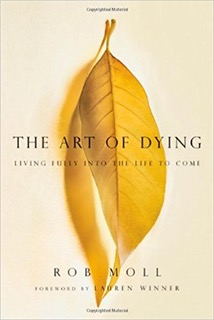
The Art of Dying: Living Fully into the Life to Come by Rob Moll
Rob Moll has worked as a journalist, hospice volunteer and with World Vision. Here, he reintroduces the Christian tradition of preparing for a “good death”. In this tradition death becomes a significant spiritual event for both individual and community.
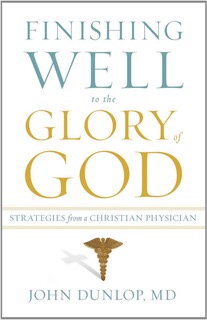
Finishing Well to the Glory of God by Dr. John Dunlop
A specialist in geriatrics, Dr. Dunlop provides nine strategies for navigating the end of life. His strategies are based in both medical knowledge and Scripture. Dr. Dunlop also acknowledges and confronts the cultural limitations of writing as a white, middle-class Christian.
Take Action
Questions or comments on any of these resources?
Are you looking for information on a topic not addressed here?

Bethany Slack, MPH, MT, is the Public Health and Wellness research associate at EGC. Her passion is to see Jesus’ love translated into improved health and health justice for all, across the lifespan and across the globe.


![Barriers to Mental Health Care for Boston-Area Black Residents [Report]](https://images.squarespace-cdn.com/content/v1/57ff1c7ae58c62d6f84ba841/1518458267039-7WI3NJUWYJQKOQCYDWTK/pexels-photo-561654.jpeg)


Top 6 Books For Understanding The South End
The South End has undergone a dramatic transformation in this generation. Christian leaders in the South End can benefit from these recommended resources for foundational and ongoing learning about this dynamic community.
Top 6 Books For Understanding The South End
by Rudy Mitchell, Senior Researcher, Applied Research and Consulting
The South End has undergone a dramatic transformation in this generation. Christian leaders in the South End can benefit from these recommended resources for foundational and ongoing learning about this dynamic community.
The books I've selected are not just informative — they also illustrate methods of researching a neighborhood or community. These methods include historical research, biographical research, the use of documents and photographs, interviews, and participant observation. The books also represent different time periods from the 1890s settlement house research to very recent studies.
Once Upon a Neighborhood: A Timeline and Anecdotal History of the South End of Boston
by Alison Barnet

While Barnet’s history of the South End is not a continuous narrative, it is by far the most detailed study of the neighborhood. The book is arranged chronologically by year, with many years having multiple entries of a paragraph for each fact or anecdote. The history from the 1960s on is especially detailed since the author lived in the South End during that period. This work covers all types of businesses, publications, organizations, and churches. It does an excellent job of covering the rich diversity of groups and individuals which have lived in the South End. Some entries are associated with a founding date or initial activity, but also describe later developments up to the twentieth century. On the other hand anecdotes sometimes also review past history from the associated date. You can dive into this book at any point and find a fascinating mix of people, events and issues from a cross-section of neighborhood life.
Boston’s South End: The Clash of Ideas in a Historic Neighborhood
by Russ Lopez

The South End is a complex neighborhood which has experienced many waves of change. This is the only full length book to narrate and interpret the overall history of this diverse community. Lopez notes some truth in the standard narrative of the neighborhood rising, declining, and gentrifying, but says the fuller story is more multifaceted and nuanced. Since this has been a multi-racial, multi-ethnic neighborhood for over 125 years, it offers many lessons in conflict resolution and community organizing for other urban neighborhoods. The chapter on religion in the South End describes several major institutions, but fails to cover some of the largest Protestant churches. Although the book contains occasional factual errors, it is the most comprehensive history of the South End.
A Block in Time: History of Boston's South End Through a Window on Holyoke Street
by Lynne Potts
See also by the same author, Faces of a Neighborhood: Boston’s South End in the Early Twenty-first Century.

Lynne Potts, a long term resident, writes with flair and adds a personal touch to her concise history of the South End. She also gives those interested in the research process glimpses of her own research methods including trips to archives and libraries as well as detailed first hand observations and interviews. Although the book includes enough general information to understand the neighborhood’s development and trends, its unique contribution is the author’s personal perspectives and experiences woven into the general narrative. The approach of studying a neighborhood beginning with an in-depth look at one typical block works well here because the people, events, and experiences described are representative of the larger neighborhood over the last several decades.
Boston’s South End
by Anthony Mitchell Sammarco
See also by the same author, Boston’s South End: Then and Now.
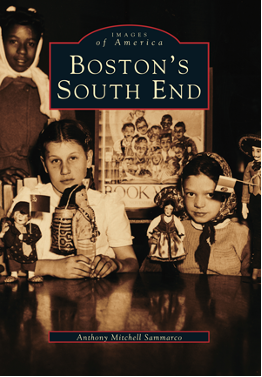
The Arcadia Images of America Series books are full of historical photos with detailed descriptions and introductions for each of the towns and neighborhoods covered. While these do not give full histories of the communities, they do help the casual reader absorb a visual sense of the history and learn many detailed facts. Photos are organized in chapters about churches, schools, hospitals, businesses, libraries, transportation and other institutions. Many of the photographs show buildings, but quite anumber also include groups of everyday people. By learning about the history of your neighborhood you can join with others interested in history, have common ground for conversations, and gain an understanding of community identity.
Legendary Locals of Boston's South End
by Hope J. Shannon

While a neighborhood like the South End has many historical buildings, its current and past residents are the most interesting and important aspect of what makes it a community. Hope Shannon presents short, illustrated biographies of women and men of the past and recent times who have made significant contributions to the community and wider world. Shannon selects famous, infamous, and everyday people from many walks of life for Legendary Locals. The biographies range from Alexander Graham Bell, Louisa May Alcott, Rev. A.J. Gordon, and Cardinal Richard Cushing to former Mayor James Michael Curley. People who have lived in the South End of Boston over the last several decades will enjoy reading about historical figures and familiar faces, while newer residents and future generations will benefit from the careful research behind all of these biographies.
The City Wilderness: A Settlement Study
by Robert A. Woods, (editor)

In the 1890s the South End House was established as a settlement house, and the residents and associates began living in and researching the neighborhood. This classic book was the result of that research. Although the language and views were shaped by the culture and ideas of that time period, the research opens a window into the lives of South Enders at the turn of the century. The topics covered include history, description of the population, public health, employment, politics, “criminal tendencies,” recreation, the church, education, social agencies and charitable organizations (including an analysis of their methods). The most fascinating elements of the book are three color coded maps indicating for each block, the types of buildings, the nationalities of residents, and the types of employment of the workers. The book can be accessed online at Google books.
Other more specialized books on the South End
South End Character: Speaking Out on Neighborhood Change
by Alison Barnet

While the book Legendary Locals of Boston's South End highlights South Enders who achieved some prominence or fame, in contrast South End Character gives us a window into the lives of the lesser known “old South Enders.” Barnet also contrasts the perspectives and lifestyles of long-time residents and wealthier newcomers. Many of the chapters are reflections and sketches of people and life in the 1960s and 1970s. These short essays originally appeared as columns in the South End News. The look backward is not just a nostalgic reminisce, but an examination of values and issues in a changing neighborhood. Alison Barnet has also written several other books including South End Incident: A True Story.
Faces of a Neighborhood: Boston’s South End in the Early Twenty-first Century
by Lynne Potts
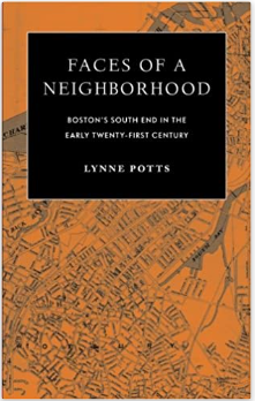
In this second book on the South End, author Lynne Potts interviewed 24 diverse neighborhood residents. The interviews draw out insights on contemporary issues facing people living in the city today. The 24 South Enders included people from different age groups, economic groups, as well as people who were long-time residents and newcomers.
Boston’s South End
by Lauren Prescott
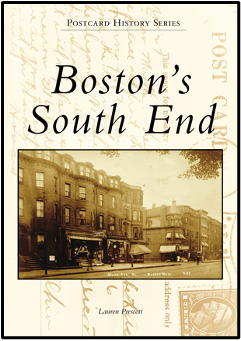
This annotated collection of South End related postcards covers the period from the late 19th century to the mid Twentieth century. This is not a complete history, but it does have extensive notes with its many pictures of South End churches, hospitals, charity organizations, and businesses. For example, the book gives details on Rev. Edgar J. Helms’ development of Morgan Memorial Goodwill Industries, as well as historical notes on the Salvation Army, the Union Rescue Mission, the Woman’s Christian Temperance Union, the YWCA, and the Woman’s Foreign Missionary Society (founded in the South End). Other chapters cover schools and education; hotels and recreation; and businesses and industry.
Villa Victoria: The Transformation of Social Capital in a Boston Barrio
by Mario Luis Small

Villa Victoria has been a national model of community development. This study looks at the relationship of poverty and social capital, finding in Villa Victoria that poorer urban communities are not necessarily lacking in social capital.
Good Neighbors: Gentrifying Diversity in Boston's South End
by Sylvie Tissot, (translated by David Broder and Catherine Romatowski)

A French Marxist’s perspective on gentrification in the South End based on participant observation and interview research in neighborhood associations and networks.
Take Action


White Evangelicals’ Candid Talk About Race: 6 Takeaways
What happens when a group of white evangelical Christians get together for candid conversation about race issues? Here are six takeaways from a starter conversation on April 1.
White Evangelicals’ Candid Talk About Race: 6 Takeaways
by Megan Lietz
[Last month I posted A Word to White Evangelicals: Now Is The Time To Engage Issues of Race, a call to action for beginning a journey toward respectful and responsible engagement with issues of race. As an action step, I invited white evangelicals to join me for small group conversation on race. The gathering took place April 1, 2017 at EGC. Here’s what we learned together from the experience.]
With little more than a few key questions and a spark of hope, I wasn’t sure how this first conversation would go. Under a surprise April snowstorm, I wasn’t even sure who would show up. But I sensed that God was in this. Having done my part, I was trusting God to do his.
One by one, eight white evangelical Christians filtered in. Men and women of different ages, life experiences, and church backgrounds came to the table with varied levels of awareness about race-related concerns. Against cultural headwinds of complacency and fear, these eight were ready for an open conversation about race.
Stepping Into the River
To frame our time together, I invited each person in the group to use the image of a river to depict their journey toward racial reconciliation. It was my hope that by recalling our experiences together, we could help one another imagine pathways ahead and find the support to move forward.
As people shared parts of their journey, we heard six unique stories. One man’s engagement with race issues began in the 1960s through his observation of racial discrimination at his university and his subsequent positive reaction toward the leadership of the Black Power movement. This got him thinking and eventually led him to visit a black church. One woman began to seriously think about race only weeks before our gathering because of an eye-opening grad school course.
We then used our river-journeys to reflect together on three simple questions: With regard to our engagement in issues of race...
Where are we?
Where do we want to be?
What can we do to move forward?
Takeaways
As group members began to share their experiences wrestling with issues of race and culture, they did so with relief at the opportunity to speak openly. With a life-giving mix of humility and excitement, the group gave voice to the following shared insights.
1. We Remember A Time Before We Were Aware
Each white evangelical in the room remembered a time in their life before they were aware of the magnitude and significance of racial disparities today. As one participant put it, “I didn’t realize there was an issue. It is hard to know there are racial problems when living in racially homogeneous communities.”
Confronting basic, hard realities shifted their perspective, evidenced by comments such as these from various participants:
People of color are not treated the same as white people.
Ethnic injustice was an issue even in biblical times.
People make assumptions about people’s experiences and needs based on the color of their skin.
When people just go with the flow, they are unconsciously agreeing with what is going on.
2. We Have Personal Work To Do
The group broadly agreed on the need for white people to engage in personal learning and engage issues of race more effectively. One participant shared, “There are racist systems (that need to be addressed), but I also need to do a lot of [self-]work.”
Another, who became aware of the profound impact race has on people’s lives more recently, added, “Lack of knowledge keeps me from entering the conversation. I’m still learning, so I’m insecure.” A third participant asserted that white people need to do their learning and self-work both before and during their engagement across racial lines.
3. Story Sharing is Key
Many insights affirmed the power of story sharing to bring awareness and practical guidance. It is a helpful step for us to reflect on our own stories and be willing to be honest and vulnerable. It is essential to become good listeners, giving careful attention to the stories of our brothers and sisters of color. Some of our comments were:
White evangelicals have many things to learn from communities who look different from them.
We should share our own stories about our journey toward racial justice with our fellow white evangelicals.
We should take the posture not of “rescuers,” but of mutual learners.
Sharing our own story can impact others.
Engaging with white people and people of color who are both ahead of and behind us in the journey can be useful in understanding the self-work we need to do.
4. We Need More Skills to Do Hard Conversations Well
The group identified an obstacle in their work around race: limited skill for hard conversations. They attributed the problem to a lack of good models, especially within the white evangelical community, for listening, dialogue, and engaging conflict.
One participant said that white evangelicals are not good at engaging conflict. He went on to explain that, in his experience, people often announce their opinions in ways that shut down conversations rather than invite genuine dialogue. “When people are not listening and are argumentative, it’s difficult to have the conversations that propel people forward in their journey [toward racial reconciliation].”
5. We Need Brave Spaces
When discussing what these leaders would look for in a healthy conversation, they used words like “open,” “humble,” “honest” and “authentic.”
One participant observed, “Lack of [such spaces] keeps us locked in coasting mode or in the status quo.” Brave spaces to engage in uncomfortable conversation are needed for growth.
6. Growth Requires Ongoing Community
These white evangelicals were seeking brave spaces not just for conversation, but to walk with one another in community. One participant declared his need for a “community of inquirers… that address the current social tensions.”
Another added that single events, while helpful in sparking interest and fostering growth, are less effective in supporting lasting transformation. “We need continuity…There needs to be a group who is doing this work over a length of time.”
Pilot Cohort
With a shared longing to experience new ways of listening, dialoguing, and learning in community, the group committed to experiment together as a cohort for a time. The group agreed to use two upcoming meetings to discuss Debby Irving’s book Waking Up White. We will also attend a lecture with the author.
Through this pilot cohort in EGC’s new Race & Christian Community initiative, we aim to:
Create a space where the group can try, fail, learn, and grow.
Practice dialogue that nurtures respectful and responsible engagement around issues of race.
Take Action
Are you a white evangelical Christian interested in a similar, future cohort?
Do you have advice or resources that could help our cohort function more effectively?
Do you want to speak into the development of the Race & Christian Community initiative at EGC?
Please connect with us! We invite the insights of the community and are excited to see where the Lord may lead.
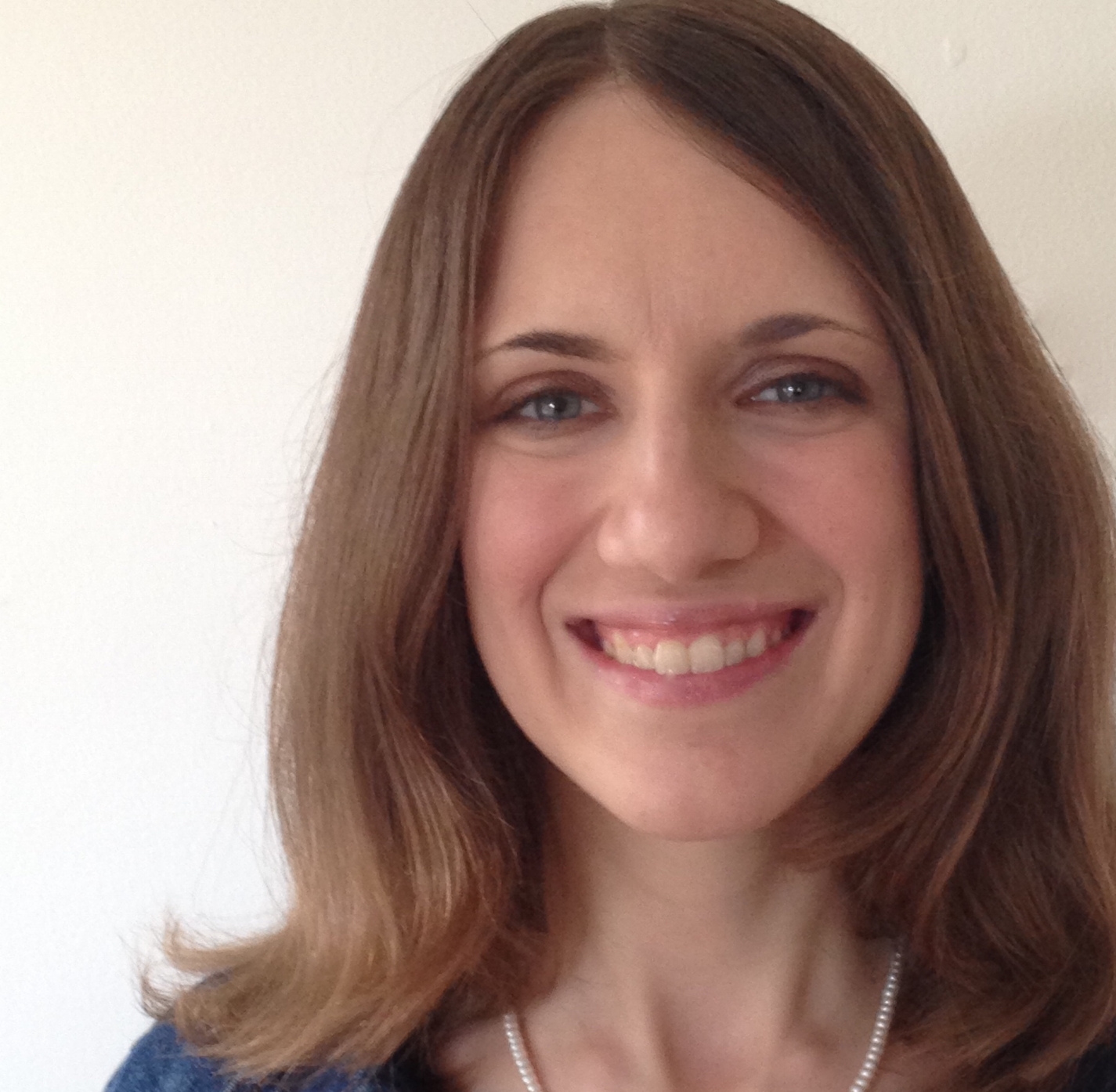
Megan Lietz, M.Div., STM, helps white evangelicals engage respectfully and responsibly with issues of race. She is a Research Associate with EGC's Race & Christian Communities ministry.
![Voices of Human Trafficking [VIDEO]](https://images.squarespace-cdn.com/content/v1/57ff1c7ae58c62d6f84ba841/1549999751750-FPJ37PZW2U4UHY6OVXSH/Screenshot+2019-02-12+14.28.40.png)
![Hard Steps Toward the Light: Meet Bonnie Gatchell [Interview]](https://images.squarespace-cdn.com/content/v1/57ff1c7ae58c62d6f84ba841/1524836375191-XIDDMMVWWA04WYY5D1L6/3+a.+Route+One-+Bonnie+Tedx.png)


![Saffron: A Refugee Story [VIDEO]](https://images.squarespace-cdn.com/content/v1/57ff1c7ae58c62d6f84ba841/1549999821579-83XWBWFG0C5QT4ARUXM3/Screenshot+2019-02-12+14.30.04.png)


![Hidden Treasures: Celebrating Refugee Stories [photojournal]](https://images.squarespace-cdn.com/content/v1/57ff1c7ae58c62d6f84ba841/1512579164575-AKNVCYX4Q5DW8IN2CNYP/P1070998.jpg)


History of Revivalism in Boston
Journey with EGC’s Senior Researcher Rudy Mitchell through Boston’s key evangelistic revivals from the First Great Awakening in 1740–1741 through the Billy Graham campaign of 1950. History comes alive as we read how God moved in remarkable ways through gifted evangelists, and we gain a deeper appreciation for Boston’s vibrant Christian history.
History of Revivalism in Boston

Resources for the urban pastor and community leader published by Emmanuel Gospel Center, Boston
Emmanuel Research Review reprint
Issue No. 24 — January/February 2007
by Rudy Mitchell, Senior Researcher, Emmanuel Gospel Center, Boston
Read the full version online here.
Executive Summary
“Revivalism,” according to the Dictionary of Christianity in America, “is the movement that promotes periodic spiritual intensity in church life, during which the unconverted come to Christ and the converted are shaken out of their spiritual lethargy.” David W. Bebbington, professor of history at the University of Stirling in Scotland and a distinguished visiting professor of history at Baylor University, describes revivalism as a strand of evangelicalism, a form of activism (which he identifies as one of evangelicalism’s four key characteristics), where a movement produces conversions “not in ones and twos but en masse.”

Dwight L. Moody revival meeting in Boston
In this 2007 study, EGC’s Senior Researcher Rudy Mitchell traces Boston’s key evangelistic revival movements from the First Great Awakening in Boston in 1740–1741 through the Billy Graham campaign in Boston, starting on New Year’s Eve in 1949. With 23,000 attending services on the Boston Common in 1740 to hear Whitefield (without the benefit of electronic amplification) to an estimated 75,000 gathered at the same spot in 1950 to hear the same Gospel preached by Rev. Billy Graham, the story of revivalism in Boston gives color and texture to the waves of revival.
Rudy introduces us to a few of the key players, remarkable crowds, recorded outcomes, while weaving in familiar faces and places, from Charles Finney, Dwight L. Moody and Billy Sunday to Harvard Yard, Park Street Church and the Boston Garden. We sense history coming alive as we read how God moved in remarkable ways through his gifted evangelists and preachers, and we gain a deeper appreciation for Boston’s vibrant Christian history.
“History of Revivalism in Boston” was first printed in the January/February 2007 issue of the Emmanuel Research Review, Issue 24. It was subsequently published in New England’s Book of Acts, a collection of reports on how God is growing the churches among many people groups and ethnic groups in Greater Boston and beyond.
Table of Contents (with key themes and names added)
First Great Awakening in Boston
Learn More
Read the full version of “History of Revivalism in Boston.”
Contact Rudy Mitchell with questions or to request a printed copy.





![Gender Based Violence & the Church [Resources]](https://images.squarespace-cdn.com/content/v1/57ff1c7ae58c62d6f84ba841/1525202179581-91N8RV6OP4ASQAHLX1OD/black-and-white-black-and-white-depressed-568025.jpg)


![Christian Leadership Web Sites [Resource List]](https://images.squarespace-cdn.com/content/v1/57ff1c7ae58c62d6f84ba841/1505489399837-OVLHG7QQ7TJ6K8RIJBG7/pexels-photo-209151-website.jpeg)
![Biblical Theology Of Leadership [Resource List]](https://images.squarespace-cdn.com/content/v1/57ff1c7ae58c62d6f84ba841/1503082312592-NX21D7QBK2IYCYEPM32I/pexels-church_Theology.jpg)
A Good Death: The Benefits of Talking About End of Life
What is the impact of spiritual community on end of life care? The truth may surprise you. Talking openly about End of Life issues benefits individuals, families, and communities.
A Good Death: The Benefits of Talking about End of Life
by Bethany Slack, MPH, MT
“For everything there is a season, and a time for every matter under heaven: a time to be born, and a time to die…” - Ecclesiastes 3:1-2a

As human beings, we all share the common experiences of birth and death. But we tend to focus our time and energy planning, living out, and seeking to improve our time here on earth. Many of us give little attention to how we wish to experience the end of earthly life.
Passage into extreme old age or the discovery of terminal illness can stir up confusion and conflicting desires. Miscommunication with family and medical staff is common.
If we have avoided discussing End of Life (EOL) issues as families, churches, and communities, there are usually medical, relational, financial, and spiritual ramifications. But open conversation benefits both the individual and the community.
You May Be Surprised To Learn
Research indicates that 80% of people would like to die at home, yet only about one third do.
Dying in a hospital is pricier and comes with more aggressive treatments than dying in other facilities or at home.
Hospice services offer treatments that make a terminally ill person comfortable at the end of life, and more people than ever are choosing to receive hospice care.
Persons with terminal cancer who are part of a highly supportive spiritual community are more likely to receive aggressive care and die in the hospital, rather than choose hospice or home care.
Among those with highly supportive spiritual communities, racial/ethnic minorities and those reporting strong reliance on God are even more likely to receive aggressive treatments at the end of life.
Introducing a Boston Public Health and Wellness Initiative
The Public Health and Wellness (PH&W) initiative at the Emmanuel Gospel Center is beginning to explore such end of life questions, building on our ministry partners’ wisdom, insights, and contributions to the field.
Observing the needs of her own congregation, Rev. Gloria White-Hammond, M.D. of Bethel AME Church began Planning Ahead, a ministry to encourage discussion of EOL issues and advance directives. Michael Balboni, Ph.D., Th.M., affiliated with Harvard Medical School and the Dana-Farber Cancer Institute, has published extensively about the role of spirituality and spiritual care in medicine and end of life care. Both have a desire to see EOL issues more widely engaged in faith communities.
With Dr. White-Hammond and Dr. Balboni, the PH&W initiative is planning a 2017 convening in the Boston area with the hope of connecting pastors and other Christian leaders with medical professionals. We hope to spark a new vision in faith communities of what a “good death” can look like, and how planning for good deaths can benefit and bless our city and society.
Take Action
1. Learn more about the current state of EOL in the United States.
2. Connect with me for further conversation.
3. Financially support the Public Health & Wellness Initiative at EGC.

Bethany Slack, MPH, MT, is the Public Health and Wellness research associate at EGC. Her passion is to see Jesus’ love translated into improved health and health justice for all, across the lifespan and across the globe.

Report from the 2017 New England City Forum
The New England City Forum brought together 103 Christian leaders from across New England to learn from each other, develop deeper relationships, and ultimately increase effective ministry in each of our cities.
Report from the 2017 New England City Forum
by Kelly Steinhaus
OVERVIEW
The New England City Forum brought together 103 Christian leaders from across New England to learn from each other, develop deeper relationships, and ultimately increase effective ministry in each of our cities. We met on February 16, 2017 at First Assembly of God in Worcester.
The New England City Forum is sponsored by the Emmanuel Gospel Center (Boston), Vision New England, Greater Things for Greater Boston, and the Luis Palau Organization (who bought us lunch!).
The New England City Forum is linked intentionally with Vision New England’s GO Conference, which this year was February 17 and 18 at the DCU Center in Worcester.

OPENING PRESENTATION
Jeff Bass and Liza Cagua-Koo from the Emmanuel Gospel Center shared a Powerpoint Presentation about the complexity of effective ministry. God’s work in a city is hard to understand because we often don’t see important things, nor do we interpret what we do see effectively. Because different people see things in different ways, and our biases interfere with our seeing and our understanding, we will be more effective in ministry if we can look and interpret together. This points to the importance of strong, diverse relationships within our ministry teams, and across our collaborative networks, as we work together to advance the Gospel in our cities and regions.
CITY PRESENTATIONS
We heard stories from Worcester, MA; Portland, ME; New London, CT; and Rhode Island.
Here are some highlights of what we learned from the various presentations.
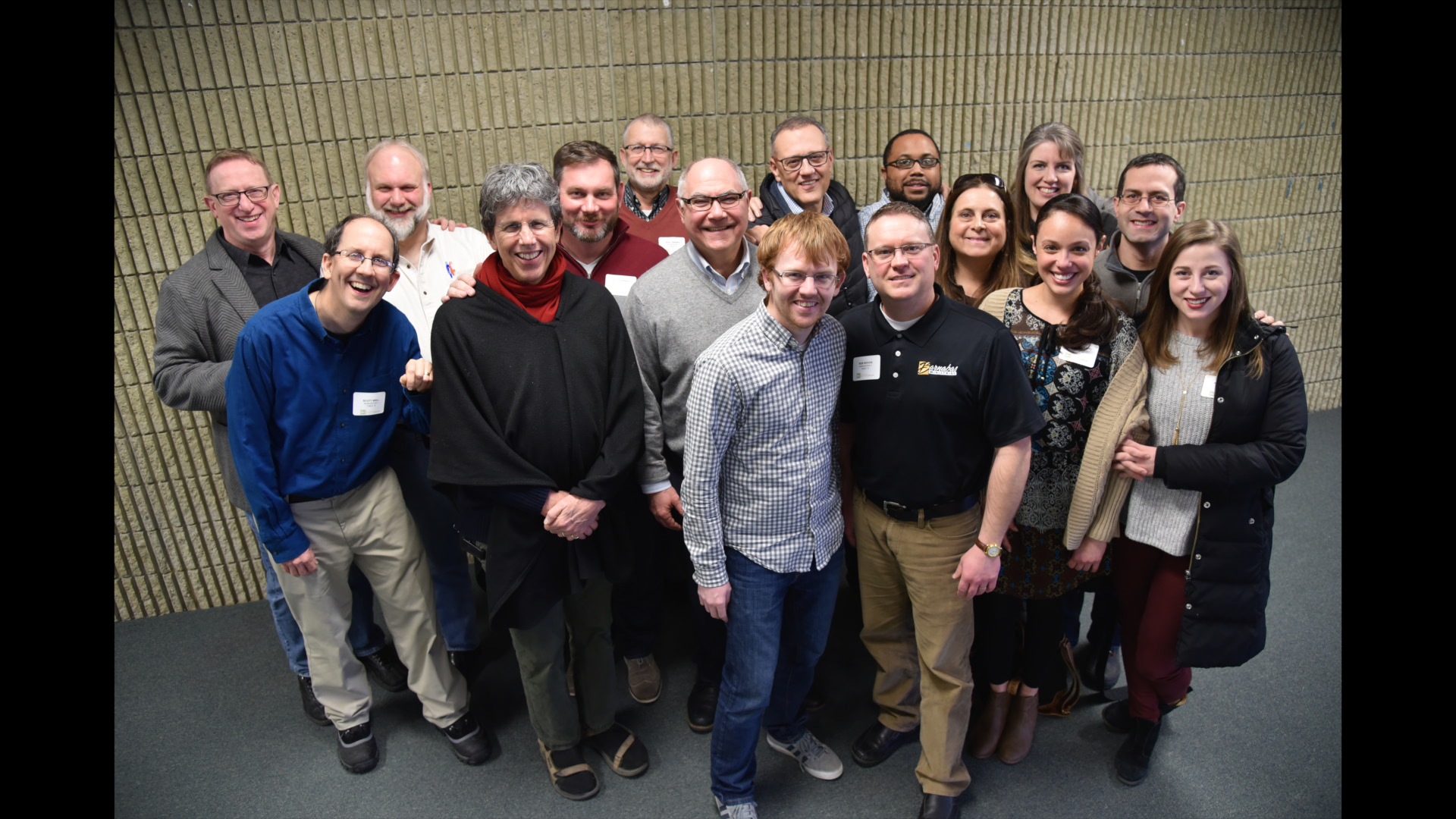
Leaders from Worcester
Worcester, MA
The second-largest city in New England, Worcester is an ethnically, racially, culturally and socio-economically diverse urban center where the church is starting to leverage the strategic opportunities presented by its diverse community. Although historically a more siloed and isolated city, here Christians are coming together to serve their neighbors. The Worcester team highlighted collaboration efforts around Christian sober house "Turn The Page" and the work of Worcester Alliance for Refugee Ministry (WARM), which connects urban and suburban churches together to welcome the city's incoming refugee neighbors. In fact, Worcester has the highest number of refugees of any city in Massachusetts. Ministry efforts in Worcester are undergirded by Kingdom Network of Worcester, which is a strong inter-denominational prayer movement, and John 17:23 pastoral support groups. The group compiled a handout describing an overview of the history of God's work in Worcester, its current challenges and opportunities.
Portland, ME
Portland's presentation highlighted the rising percentage of church attendance: older churches are being revitalized and new churches are being planted. These churches are strengthened through the Mission Maine pastors group which meets monthly to collaborate in mission and fellowship. Ministry in Portland is characterized by strong compassion-based ministry. To address the drug/opioid epidemic, the Root Cellar community center provides after-school programs, food, and clothing. Portland also has a large percentage of immigrants, and the largest number of asylum-seekers in New England. Churches have come together to help the immigrant community through trauma and marriage/family counseling, individual discipleship, language instruction, and legal services. Additionally, a team of street pastors from various churches are sharing the gospel with folks on the street, and they have seen a decrease of 70% of crime in the neighborhoods where they have been serving!
New London, CT
CityServe eCT is an informal network of churches and ministries united to proclaim the gospel in word and deed through collaboration for prayer, outreach, and service. With a 40-member team of ministry leaders and no paid staff, they have come together for a variety of efforts including: restoring Fulton Park; hosting a CityFest festival in the park (attended by 1,200 with 90 people taking steps of faith); through a "Love 146," training of staff in motels to recognize signs of trafficking and child exploitation; developing a team of police chaplains; and coordinating a multi-church vacation bible school. Many more joint initiatives are planned for the coming months. Check out their Powerpoint and Notes to learn more!
Rhode Island:
Inter-church collaboration in Rhode Island began with approximately 100 pastors participating in prayer summits and monthly pastors’ breakfasts. This led to a desire to work together, and the organization Love Rhode Island emerged, which encourages churches to pray for people, to care in practical ways, and to share the good news of Jesus. Love RI held a large citywide gospel festival in 2010 that was attended by over 100 churches. They also began to bring together entire congregations for prayer through People’s Prayer Summits. In 2013, the Summer OFF (Outreach, Friends, and Faith) program developed, which is a vacation bible school on wheels with 13 churches, bible stories, free lunches, and crafts. Then, in 2016, the Together initiative trained pastors and leaders in servant evangelism, intercession, and church planting. This ministry is now launching “Together we Pray,” 35 churches engaged in 24/7 prayer for the region. Learn more with their Powerpoint and Handout.
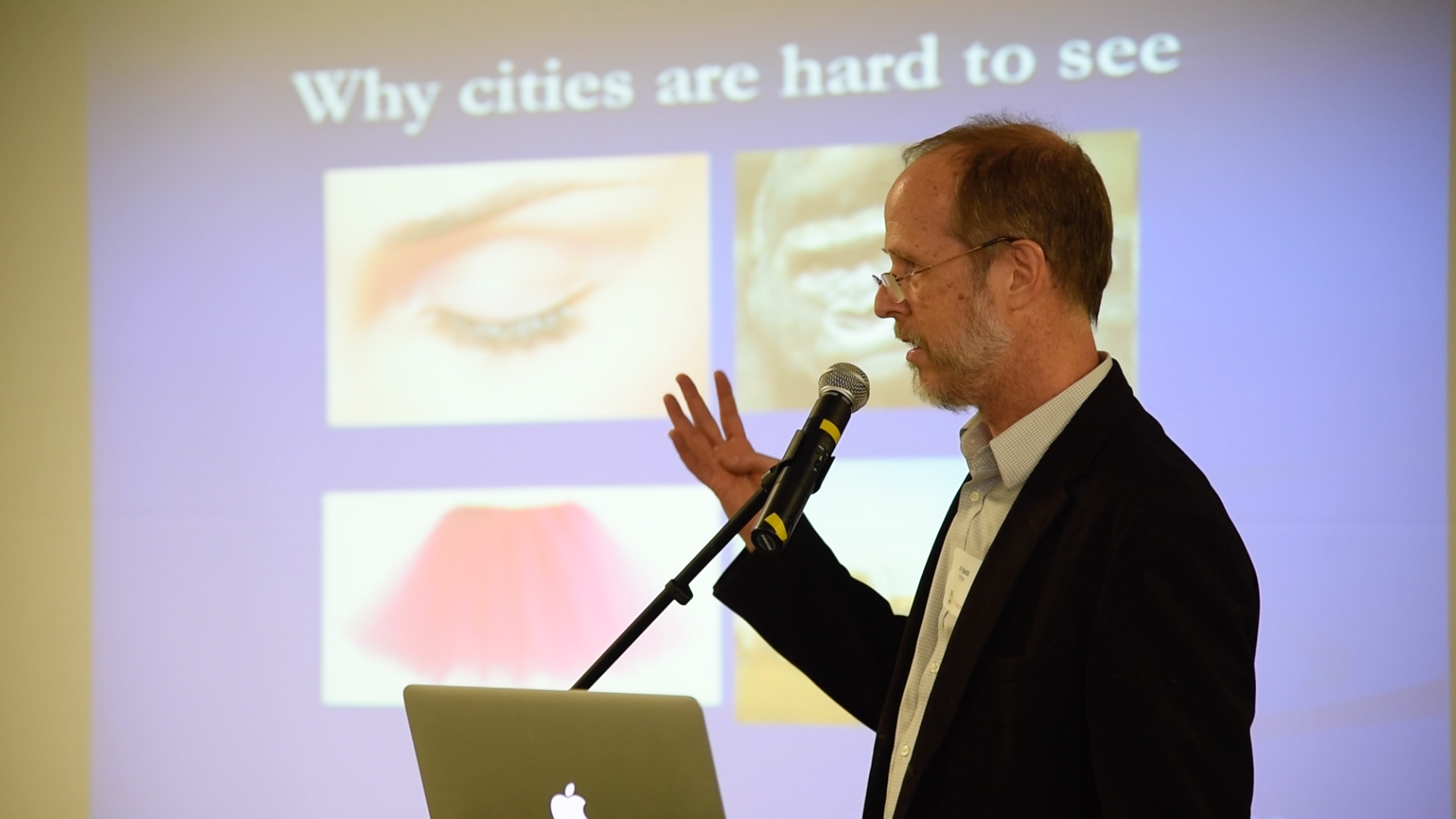
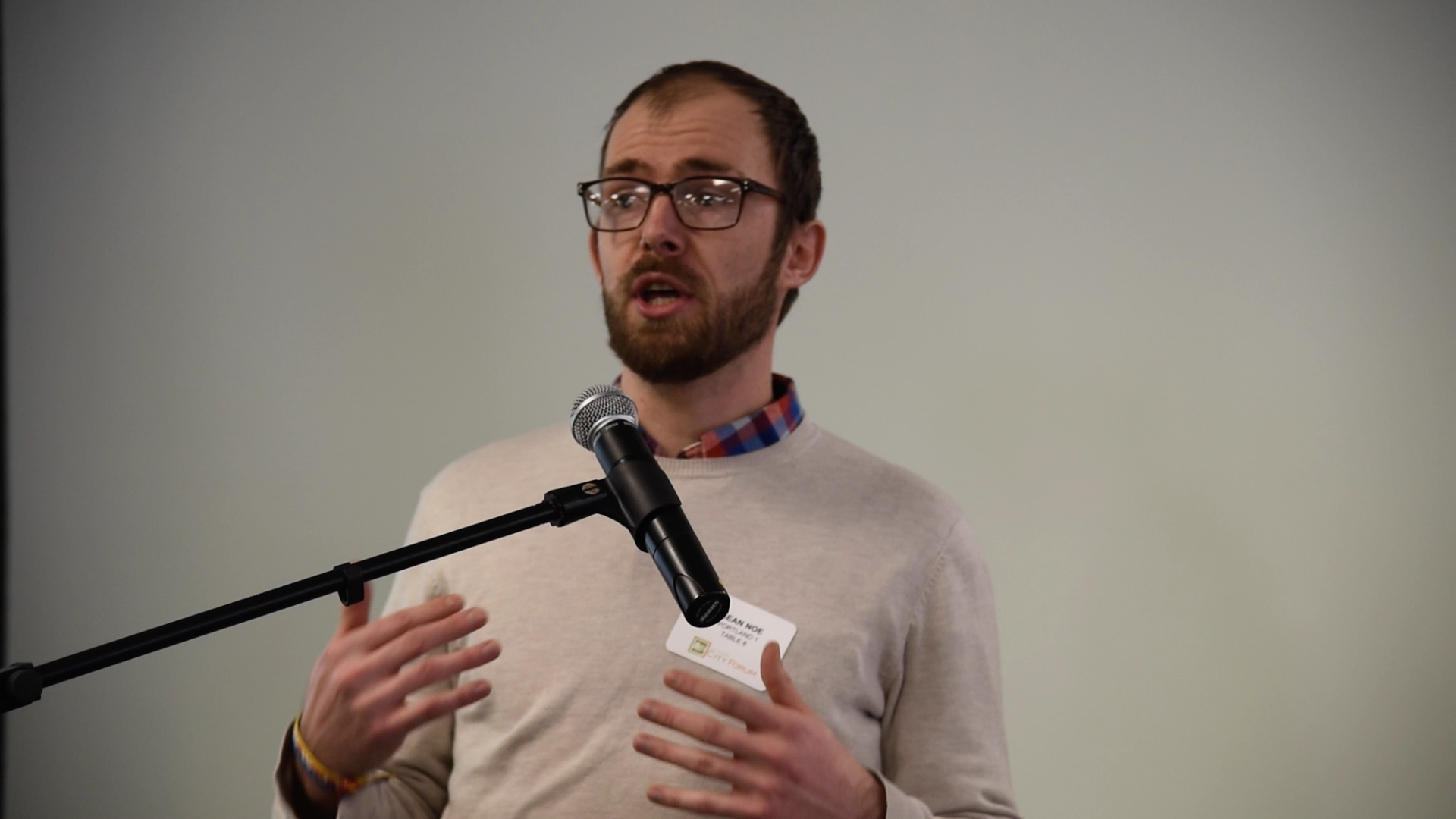
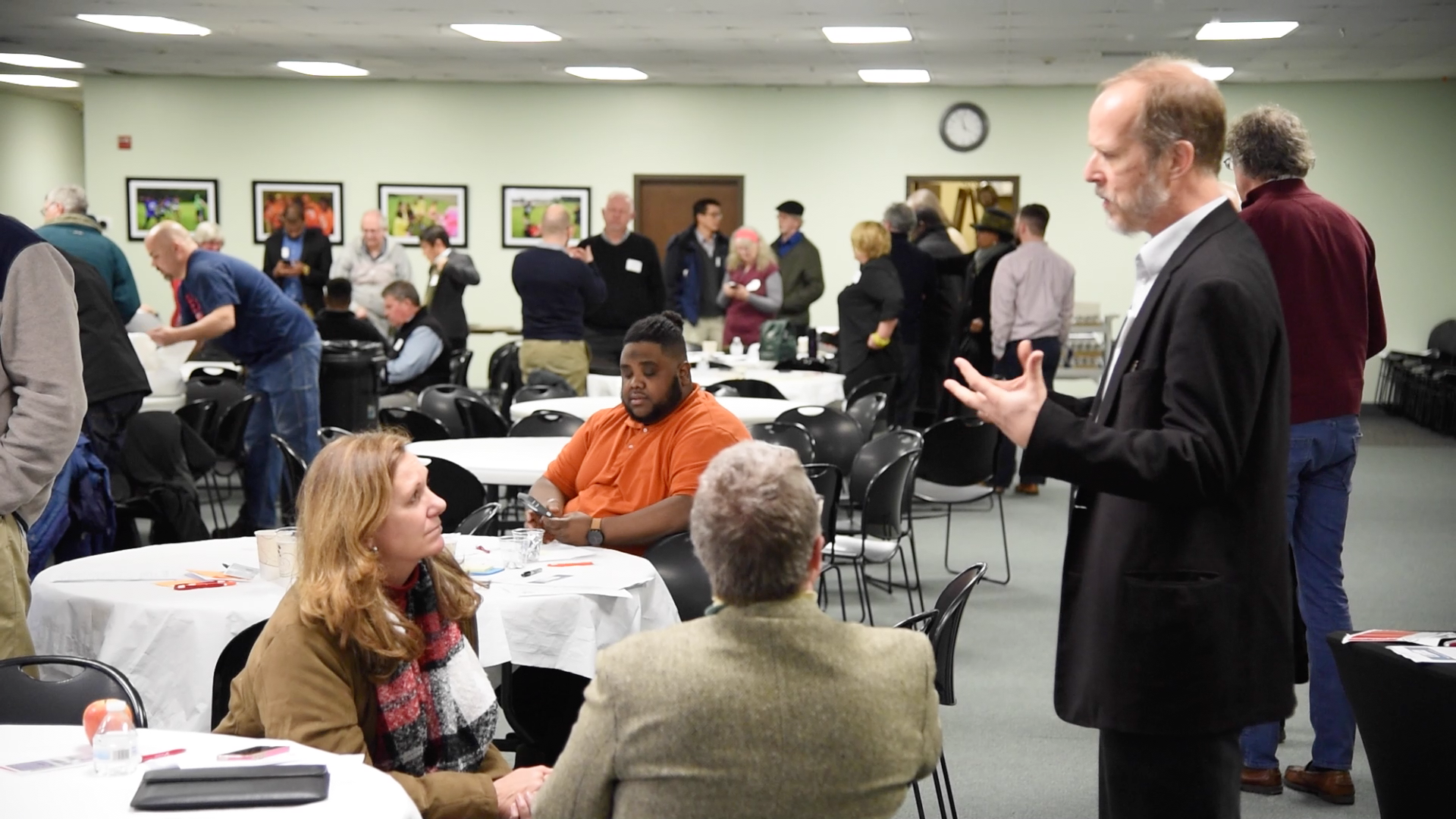
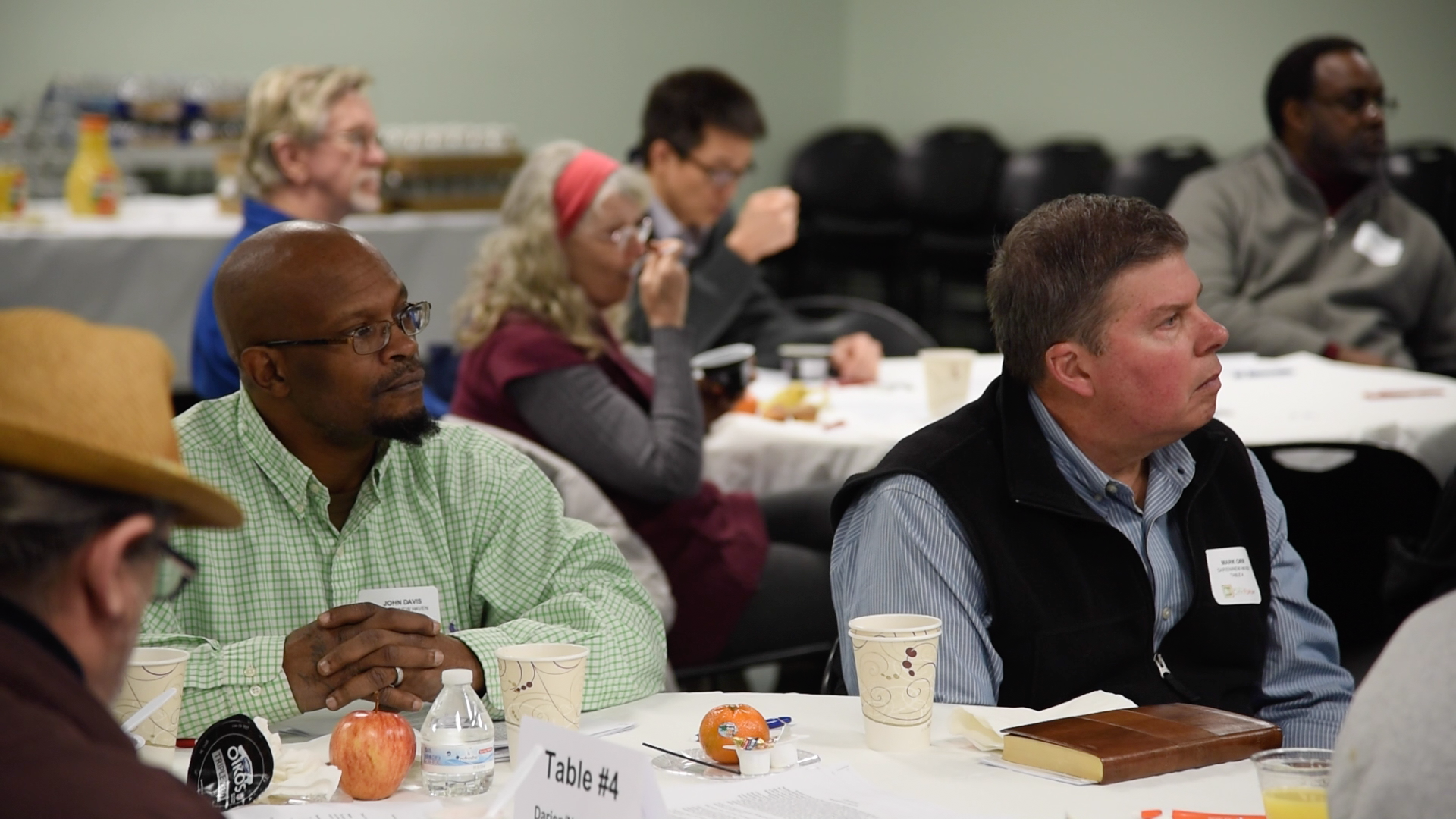
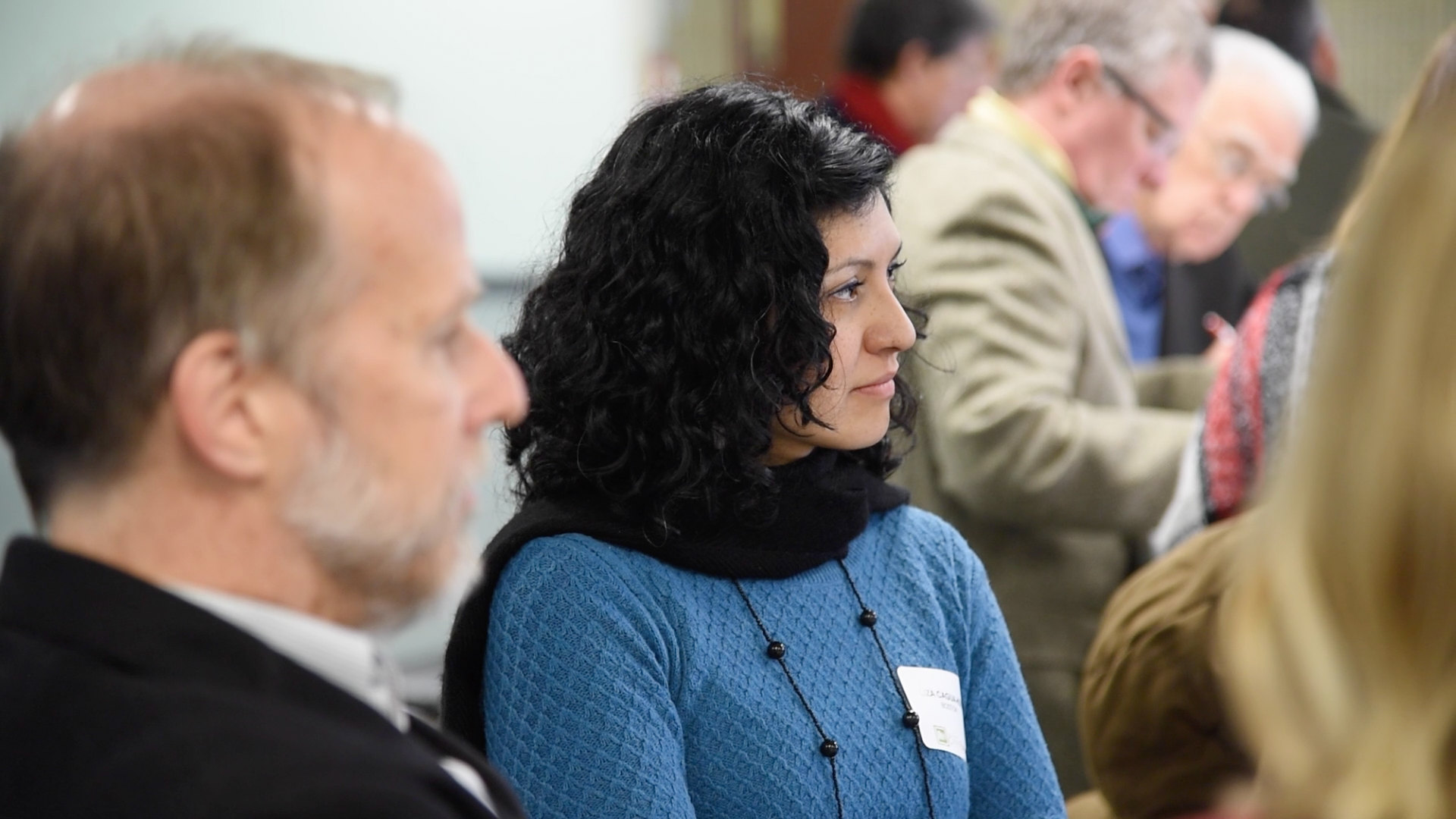
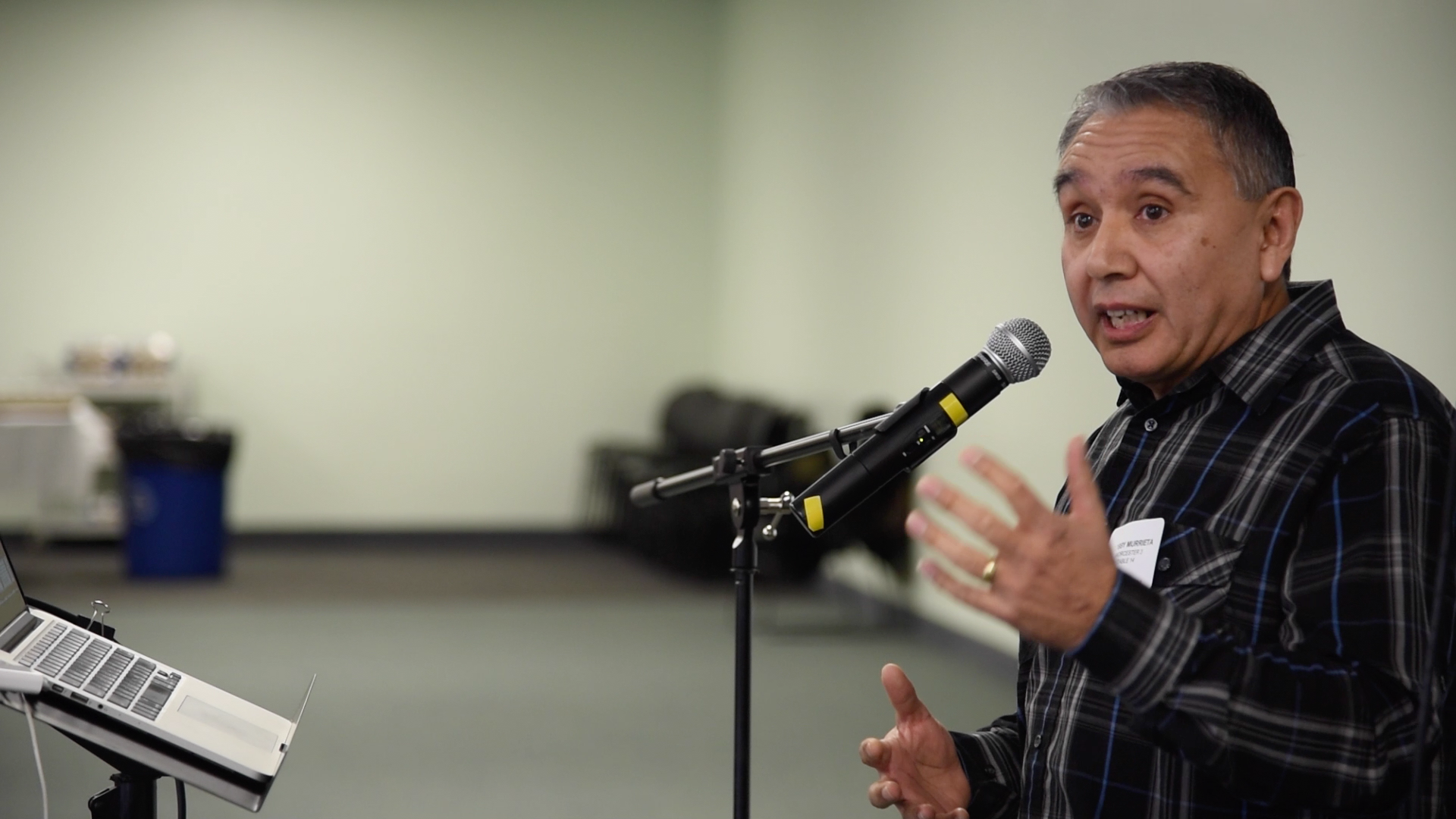
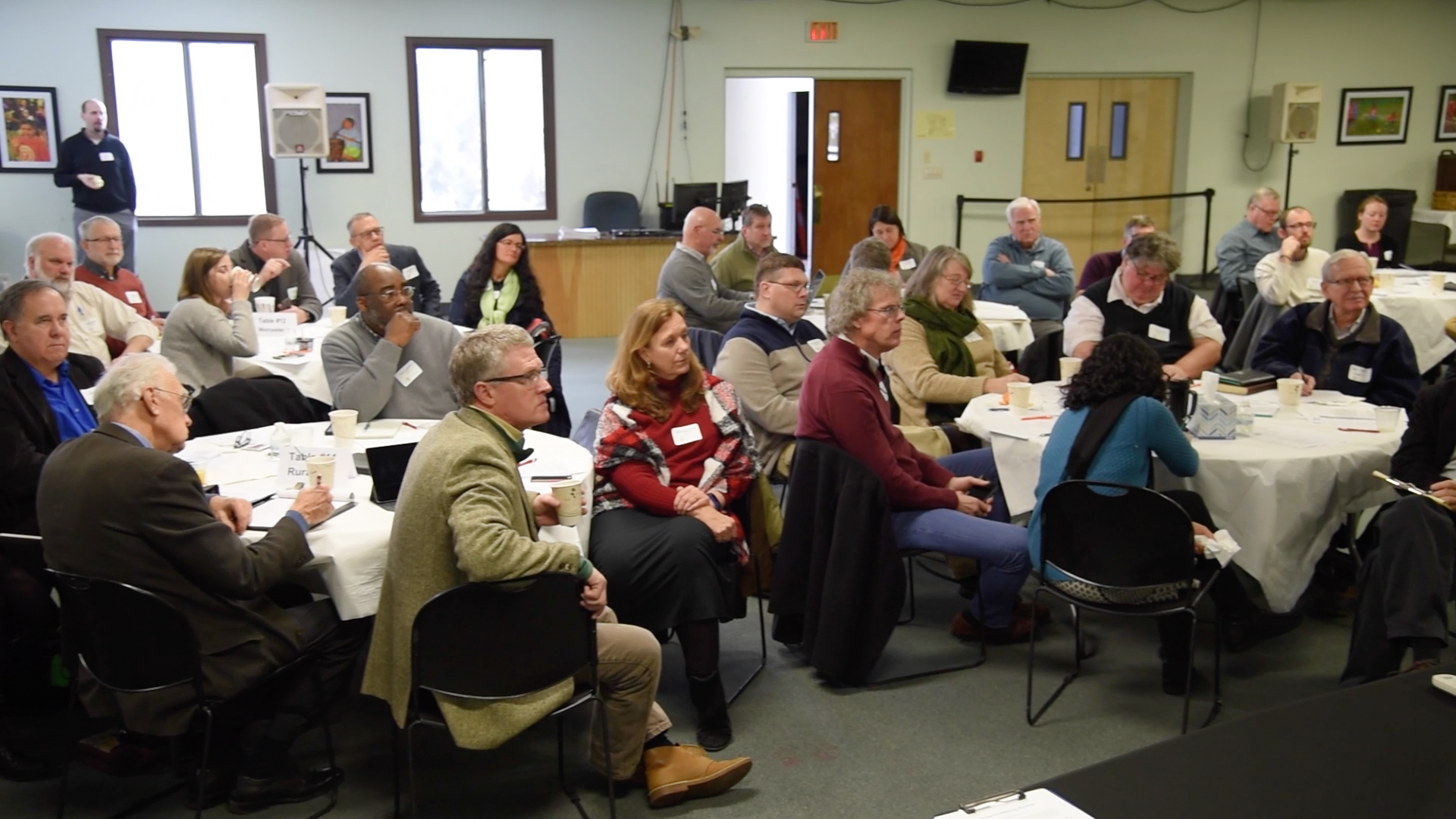
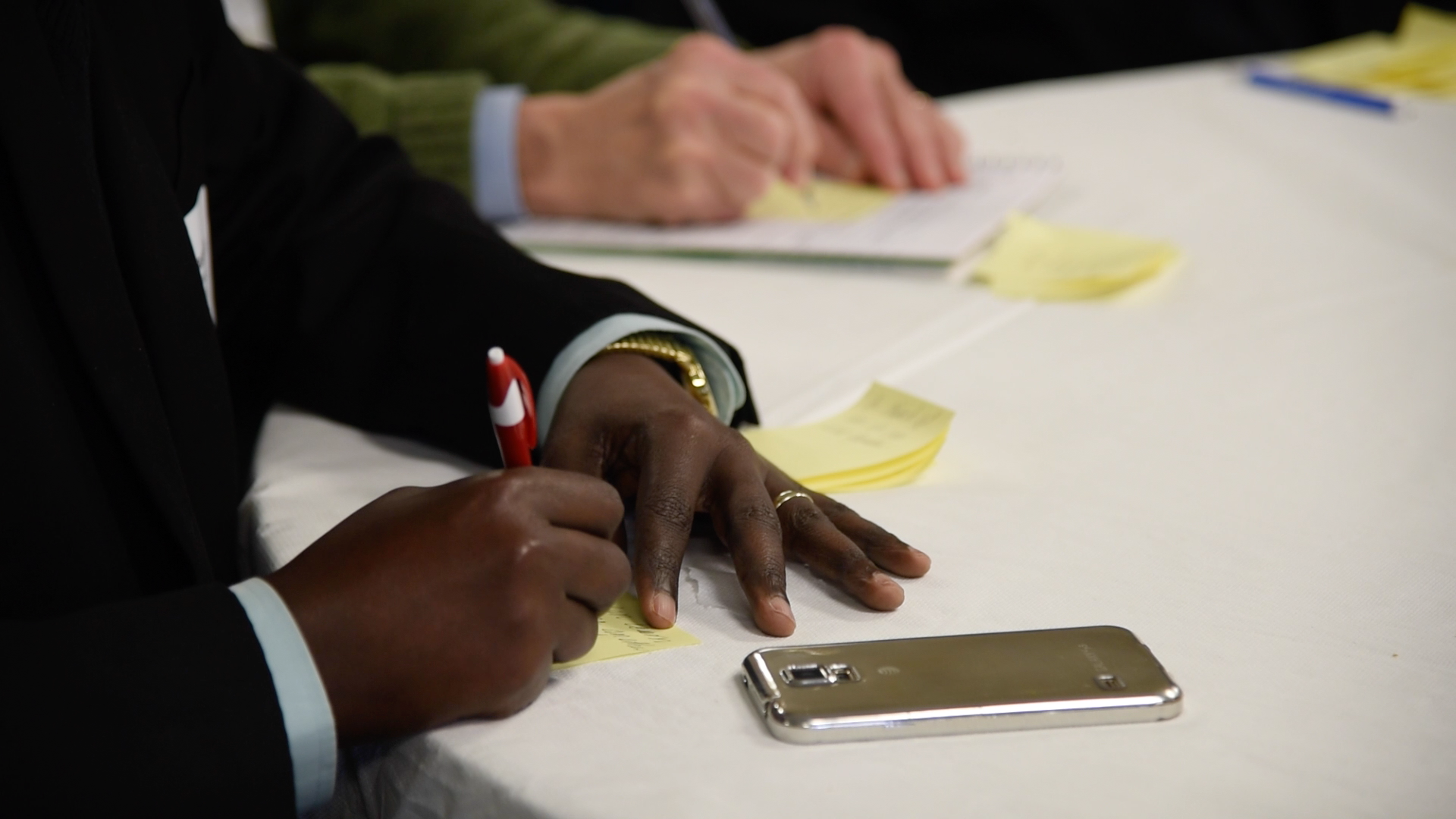
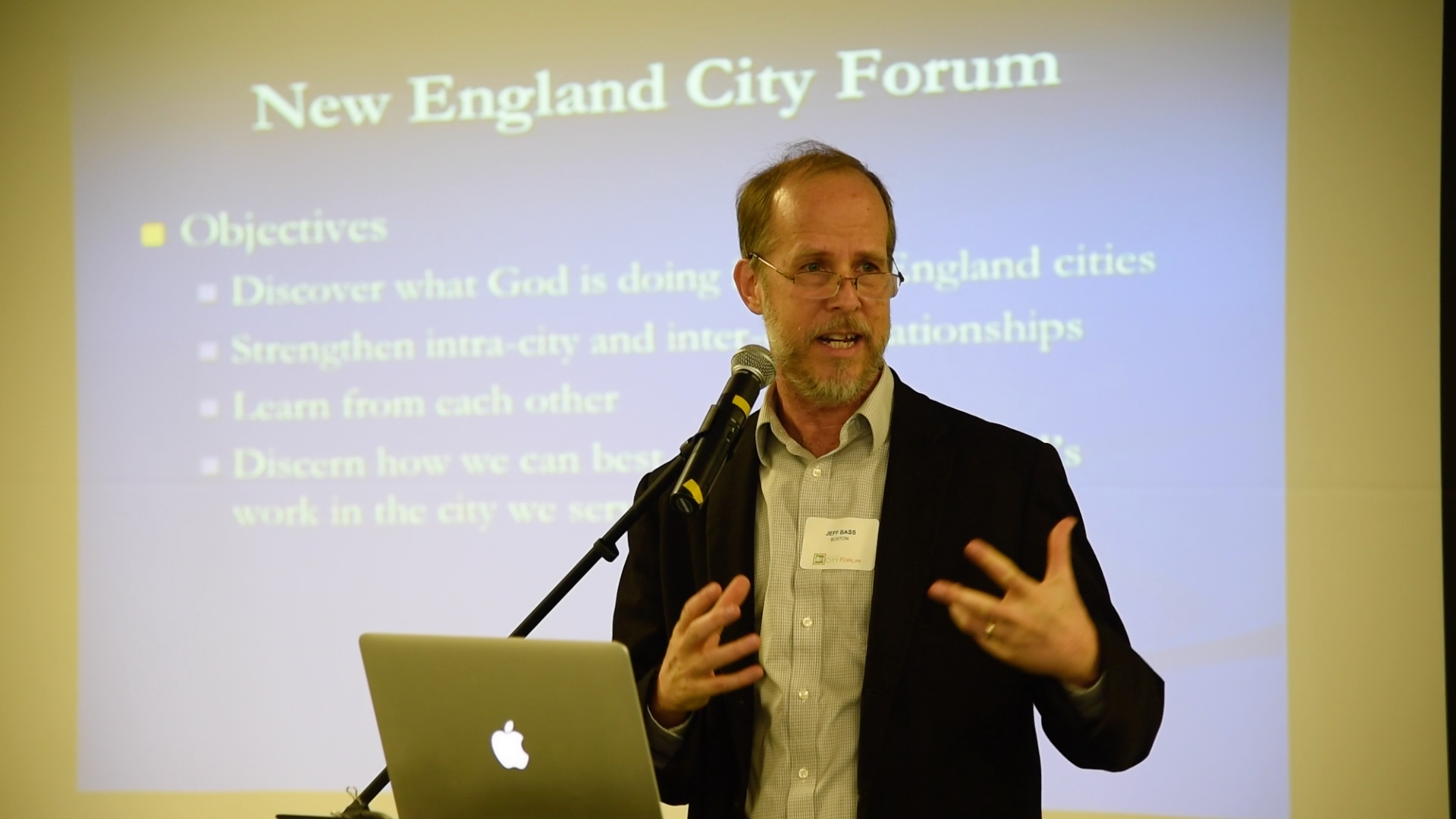
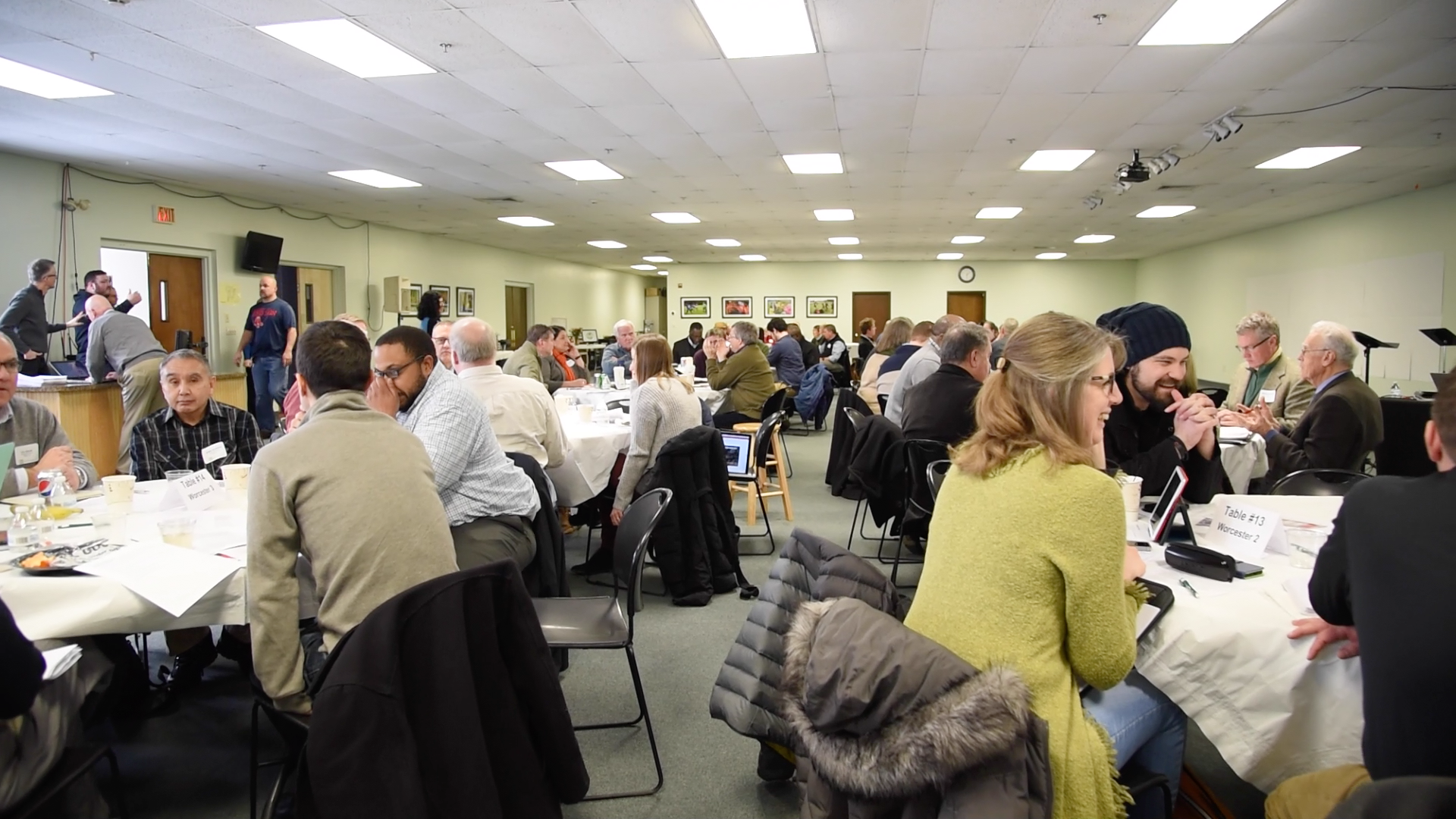
TABLE DISCUSSIONS
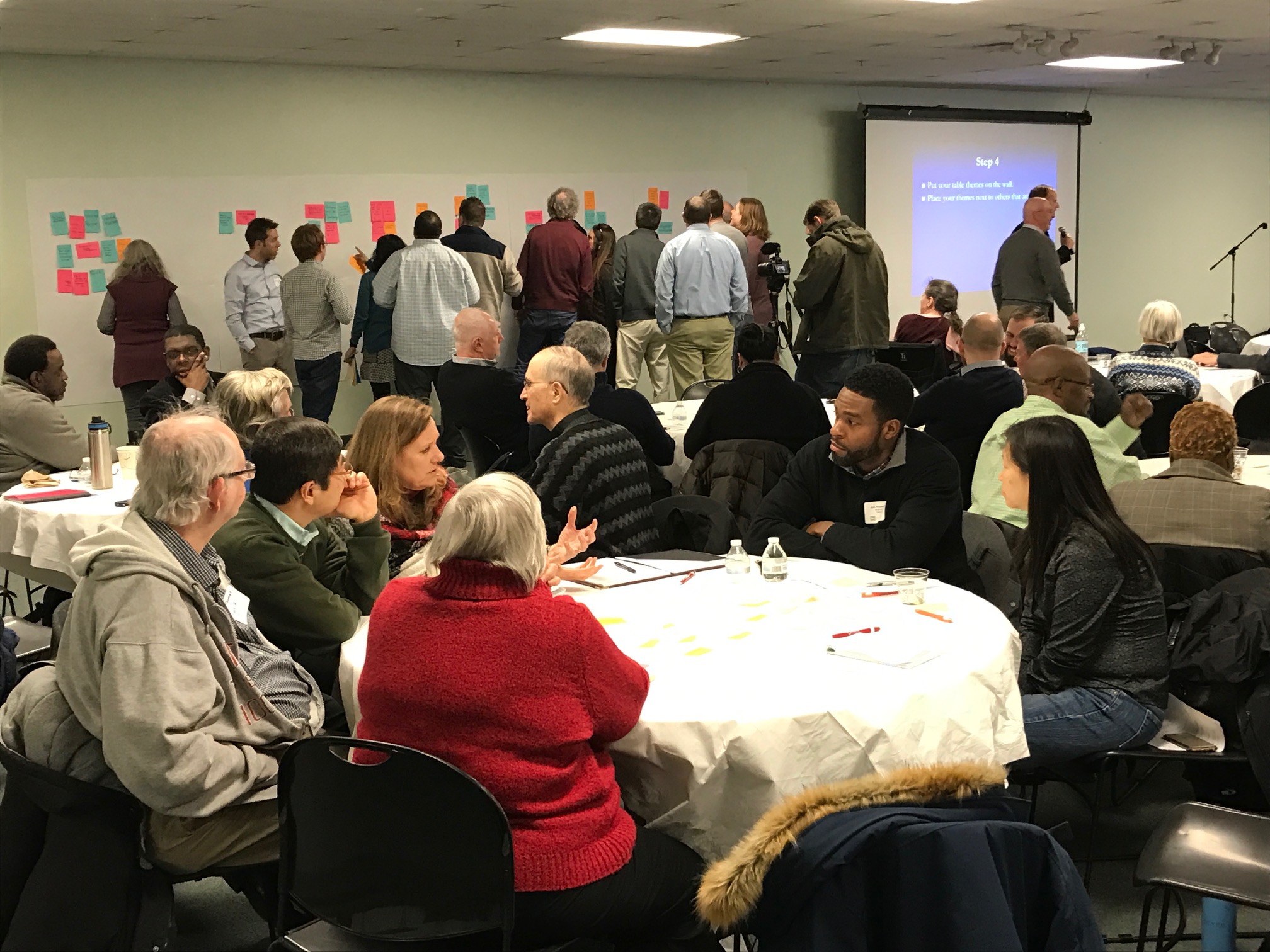
A key feature of the forum was table discussions, which gave participants a chance to share their perspectives, reflect with other leaders from their cities and together gain deeper insight. Each presentation concluded with questions for leaders to digest what they are hearing and how it applies to the unique ministry environment in their cities.
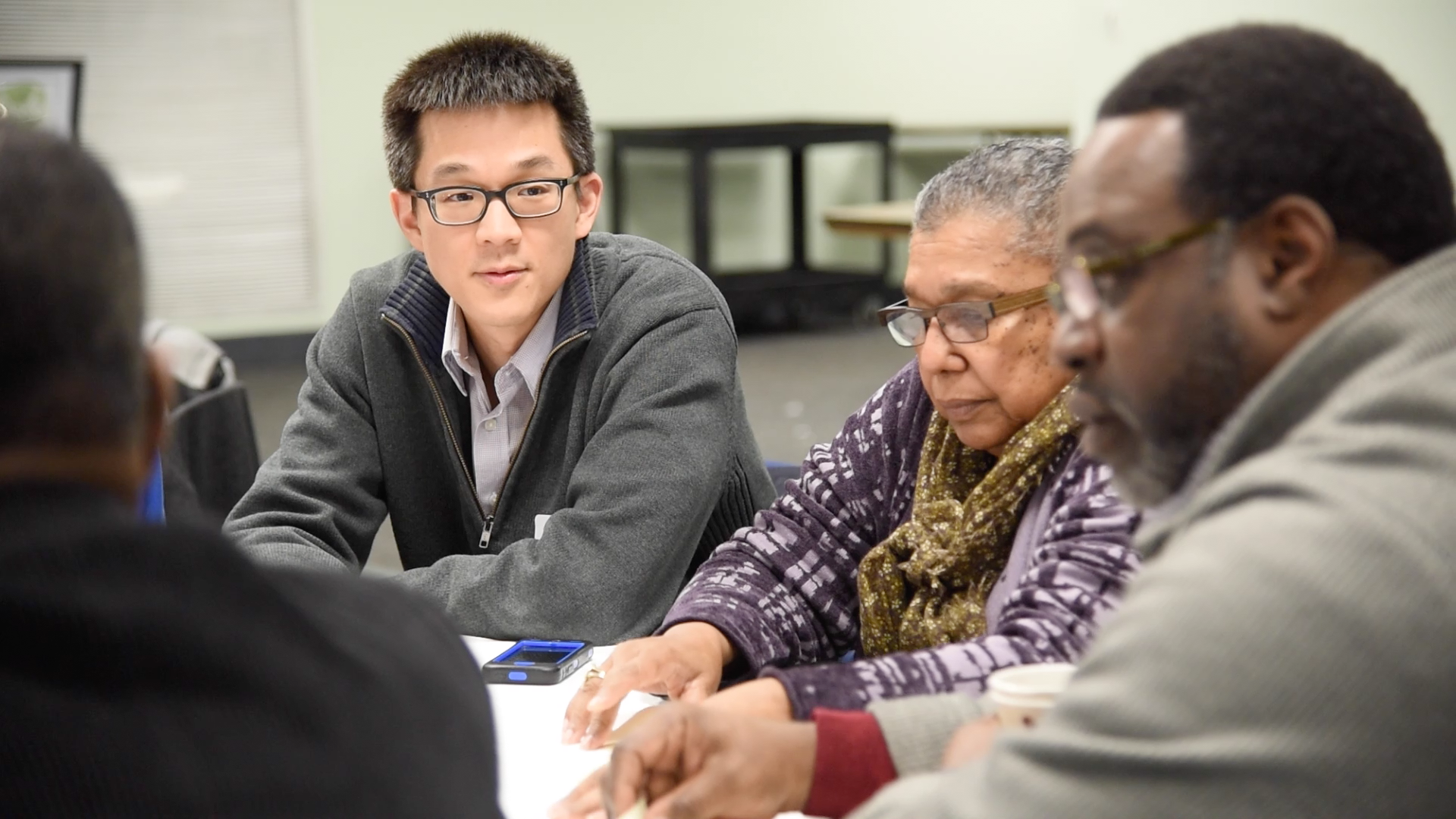
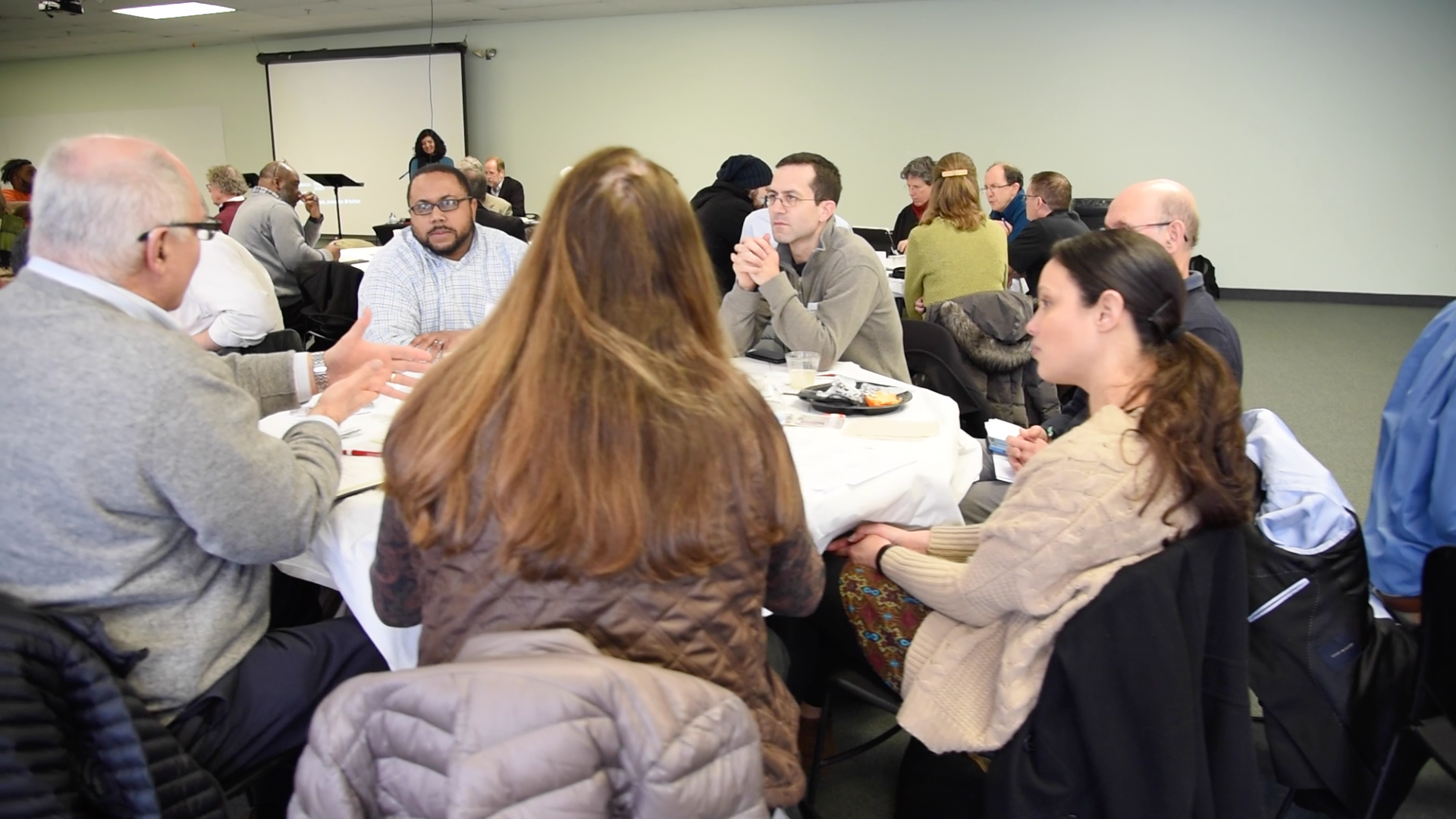
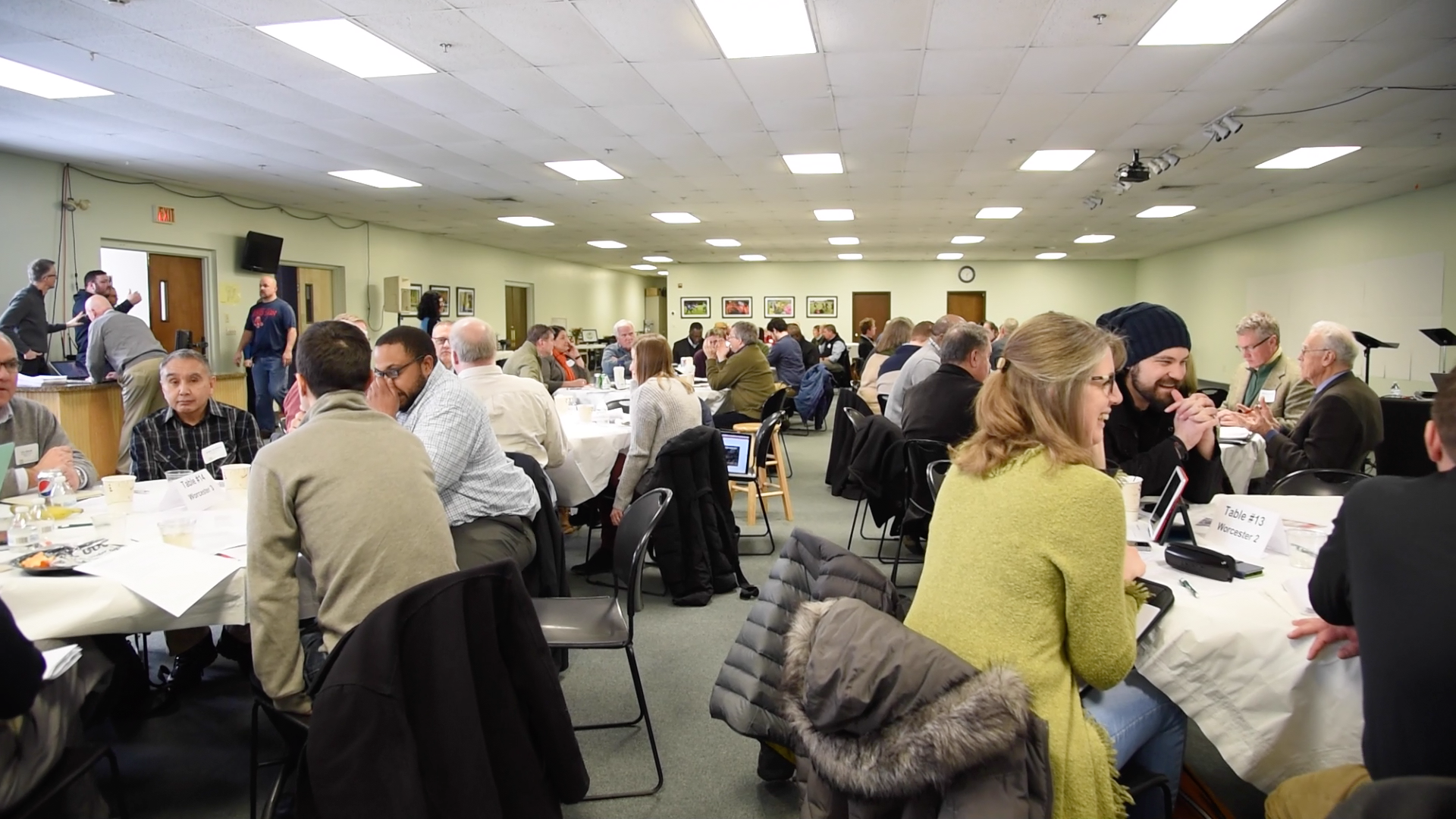
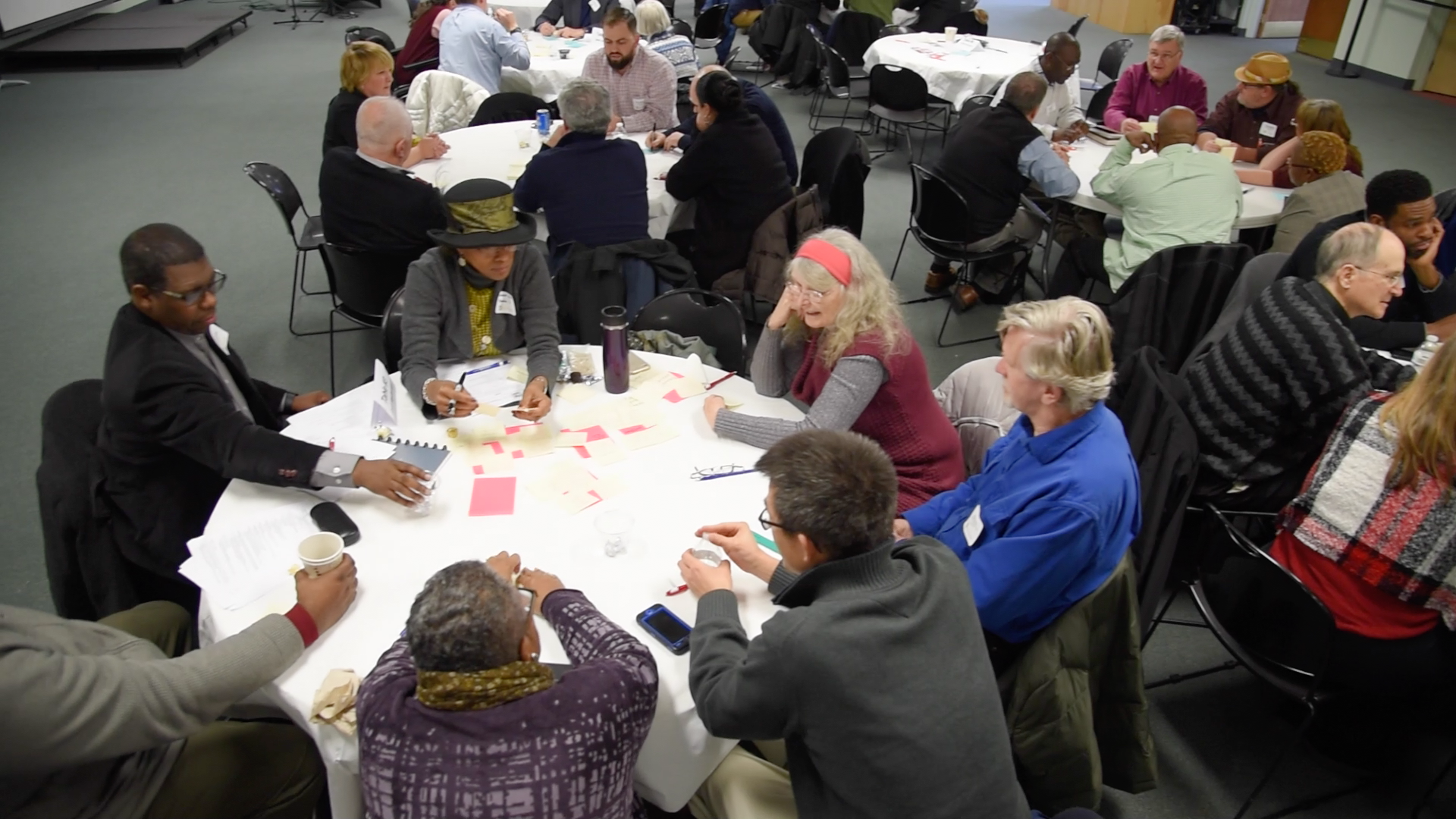
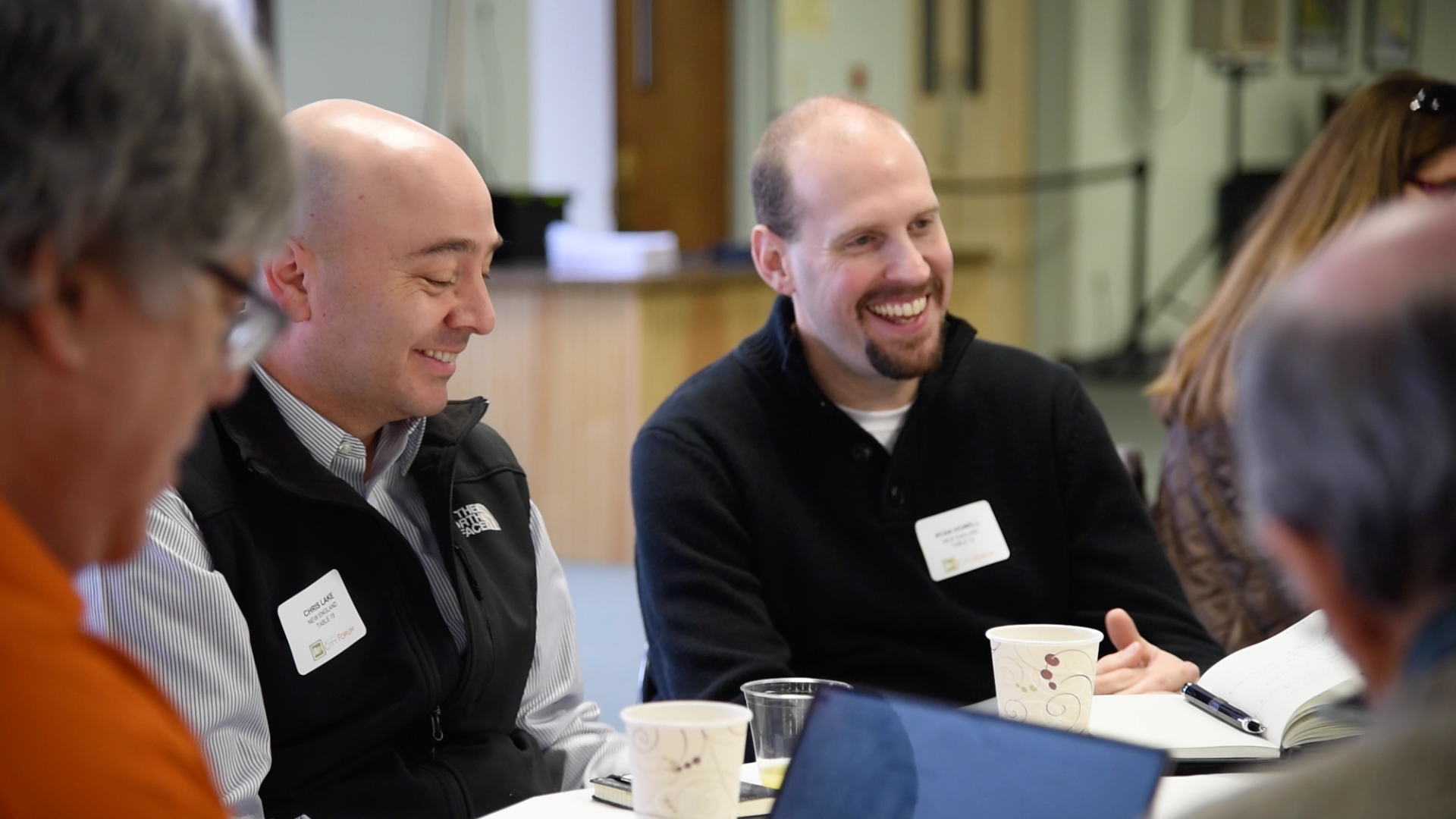

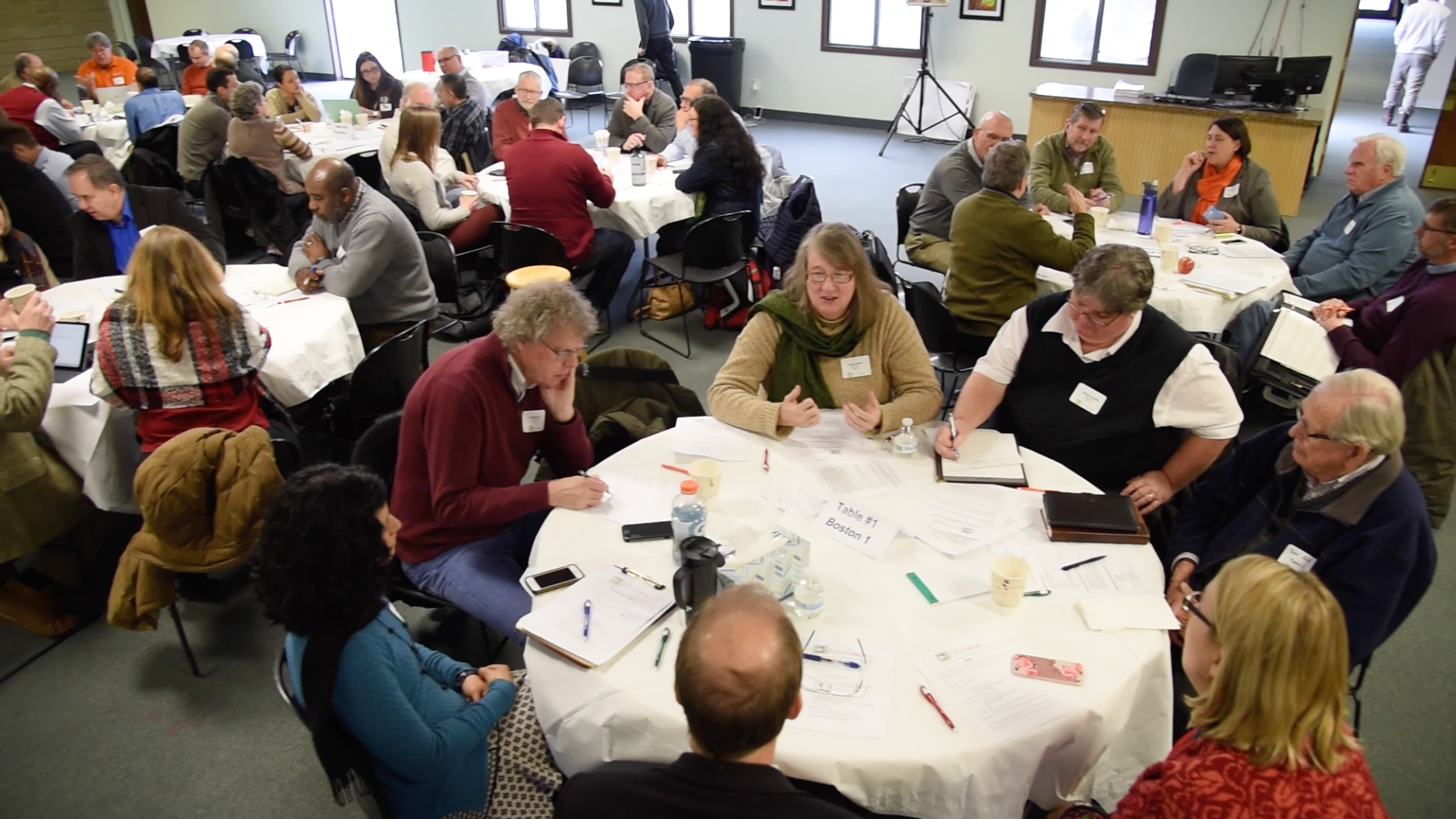
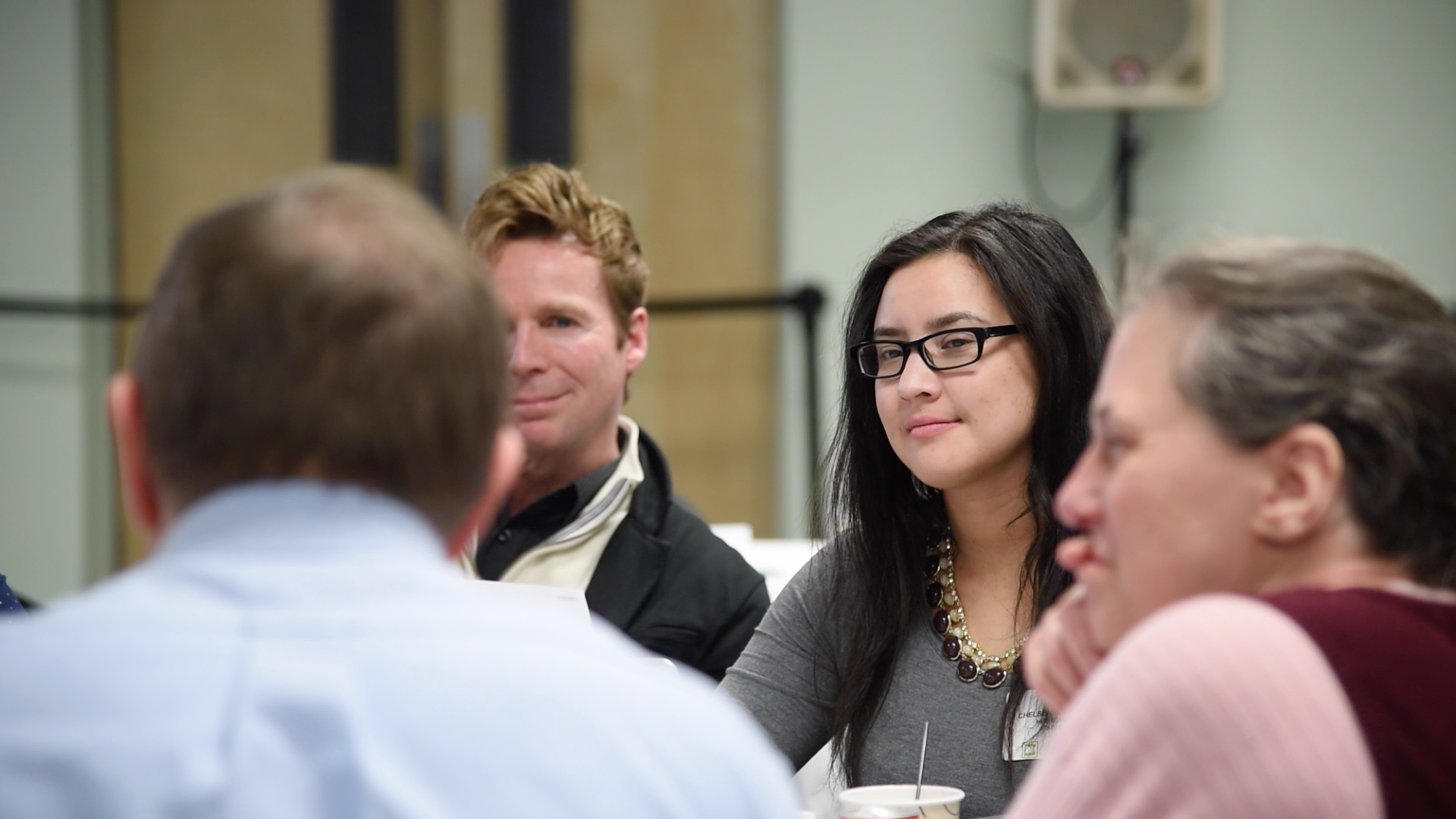
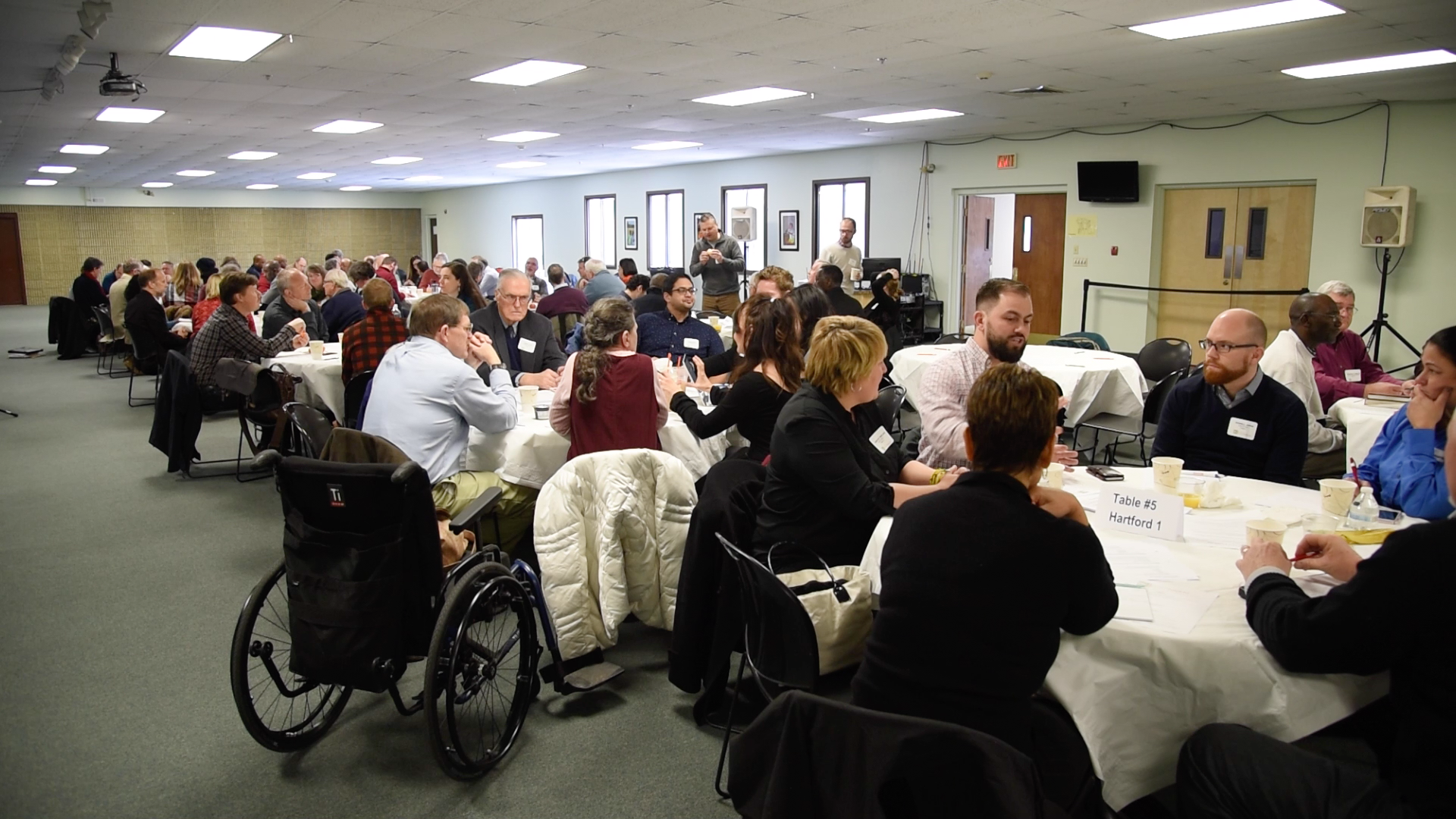
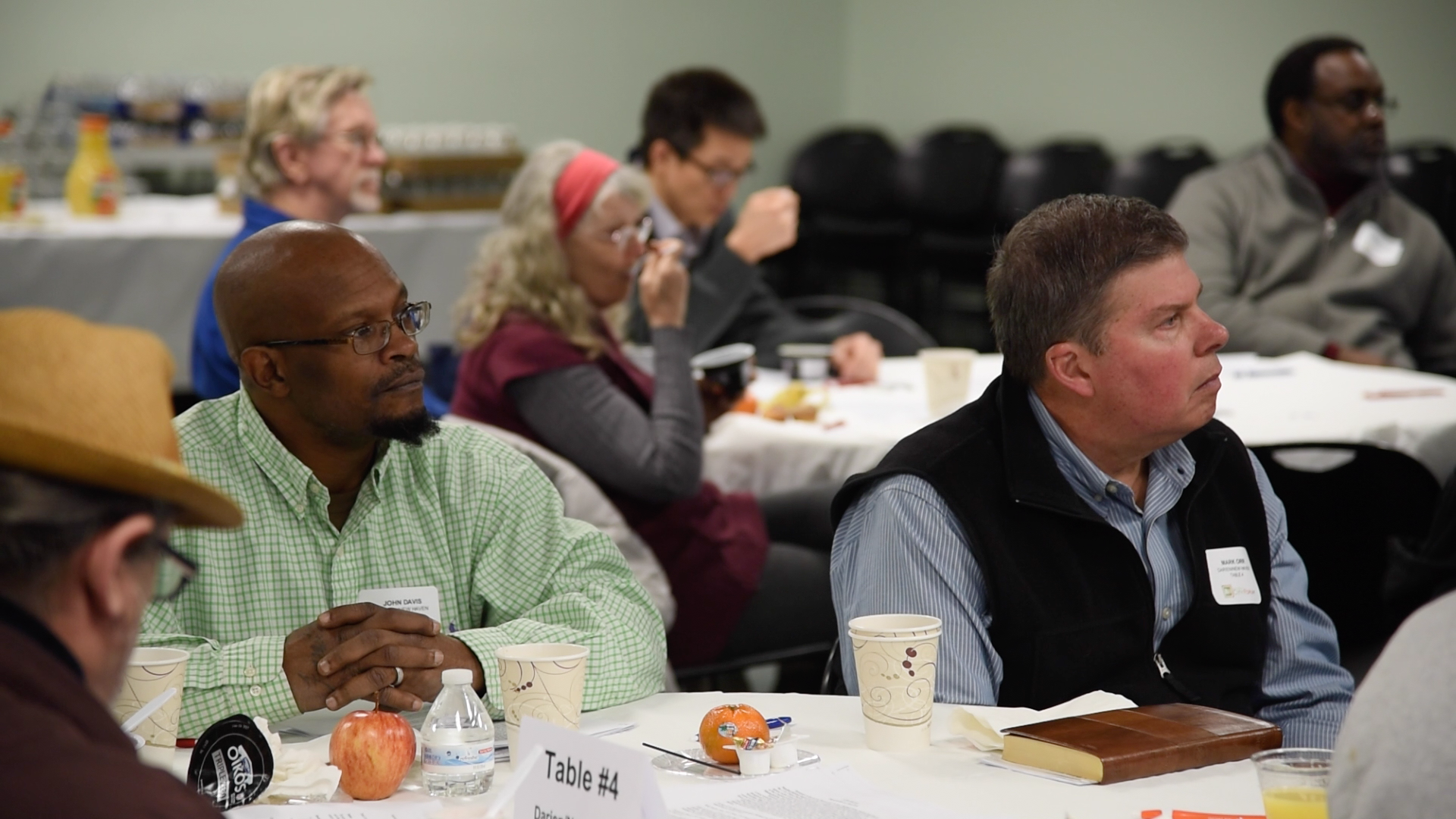
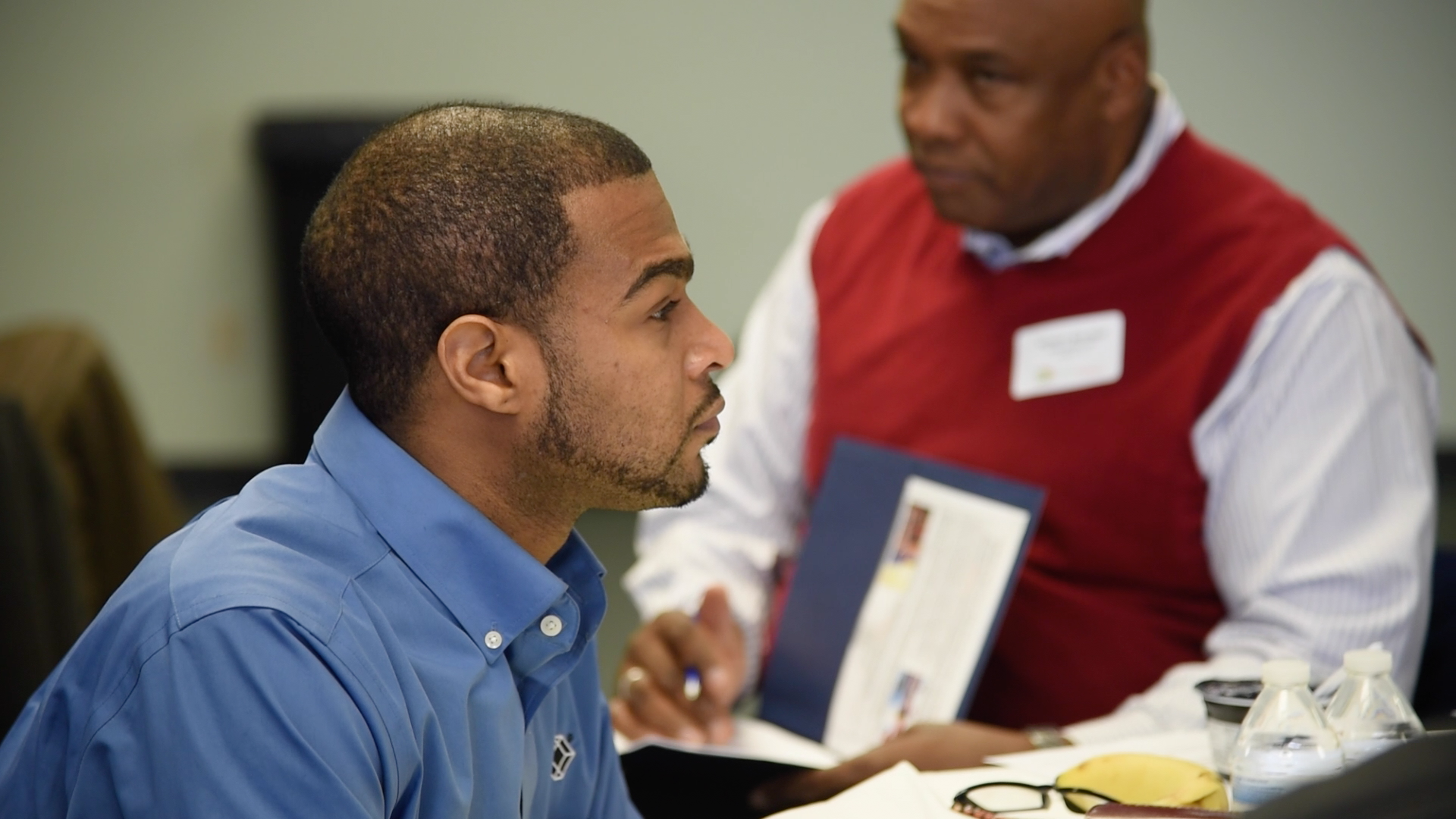
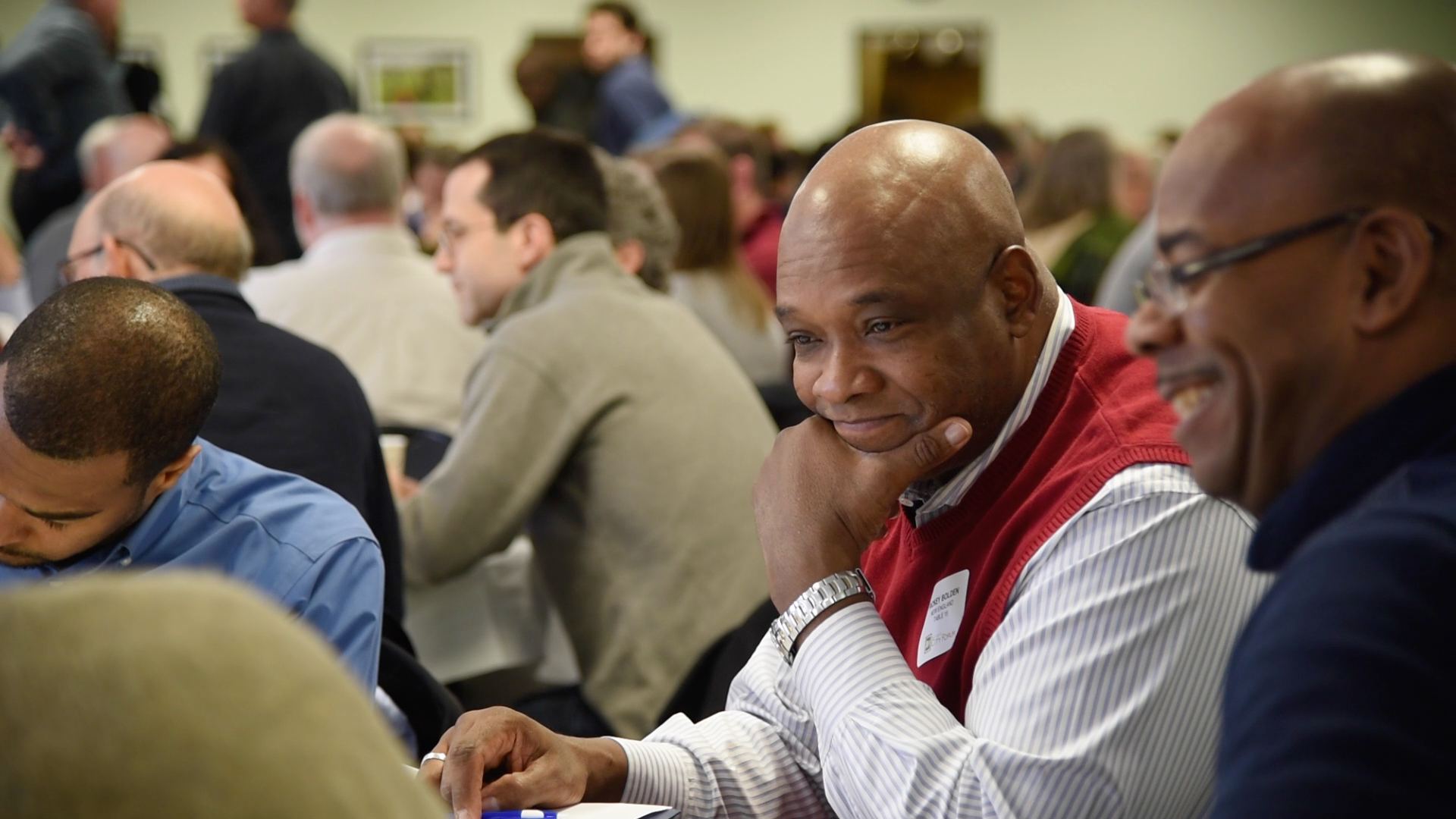
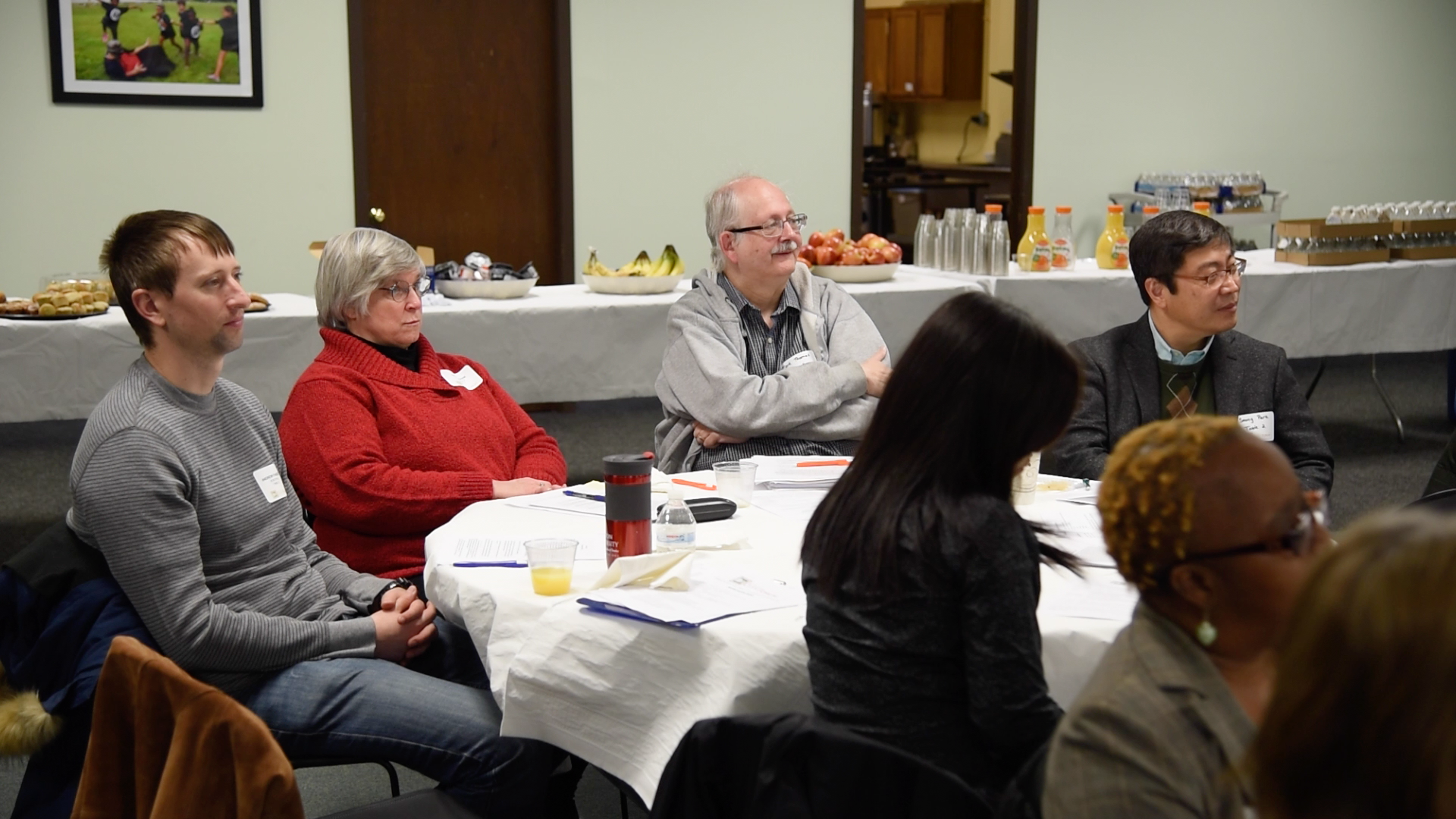
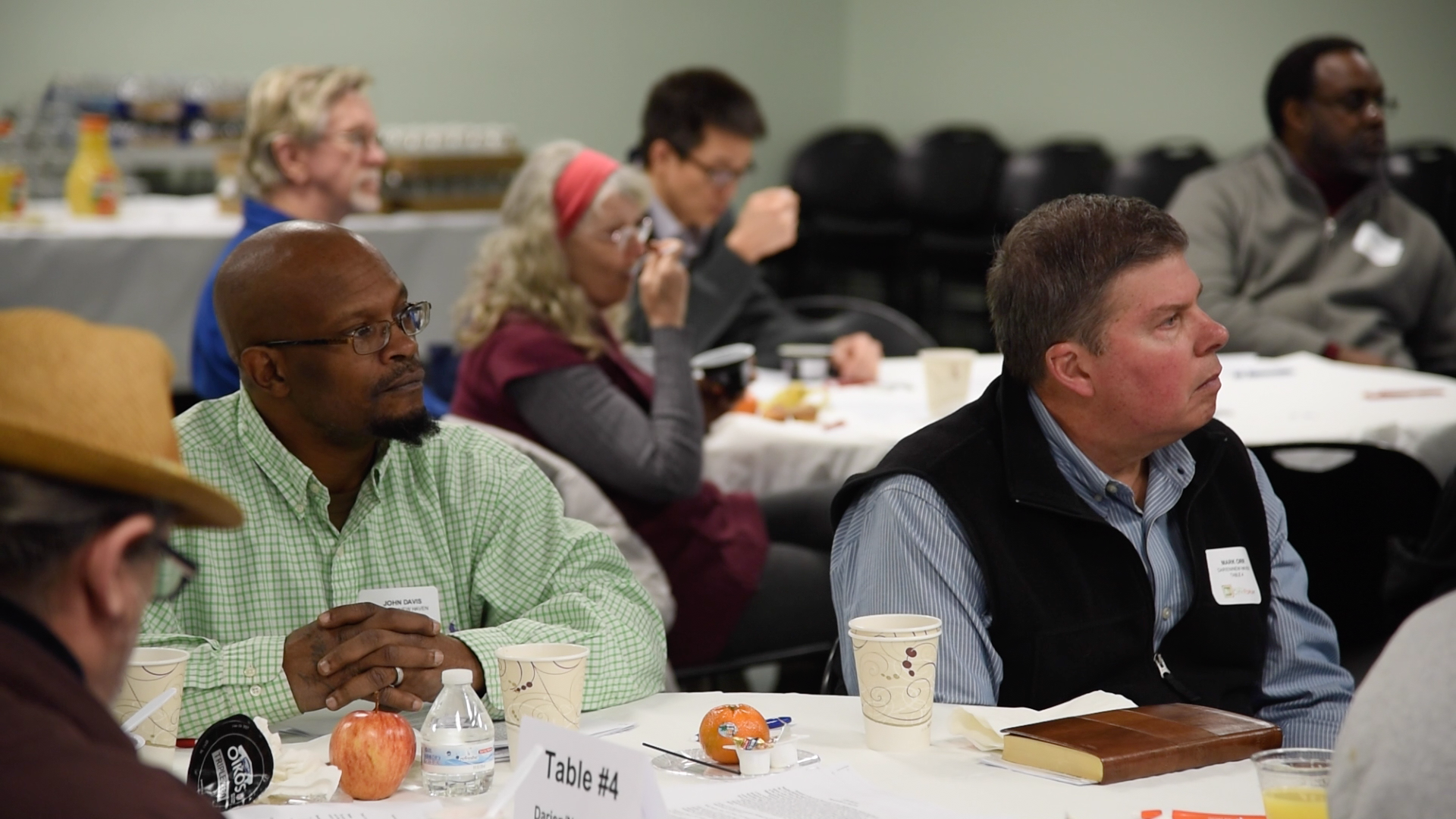
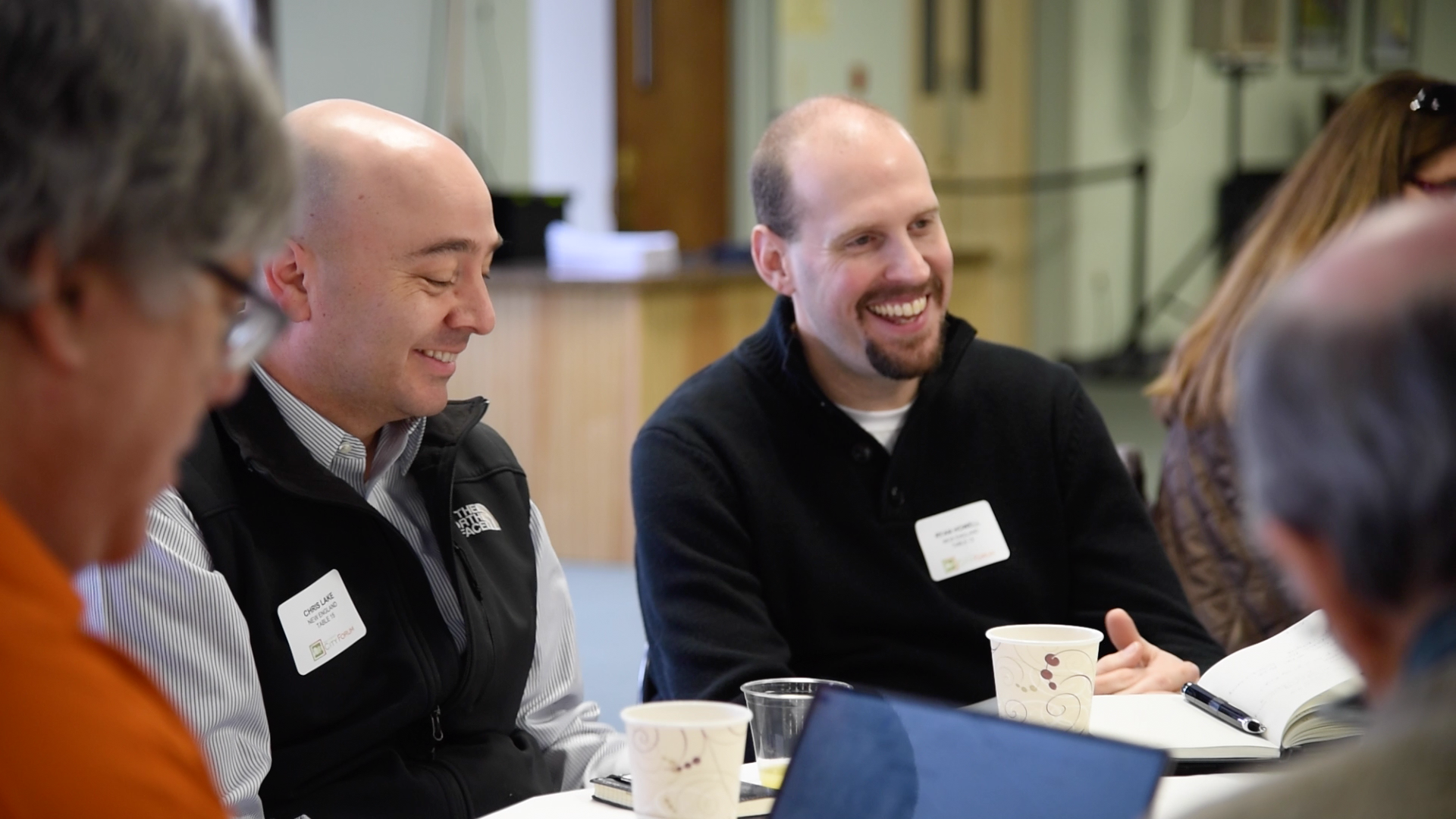
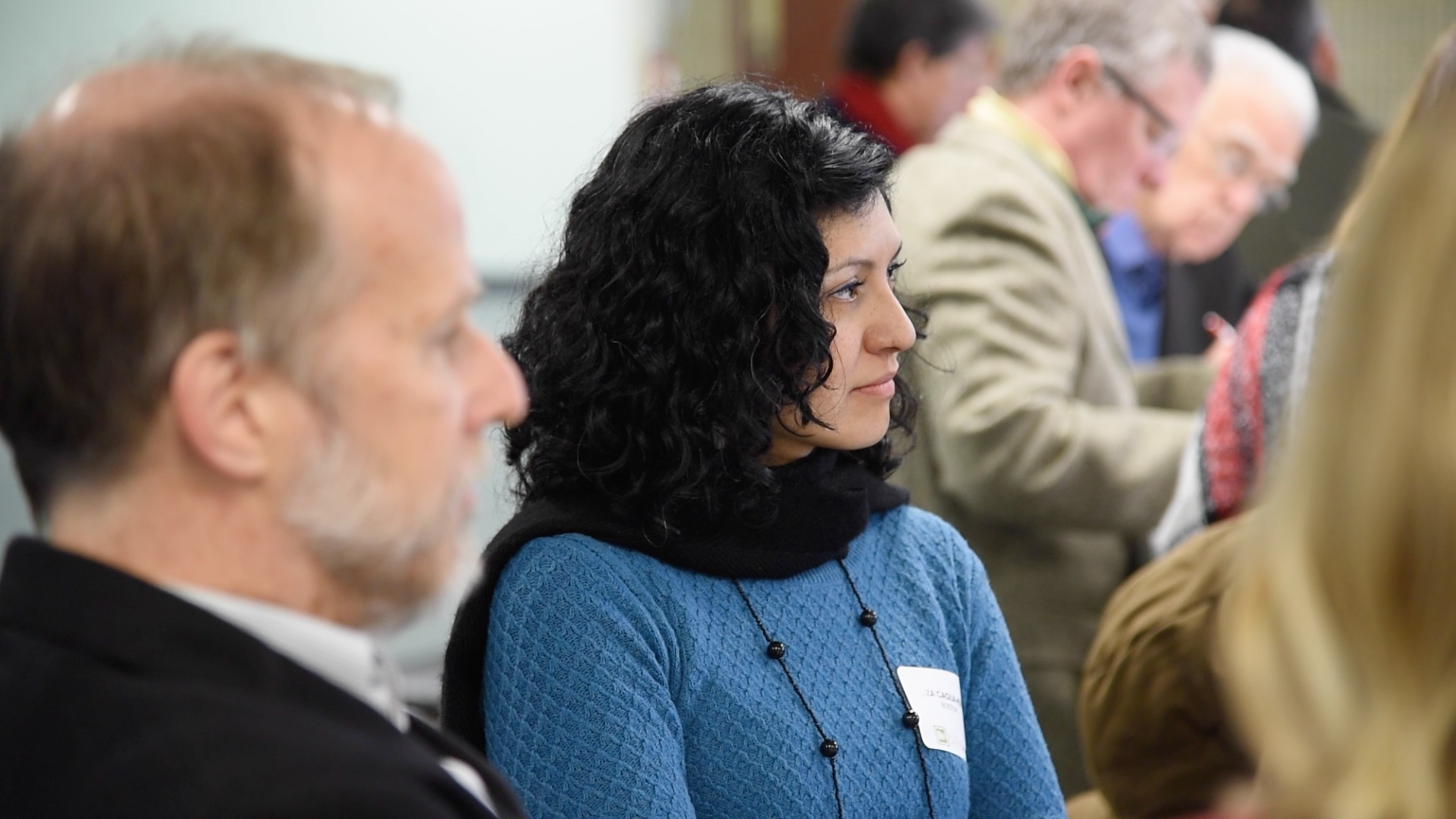
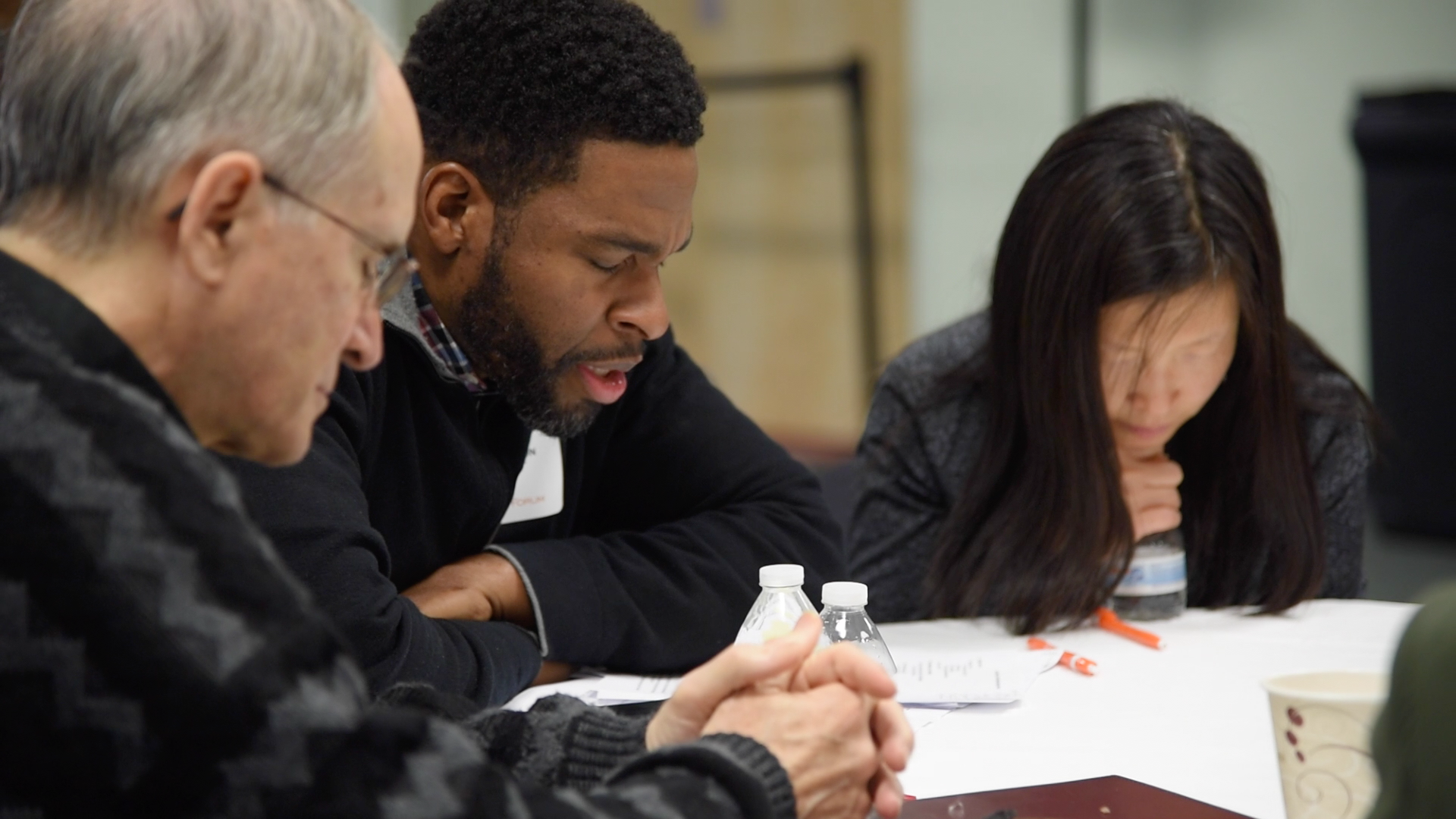
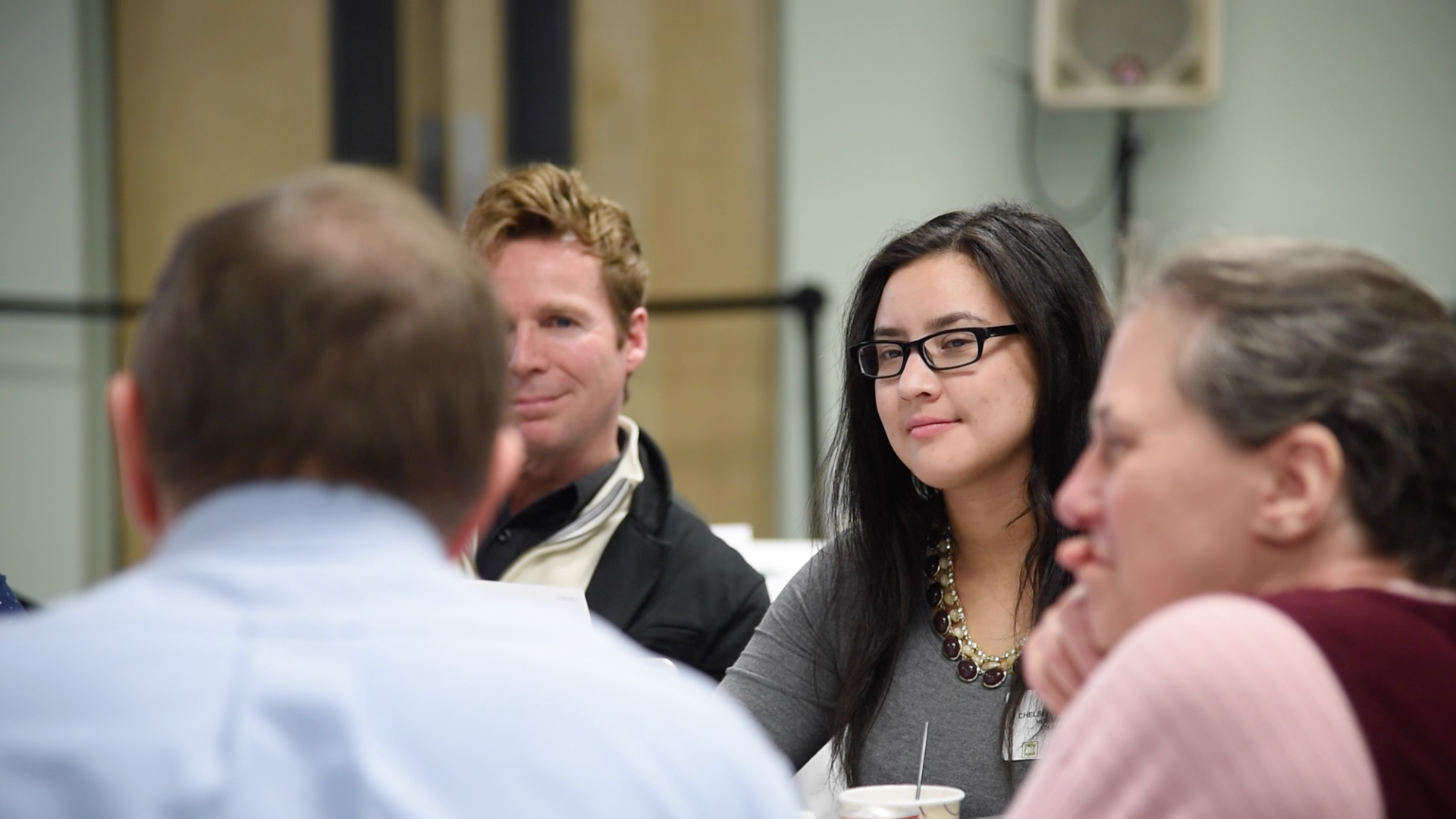
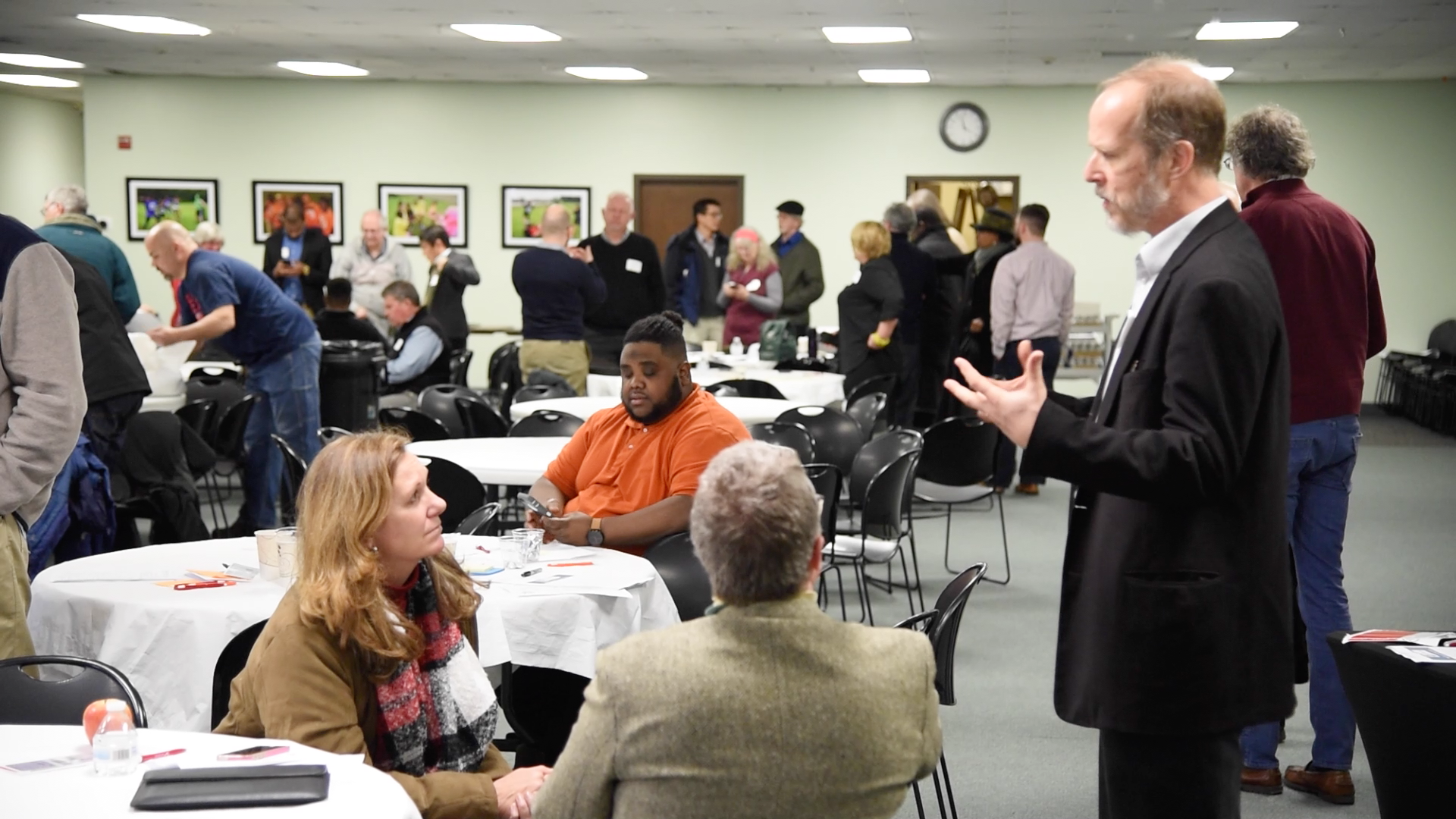
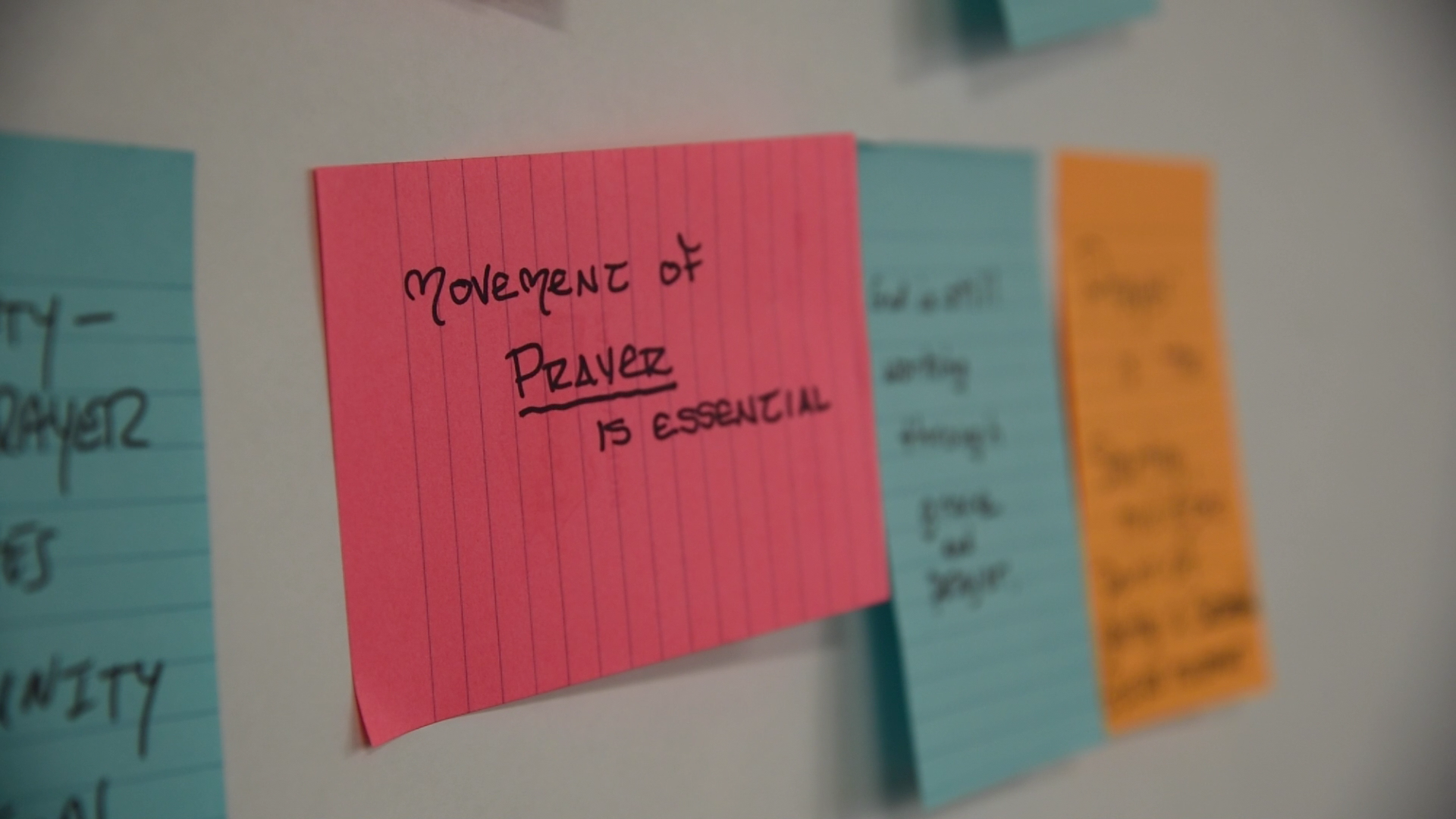
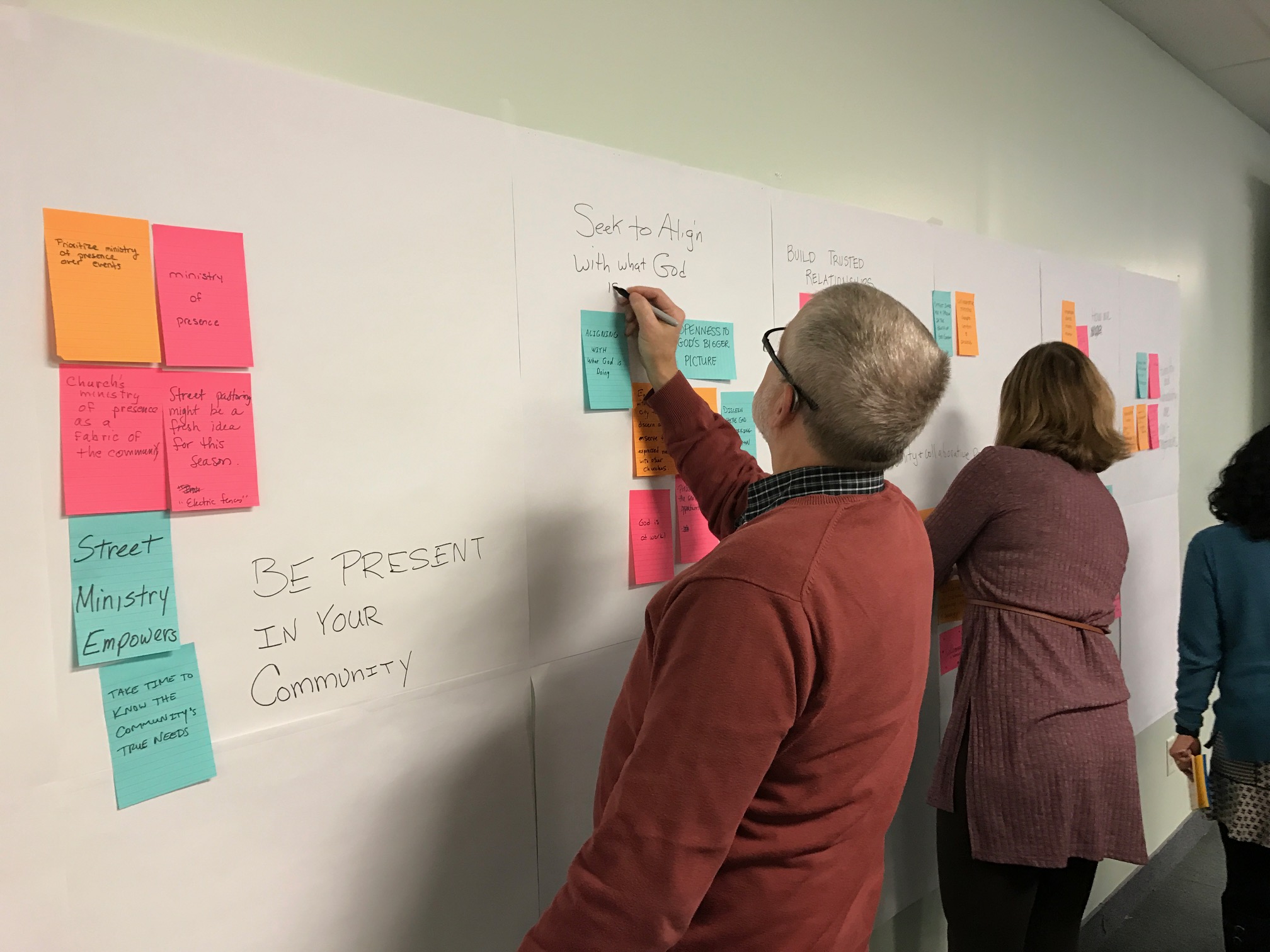
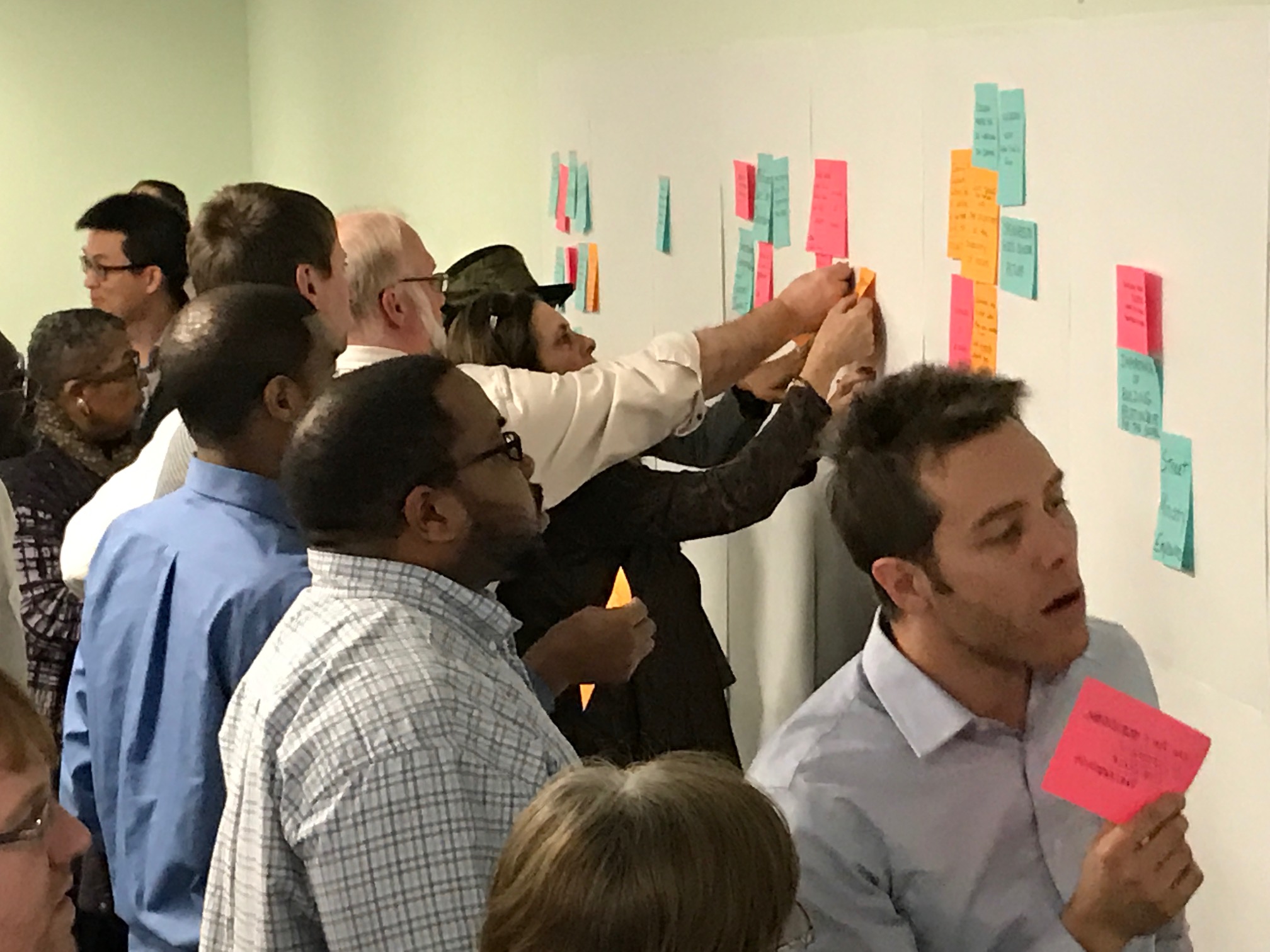
In the last part of the day, participants engaged in a large-group processing and sharing exercise to determine the key learnings that were emerging throughout all the cities. Through "flash hexagoning," individuals responded to the question “What have you learned today?” on sticky notes, and then shared these with their table. The table then grouped responses by common themes and chose up to three overarching key learnings to be highlighted for the entire room. Each table's key learnings were written on larger sticky notes, which were then themed on the wall by the large group. Ten key insights emerged, which we used to focus our concluding prayer time for God’s continuing gospel movement throughout New England.
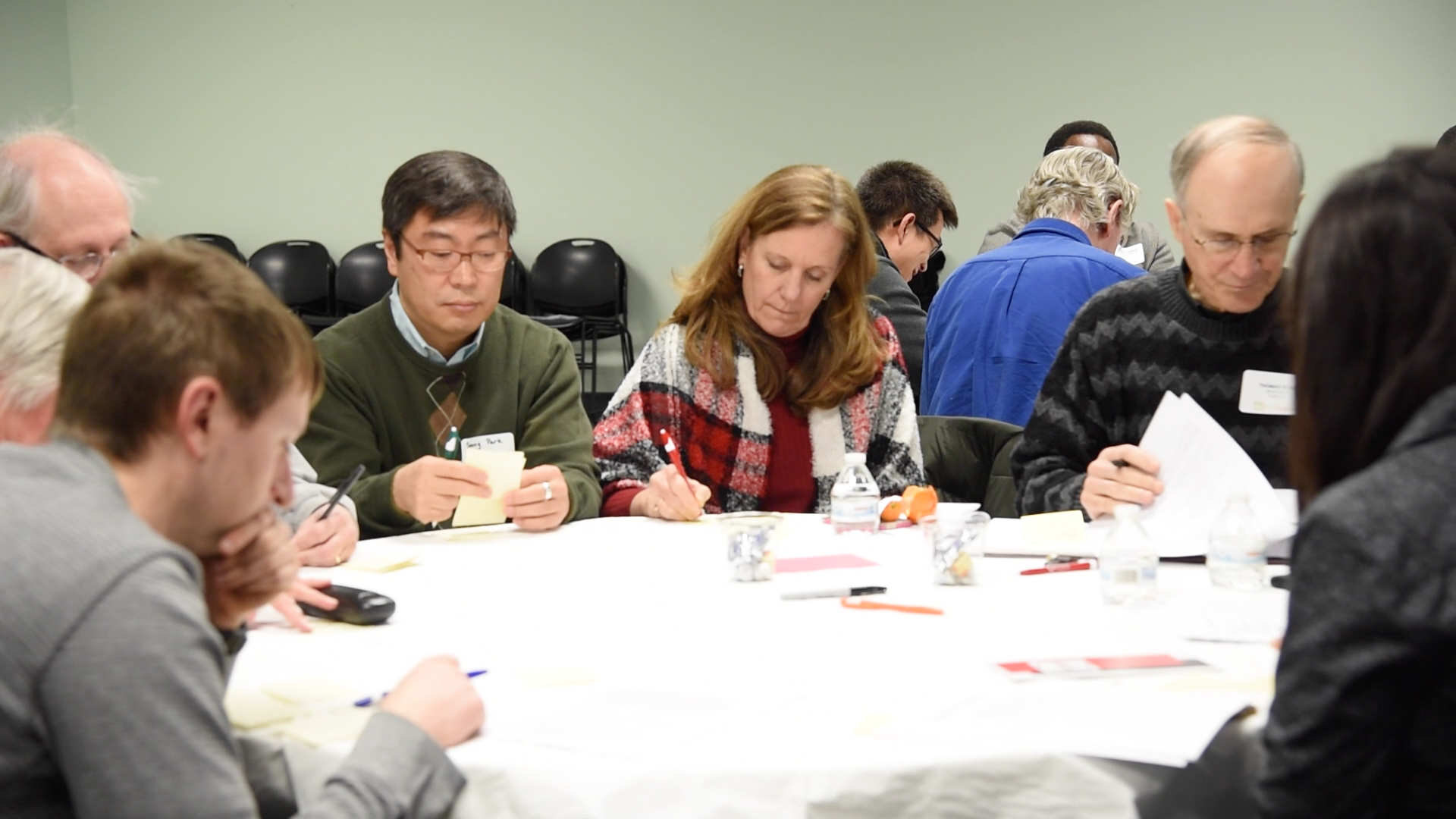
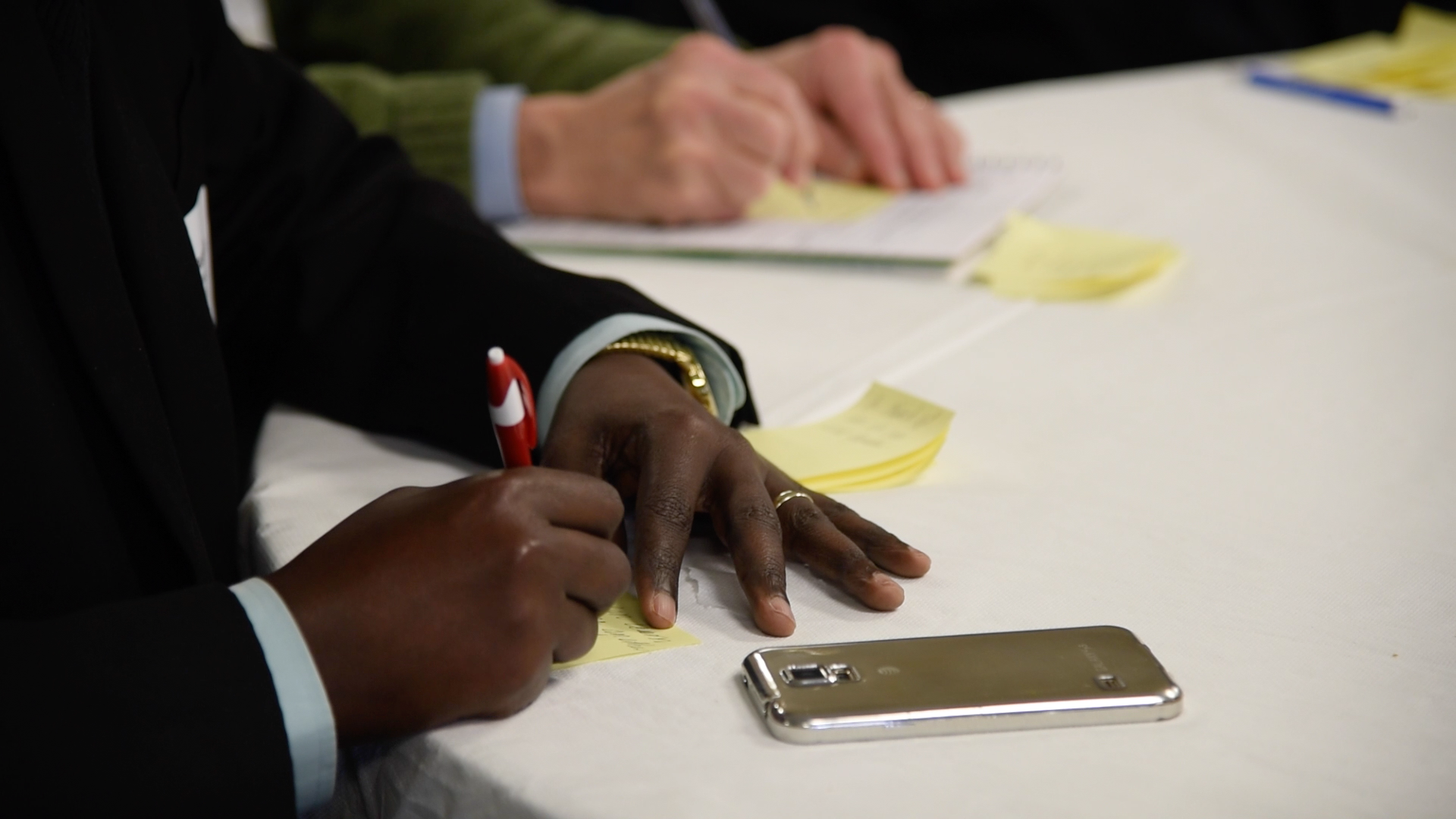
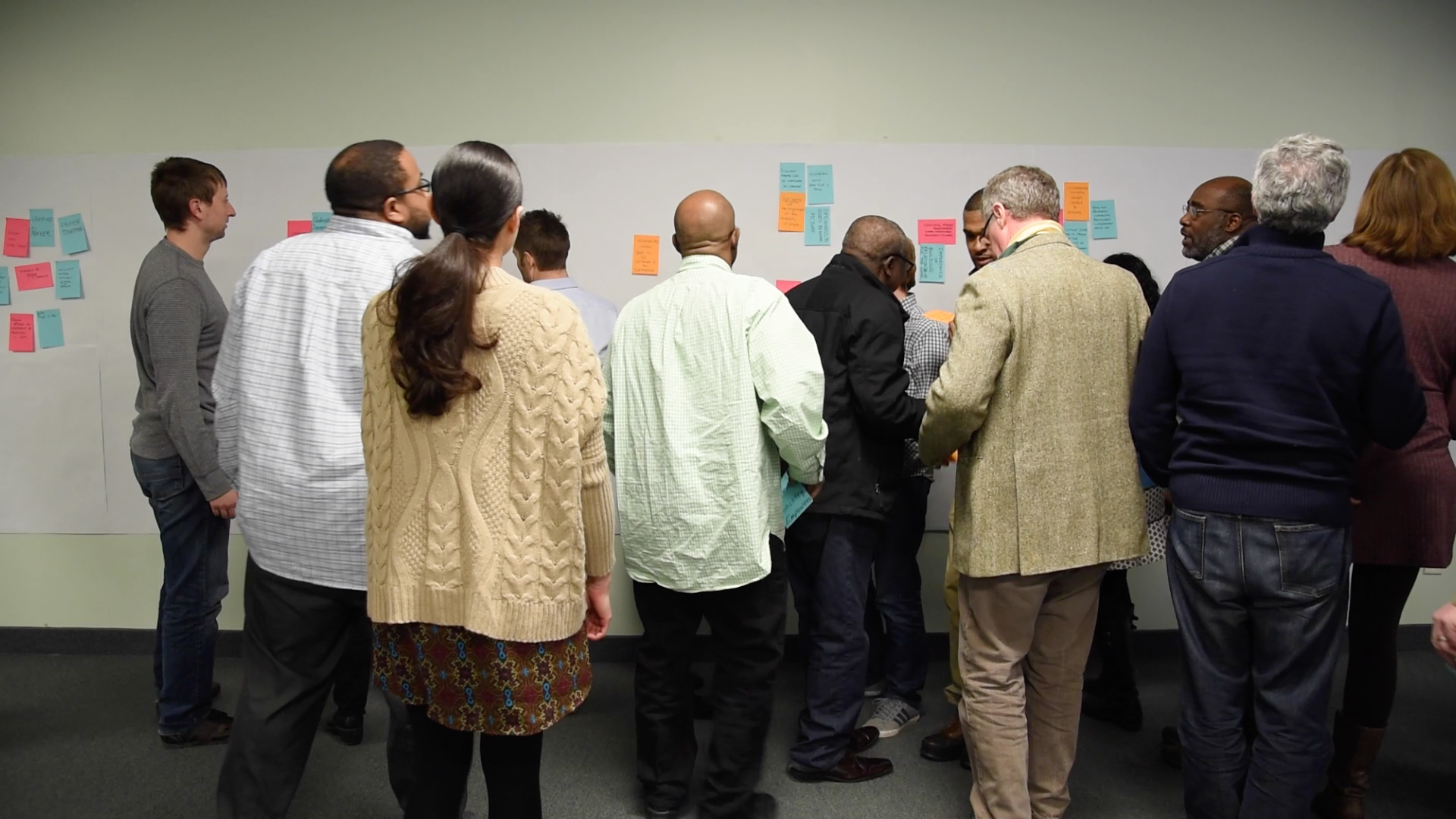
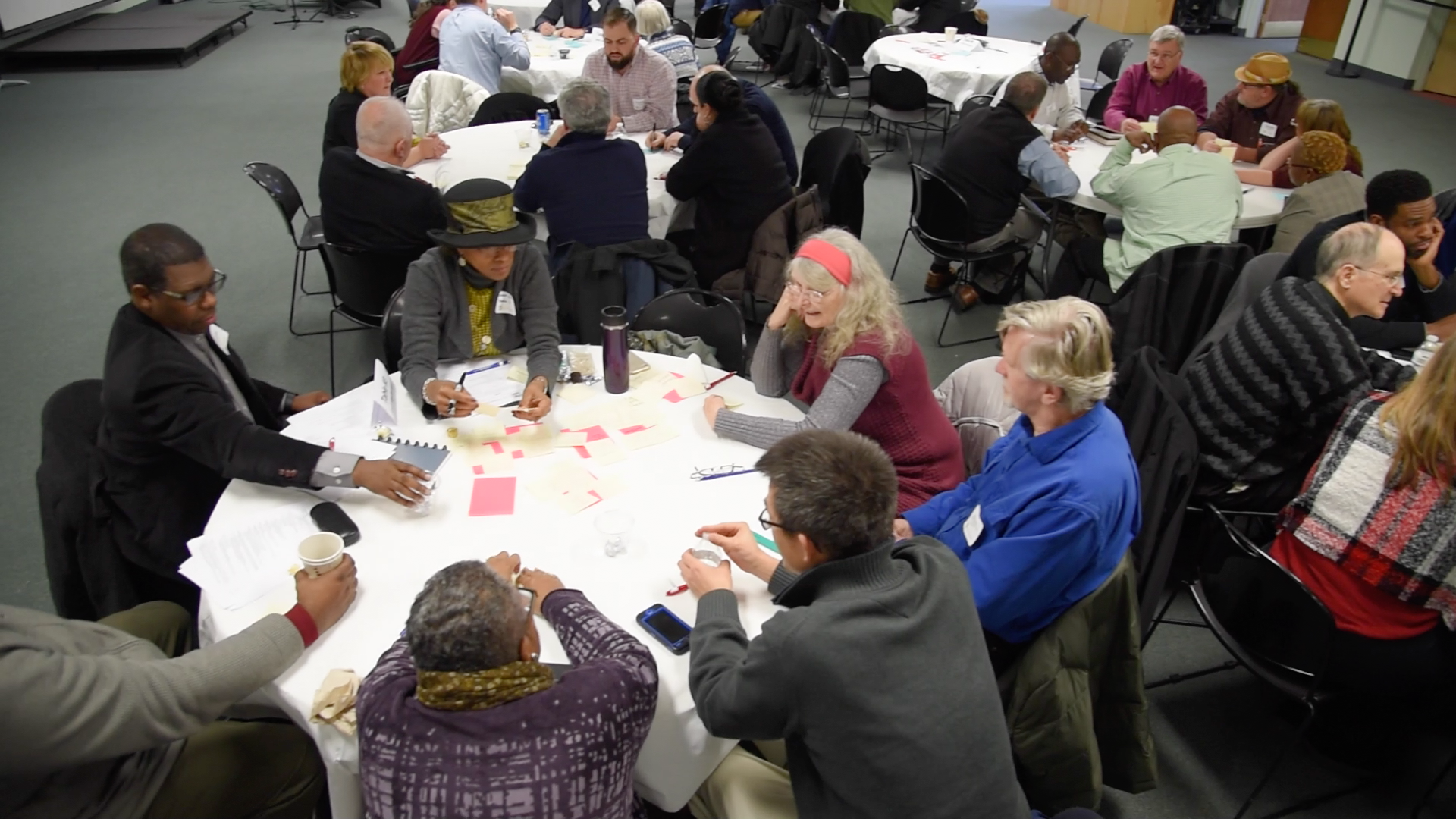
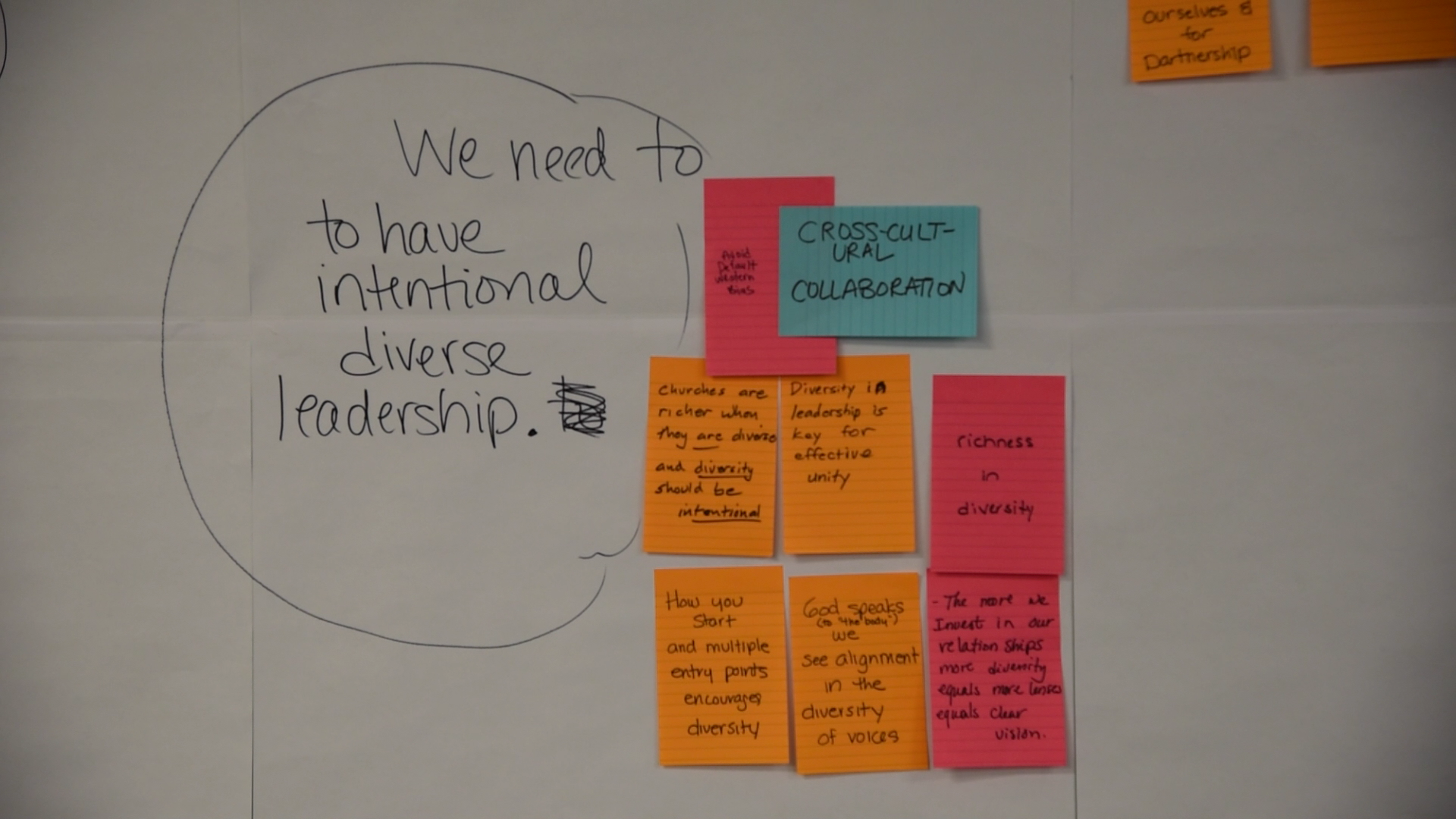
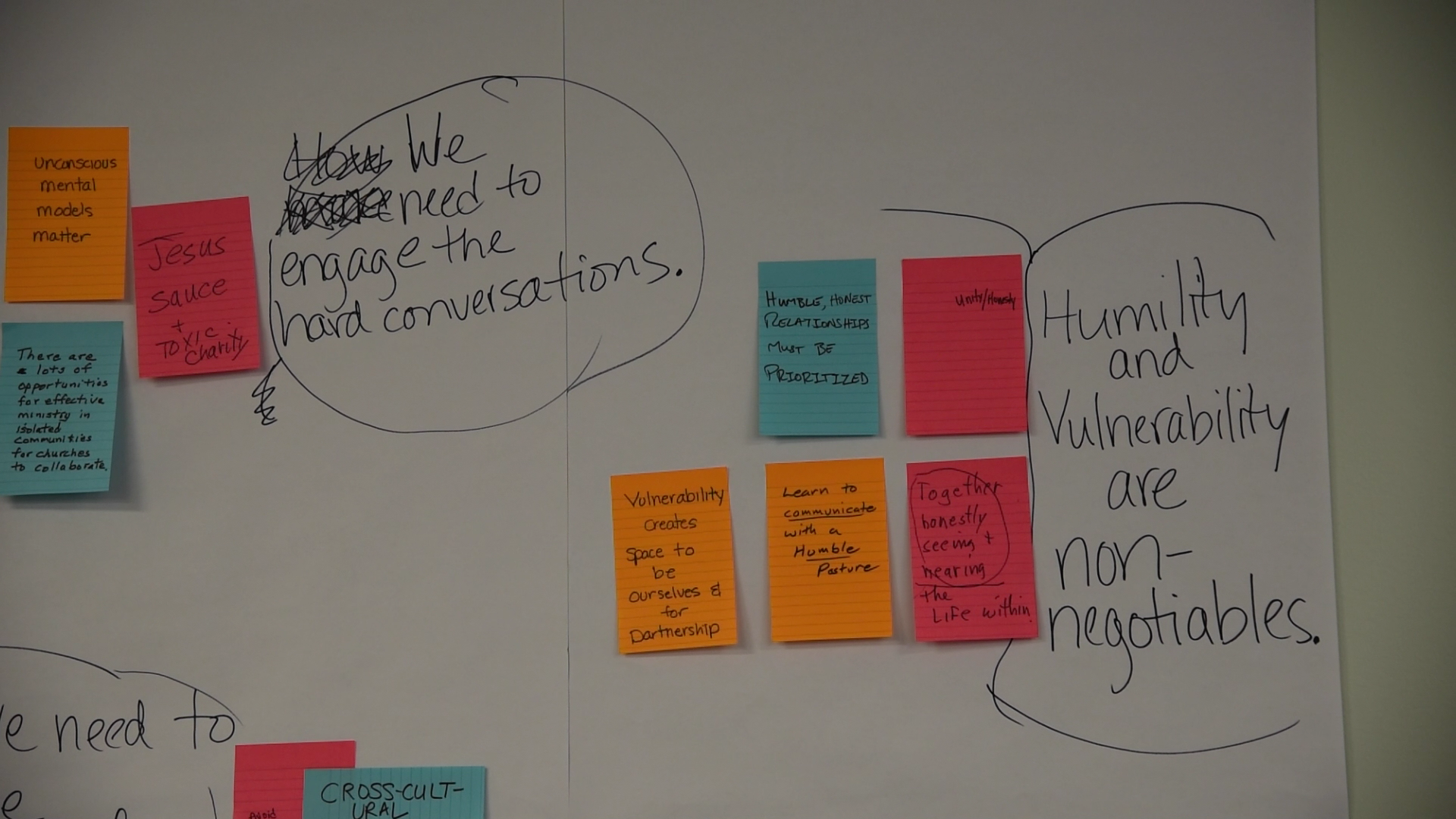
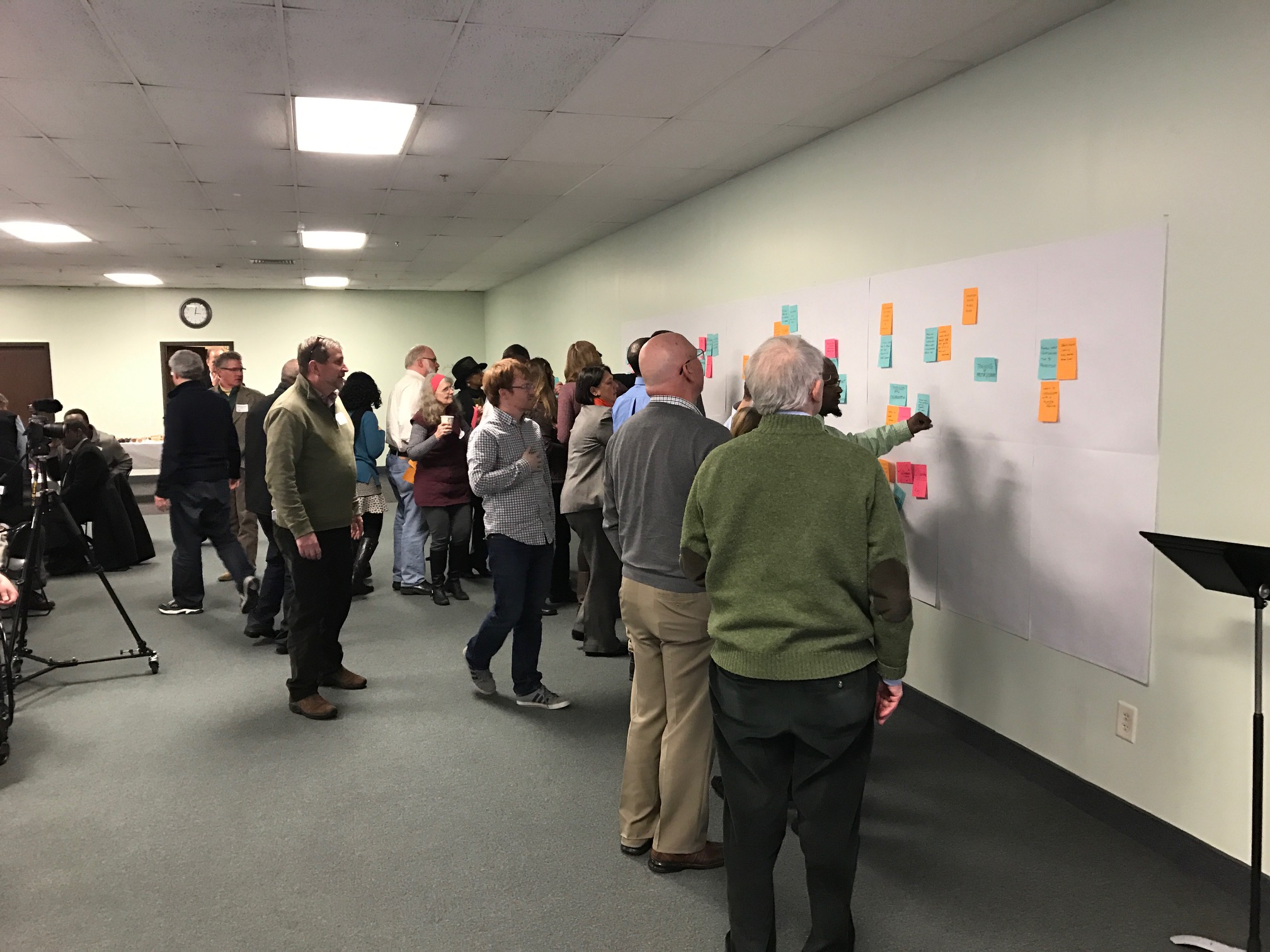
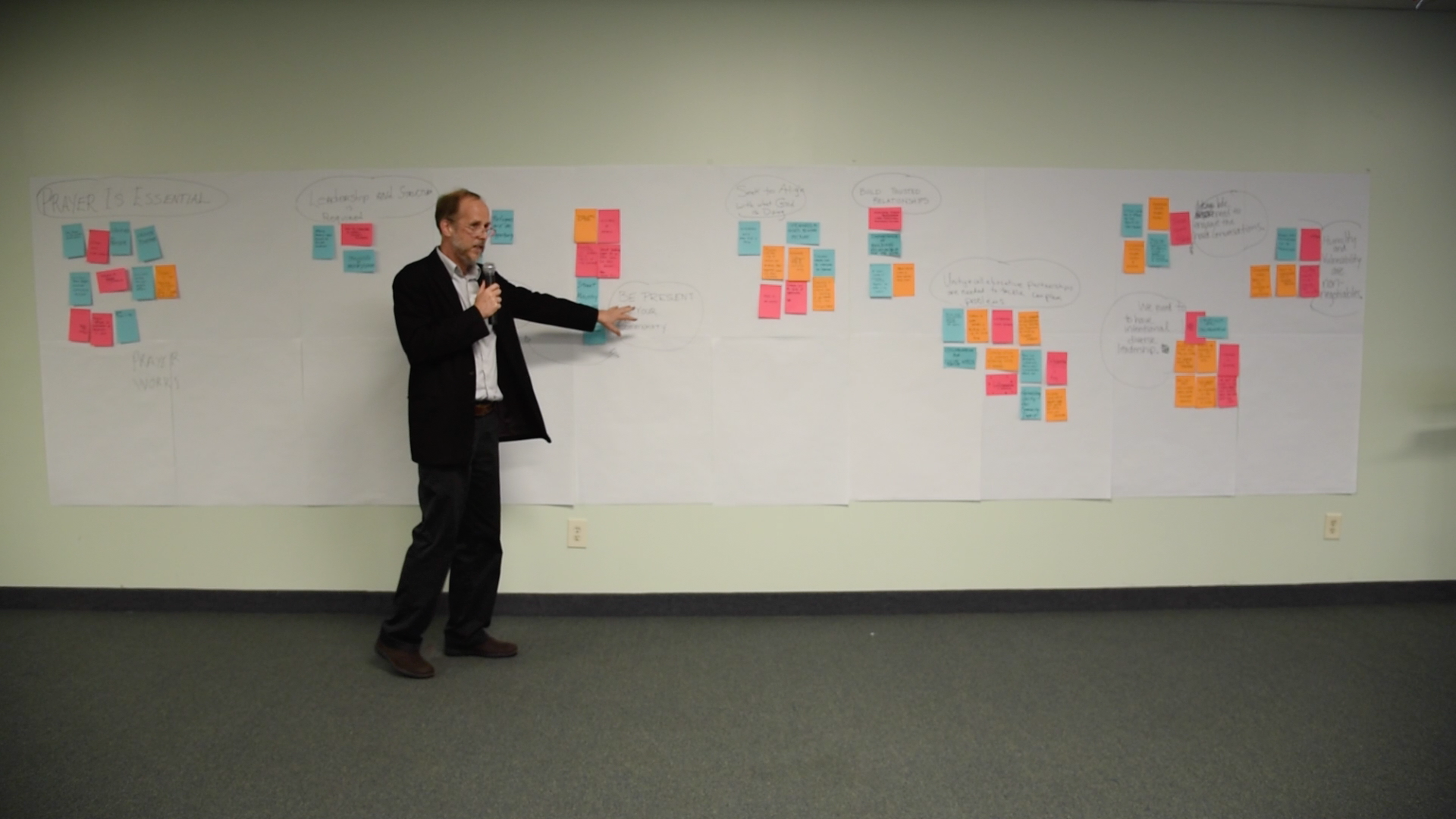
The ten key principles from the forum are stated below, with select, undergirding sticky notes in quotes and additional insights from day-long notetaking at the tables.
LARGE-GROUP LEARNINGS
1. Unified prayer is essential
Praying together is the foundation of a gospel movement, and "precedes an environment of collaboration and love." "Commnunity-based prayer launches community action." It is no surprise that many of the cities with strong Gospel witness also had a strong inter-church prayer network across denominations. Truly, we can’t expect the Holy Spirit to move in our cities without unified prayer.
2. Leadership and structure is required
"Effective moments require engaged and available leadership." "A structure is needed to capture and accelerate partnerships." Pastors are often the gate-keepers for collaboration; if they don’t know other pastors, then churches won’t work together. "Training of pastors/leaders" is key. At the same time, we need to restructure the current church system so these initiatives are not entirely placed on the pastor. There is much momentum around training congregation members working in secular fields to disciple people in their occupations to further the kingdom of God. To this end, pastors in Hartford have been discussing a Kingdom in the Workplace conference to help people network across churches vocationally.
3. Know your community
Needs within cities are ever-changing: we must become multidimensional in our thinking and approaches to serve our communities. Initiatives should be birthed through the assets and needs in the community, so that ministry is transformational rather than transactional. "Understanding demographics for Gospel impact" by tuning into the "kairos opportunities" presented by who is in or coming to a city--through immigration, refugee resettlement, etc. There is a lot of momentum throughout New England around refugee ministries, and God is bringing us an opportunity to engage the nations through the refugees among us.
4. Be present in your community
A "ministry of presence" is key, and upon this foundation events can be leveraged--we must "prioritize presence over events." Church leaders are continually seeking to find a good balance between initiating collaborative events and adopting a consistent ministry of presence-- a dynamic that plays out not just when a church engages the community, but also when churches engage each other. All of the great gospel movements are happening outside the four walls of the church. Leaders in Portland have found that the less church-centric and the more sent out into the neighbors a church can be, the better.
5. Seek to align with what God is doing
Rather than just starting new things, leaders should find things that are already happening and join in, asking “How can we be a part of this?” This curious, open, discovery-oriented approach identifies and celebrates where "God is at work," and enables us to see our ministry within God’s bigger picture.
6. Build trusted relationships
Leaders across New England continually attribute gospel movement to strong, trusting relationships between leaders. God speaks to many people at once - we can only discern what God is doing by being in relationship with one another. Developing authentic relationships that cross traditional boundaries and divisions is also key, but taking time to build trust cuts against our natural proclivity for “productivity.” However, trust-filled relationships make #7 (below) possible, and are also the basis of #8.
7. Unity and collaborative partnerships are needed to tackle complex problems
At least nine cities honed in on the importance of collaboration: collaboration is not just an optional goal for ministry, it is essential for united and effective gospel witness. Cities are complex, and churches miss major opportunities when they do not see secular/governmental organizations as potential allies, rather than obstacles. Boston has seen the incredible value of intentional partnership between churches, community organizations, and social service agencies within small geographic regions of the city. In Portland, church leaders have come together to serve the refugee population and address the drug crisis, complex situations that are too big for any one church to tackle. Leaders in Worcester describe the need for some kind of clearinghouse that brings us together and helps to coordinate our prayer, witness, and service.
8. Intentional diverse leadership is needed
Churches and ministry efforts are richer when they are diverse because more diversity equals more lenses, resulting in a clearer vision. We need to get outside our cultural and denominational bubbles in order to gain insight on our own stereotypes and biases, so we can see God and others more clearly, as well as our part in what He is doing. Pursuing diversity in any context (church, leadership, collaboration) needs to be intentional and it is not going to happen naturally. Churches in Cambridge have found that diversity is built through food, friendship, and giving voice to people at the table. Who is at the table when something starts often means that the starter group ends up being the decision-makers, so having multiple entry points where new people at the table can co-create, not just "follow," makes functional diversity more likely.
9. We need to engage hard conversations
"Comfort zones are a prison in the growth of God's Kingdom." Therefore we have to break outside of our comfort zones and pursue hard, vulnerable conversations with those who are different from us, but this isn’t easy. Working together "disrumpts comfort and process" and we need to anticipate that and press through. Our "unconscious mental models"-- how we think the world is or how it works-- really matter, and these can be challenged when we work together. Even with the best intentions, sometimes we can operate counterproductively (for example, through "toxic charity"), and our willingness to engage in hard conversations will determine whether these blindspots can be addressed. One of the biggest challenges is for churches to create collective long-term change, rather than the tendency to follow the “flavor of the month.”
10. Humility and vulnerability are non-negotiables
We must "learn to communicate with a humble posture." "Humble, honest relationships must be prioritized." Like Jesus, we must have the attitude that we came not to be served, but to serve. Our humble approach is something that should stand out about the Christian Church and as we engage one another. Looking through the lens of our own need/brokenness opens us up to better understand and come alongside others; this shifts how we reach out and understand ministry. In many cases, when partnerships are empowering the community and the local leadership so that they are leading locally, the Church may not get the immediate credit. (Good thing we have an audience of One.)
PERSONAL REFLECTIONS
Through reflecting and dreaming together, and through fellowship and prayer, a vision for growing the Kingdom of God in New England was expanded and strengthened. Here are some comments from participants:
“I was surprised that God’s work in New England is fairly common from city to city. The same “city issues” exist everywhere!”
“Today, I learned the value of accessing as many lenses to view my city as possible, and that building relationships across our differences is worth whatever it costs.”
“I learned about the need for diversity to be present in our dialogues.”
“It was inspiring to see what God is doing in our region.”
“It was cool to see how prayer and John 17 unity is resonating throughout the region.”
“The flash hexagon activity was a great way to digest the information, and made me think about the art of God’s refracted light.”
“I learned about the importance of fostering united prayer and authentic relationships with others outside of my normal silos.”
“I was encouraged to see that there are many in my city who have a heart to come together and see God do a good work!”
NEXT STEPS:
New London: Leaders in New London were encouraged by Worcester’s model of two churches collaborating to run a sober house together and are exploring implementing this in New London. They are also considering starting a free arts and crafts in the park once/week during the summer.
Rhode Island: Based on the New England City Forum conversations, leaders in Rhode Island thinking about how to rebrand their movement towards the “Together” terminology, developing a sub-area strategy using the NH Alliance as a model, and continuing to develop the 24/7 prayer network.
Connecticut: CityServeeCT is now working to invite more than 100 additional pastors to their monthly meetings and rotate the meeting location between cities.
Maine: Leaders in Maine are considering implementing a street pastor’s ministry in Lewiston and how they can respond well to immigrants in Portland.
Hartford: A pastor's luncheon is taking place on March 30th to consider how to foster greater unity and relationship among diverse leaders in the Urban Alliance Network.
Worcester: In a follow-up meeting, Worcester church leaders discussed the need for their team to represent the full racial, ethnic, gender and denominational diversity of Worcester. They are also considering how to nurture better church/community collaboration through focused research, a street pastor's ministry, and local school partnerships.
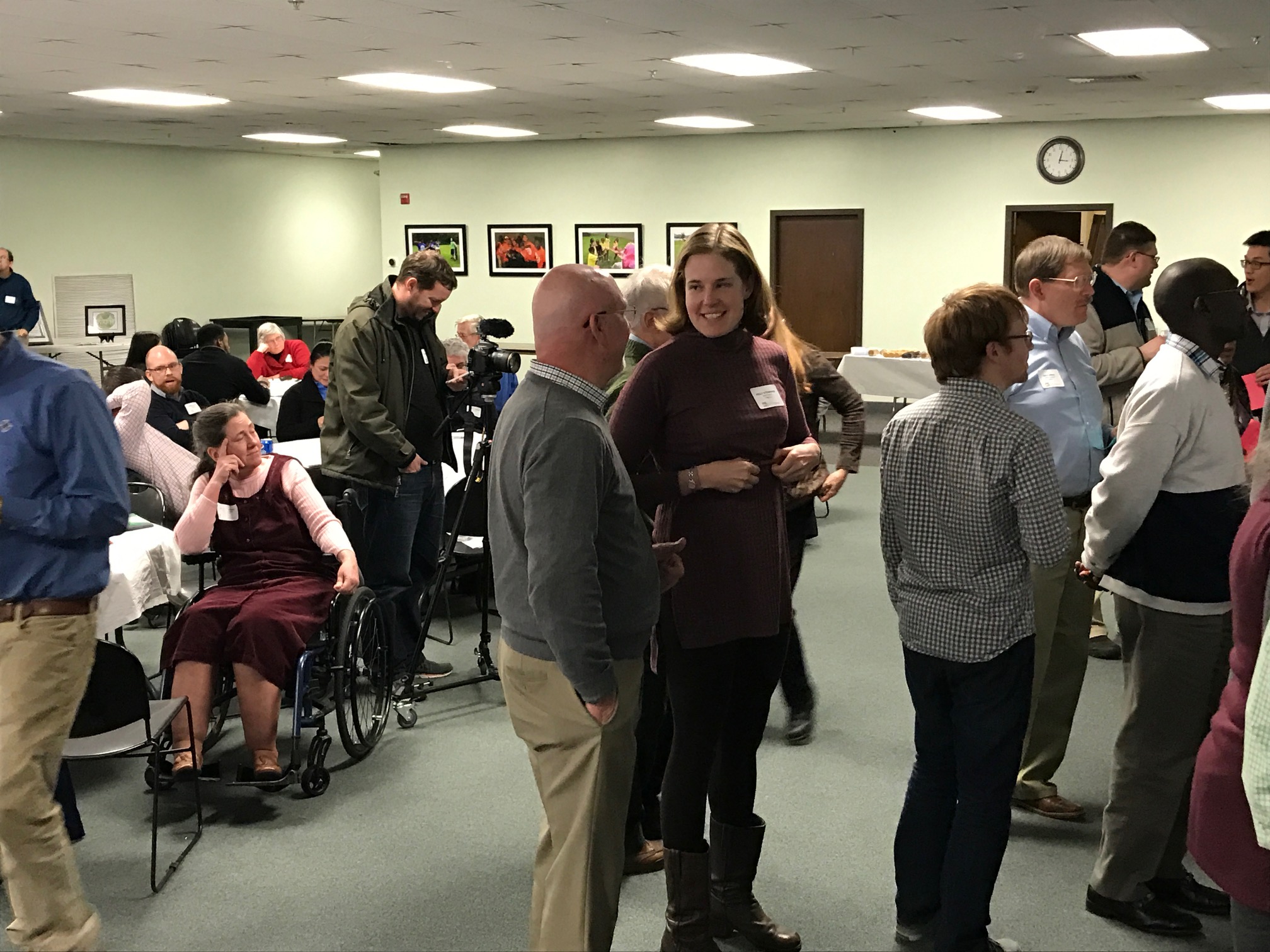
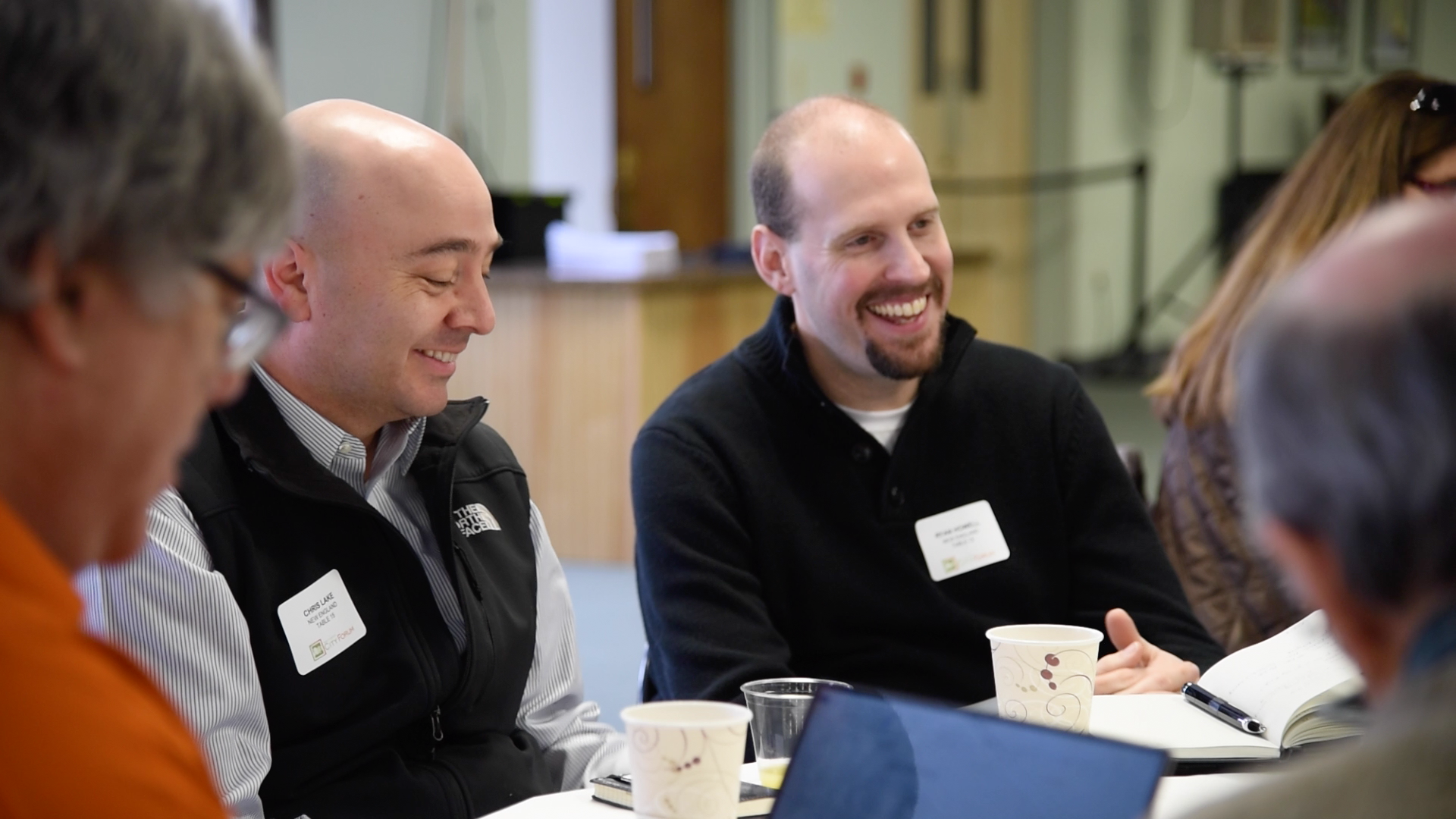

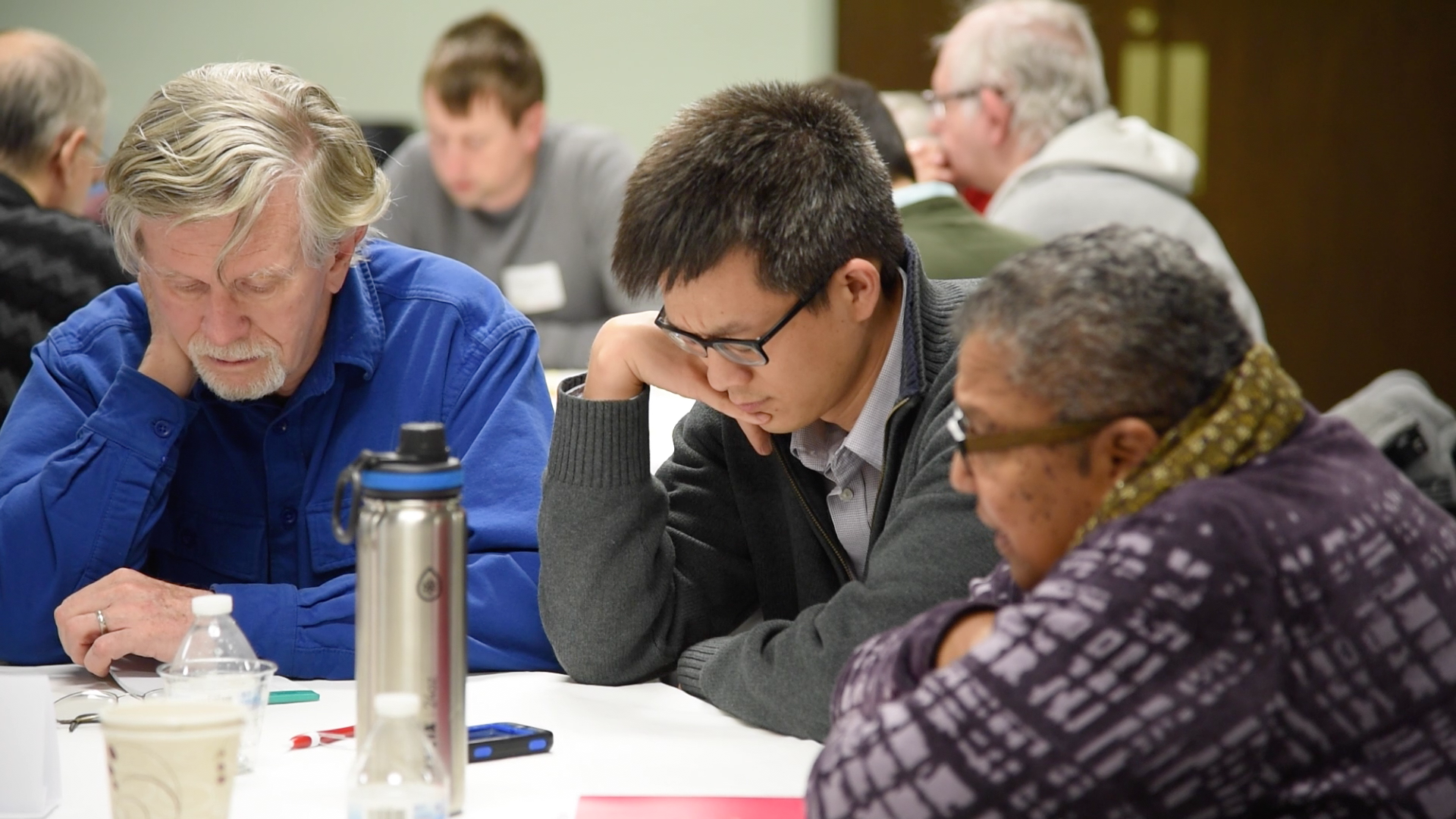
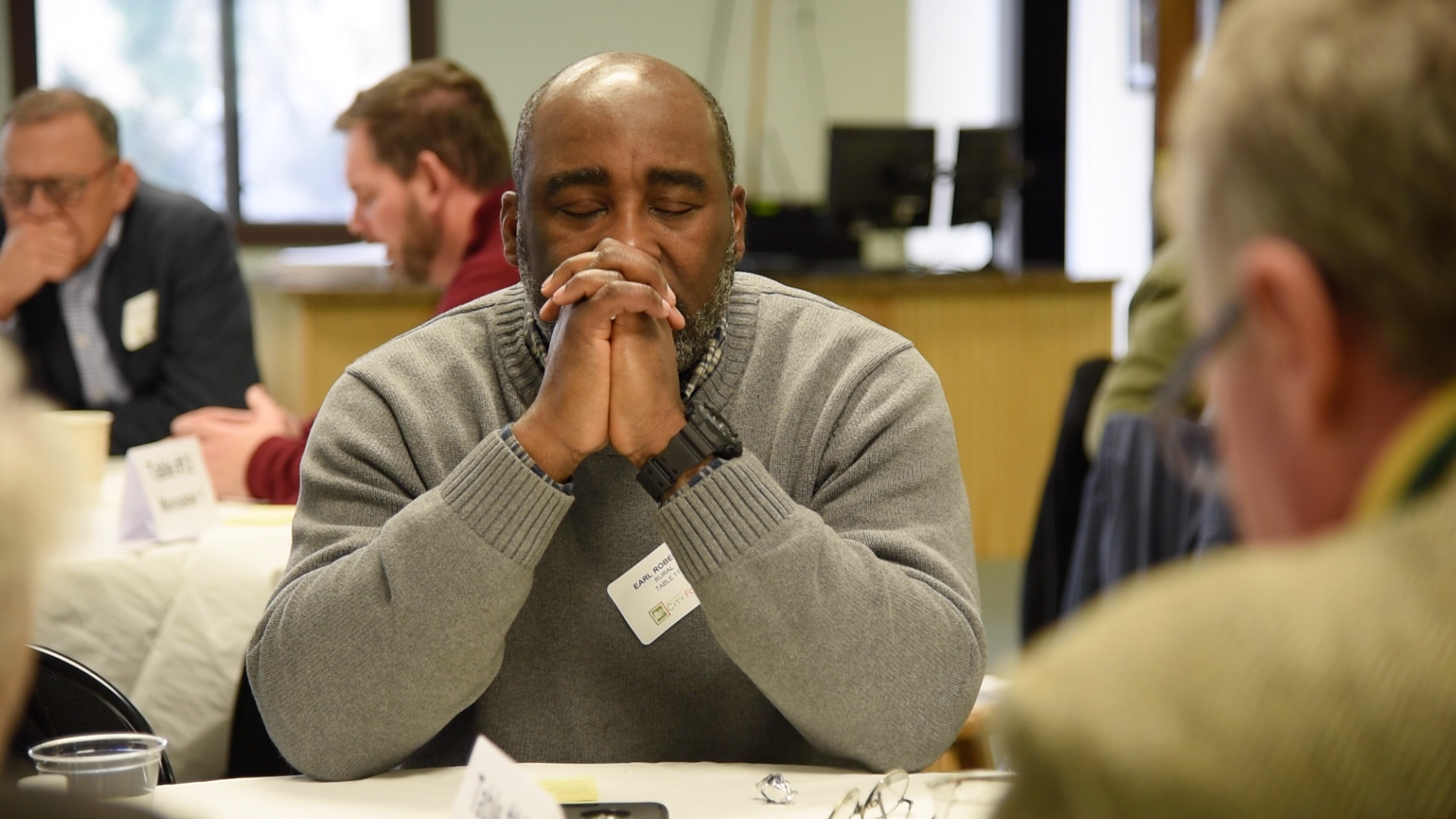
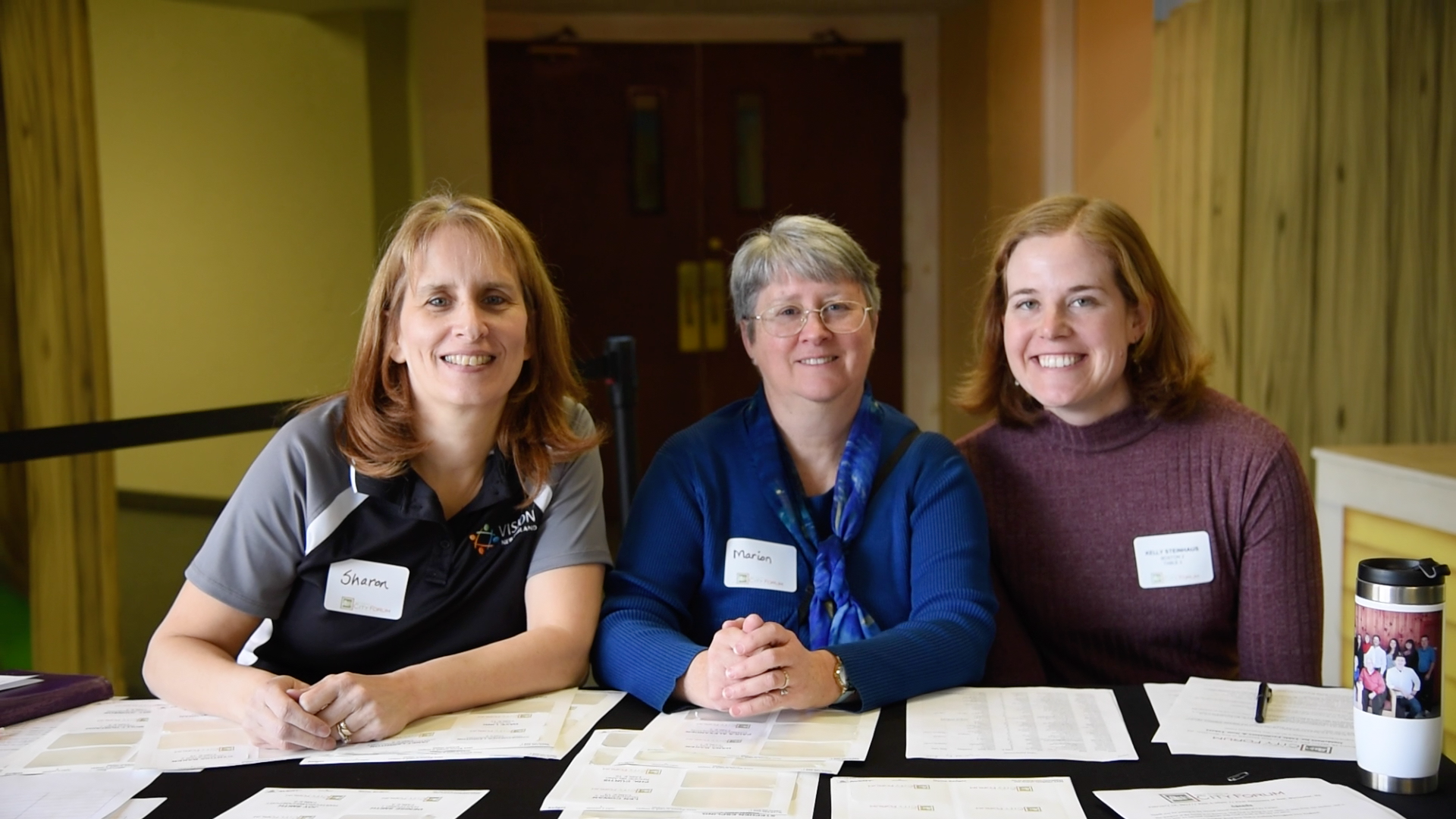
Keywords
- #ChurchToo
- 365 Campaign
- ARC Highlights
- ARC Services
- AbNet
- Abolition Network
- Action Guides
- Activism
- Administration
- Adoption
- Aggressive Procedures
- Andrew Tsou
- Annual Report
- Anti-Gun
- Anti-racism education
- Applied Research
- Applied Research and Consulting
- Asking for help
- Ayn DuVoisin
- Balance
- Battered Women
- Berlin
- Bianca Duemling
- Bias
- Biblical Leadership
- Biblical leadership
- Black Church
- Black Church Vitality Project
- Book Recommendations
- Book Reviews
- Book reviews
- Books
- Boston
- Boston 2030
- Boston Church Directory
- Boston Churches
- Boston Education Collaborative
- Boston General
- Boston Globe
- Boston History
- Boston Islamic Center
- Boston Neighborhoods
- Boston Public Schools
- Boston-Berlin
- Brainstorming
- Brazil
- Brazilian
- COVID-19
- CUME
- Cambodian







Resources about Human Trafficking for Churches.