
EGC RESOURCES
Research Topics
- Boston Churches
- Boston General
- Christian Leadership
- Christianity & Culture
- Church Spaces
- Churches & Communities
- Churches/Church Planting
- Communities
- Gender-Based Violence
- Housing & Homelessness
- Intercultural
- Public Health
- Race
- Refugee
- Spiritual Health/Vitality
- Trafficking/Exploitation
- Urban Youth & Education
- Women in Leadership
Remembering Doug Hall
We mourn the passing of Dr. Douglas A. Hall, former executive director and president of the Emmanuel Gospel Center (1964–2014). Doug's thinking lives on in his writing. Below are four articles from our Resources page — a small window into the ideas he spent his life developing and sharing.

What is Living System Ministry? Doug Hall sets out the core ideas of this discipline of Christian practice where we learn to discern the living social systems around us and align our actions to what really creates lasting change.

The Process of the Gospel is not a program, but a model for building relationships that nurture effective, incarnational ministry, helping people experience the presence and power of Jesus Christ for themselves. By internalizing this process, Christians can be involved in loving people in some of the same ways that Jesus modeled for us in the Gospels.

Christians need to change. Sometimes that change is so radical, we could call it conversion. But how can those who have been converted be converted all over again? Here, Dr. Hall talks about three types of conversion, a spiritual, social, and systemic conversion. Using examples from his own life, he explains how each type of transformation was needed for him to do ministry effectively, and all three types of change were empowered by the redemption won by Jesus Christ on the cross.

The Boston Church Directory may be used for a variety of scholarly, relational, and spiritual purposes.
Ten practical, hard-earned lessons from church leaders on avoiding costly property mistakes: from hiring the right professionals and building strong financial systems to reviewing leases and protecting core ministry assets from over-leverage.
Boston Churches
The Boston Church Directory may be used for a variety of scholarly, relational, and spiritual purposes.

Explore the history of the Church in Boston with a look at Christian movements through the centuries.
Communities
Boston

There are about 250 Black churches in Boston facing multiple challenges. To leverage their collective strength, almost a dozen of them came together to build relationships for the betterment of the community.
The Boston Church Directory may be used for a variety of scholarly, relational, and spiritual purposes.

More and more newcomers are flocking to Boston even as the number of churches appears to be leveling off.

There are many different aspects of Boston and, therefore, different perspectives and resources are needed to understand the city. Here is a list of resources and books for understanding the city’s background and history.

Are you looking to get a better understanding of the city of Boston with all its history, neighborhoods, and eccentricities? Rudy Mitchell, researcher of Boston's neighborhoods and churches for over 30 years, gives his top 5 recommendations for books about Boston.

As we begin 2019, housing is a hot topic in every corner of Boston. Get oriented with some basic data about housing realities and resources in Boston.

Want to know where to plant a church in Boston? You might consider Boston’s newest or soon-to-be-built residential growth sites. We’ll take a look at eight neighborhoods where growth is—or soon will be—taking place, based on public and private development plans.

The City of Boston has released “Imagine Boston 2030,” a comprehensive vision to prepare for an expected population surge by the city’s 400th anniversary in 2030. Can the church articulate a similar vision for what the Kingdom of God could look like in Boston 13 years from now?

EGC Executive Director Jeff Bass reflects on the greatest lesson from the recent meeting of the Greater Boston Interfaith Organization at the Boston Islamic Center, attended by Sen. Elizabeth Warren and Mayor Marty Walsh.

Based on an interview with Rev. Eldin Villafañe, Ph.D., the founding director of the Center for Urban Ministerial Education (CUME), this article tells the story of Dr. Villafañe’s calling to launch CUME in 1976 and how the school rapidly took shape. Dr. Villafañe recalls the fruitful synergy at work among three primary players: CUME, the Emmanuel Gospel Center, and a network of new churches emerging from the Quiet Revival.
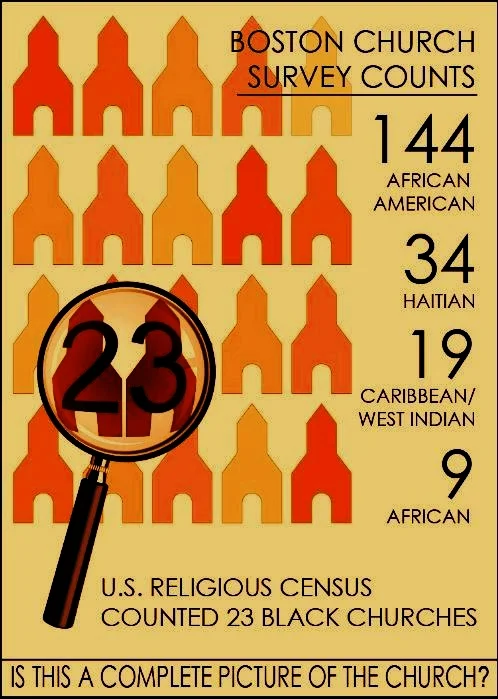
A frank look at the sources, accuracy, limitations, and weaknesses of some commonly used church statistics in Boston. As convenient and convincing as statistics are, they can be misunderstood, misapplied, and generate misinformation.

The challenge of dealing well with the different cultures in our modern cities is the most significant challenge facing theological schools today, according to Dr. Alvin Padilla, former Dean of Gordon-Conwell Theological Seminary’s Boston campus. In this issue, he begins to unravel the problem by offering several perspectives to help us move from being bewildered to better understanding what God might be doing in our cities.
Neighborhood Studies

Are you planting a church or ministering in Jamaica Plain? Get to know this vibrant neighborhood and explore some great local resources.

At the geographic heart of Boston, Roxbury is home to a diverse community. Like many Boston neighborhoods, Roxbury is in transition—holding the tension between the beautiful old while welcoming in the beautiful new.

Are you ministering or planting a church in Dorchester? Check out this gateway to local resources for understanding the people and community you serve.

The South End has undergone a dramatic transformation in this generation. Christian leaders in the South End can benefit from these recommended resources for foundational and ongoing learning about this dynamic community.

From progressive education policies in the late 1600s, to the arrival of immigrants and industry in the 1800s, to the establishment of diverse housing projects and churches up to the present day, Jamaica Plain has had a colorful and action-filled past.

This summary of a larger study offers both story and statistics on life and culture in one Boston neighborhood. Following a brief history of the area, the study offers data on racial trends, economy, housing, education and more.
Data Dives

What is the Quiet Revival? Fifty years ago, a church planting movement quietly took root in Boston. Since then, the number of churches within the city limits of Boston has nearly doubled. How did this happen? Is it really a revival? Why is it called "quiet?" EGC's senior writer, Steve Daman, gives us an overview of the Quiet Revival, suggests a definition, and points to areas for further study.
Our research on new church development in Greater Boston yielded general information with a special focus on women in leadership. The hope is that this study can become a source of “mainstreaming” gender parity discourse within the church, as part of an overall discussion of the practical needs of church planters in the areas of leadership and ministry development.
A frank look at the sources, accuracy, limitations, and weaknesses of some commonly used church statistics in Boston. As convenient and convincing as statistics are, they can be misunderstood, misapplied, and generate misinformation.
How to Research Your Community


From community-based participatory research to social-network analysis, there are various ways Christians can learn more about the communities they serve.

A Christian church or ministry functions in the context of a particular community. To effectively minister in that community, it’s important to understand it.

From population trends to social needs, this illustrated guide lists the factors to consider when learning more about a local neighborhood or community.

From population trends to social needs, this guide lists the factors to consider when learning more about a local neighborhood or community.
Most Popular

Church closures often happen quietly — not because leaders failed, but because shame and isolation kept them from asking for help. This piece explores why a culture of transparency, not silence, may be the biggest factor in whether a struggling church survives.
Ten practical, hard-earned lessons from church leaders on avoiding costly property mistakes: from hiring the right professionals and building strong financial systems to reviewing leases and protecting core ministry assets from over-leverage.
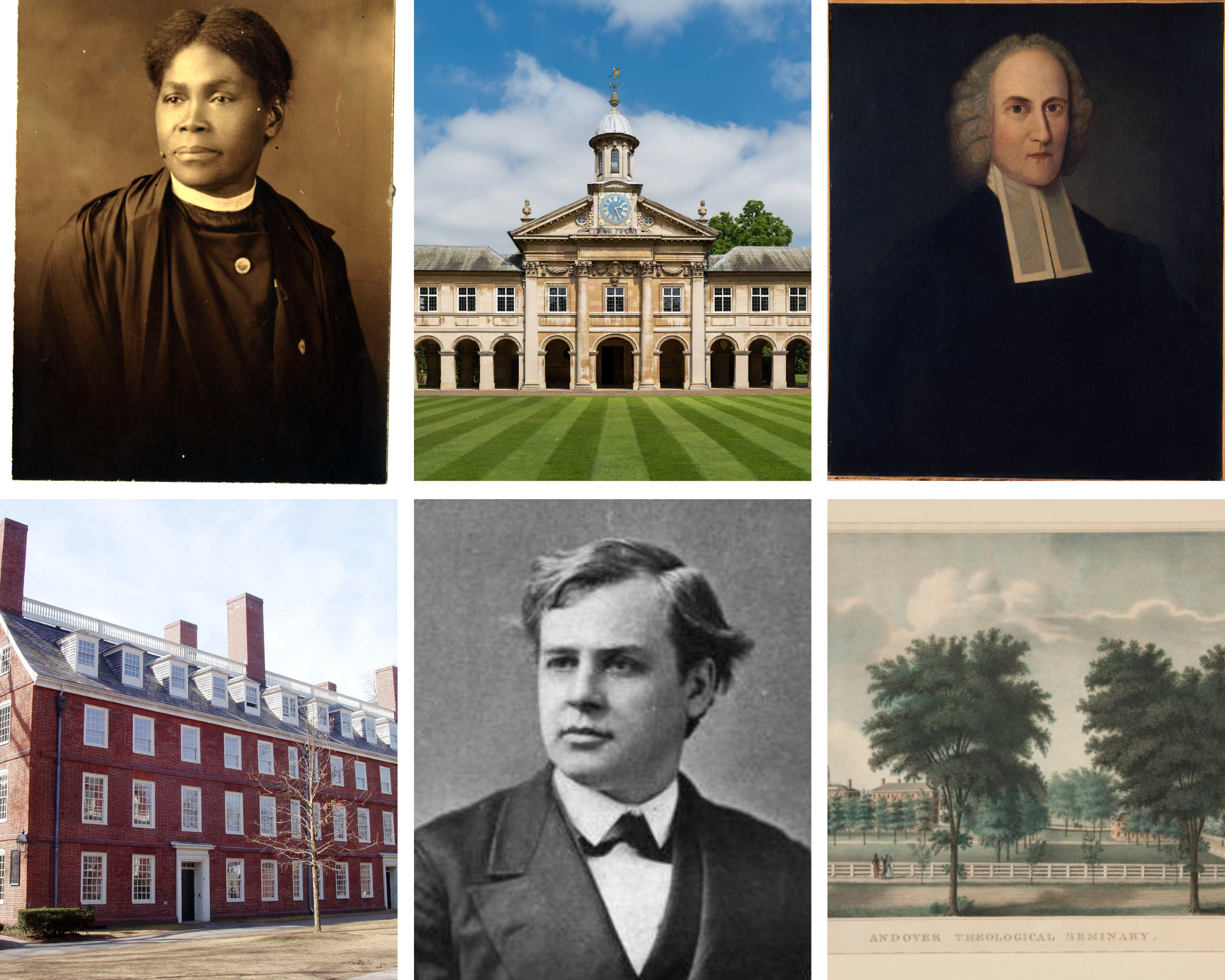
From Harvard College to Bible institutes meeting in churches, Boston and New England have a long history of innovation in theological education and ministry training. The successes and failures of schools in the past can help shape and inspire a new vision for training men and women for gospel ministry.

Many white Christians in evangelical churches feel isolated in their desire to discuss race, often encountering silence or pushback from their communities. Engaging with racial issues from a biblical perspective is essential for fostering unity and effectively following Jesus in a diverse world.
Are you planting a church or ministering in Jamaica Plain? Get to know this vibrant neighborhood and explore some great local resources.
Christian Ministry
Church Landscape Review


Over time, you would think churches in the city would be less apt to wear their faith on their sleeves. But a look at a large group of newer church communities in Boston over the last ten years challenges such conventional wisdom.

Churches in Boston are answering the divine knock at the door. And the results are encouraging.

Boston is often described as secular, but these stories from churches in the area will stir your faith and expand your vision for what God is doing in the city.

In the last 10 years, pastors have faced unprecedented challenges in shepherding their congregations. How did pastors in Boston hold up under the pressure?

Churches have experienced plenty of change and faced much upheaval over the last 10 years. If you could take a snapshot of your church before and after that period, what would it look like? Would you see any big structural changes? How would the leadership of your church have changed? What about the congregation?

How has the church landscape in Boston changed over the last ten years? EGC’s Applied Research team analyzes the data from before-and-after snapshots of a group of newer churches between 2014 and 2024.
Church Space
Church closures often happen quietly — not because leaders failed, but because shame and isolation kept them from asking for help. This piece explores why a culture of transparency, not silence, may be the biggest factor in whether a struggling church survives.
Ten practical, hard-earned lessons from church leaders on avoiding costly property mistakes: from hiring the right professionals and building strong financial systems to reviewing leases and protecting core ministry assets from over-leverage.

How do you know when to rent or buy space for your church? Experienced Boston church leaders share some hard-earned wisdom and guidance.

Your church has just received a request to use its space for a community event. How do you decide whether to approve it? What factors should you consider? Who in your congregation makes that call?

As churches explore ways to more fully use their buildings, they also need to consider any potential issues that might affect their tax-exempt status.

Christians look on in dismay as empty churches are converted into luxury condos, but congregations are beginning to reassess how their sacred spaces are used outside Sunday worship.

While many churches in Boston share their space with congregations, nonprofits, or community members, several barriers prevent them from fully utilizing their properties for mission.

Churches open to reimagining how their spaces can be utilized may discover new ways to serve their communities, build stronger connections, and contribute to the financial sustainability of their facilities.

Some churches have successfully transformed their properties into dynamic community centers offering various services, from food pantries and after-school programs to cultural events and neighborhood meetings.

Churches faced with aging buildings, lack of parking, and aging, dispersed membership may find selling their buildings necessary—or even advantageous. What happens to the buildings when they do?

With limited meeting space in some of our cities, how do churches who practice their faith in different ways gather under the same roof and learn to love each other?
Intercultural Ministry

When one part of the body suffers, every part suffers with it. What does it look like for us to show up with hope alongside immigrants in a time of fear and disconnection?


The Emmanuel Gospel Center is partnering with the Fellowship of Haitian Evangelical Pastors of New England on “Pwojè Rebati” to raise funds for restoration efforts in Southern Haiti.

As Boston welcomes scores of Afghan evacuees, Intercultural Ministries at the Emmanuel Gospel Center is gathering a group of people from local churches to pray, reflect, learn and support the new arrivals.

Mental models are assumptions we make about how the world works. What mental models do we hold about refugees? How willing are we to challenge those mental models with new information? Olivia Blumenshine walks us through a process for uncovering our own mental models about refugees. She discusses five common mental models about refugees and where those models may be incomplete, outdated, or based on false information.
![Hidden Treasures: Celebrating Refugee Stories [photojournal]](https://images.squarespace-cdn.com/content/v1/57ff1c7ae58c62d6f84ba841/1512579164575-AKNVCYX4Q5DW8IN2CNYP/P1070998.jpg)
Photojournal of the refugee stories, cuisine, videos, and panels guests enjoyed at the 2017 GBRM Fundraiser. If you missed this memorable evening, you can still take part in the fundraiser -- help them reach their $50K goal for 2018!

The dynamics of shaming affect your church community more than you might think. Guest contributor Sang-il Kim raises awareness for Boston Christian leaders to a surprising level of honor-shame dynamics in US urban culture. Join the conversation!
![Ethiopian Churches in Greater Boston [map]](https://images.squarespace-cdn.com/content/v1/57ff1c7ae58c62d6f84ba841/1506113852983-TSLLC1FENTJJGZYIO7MM/orthodox+cross+church.jpeg)

Newly updated resources for understanding the diverse journeys of Ethiopian Christians in Greater Boston.

Is your church looking for strategic ways to serve refugees? Welcoming refugees into our community network can transform their employment and entrepreneurship journey.

Work is one the most challenging issues for refugees rebuilding their lives in the U.S. — and a perfect place for the Church to step in.
![Saffron: A Refugee Story [VIDEO]](https://images.squarespace-cdn.com/content/v1/57ff1c7ae58c62d6f84ba841/1549999821579-83XWBWFG0C5QT4ARUXM3/Screenshot+2019-02-12+14.30.04.png)

From just two Chinese churches in greater Boston 50 years ago, the number has grown to more than 25 congregations serving an expanding Chinese population. The growth of the Chinese church in and around the Boston area is something to celebrate. Its strength and integrity, and the quality of its network—unified for prayer, for youth and college ministry, and for international missions—stand as a model for other immigrant and indigenous church systems.

A listing of Chinese churches in Greater Boston, derived from many online sources and from the ongoing research of EGC. This serves as a resource page to a 2016 article on the current status of Chinese churches in this region. There is also a link to a corresponding map.

New England’s Book of Acts is a 2007 publication of the Emmanuel Gospel Center that captures the stories of how God has been growing his Church among many people groups and ethnic groups in New England.
![Intercultural Leadership [Resource List]](https://images.squarespace-cdn.com/content/v1/57ff1c7ae58c62d6f84ba841/1503082407845-5YCT4DLA93VIGHBSAN1R/pexels-intercultural.jpeg)
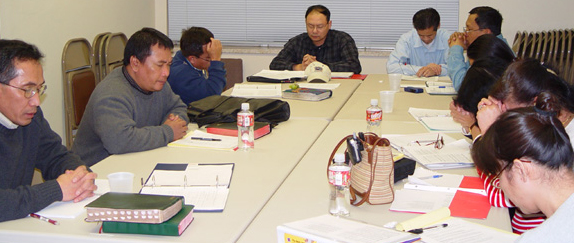
On Friday, March 4, 2005, Pastor Reth Nhar said goodbye to his wife, climbed into a car with four Cambodian friends, and headed out into the evening rush hour for the 60-mile drive north out of Providence, through the heart of Boston, to Lynn, Massachusetts. There the five made their way up to the second floor of an office building at 140 Union Street, grabbed some tea, and at 6:45 p.m., they crammed into a meeting room at the new Cambodian Ministries Resource Center.
The vision of EGC’s Intercultural Ministries is to connect the Body of Christ across cultural lines to express and advance the Kingdom of God in the city, the region, and the world. Building relationships and creating learning environments are essential to achieving this vision. Among its networks with urban ministries globally, Emmanuel Gospel Center is connected with Gemeinsam fuer Berlin a ministry organization in Germany since 2006, whose mission statement is: “Through a growing unity among believers in committed prayer and coordinated action, the Gospel of Jesus Christ shall reach all areas of society and people of all cultures in Berlin, so that the evidence of the Kingdom of God will increase, thus causing a higher quality of life in the city.”
For EGC, the 2010 Ethnic Ministries Summit was not a one-time event as much as another step along the way in our participation in and encouragement of the Kingdom of God in Boston expressed in all its cultural diversity. Here are a few of the milestones for EGC as we have watched God building his church in Boston, anticipating the church described in Revelation.

About 30% of all Brazilians living in the U.S., approximately 68,197, reside in New England, and Portuguese is the third most spoken language in the region, after English and Spanish. What are the strengths and opportunities of the predominant Brazilian-speaking churches in New England today? Kaye Cook and Sharon Ketcham offer a quick update on the status of New England’s Brazilian churches, their history, strengths, and challenges.
A church-planting movement requires mutual understanding and agreement that can only come from a common and adequate language.

A practical guide to encourage, inspire, and inform churches how to organize and plan an intercultural ministry event in their city.

Listen in on a video conversation on Christian engagement with Muslims in the U.S. where panelists talk about positive and objectionable interactions Christians may have with our Muslim neighbors.

Do you want to see transformation in your organization? You might want to give some thought to the importance of creating a safe environment, where your team can learn together to trust, practice confidentiality, become good listeners, stop judging, and develop a culture of patience, forgiveness, and celebrating the best in one another.

“The Summit was a reality check. And it wasn’t a reality check that the world is becoming more multi-ethnic, but rather that God’s Kingdom is already multi-ethnic, and what am I going to do about it? How am I going to respond?”

“In June of 1972, I was discouraged because a year had gone by since I had graduated from seminary, and I hadn’t raised a penny to go back to Haiti, which had been my goal. So after preaching at a church in New York City, two ladies asked me whether they could join my wife and me for a night of prayer.

Cultural misunderstandings, theological controversies, and power issues influence our relationships and encounters between churches of different ethnic backgrounds and denominations.
While it is the nature of teens to consider their parents to be “out of touch” and the nature of older people to complain about the younger generation, the biblical mandate to pass the faith on to our children becomes extremely difficult in immigrant communities where younger people rapidly assimilate into a culture very different from their parents’. While this is not a new issue, to those experiencing the conflict, it is an issue that seems to threaten the very future of their faith.
The Killing Fields of the Cambodian holocaust that took place from 1975 to 1979 under the leadership of the Khmer Rouge left over a million dead and led to a flood of refugees fleeing from Cambodia. Many escaped from this horrific event to neighboring countries, while others sought safety around the world. A portion of the refugees came to the United States in the early 1980s in an attempt to start their lives afresh. Today, the Greater Boston area has the second highest concentration of Cambodians in America, some estimating as many as 30,000, with the majority living in Lynn, just 10 miles north of Boston, and Lowell, 30 miles to the northwest.
Church Planting
Boston is often described as secular, but these stories from churches in the area will stir your faith and expand your vision for what God is doing in the city.
In the last 10 years, pastors have faced unprecedented challenges in shepherding their congregations. How did pastors in Boston hold up under the pressure?
There are about 250 Black churches in Boston facing multiple challenges. To leverage their collective strength, almost a dozen of them came together to build relationships for the betterment of the community.
Churches have experienced plenty of change and faced much upheaval over the last 10 years. If you could take a snapshot of your church before and after that period, what would it look like? Would you see any big structural changes? How would the leadership of your church have changed? What about the congregation?
How has the church landscape in Boston changed over the last ten years? EGC’s Applied Research team analyzes the data from before-and-after snapshots of a group of newer churches between 2014 and 2024.
The Boston Church Directory may be used for a variety of scholarly, relational, and spiritual purposes.
Want to know where to plant a church in Boston? You might consider Boston’s newest or soon-to-be-built residential growth sites. We’ll take a look at eight neighborhoods where growth is—or soon will be—taking place, based on public and private development plans.

Want to explore Neighborhood Chaplaincy as a fresh way to bring the gospel into emerging neighborhoods? There are questions to address before fostering a Neighborhood Chaplaincy movement in Boston. Explore with us.

Rev. Ralph Kee, animator of the Greater Boston Church Planting Collaborative, has been giving a lot of thought to this idea: What may be the Church’s dreams for Boston for the next few decades? What should be the Church’s priorities? Where are the Church’s growth edges? In this article, Ralph offers his own five basic ideas, his five dreams about church planting for Boston’s future.
The City of Boston has released “Imagine Boston 2030,” a comprehensive vision to prepare for an expected population surge by the city’s 400th anniversary in 2030. Can the church articulate a similar vision for what the Kingdom of God could look like in Boston 13 years from now?

Starting a new church, but short on leaders? A few years ago, we interviewed a number of Greater Boston’s church planters to ask how they were developing new leaders for their churches. Here are some of their tips for raising new leaders.
New England’s Book of Acts is a 2007 publication of the Emmanuel Gospel Center that captures the stories of how God has been growing his Church among many people groups and ethnic groups in New England.
![Biblical Theology Of Leadership [Resource List]](https://images.squarespace-cdn.com/content/v1/57ff1c7ae58c62d6f84ba841/1503082312592-NX21D7QBK2IYCYEPM32I/pexels-church_Theology.jpg)
![Inner Life Of A Leader [Resource List]](https://images.squarespace-cdn.com/content/v1/57ff1c7ae58c62d6f84ba841/1503082360379-C5ZBYKU7T85I40JH5WMS/pexels-inner-life-airballoon.jpg)
![Women In Christian Leadership [Resource List]](https://images.squarespace-cdn.com/content/v1/57ff1c7ae58c62d6f84ba841/1503082489913-T7DT6XUHEQE5DLCQ91UP/pexels-womanleader.jpeg)
![Pastoral Leadership [Resource List]](https://images.squarespace-cdn.com/content/v1/57ff1c7ae58c62d6f84ba841/1505489535138-EG2UJ0K00MI0BXPQTNZ5/pexels-pastor.jpg)
What is the Quiet Revival? Fifty years ago, a church planting movement quietly took root in Boston. Since then, the number of churches within the city limits of Boston has nearly doubled. How did this happen? Is it really a revival? Why is it called "quiet?" EGC's senior writer, Steve Daman, gives us an overview of the Quiet Revival, suggests a definition, and points to areas for further study.
Our research on new church development in Greater Boston yielded general information with a special focus on women in leadership. The hope is that this study can become a source of “mainstreaming” gender parity discourse within the church, as part of an overall discussion of the practical needs of church planters in the areas of leadership and ministry development.
A church-planting movement requires mutual understanding and agreement that can only come from a common and adequate language.
We need to more clearly identify the prophets in current-day Boston and enlist their participation as we seek to expand Jesus-permeated, Kingdom-of-God-on-earth-permeated, church-planting movements
With limited meeting space in some of our cities, how do churches who practice their faith in different ways gather under the same roof and learn to love each other?
God’s intent is that everyone living in Greater Boston be enthusiastically and holistically engaged in a community of vibrant Christian faith. The best way to make that happen right now, in 2012, is by church planting—apostolic-led church planting. That is the story of the Book of Acts and it is the story of Christian history ever since.
Awakening Your Inner Church Planter is a motivational book with practical suggestions to encourage the involvement of the whole Body of Christ in the important work of starting new churches.
Do you want to see the Church at work? This little book by Rev. Ralph Kee, veteran church planter in Boston, helps us get a handle on what the Bible calls “diakonia” and what we call “the deaconate.” Diakonia, we will discover, is much more than just a religious word. Diakonia moves us quickly from words to action, for it is, in fact, the life of service the church carries out in the world. In our day, as in Jesus’ day, as in the Apostle Paul’s day, diakonia carried out in the power of the Holy Spirit is still absolutely critical to the work of a credible church.
“The Summit was a reality check. And it wasn’t a reality check that the world is becoming more multi-ethnic, but rather that God’s Kingdom is already multi-ethnic, and what am I going to do about it? How am I going to respond?”
Ministry Collaboration & Partnership
Church closures often happen quietly — not because leaders failed, but because shame and isolation kept them from asking for help. This piece explores why a culture of transparency, not silence, may be the biggest factor in whether a struggling church survives.

EGC’s fundraisers have expanded over the years to embrace the diverse gifts of our staff members and ministry partners, adopting more creative content expressions.

Two church leaders participating in the BBCVP’s Thriving Initiative shared their strategies for serving the community and keeping their congregants safe from COVID during worship services.

The Boston Black Church Vitality Project (BBCVP) at the Emmanuel Gospel Center is kicking off its Thriving Initiative with a cohort of ethnically and denominationally diverse Black churches that are located in four predominantly Black neighborhoods in the city.

What happens when diverse Christian women leaders from across Boston gather for consultation to ignite movements for change? God uses that space to do unexpected things—and challenges us to further growth together as the Body of Christ. Shared learnings from then 2017 Woven Consultation Day.

Does Christian collaboration move us towards God’s ideal of healthy urban life? It depends. For Christian leaders, collaboration minus discernment can add up to idolatry. Check out these 5 disciplines for Christian leaders to help the Church avoid Babel in Boston.

Considering a ministry collaboration? Get ready for it to be slower, messier, and more fruitful than you imagine. Here are 6 social skills we all need for healthy ministry collaborations.

There has been a rich history of ministry collaboration in the Greater Boston Christian community. This document gives a brief description of some of the significant ministry initiatives in urban Boston that involved a broad coalition of ministry partners, and/or involved significant partnering across sectors. Much more could be said about each of the ones listed, and many more initiatives, projects and ministries could be added to this list.
Nurturing Vitality

A discussion group for people involved in the child welfare system in Boston has led to collaboration as members learn from each other and better understand the system which affects their lives and directs their work.

After almost 50 years of providing theological education to urban ministry practitioners, CUME’s vision and mission are still being turned into a beautiful reality each semester.

A simple question changed the trajectory of a young college student’s life in the late 1970s. “Would you be willing to go to the city?” Jeff Bass, EGC’s executive director, reflects on how the Holy Spirit used that question to prompt other questions that continue to shape God’s call on his life.


In times of political crisis and division, the poetry in some lesser known hymns has surprising power to bring courage and vision for justice. Enjoy this reflection from Prof. Dean Borgman.

We live in polarizing times—but we’re not the first. Prof. Dean Borgman recommends resources with time-tested kingdom principles about how to engage with others in political matters.
![[Video] The Power of Story: Defying the 'Godless New England' Narrative](https://images.squarespace-cdn.com/content/v1/57ff1c7ae58c62d6f84ba841/1521656472413-O4GQ2EDB7BBZW7QYAYX3/Stacie+Caleb+GO.jpg)

As a busy Christian social activist or leader, do you know the practical, strategic, and relational benefits of waiting for God? Here are the perspectives of 10 Christian change-makers on why they wait for God in their work.

Are you ministering in a spiritual desert? In a recent study, Boston was ranked one of the most “Post-Christian” cities in the U.S. Kathryn Hamilton, an EGC communications intern from West Texas, weighs in about her experience with Boston’s spiritual climate and Christian vitality.
EGC Executive Director Jeff Bass reflects on the greatest lesson from the recent meeting of the Greater Boston Interfaith Organization at the Boston Islamic Center, attended by Sen. Elizabeth Warren and Mayor Marty Walsh.
What is Living System Ministry? Doug Hall sets out the core ideas of this discipline of Christian practice where we learn to discern the living social systems around us and align our actions to what really creates lasting change.

The Emmanuel Research Review (2004-2014) was a digital journal from the Emmanuel Gospel Center’s Applied Research department that featured articles, papers, resources, and information designed to be a resource for urban pastors, leaders and community members in their efforts to serve their communities effectively. Ninety-five issues of The Review were published during its ten-year run from 2004 to 2014. On this page we offer a list of all issues published, and links to those that have been reposted to this new site.
Based on an interview with Rev. Eldin Villafañe, Ph.D., the founding director of the Center for Urban Ministerial Education (CUME), this article tells the story of Dr. Villafañe’s calling to launch CUME in 1976 and how the school rapidly took shape. Dr. Villafañe recalls the fruitful synergy at work among three primary players: CUME, the Emmanuel Gospel Center, and a network of new churches emerging from the Quiet Revival.
The Process of the Gospel is not a program, but a model for building relationships that nurture effective, incarnational ministry, helping people experience the presence and power of Jesus Christ for themselves. By internalizing this process, Christians can be involved in loving people in some of the same ways that Jesus modeled for us in the Gospels.
The challenge of dealing well with the different cultures in our modern cities is the most significant challenge facing theological schools today, according to Dr. Alvin Padilla, former Dean of Gordon-Conwell Theological Seminary’s Boston campus. In this issue, he begins to unravel the problem by offering several perspectives to help us move from being bewildered to better understanding what God might be doing in our cities.

Sometimes a group may be grappling with an issue, and they need to be able to “see” their issue in a clearer way. A facilitated brainstorming technique called hexagoning can help achieve that.
Christians need to change. Sometimes that change is so radical, we could call it conversion. But how can those who have been converted be converted all over again? Here, Dr. Hall talks about three types of conversion, a spiritual, social, and systemic conversion. Using examples from his own life, he explains how each type of transformation was needed for him to do ministry effectively, and all three types of change were empowered by the redemption won by Jesus Christ on the cross.
Innovating Ministry
From Harvard College to Bible institutes meeting in churches, Boston and New England have a long history of innovation in theological education and ministry training. The successes and failures of schools in the past can help shape and inspire a new vision for training men and women for gospel ministry.

This guide includes Boston-area Christian campus ministries and a sample of churches serving college students.

The arts are an important opportunity for spiritual formation. How can churches reach unbelievers through the arts while caring for the creatives in their pews at the same time?

Non-profits need sustainable funding for their long-term health. Avoid common pitfalls and learn about a balanced funding strategy.
![Beyond Church Walls: What Christian Leaders Can Learn from Movement Chaplains [Interview]](https://images.squarespace-cdn.com/content/v1/57ff1c7ae58c62d6f84ba841/1550010291251-EVMN3KQ15A70OBTAD4JQ/movement-chaplaincy_outdoorcitygroup.jpg)
People who profess no faith affiliation, often called "nones," as in "none of the above", comprise nearly 23% percent of the U.S.'s adult population. How do we develop meaningful connections with a generation that may never enter a church building? We sat down with anti-racism activist and spiritual director Tracy Bindel to discuss this question.

Neighborhood Chaplaincy is an innovative approach to ministering the love of Jesus in emerging communities. Steve Daman makes the case for how Boston would benefit from neighborhood chaplains.

Christ@Work (C@W) ministries help Christians live out their faith through their work: in their workplace relationships, work ethic, and professional impact on the world. This birds-eye view gives a glimpse of the scope of C@W ministries thriving nationwide today.
Want to explore Neighborhood Chaplaincy as a fresh way to bring the gospel into emerging neighborhoods? There are questions to address before fostering a Neighborhood Chaplaincy movement in Boston. Explore with us.
Do you want to see transformation in your organization? You might want to give some thought to the importance of creating a safe environment, where your team can learn together to trust, practice confidentiality, become good listeners, stop judging, and develop a culture of patience, forgiveness, and celebrating the best in one another.
Multi-Site Ministry
![Connecting Multi-Site Church Leaders [PhotoJournal]](https://images.squarespace-cdn.com/content/v1/57ff1c7ae58c62d6f84ba841/1513116581077-WOWU94O437SJAKKAMZMA/DSC_0438-for-header.jpg)
On November 20, Vision New England brought together 38 current and aspiring multi-site leaders from across New England for a Multi-Site Forum at LifeSong Church in Sutton, MA. The full-day event provided a space for peers to build relationships with fellow multi-site leaders, exchange insights, and share successes and failures in their multi-site experience.

Multi-site ministry is hard. But a few simple team practices can make the difference between a failed "experiment" and a thriving multi-site community.

Christian Leadership

Sexual exploitation in the church thrives in a culture of silence and secrecy. Gregg Detwiler argues that the absence of safe, transparent spaces where leaders can process their struggles is a systemic issue. Sharing from his own life and ministry, Gregg encourages Christian leaders to walk with others in accountability and transparency as they seek to minister to others.
Starting a new church, but short on leaders? A few years ago, we interviewed a number of Greater Boston’s church planters to ask how they were developing new leaders for their churches. Here are some of their tips for raising new leaders.
![Christian Leadership Web Sites [Resource List]](https://images.squarespace-cdn.com/content/v1/57ff1c7ae58c62d6f84ba841/1505489399837-OVLHG7QQ7TJ6K8RIJBG7/pexels-photo-209151-website.jpeg)
![Modern Classics on Leadership [Resource List]](https://images.squarespace-cdn.com/content/v1/57ff1c7ae58c62d6f84ba841/1503082448262-DU5B4OH1ZP625DKJRZHH/pexels-modernclassics.jpeg)
![Leadership Strategies & Models [Resource List]](https://images.squarespace-cdn.com/content/v1/57ff1c7ae58c62d6f84ba841/1505489580322-W3YPVU5W1AKQXXNOLFUM/pexels-strategyleadership.jpeg)
Our research on new church development in Greater Boston yielded general information with a special focus on women in leadership. The hope is that this study can become a source of “mainstreaming” gender parity discourse within the church, as part of an overall discussion of the practical needs of church planters in the areas of leadership and ministry development.
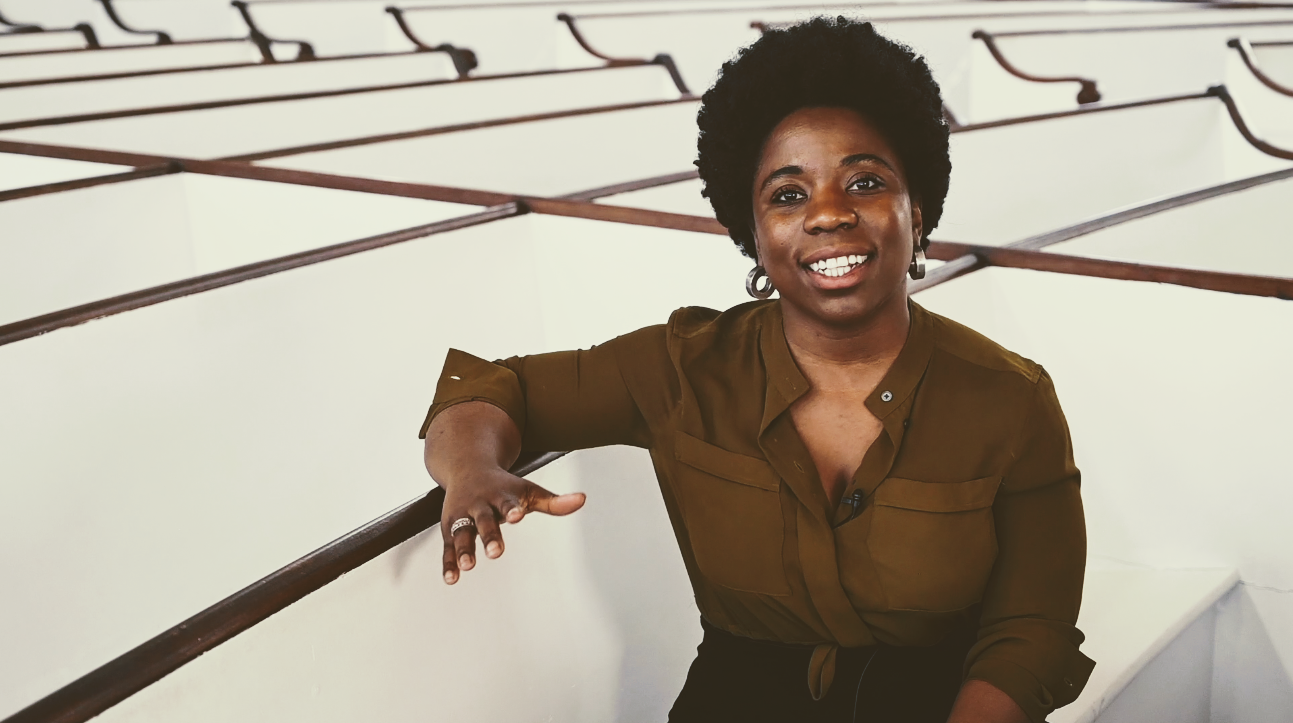
“My love for the Church comes from my love for Black people, so if the Church is not serving the people, then what are we doing?”
Jaronzie Harris,
Director, Black Church Vitality Project
“If the Black Church were to disappear, who would miss it?”
City Issues
Urban Youth & Education

The Boston Public Schools Engagement Toolkit resource includes data, opportunities for volunteers to engage, stories of church-school partnerships, a prayer guide, and more.

How do you start and sustain a successful partnership with a local public school? Here is a roadmap your church can explore as it discerns its level of involvement.

Symphony Church in Allston partnered with Jackson/Mann K-8 School in Allston for several years before the school closed. The church served as a critical partner during the pandemic.

From obstacles with virtual learning to parents losing jobs, the coronavirus pandemic has made life difficult for many children in Boston. Despite the challenges, Christian leaders at ministries offering after-school and summer programs say they are witnessing God’s goodness and grace toward the children and their families.

Youth in Lower Roxbury interview seniors in their community as part of a 2019 Youth Participatory Action Research project called “Learning from the Past to Build a Stronger Future.” Find out what they learned, and the strategic community actions they’re taking this year.
![The Value of Making Youth Voices Heard [VIDEO]](https://images.squarespace-cdn.com/content/v1/57ff1c7ae58c62d6f84ba841/1540908939188-LRJKMBIWZXOOO5V5A9UP/Screenshot+2018-10-30+10.08.13.png)
The BEC was privileged to work with some amazing youth leaders last school year, training them to be community researchers in the Lenox/Camden area by using the tool of participatory action research. We were also blessed to collaborate with Vibrant Boston, St. Stephen's Youth Programs, Crosstown Church International, and Boston College School of Social Work to make this program a success. See the video for a short intro.

Youth are a resource to their community. The DELTA Youth (Diverse Excellent Leaders Taking Action) are a group of nine youth participating in the South End/Lower Roxbury based Making Youth Voices Heard initiative, a collaboration for community learning among youth, social work students, youth-focused non-profit programs, and community members.
![Urban Youth Culture Research [Resource List]](https://images.squarespace-cdn.com/content/v1/57ff1c7ae58c62d6f84ba841/1530294363902-G2R6K4YMB3AX42HOIMH9/black-and-white-crowd-gang-38198.jpg)
How are people of faith to understand urban youth culture? How can the Church best interact with urban youth? Youth and Culture Professor Dean Borgman provides qualitative research resources for the urban youth practitioner to develop a framework and approach for more effective ministry.
![God Met Me in Boston [Interview]](https://images.squarespace-cdn.com/content/v1/57ff1c7ae58c62d6f84ba841/1529427271630-4CUDW0ICCL9D8IQ4SV4I/Ruth+%26+Cherchaela+2.jpg)
Is Boston post-Christian? Social work student and Roxbury youth leader Cherchaela Spellen tells us her story of coming to God personally after moving to Boston.

How can busy youth workers and ministers stay on top of trends affecting youth? Dean Borgman offers some starting points.
![[Video] 2018 Trends in Youth Culture](https://images.squarespace-cdn.com/content/v1/57ff1c7ae58c62d6f84ba841/1523474943655-9Q698S527EGBAHR9PLTX/action-adults-celebration-433452.jpg)
[VIDEO] Trends in youth culture, along with conversation starters and resources for parents, youth workers, and trend spotters. Lecture by Prof. Dean Borgman at the Center for Urban Ministerial Education in Boston.

Teens in Lower Roxbury have felt the threat and impact of gun violence much of their lives. The youth of the Making Youth Voices Heard program want to do something about it. They're engaged in a youth participatory action research project to explore the causes and outcomes of gun violence in the Lenox-Camden neighborhood, as well as links to poverty, education, drug use, and employment.

Join us for three Boston climate talks at EGC this fall! Guest speakers include Mia Mansfield, Mariama White-Hammond, Gabriela Boscia, and Melinda Vega. Come learn with us as we become more informed and ready to support local leaders doing important climate resilience work in our neighborhoods and city.

New in Lower Roxbury--Pastors and leaders serving the Lenox Street area met to consider a wider collaboration with the Melnea Cass Network, a group dedicated to "eliminating youth violence and poverty, one neighborhood at a time."
MCN believes that youth can thrive and overcome the systemic problems of their environment if they have a network of social support that addresses physical, vocational, social and spiritual needs. The MCN is working to convene local leaders for shared learning and collaborative action towards that common purpose. MCN's mission is "ending youth poverty and violence one neighborhood at a time."

he presence of a caring adult in the life of a youth is one of the key factors in influencing a child’s behavior. In addition to parenting, mentoring youth in an urban context provides a highly strategic social-spiritual opportunity to shape future generations and address broader societal issues, including youth violence. In this issue from 2008, EGC Senior Researcher Rudy Mitchell summarizes his research on mentoring youth in an urban context. See also the concluding list of links and resources.
Since its founding, the BEC has helped make an impact on church-based programs in Greater Boston that help urban residents reach educational goals.

Church-school partnerships. Do they work? Is it a win-win for both parties? Learn about how EGC’s Boston Education Collaborative is having success matching churches with local schools. And find out more about the other work of the BEC to help encourage and equip Christian leaders in Boston who work in educational settings.
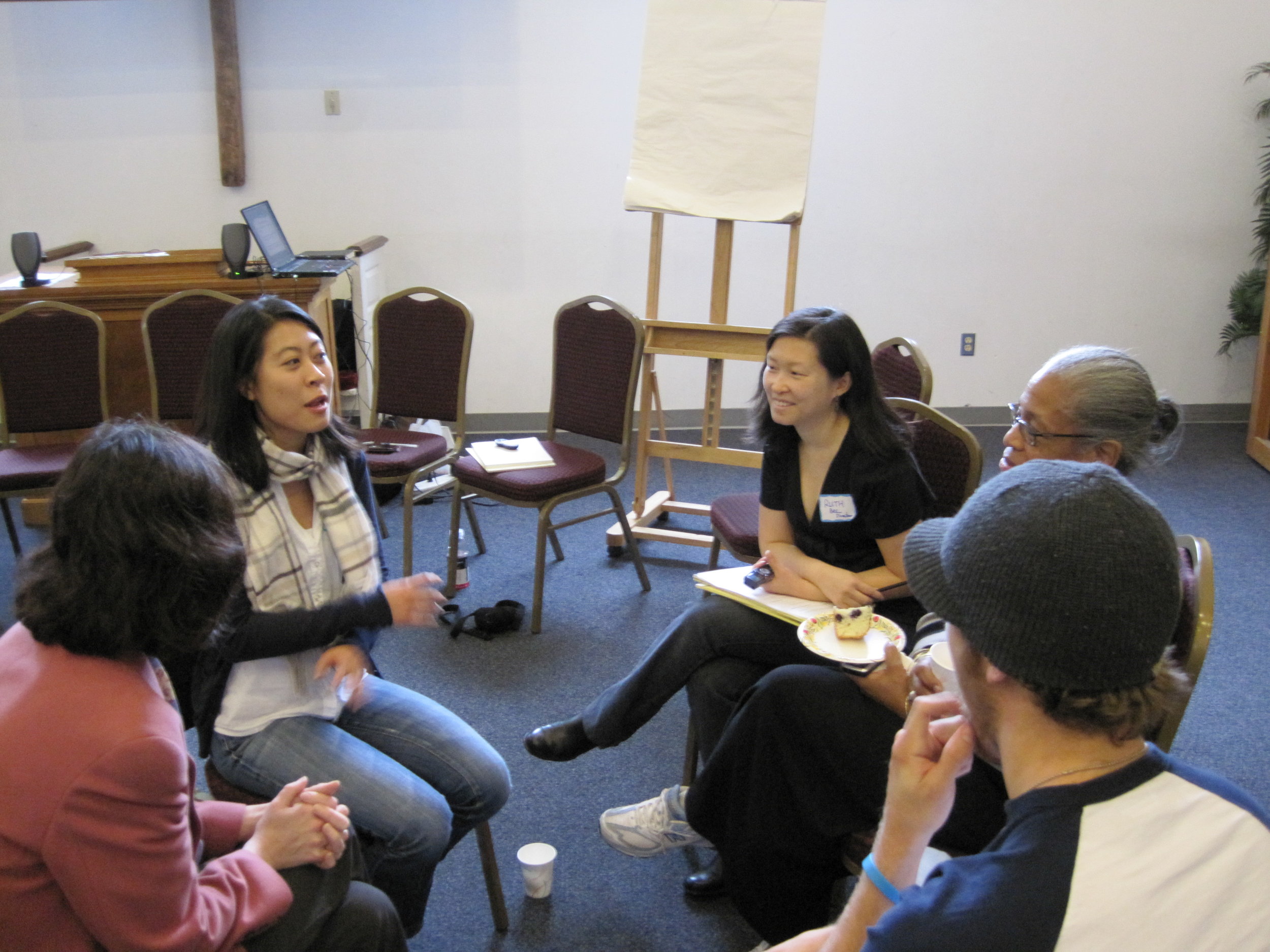
BEC: Helping Urban Churches Motivate & Support Underserved Students
Perhaps because Boston is home to over 50 colleges and universities (inside the I-95 belt), or perhaps because education has always been an important value in the New England culture, the desire to give our children a good education remains a top priority for Bostonians. And today it’s not just parents, educators, and politicians who focus on education, but urban churches and faith-based nonprofits also have education on their minds.
Human Trafficking & Exploitation
![Hard Steps Toward the Light: Meet Bonnie Gatchell [Interview]](https://images.squarespace-cdn.com/content/v1/57ff1c7ae58c62d6f84ba841/1524836375191-XIDDMMVWWA04WYY5D1L6/3+a.+Route+One-+Bonnie+Tedx.png)
Meet Rev. Bonnie Gatchell! Bonnie equips Christians throughout MA to minister to women exploited in the sex industry. In this interview we hear a little of her story.
![Voices of Human Trafficking [VIDEO]](https://images.squarespace-cdn.com/content/v1/57ff1c7ae58c62d6f84ba841/1549999751750-FPJ37PZW2U4UHY6OVXSH/Screenshot+2019-02-12+14.28.40.png)


Resources to help leaders join the fight against Human Trafficking. (Includes: 1. Who is involved in the Abolitionist Network 2. Who else is fighting Human Trafficking locally 3. Learning about Human Trafficking (recommended books, movies, websites) 4. Resources for Churches and 5. Self Care Resources for Leaders.

I. Human Trafficking Resource List [Churches, Leaders, & Ministries involved in the Abolitionist Network]

State and Local Organizations, Ministries, and other Programs working with the Abolitionist Network in the fight against Human Trafficking.
Qué es explotación/Tráfico Humano? "Tráfico Humano es la adquisición de la personas pormedios impropios, tales como la fuerza, el fraude, o la coacción, con el objetivo de explotarlos." United Nations Office on Drugs and Crime
http://www.unodc.org/unodc/humantrafficking/
Si alguien se identifica a sí mismo como una víctima de la trata de personas, o sospecha quealguien está en riesgo o involucrados con la trata de personas y la explotación, aquí están los recursos para la respuesta
If someone self-identifies as a victim of human trafficking, or you suspect someone is at risk or involved with human trafficking and exploitation, here are resources for response.
Race
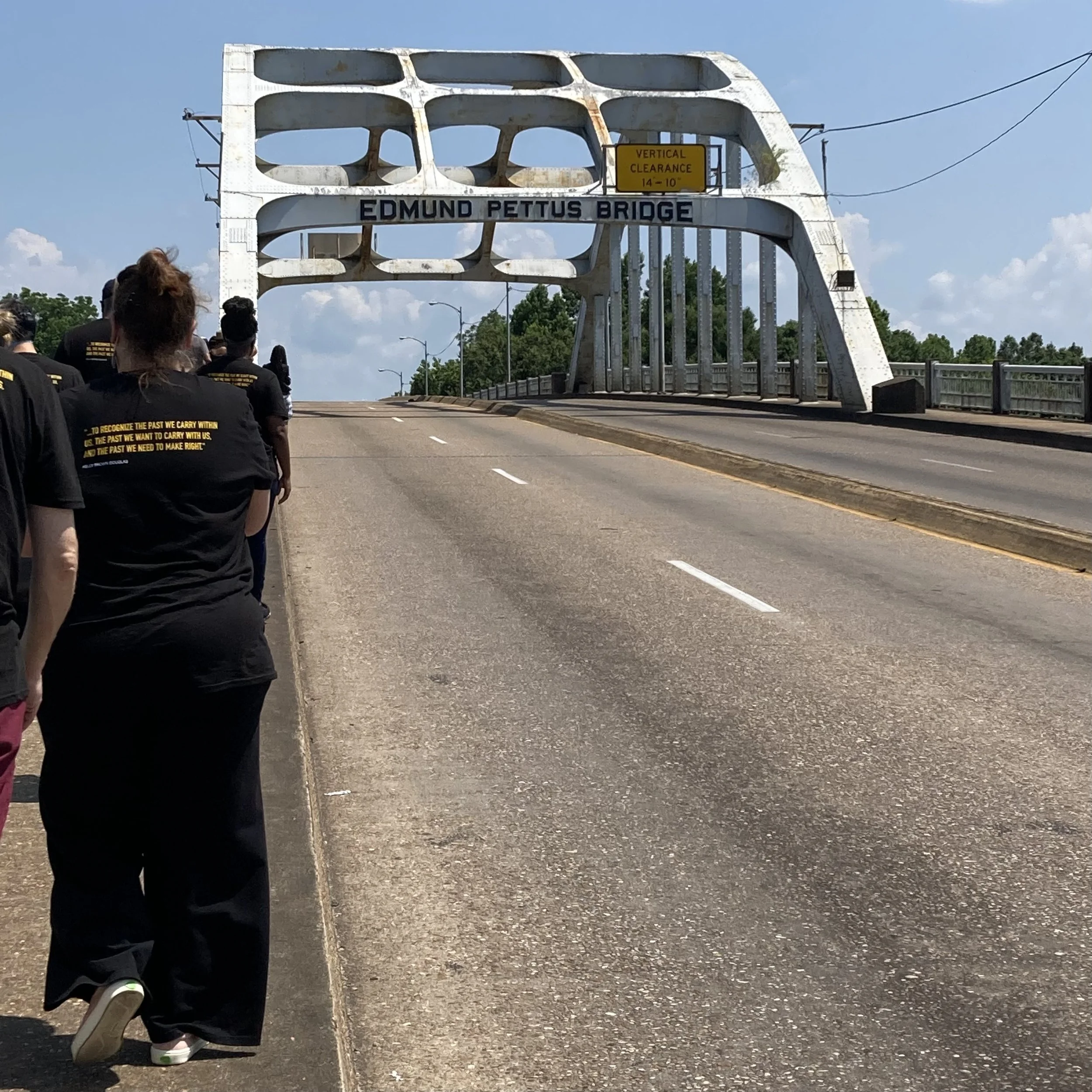
Civic engagement can feel overwhelming—especially if no one in your faith community ever modeled it. Here's what one white evangelical learned by jumping in anyway.
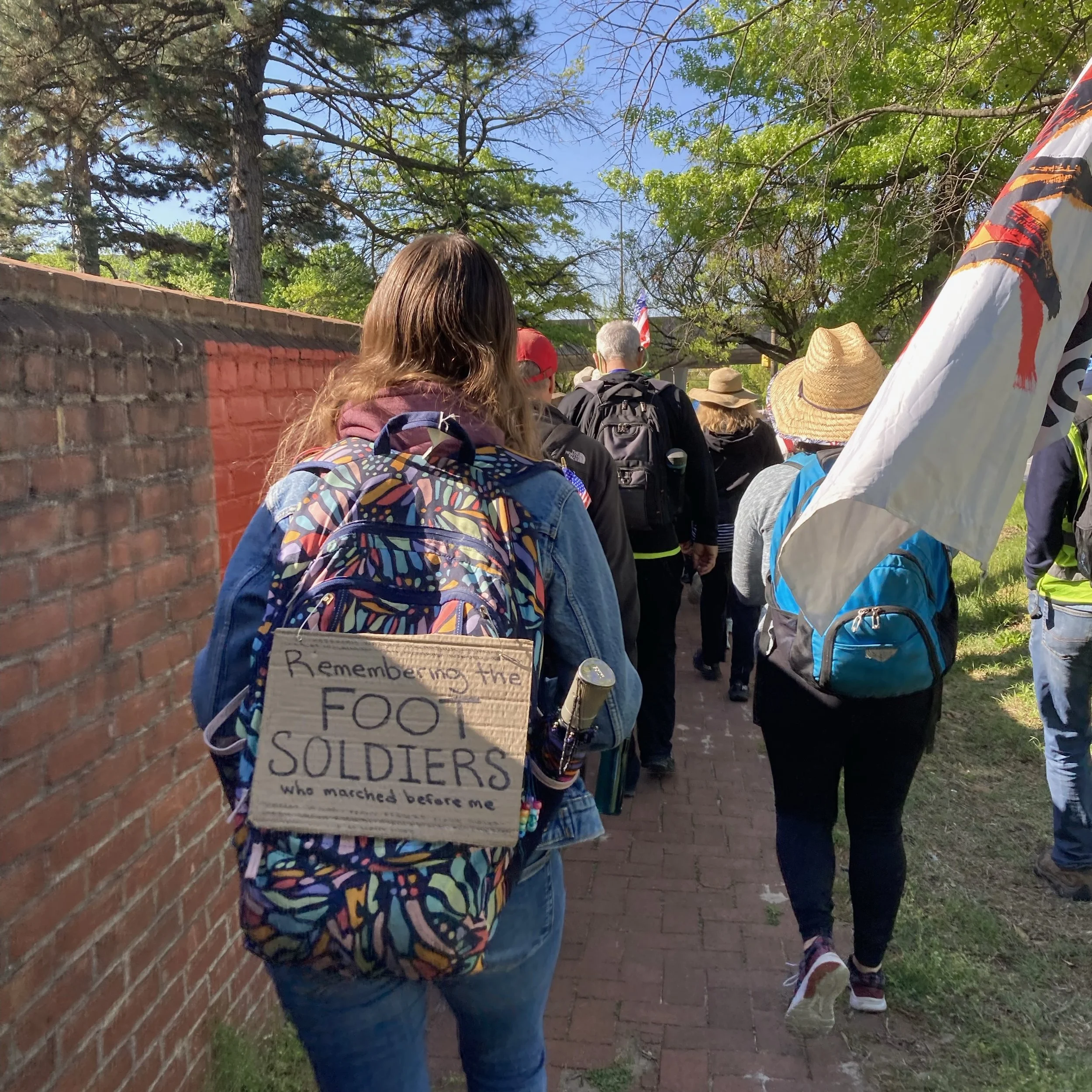
When you march 160 miles, you quickly discover how much you need other people — and how hard it is to let go of control. For white Christians working toward racial justice, that discomfort isn't an obstacle. It’s the point.
Many white Christians in evangelical churches feel isolated in their desire to discuss race, often encountering silence or pushback from their communities. Engaging with racial issues from a biblical perspective is essential for fostering unity and effectively following Jesus in a diverse world.

The Church in Boston needs to wrestle with our region’s involvement in the Transatlantic Slave Trade. This resource list provides a wealth of material to grow in awareness of how the legacy of slavery continues to impact our communities.

Despite good intentions, white people tend to run ahead and take the lead, taking action that is uninformed, misdirected, and not well received by BIPOC communities. How can they learn to adopt a role that better reflects the redemptive power dynamics of God’s kingdom?

We can have a strong ideological commitment without corresponding actions. This disparity can be seen in how I collaborated across racial lines in the early years of RCCI’s ministry.


A new way of thinking helped launch me into ministry. It also changed me in the process.

RCCI’s founding director, Megan Lietz, shares three key lessons that are forming the ministry and that could serve your own pursuits of building shalom across racial lines.
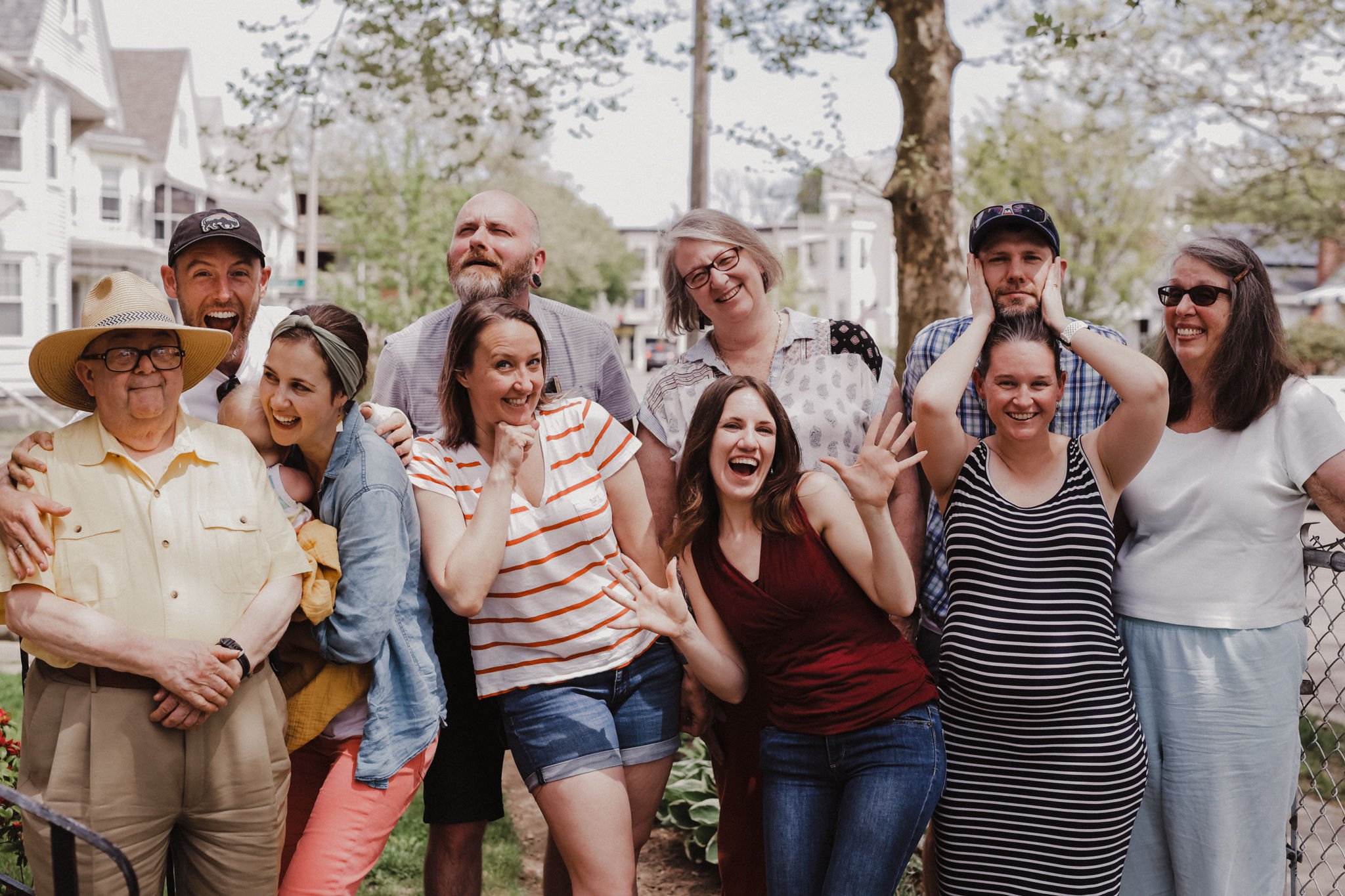
Five years ago, the Race & Christian Community Initiative launched its first cohort, a small group of white Christians in Greater Boston wrestling with issues related to race. It was an unexpected adventure, but one that was characterized by humility, transformation, faith, and grace.

A compilation of resources to help White Evangelicals live a more racially just life through laying a theological foundation, understanding the problem, and doing something about it.

White evangelicals who are moved by their biblical convictions to pursue justice and resist oppression often lack clear direction on how to seek these aims in concrete and tangible ways. This resource is designed to be a launching pad for White evangelicals to learn how to use their time, talents, and treasures for civic engagement.

As caregivers, mentors, and church family, we need to help children understand the realities of racism and develop a positive racial identity from a Biblical perspective through exposing them to race-related conversations.

Boston has a long and complicated racial history, which has often gone untold. The RCCI team shares some resources that can help us better learn our past as we work to build a more just and equitable future for our city.


Liza Cagua-Koo shares her perspective on pursuing God's ways of dealing with pain through lament as the strong foundation from which we can engage productively and perseveringly in the work of repair.

Today, issues related to race are sometimes seen as “liberal” or “political” issues. As a result, some Christians have disengaged from this important conversation, and this breaks the heart of God. Racial healing is first and foremost a biblical value. This article from the Race & Christian Community team explores a Biblical theology of racial healing.

You're White, and you want to engage responsibly and respectfully on race issues. You're an evangelical, and you believe the ministry of reconciliation is part of your calling as a follower of Jesus. Where do you begin? Check out these starter resources recommended by Megan Lietz, a White evangelical committed to helping other White evangelicals on their race journey.

As we seek the Lord for how to respond to COVID-19 and reorient ourselves to this new reality, let's consider how racism is shaping our communities and how we can work to counter its impact through practical actions and compassionate faith. Learn more about COVID-19's disproportionate impact on communities of color and concrete steps you can take to work against racism.

Racial trauma awareness—by both people of color and white people—is critical to healing our racial wounds and racial divides. Sheila Wise Rowe’s newest book Healing Racial Trauma fills this crucial gap with an exploration of the reality and scope of racial trauma, along with interviews that honor real people’s paths toward resilience.

Well-intentioned congregations with beautiful visions for multiracial community can perpetuate inequitable power dynamics instead of the mutuality and reciprocity God intends for the body of Christ. These resources provide more information on such power dynamics.

How has 2018 been for you? James Seaton shares reflections on the summer of 2018 in Boston and where we’re at as the Church.

Many White people may be surprised by some of the most basic realities of racism in America today. Don’t be one of them—get informed in this article from EGC’s Race & Christian Community initiative REWE, Race Education for White Evangelicals.

To express Jesus' love in these times, Boston White Evangelicals will want to face the realities of the city's racism. Find pathways for reflection and action, suitable for both starters and veterans in the struggle for racial understanding and reconciliation, with links to the Boston Globe Spotlight on Boston Racism.

Well-meaning people can act in ways that have racist impacts they wouldn't want. Don't be one of these people! Learn all you can to avoid being an accidental racist through this heartfelt reflection.

Racism in Boston is a big problem. But the road to racial harmony starts with a single step. Check out these recommended videos and special features, each of which take under five minutes to explore.

White evangelicals are going deeper in racial justice, but still have much work to do. Three churches in the Boston area tell their stories.

Our country is deeply divided. What part can we play in healing the nation's racial wounds? And where do we start?
Housing & Homeslessness

Pastor Clarence McGregor, a beloved member of the local community, passed away in September 2022. He had served with Starlight Ministries at EGC and as associate pastor at South End Neighborhood Church for many years.
As we begin 2019, housing is a hot topic in every corner of Boston. Get oriented with some basic data about housing realities and resources in Boston.
![Homelessness & Collaboration: Starlight Ministry [VIDEO]](https://images.squarespace-cdn.com/content/v1/57ff1c7ae58c62d6f84ba841/1523389821793-ZWG4LOT4ZTF83A6JKKS1/Cynthia+Starlight+Video+HiDef.png)
[VIDEO] Hear from ministers around the city how Starlight Ministries engages churches in collaboration to address local homelessness.

To address local homelessness, we need a clear picture of whom we seek to help. You may be surprised by who qualifies as part of the homeless population. What follows is a glimpse of the current reality of homelessness in Massachusetts today.

To address local homelessness, we need a clear picture of whom we seek to help. You may be surprised by who qualifies as part of the homeless population. What follows is an overview of how homelessness is defined in the US.

Boston is in a homelessness crisis, especially among families experiencing homelessness. When it comes to engaging this crisis, Starlight believes churches are better together. Discover Starlight's collaborative ministry model for ending homelessness in Boston.

Churches address homelessness best through smart community collaborations. Here are ten ways your church can get connected and trained.

Homelessness is complex. For a deeper understanding of the dynamics of homelessness, check out these recommended resources. Includes books and Boston-area reports.

What's being done about homelessness in Boston today? Check out this overview of active Boston-area homelessness ministries and organizations.

Addressing homelessness effectively can surprise our intuition. Learn about entry points from those who study homelessness as a system.
![Street Involvement As A System [infographic]](https://images.squarespace-cdn.com/content/v1/57ff1c7ae58c62d6f84ba841/1506610840159-GYRRV17PMQVSKQWTKDX8/street+involved.jpeg)
Homelessness is a complex system. Learn about this system and how the church can engage.
Gender-Based Violence

The scope of sexual and gender-based violence in America is coming into the public light—not just in Hollywood and Washington, but in the church as well. Three nationwide movements focus on the church’s responsibility, both in adding to the problem and in bringing healing.

Do you feel called to help survivors of gender-based violence (domestic abuse, sexual assault, etc.)? See these recommended local and national organizations and see how you may be able to get involved.
![Gender Based Violence & the Church [Resources]](https://images.squarespace-cdn.com/content/v1/57ff1c7ae58c62d6f84ba841/1525202179581-91N8RV6OP4ASQAHLX1OD/black-and-white-black-and-white-depressed-568025.jpg)
The Church has a critical role in prevention, intervention, and healing from gender-based violence (GBV). These resources can help.
Women in Leadership
Meet Rev. Bonnie Gatchell! Bonnie equips Christians throughout MA to minister to women exploited in the sex industry. In this interview we hear a little of her story.
What happens when diverse Christian women leaders from across Boston gather for consultation to ignite movements for change? God uses that space to do unexpected things—and challenges us to further growth together as the Body of Christ. Shared learnings from then 2017 Woven Consultation Day.
![What Women Leaders "Shouldn't" Want [Infographics]](https://images.squarespace-cdn.com/content/v1/57ff1c7ae58c62d6f84ba841/1482182315765-UMIZ38Z5JK74HBSVE773/WOV2016_DSC_1839.jpg)
What do Christian women leaders report hearing or believing that they "shouldn't" want or need if they were a good leader? What kinds of life-giving connections to Christian women leaders want more of?

Dominance in leadership is common in America today. But is it healthy for Christian leaders? Jess Mason shares personal experience and reflections on biblical perspectives of dominance in leadership.

When you think good Christian woman, to what extent do you think effective leader? In this post we explore six conflicts-of-ideals reported by participants at the Woven Consultation on Christian women in leadership in March 2016.

Happy Fall from the EGC Woven crew! I want to share a tidbit of wisdom from one of the table groups at the May Woven Consultation to help us stay balanced this fall...

Do the Christian Women you know lead lives of healthy balance? On March 5, 2016, over 100 Boston-area women (non-profit leaders, mothers, students, businesswomen, pastors and other leaders) gathered to address this question. Women of various ethnicities, church affiliations and ages...
![2016 WOVEN CONSULTATION [Photojournal]](https://images.squarespace-cdn.com/content/v1/57ff1c7ae58c62d6f84ba841/1476666331174-5QUVROVZFAWEBDXCU15P/Screen+Shot+2016-10-16+at+6.05.15+PM.png)
Though drawn together for assorted reasons, the women who gathered shared a common commitment to Christ and a desire for wholeness. Whether they admitted to feeling overwhelmingly busy or being satisfied with their pace of life, all knew well the struggle of maintaining balance through life’s changing seasons.
Our research on new church development in Greater Boston yielded general information with a special focus on women in leadership. The hope is that this study can become a source of “mainstreaming” gender parity discourse within the church, as part of an overall discussion of the practical needs of church planters in the areas of leadership and ministry development.

Christian churches believe that all people, regardless of race, ethnicity or gender, are created in the image of God. Yet, often the Church falls short of honoring that image. Anecdotal and statistical evidence shows that women face disproportionate levels of violence, discrimination and challenge at least as much in churches as out.
Public Health

This guide showcases organizations addressing some of the most pressing social issues. Their endeavors range from supporting vulnerable children and families to promoting environmental stewardship.

Serious illness brings up serious questions, both medical and spiritual. Pastors and caregivers with the right training can help families and medical professionals honor the sick person’s values. Here are three takeaways from a Boston workshop for physicians, pastors, and other caregivers, called “Pastor, Will You Pray with Me? Shepherding Those With Serious Illness.”
![Barriers to Mental Health Care for Boston-Area Black Residents [Report]](https://images.squarespace-cdn.com/content/v1/57ff1c7ae58c62d6f84ba841/1518458267039-7WI3NJUWYJQKOQCYDWTK/pexels-photo-561654.jpeg)
Does Boston-area mental health care adequately serve Black residents? Community Health Network Area 17 (CHNA 17) invited EGC to partner in addressing this question for six cities near Boston.

Interested in dignified End of Life Care? Here are some starter resources to begin your learning.

What is the impact of spiritual community on end of life care? The truth may surprise you. Talking openly about End of Life issues benefits individuals, families, and communities.

Churches often excel at community service. But what might it look like for a church to build the capacity of a community? A reflection on a model of church work in community development.
Editor’s Pick
Church closures often happen quietly — not because leaders failed, but because shame and isolation kept them from asking for help. This piece explores why a culture of transparency, not silence, may be the biggest factor in whether a struggling church survives.
Ten practical, hard-earned lessons from church leaders on avoiding costly property mistakes: from hiring the right professionals and building strong financial systems to reviewing leases and protecting core ministry assets from over-leverage.
From Harvard College to Bible institutes meeting in churches, Boston and New England have a long history of innovation in theological education and ministry training. The successes and failures of schools in the past can help shape and inspire a new vision for training men and women for gospel ministry.
Cuando una parte del cuerpo sufre, todas las demás sufren con ella. ¿Cómo se ve el hecho de presentarnos con esperanza junto a las personas migrantes en un tiempo de miedo y desconexión?
Recommended Reading

Which books help you pursue the shalom of the city and the glory of God? Here are some titles that have contributed meaningfully to our shalom-seeking in Boston.
There are many different aspects of Boston and, therefore, different perspectives and resources are needed to understand the city. Here is a list of resources and books for understanding the city’s background and history.
Are you looking to get a better understanding of the city of Boston with all its history, neighborhoods, and eccentricities? Rudy Mitchell, researcher of Boston's neighborhoods and churches for over 30 years, gives his top 5 recommendations for books about Boston.
As caregivers, mentors, and church family, we need to help children understand the realities of racism and develop a positive racial identity from a Biblical perspective through exposing them to race-related conversations.
Racial trauma awareness—by both people of color and white people—is critical to healing our racial wounds and racial divides. Sheila Wise Rowe’s newest book Healing Racial Trauma fills this crucial gap with an exploration of the reality and scope of racial trauma, along with interviews that honor real people’s paths toward resilience.
Curious City Podcast

Apple Podcasts | Podbean | Spotify | YouTube
EGC Music Videos
ABOUT EMMANUEL GOSPEL CENTER Emmanuel Gospel Center (EGC) is a nonprofit Christian organization dedicated to supporting the work of passionate individuals, ministries, and organizations seeking to positively impact critical issues in the city. Our collaborative approach aims to create a more equitable, connected, and thriving community for all Bostonians.
Research Topics
- Christianity & Culture
- Churches/Church Planting
- Communities
- Race
- Intercultural
- Urban Youth & Education
- Christian Leadership
- Church Spaces
- Housing & Homelessness
- Women in Leadership
- Trafficking/Exploitation
- Spiritual Health/Vitality
- Refugee
- Boston General
- Public Health
- Gender-Based Violence
- Boston Churches
- Churches & Communities
Sometimes a group may be grappling with an issue, and they need to be able to “see” their issue in a clearer way. A facilitated brainstorming technique called hexagoning can help achieve that.